
Side Flexing Chain
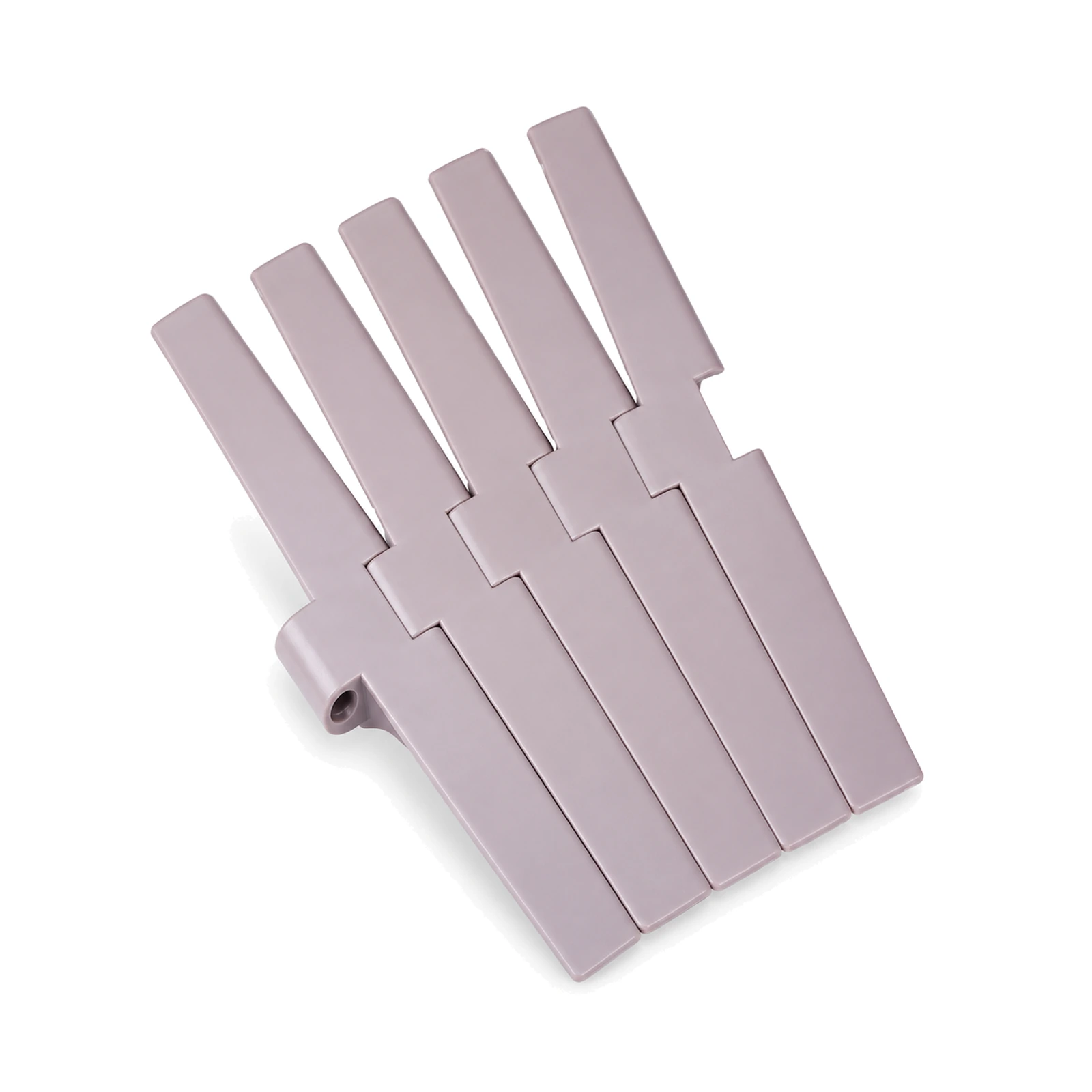
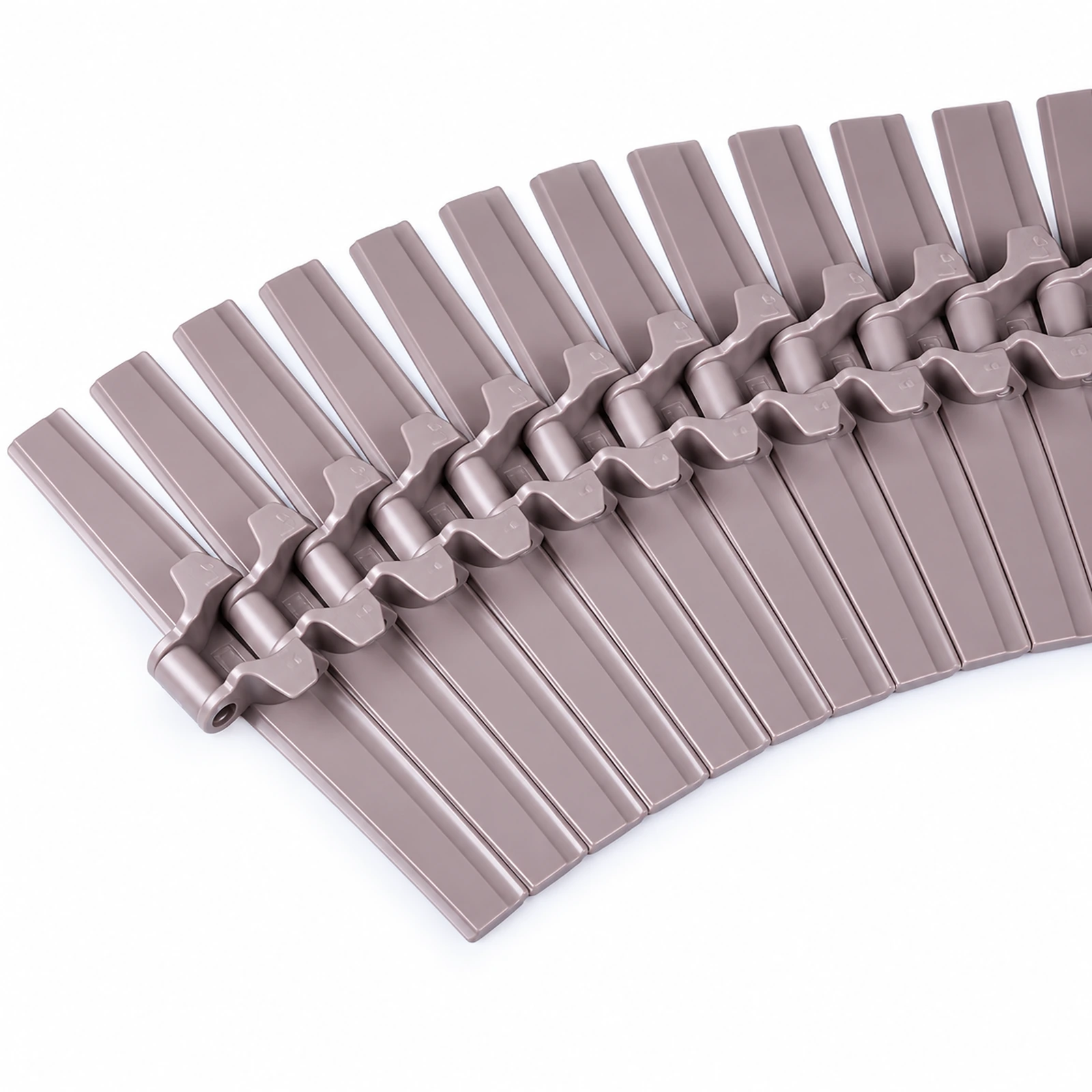
CSTRANS supplies plastic side flexing chain for horizontal conveyor curves, including 880 and 882 flat-top families, magnetic 880M, small-radius 880TAB-BO and heavy 1050/1060 forms. Matching width, radius, guide retention and drive fit helps keep products on one carrying path between straight sections.
Curve guidance
Hold the Chain on the Chosen Curve
The 880M has ferromagnetic pins attracted by magnets in its guide track, while 880TAB and 882TAB use TAB guidance; the non-TAB 880 has underside contact features that reduce guide friction. For tighter layouts, 880TAB-BO has a 200 mm minimum turning radius. Conventional TAB families at 82.6–114.3 mm width use a 500 mm minimum, while 127–304.8 mm versions use 610 mm. Radius determines whether the chain can follow the planned corner without another conveyor section and transfer.
Carrying width
Give the Product the Right Carrying Width
The 880TAB family covers 82.6 and 114.3 mm widths. The 882TAB family covers 127, 152.4, 190.5, 254 and 304.8 mm, with a 495.3 mm variant also listed. Width changes how much of a bottle, can or package base the flat top supports through a bend. CSTRANS also has 1050, 1060 and 1060TAB heavy forms with 83.8 mm plate width and 9 mm thickness for bottle and beverage conveying.
Drive fit
Check Drive Fit When Changing Families
An 880TAB and an 882TAB are not drive substitutes simply because both turn. Their head widths differ—43 mm for 880TAB and 57 mm for 882TAB—and their sprockets are not interchangeable. A replacement chain must match the installed sprocket, width and curve track. On an 880M line, the ferromagnetic pin and magnet-equipped track pairing must also be preserved.
Application / Line Context
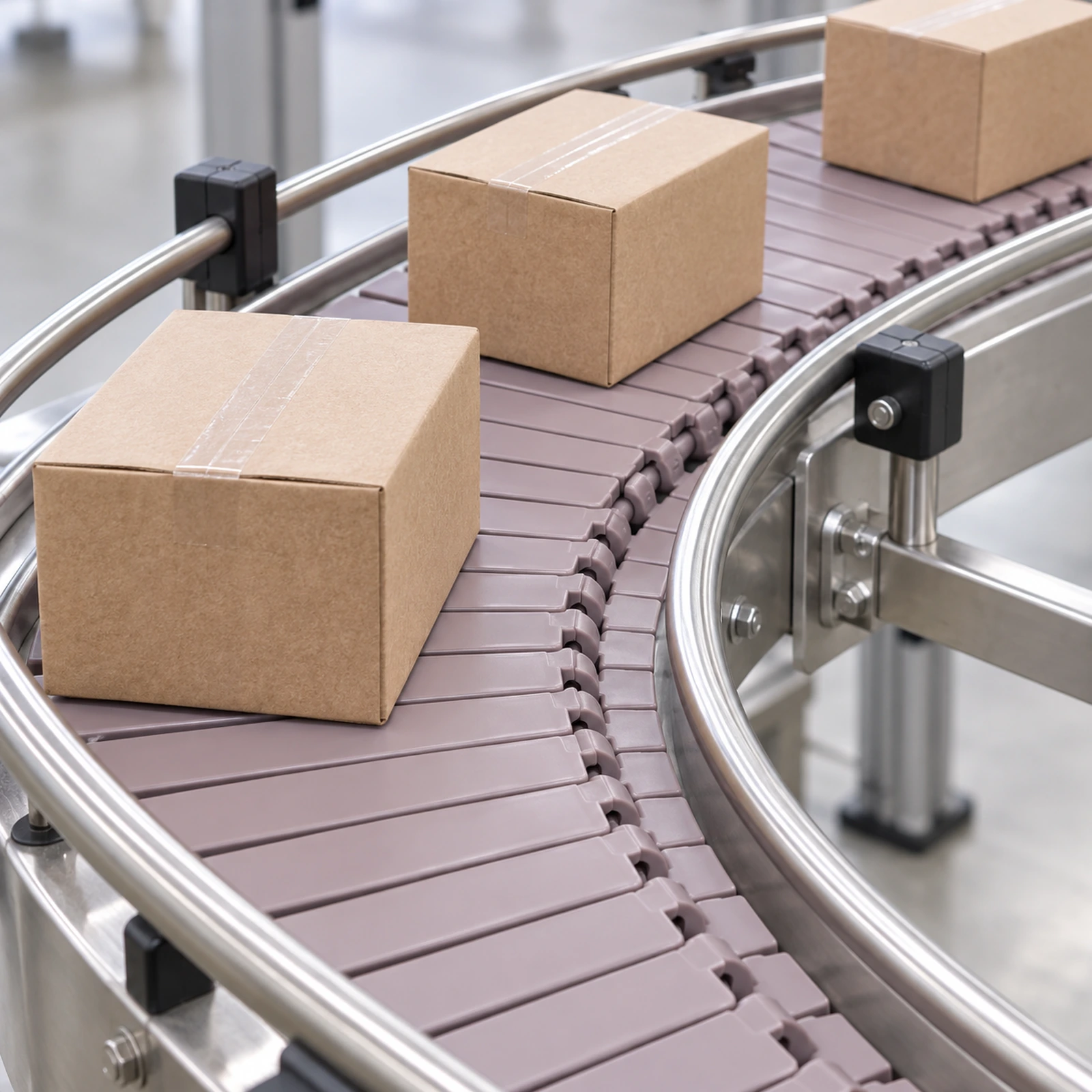
A container entering a bend needs a steady carrying surface while its direction changes. The outside of the curve covers more distance than the inside, so the chain's side-flex geometry and matching guide track govern how it follows the route. TABs or a magnetic track keep the selected chain family engaged with that curve; the flat-top width supports the product base as side guidance controls its path. At the curve exit, the next straight run or downstream conveyor must receive the product without an abrupt change in support. Radius, guide clearance, sprocket engagement and transfer position therefore affect flow through the whole line, not just the corner.