
Conveyor Leveling Feet
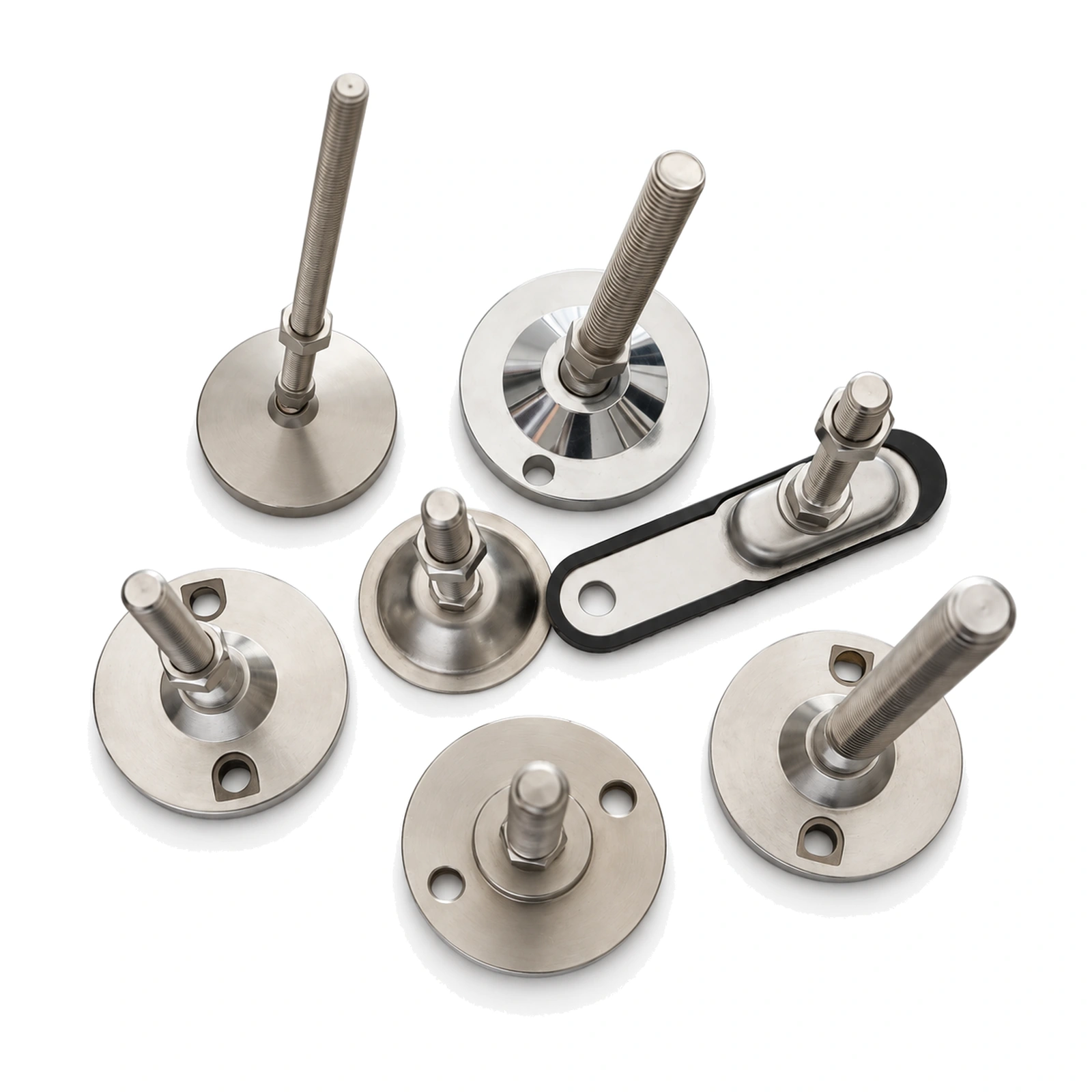
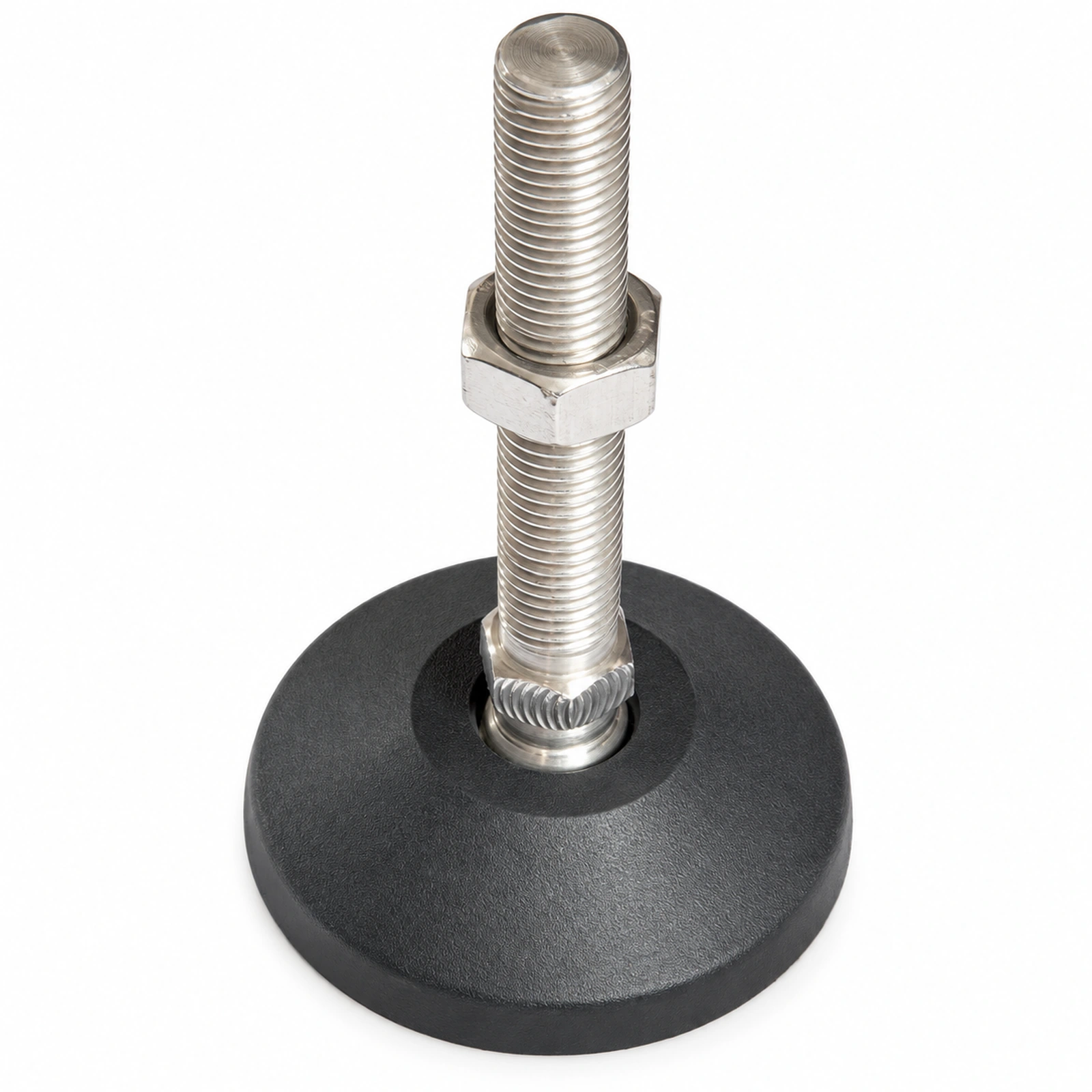
CSTRANS supplies conveyor leveling feet, including articulated and external-joint forms, the D80 M16×75 foot, and related footplates and threaded studs. The M16 connection pairs with CSTRANS conveyor support stands; the foot is specified separately. Matching the stud, base and support lets equipment teams set the carrying height, bring neighboring conveyor sections together and account for the floor beneath the line.
Stand connection
Start at the Stand Connection
The D80 M16×75 designation identifies three different dimensions: an 80 mm footplate, an M16 thread and a 75 mm stud length. CSTRANS support stands use M16 studs with their inserts, so the foot-to-stand thread is a concrete starting point for a new build or replacement. The stud sets the stand's position above the floor. Its length and the required line elevation affect whether the carrying surface can meet an upstream infeed or downstream discharge at the intended height; the model code alone does not establish the full adjustment range.
Joint and lock
Choose the Joint and Locking Arrangement
CSTRANS offers joint and external-joint foot forms. They share a footplate design, while the external-joint form adds a fixing nut. A jointed base can settle against a floor that is not perfectly level as the threaded stem adjusts support height. The extra nut changes how the external-joint version is set and secured at the stand. This distinction matters when several supports must hold a consistent conveyor elevation across a straight run or through a transfer, where a height mismatch can disturb the product handoff.
Floor contact
Match the Base to the Floor Plan
Footplate diameter also changes the floor interface. CSTRANS specifies bases below 80 mm without locating holes and bases above 80 mm with them; an 80 mm base may be supplied either way. Where a design calls for floor fixing, that hole choice must be settled before the support is positioned. Because feet are supplied separately from the stands, a replacement order should identify both the stand connection and the base or stud being replaced.
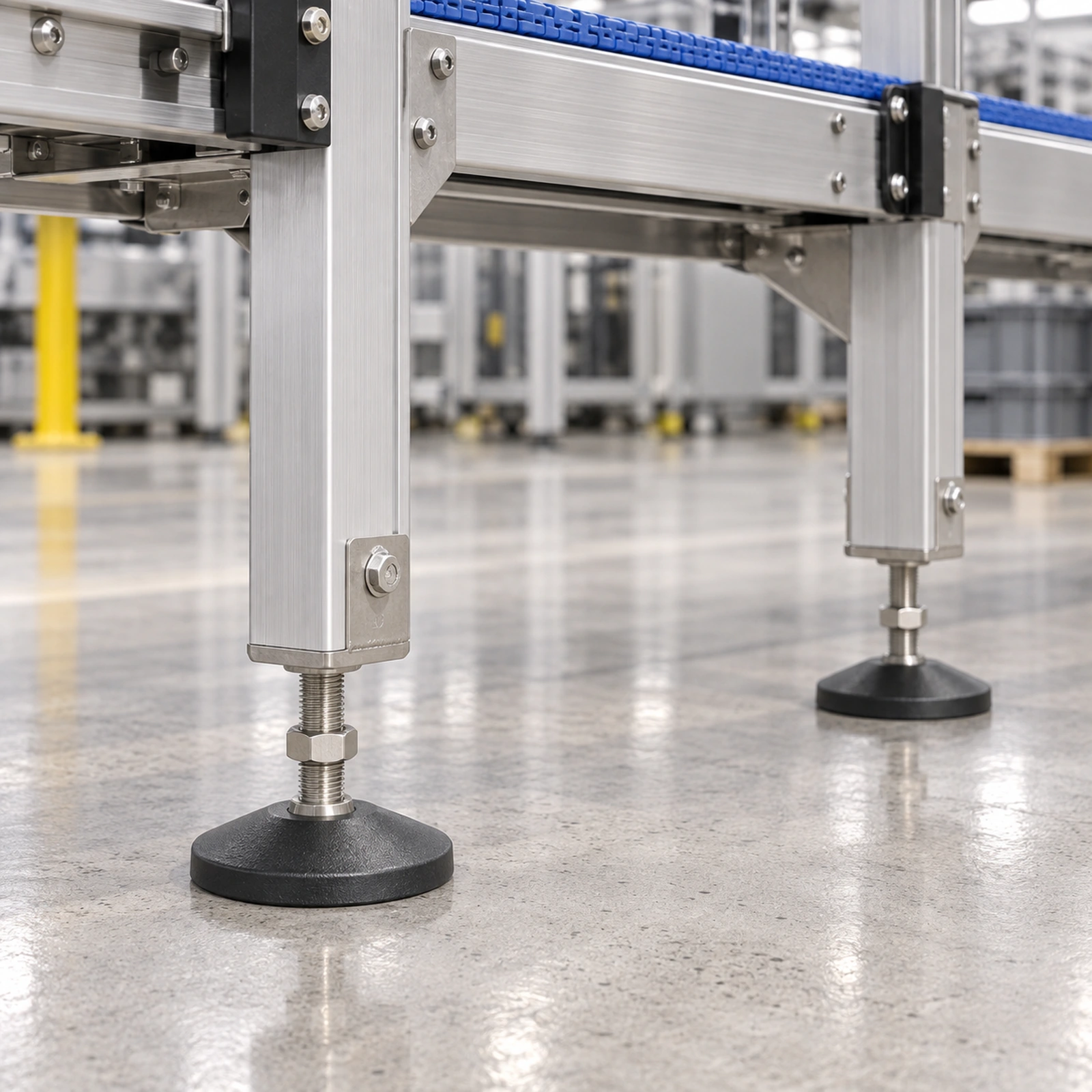
Application / Line Context
At installation, the floor, stand and carrying surface form one height chain. A threaded foot changes the support elevation; the product then crosses the infeed and discharge interfaces set by that elevation. Across multiple supports, a jointed base helps each foot meet local floor conditions while the studs bring the conveyor section into line. A floor-fixed base also changes how the stand is located, so its holes must suit the intended position. For an existing conveyor, checking the M16 insert, stud length, footplate diameter and fixing-hole requirement is more useful than matching the foot by appearance alone.