Vertical Bend
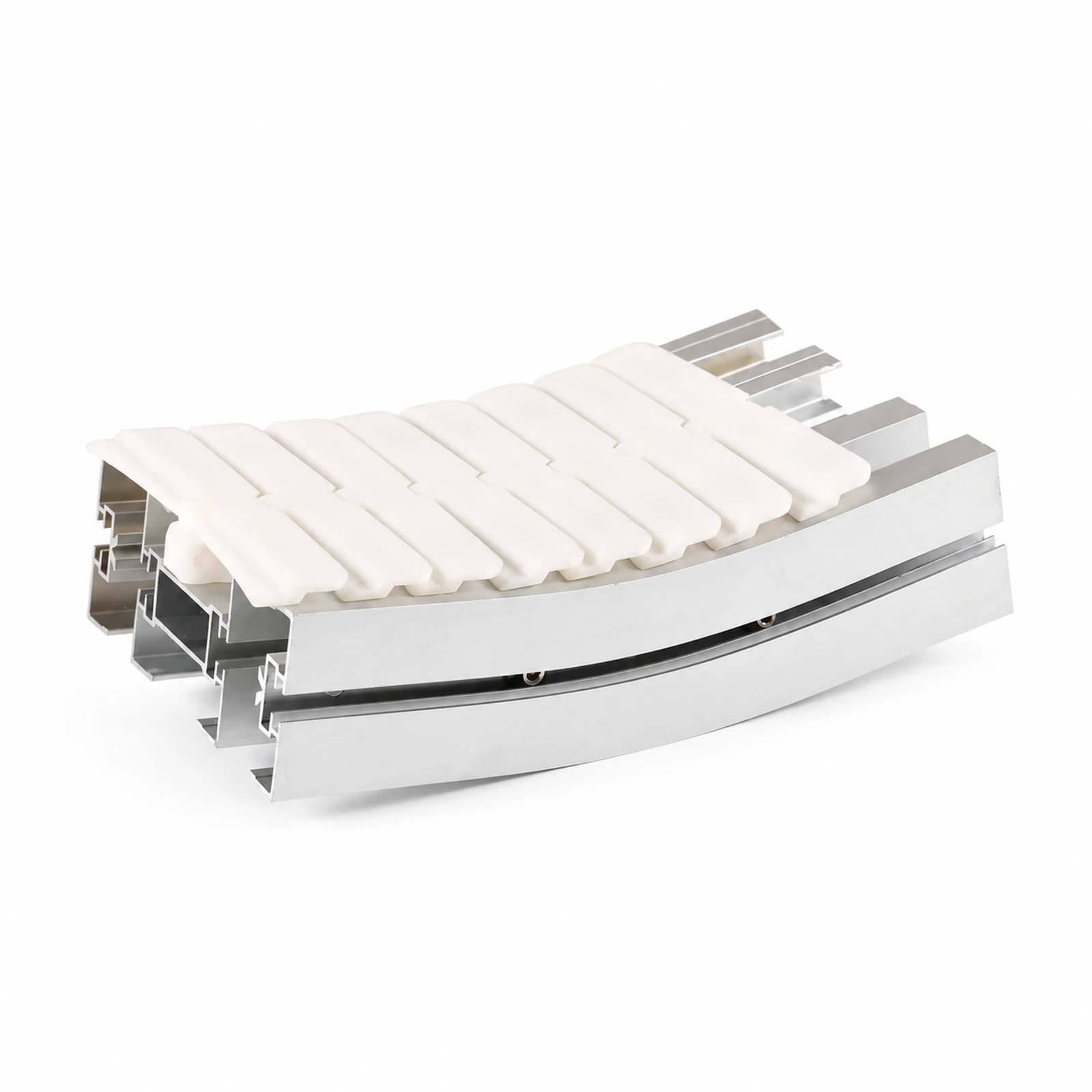
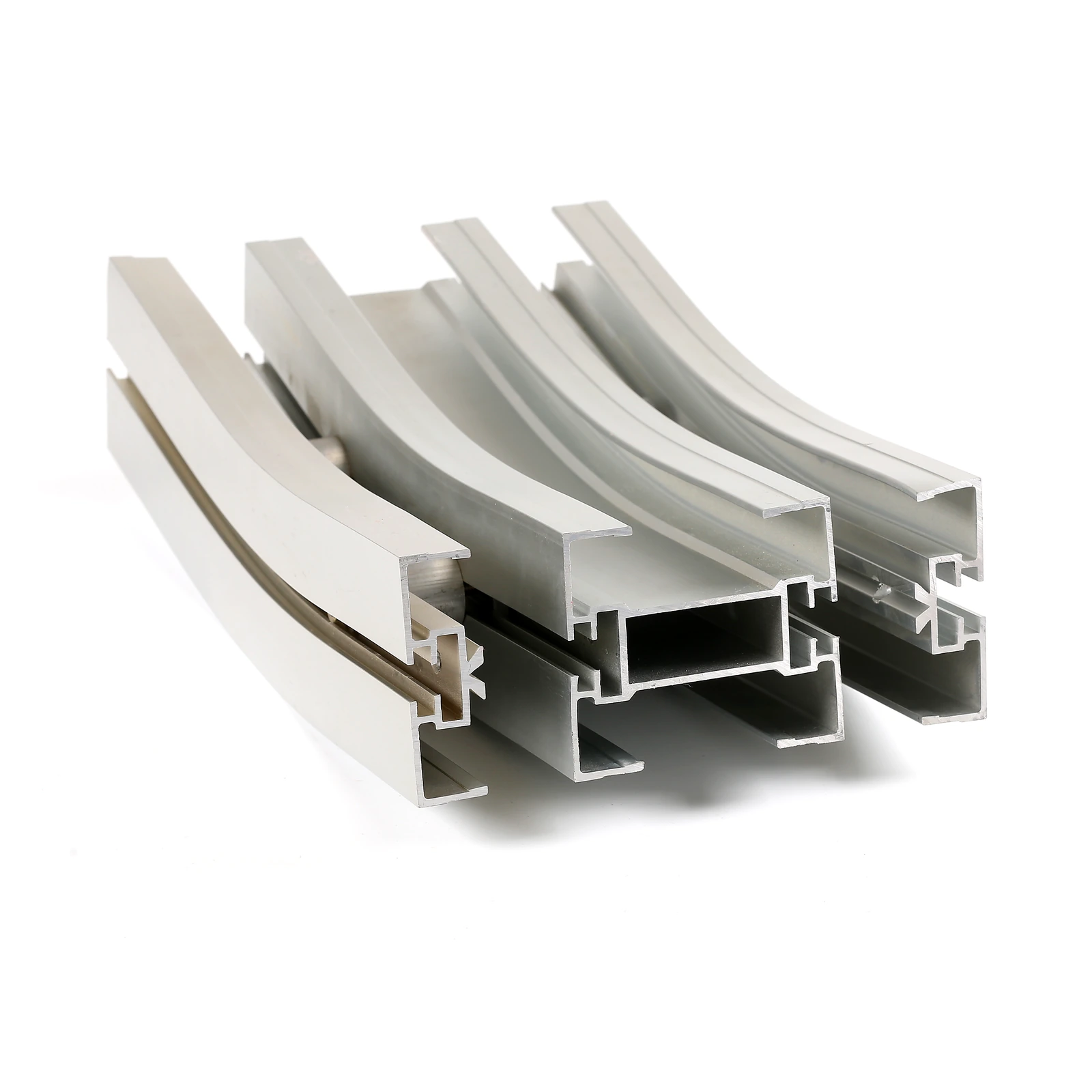
CSTRANS supplies vertical bend components for flexible-chain routes that rise or descend between line sections. Its system uses half-beam construction in bend applications and a connecting column where an 85 main beam meets an 85 half-beam. Together with the straight lead-in, turn angle and centerline radius, these interfaces position the chain path at the new level and set up the next product handoff.
Level change
Place the level change within the route
A vertical bend redirects the chain upward or downward while products remain on the conveying path. CSTRANS identifies straight length, bend angle and centerline radius as the geometry to establish for a bend. These are line dimensions: the lead-in controls where the change begins, and the angle and radius determine where the carrying surface reaches the next elevation. The result must meet the following straight section at a usable height for the product and its side guides.
Curve support
Continue support through the curved beam
In CSTRANS flexible-chain construction, an 85 main beam and 85 half-beam can be combined, and the half-beam is used mainly for horizontal and vertical bends. A connecting column joins the paired beam sections. This matters where a straight running track enters a vertical curve: the chain needs continuous beam and wear-strip support while its direction changes. An offset at the beam joint can carry into the return to straight travel, affecting chain tracking and the product's approach to the next station.
Product handling
Match the bend to product handling
The chain surface and guide arrangement matter as much as the beam geometry when the route changes level. A product that sits securely on a level run may shift on a rise or descent if its base, side guidance and the chosen chain form do not work together. CSTRANS supplies flexible-chain families, beams, wear strips and guide components for the surrounding system. Coordinating those parts with the vertical bend keeps the product path controlled through the elevation change and toward the downstream machine.
Application / Line Context
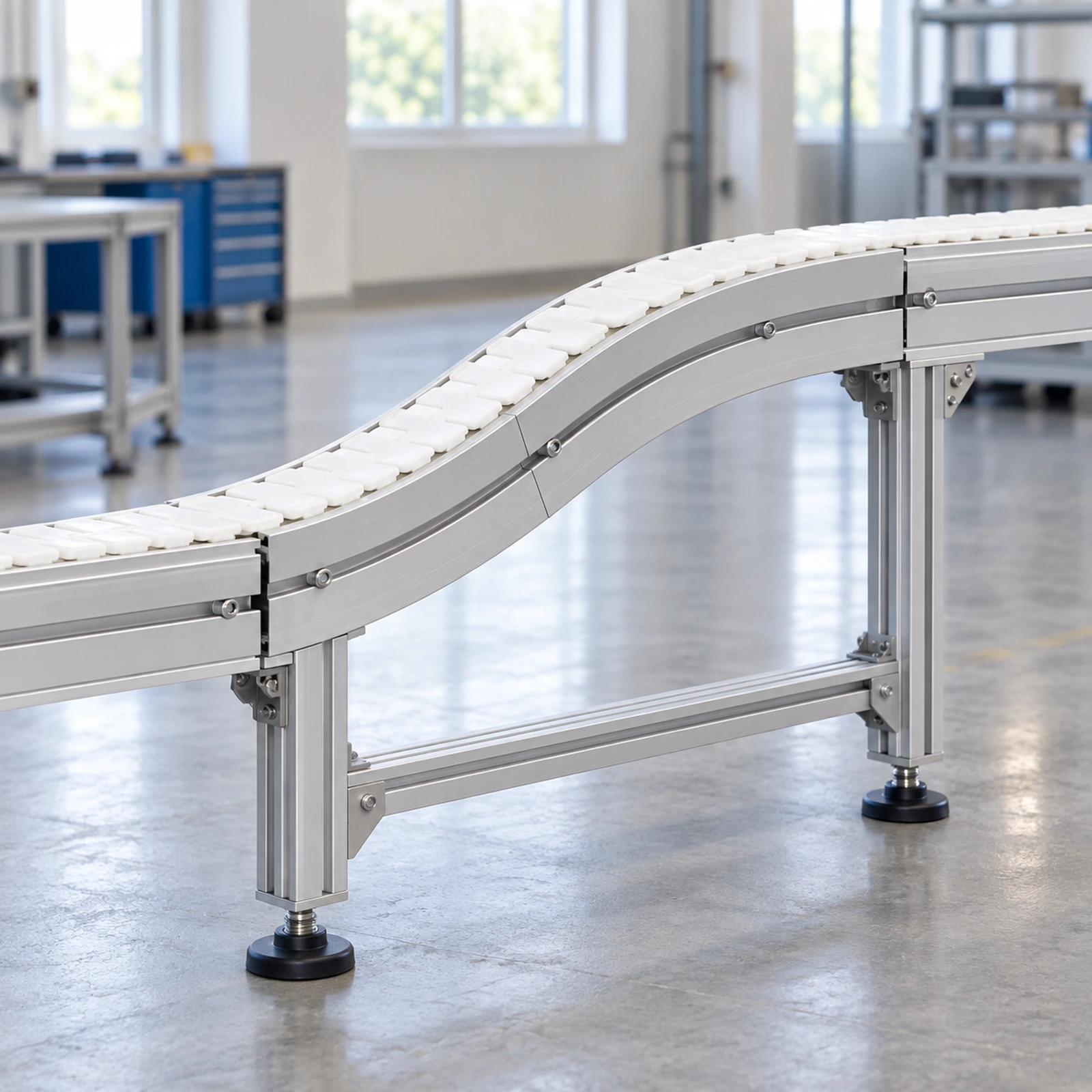
On a line that rises over equipment, a product enters the bend on a straight, supported chain. The curved beam changes the chain's elevation; the guide must follow the product's new path without forcing it sideways. At the top, the next straight beam and wear strip need to meet the curved section so the chain does not encounter a step. On a descending route, the same geometry determines where products arrive at the receiving conveyor. The support-frame height, exit guide and transfer gap then determine how the product leaves the chain. CSTRANS can relate the bend geometry to those adjoining components when replacing a curved section or laying out a new level change.