
Conveyor Guide Rail Brackets
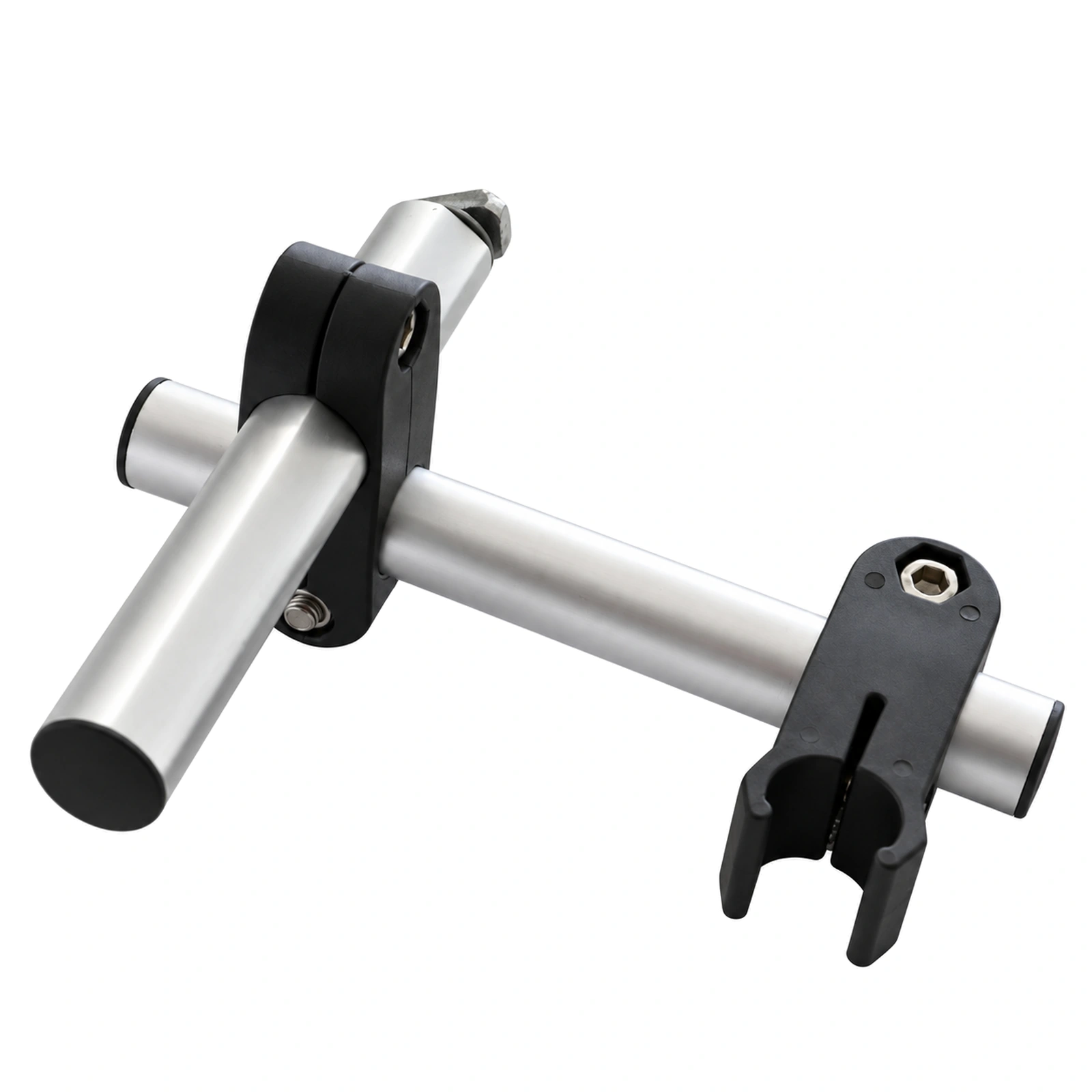
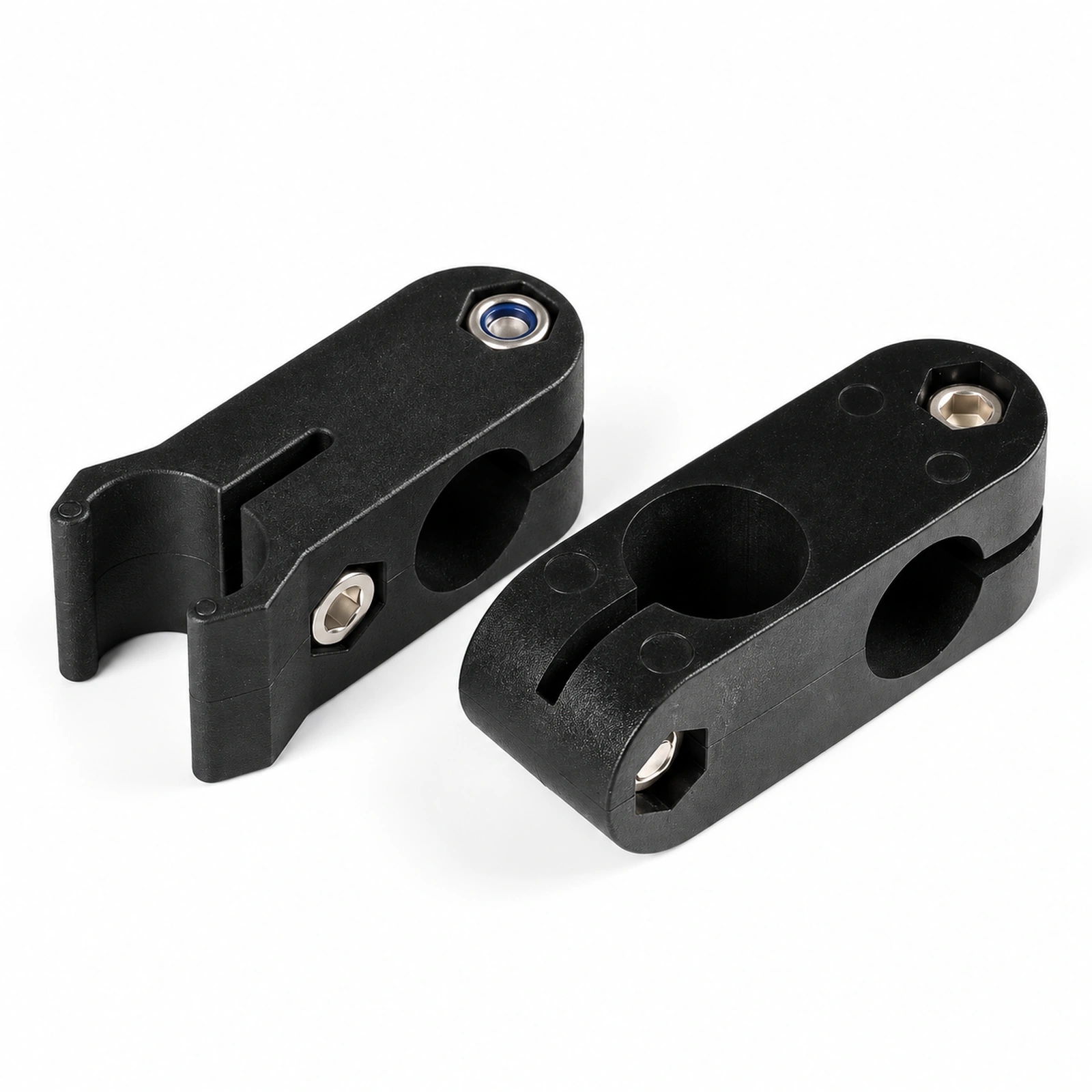
CSTRANS supplies conveyor guide rail brackets and clamps for mounting side guides to a conveyor frame. The range covers small, medium and large supports, adjustable brackets, single and double clamps, plus stainless steel options. These parts help equipment teams position a guide at the product edge, secure its support rod and carry the guide path through straight sections and turns.
Guide position
Position the guide where the product needs it
An adjustable bracket gives the installer control over the guide position instead of locking the rail to a fixed mounting point. CSTRANS adjustable A/B assemblies combine a hand knob, turning head and body; stainless bracket heads are available in 47 mm short and 75 mm long versions. The head and reach choice affects how the rail sits relative to the frame and product. Set correctly, the guide can restrain lateral movement without crowding the product path, including where the conveyor approaches a curve or transfer.
Support rod fit
Match the clamp to the support rod
The clamp interface determines whether a new guide can use the rod and rail already on the machine. CSTRANS single clamp A grips round steel and single clamp B grips square steel. Double clamps A and B grip round steel at 40 mm and 67 mm center spacing respectively; double clamp C is for square steel. The specified round steel rod is 12 mm. A hollow guide-rail clamp also pairs with the M-shaped rail. Matching these interfaces lets a line hold one or two support rods at the intended spacing instead of improvising a connection at the conveyor edge.
Mounting interface
Carry the support through mounting constraints
Frame access and rod junctions change along a conveyor. CSTRANS offers small, medium and large brackets, stainless M-shaped supports with 90 mm or 130 mm spacing, and stainless cross clamps with 20-to-12 or 20-to-20 hole arrangements. These options give a builder different ways to locate the guide support around the frame and join rods where the layout demands it. The result is a more deliberate guide path from one conveyor section to the next, rather than an abrupt change in support at a crowded interface.
Application / Line Context
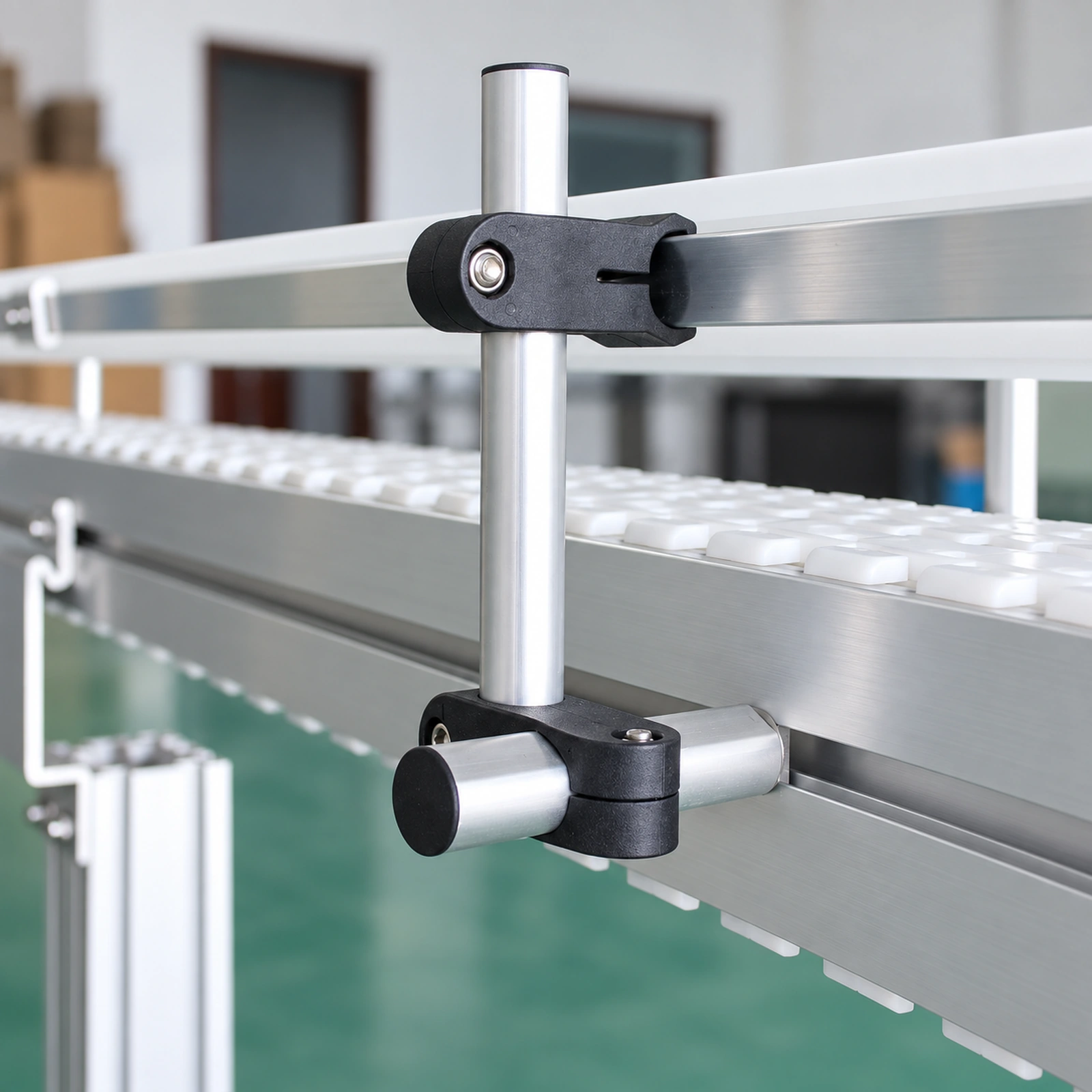
At an infeed, rail height and offset determine where the first product contact occurs; a guide set too far in can squeeze the flow, while a gap can let products drift before the next section. Through a turn, the guide path needs to follow the product route, and adjustable heads help set that geometry at each support position. At a discharge or transfer approach, the bracket must clear surrounding frame hardware while keeping the rail aligned into the receiving conveyor. A double-clamp arrangement can hold two support rods at defined center spacing where the rail layout requires two mounting positions.