
Straight Running Tabletop Chain
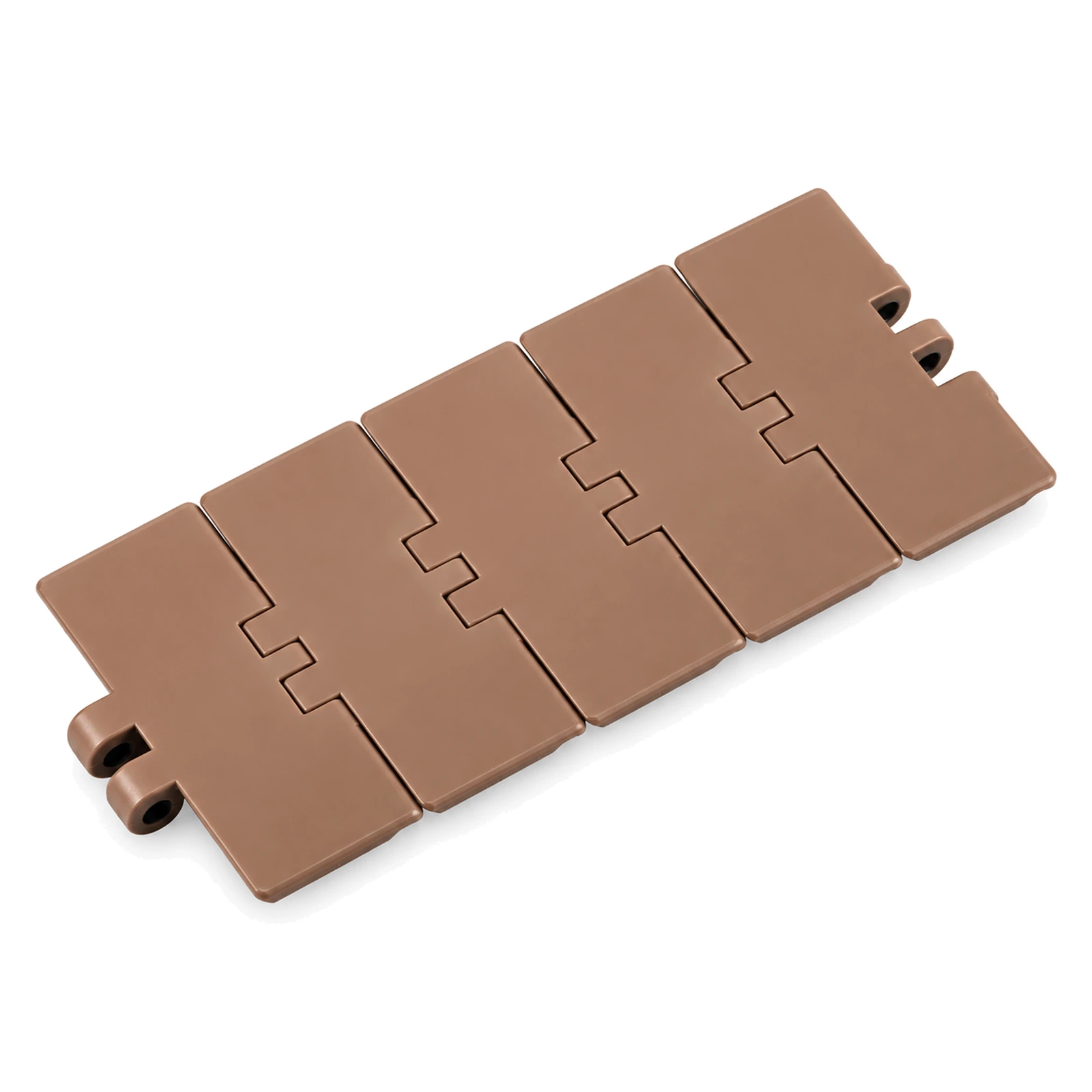
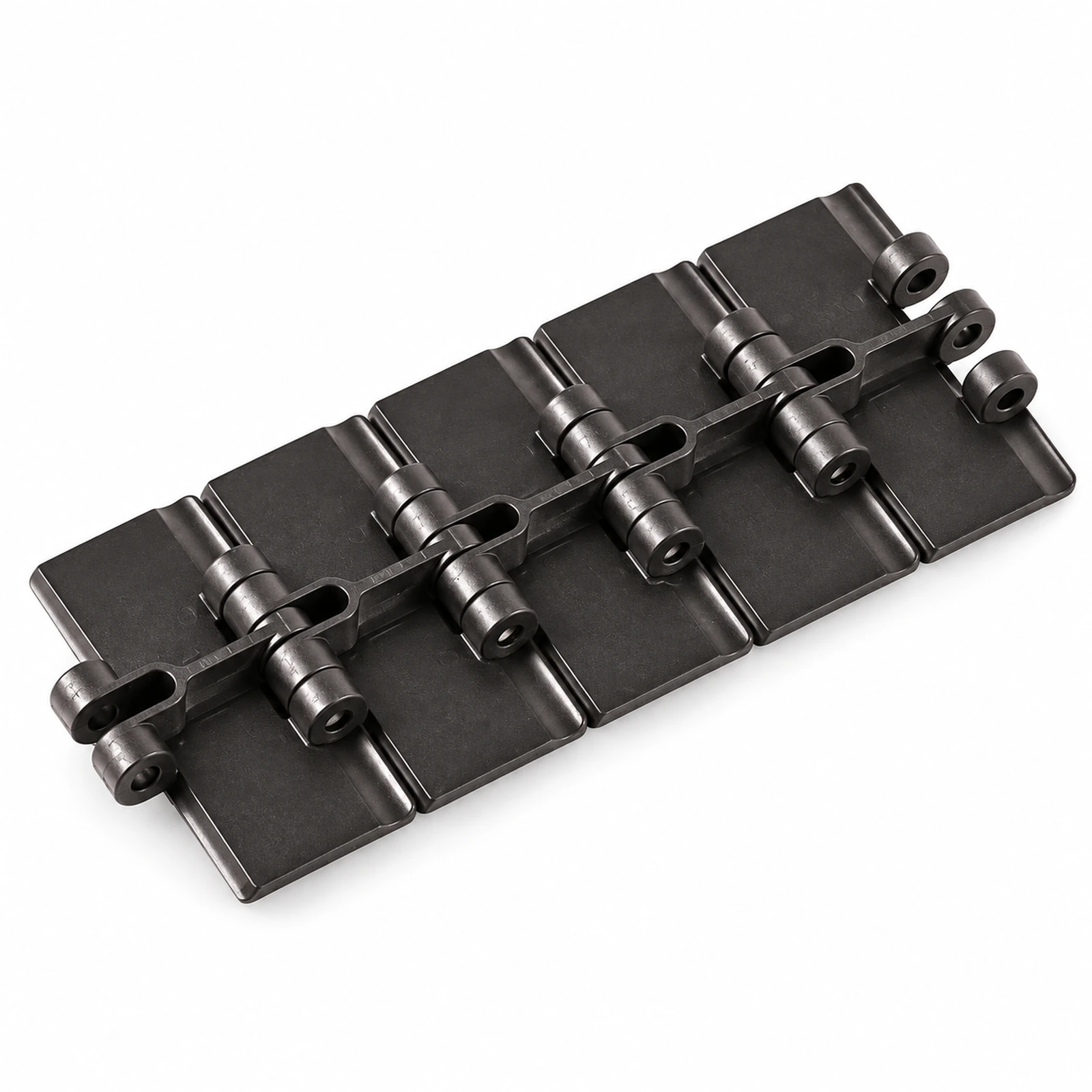
CSTRANS supplies straight running tabletop chains for bottle, can and pack conveyor lanes, including the 820, 821 and 828-K330 families. The 820 and 821 offer different carrying widths and hinge constructions; 828-K330 is a separate straight-running form. These differences affect product support, drive engagement and how a replacement chain meets its guide track and adjoining conveyor sections.
Carrying width
Match the Carrying Width to the Product Lane
The single-hinge 820 spans plate widths from 63.5 to 190.5 mm. The double-hinge 821 covers 190.5, 254 and 304.8 mm. CSTRANS can match that carrying footprint to the base of a bottle, can or pack and to the number of lanes being conveyed. A suitably sized flat top supports products through a straight section; the rail position and usable lane width then determine how consistently products reach the next machine or transfer.
Hinge and sprocket
Keep Hinge and Sprocket Fit Model-Specific
The 820 uses a 4 mm single-hinge plate, while the 821 uses a 4.8 mm double-hinge plate. CSTRANS also offers 828-K330, with its own underside and drive fit to check. A chain that looks similar from above can therefore engage a different sprocket or sit differently on its support path. For example, the 821 plastic chain and 802 stainless chain can share a drive sprocket, but their idlers are not interchangeable; 828 and 880 drive sprockets can interchange. CSTRANS can check the exact chain, drive or idler role, tooth form and shaft fit before replacement.
Handoff
Carry the Product Through the Handoff
A straight tabletop chain works as part of a route, not just as a length of linked plate. The flat carrying surface supports a product base between the infeed and discharge, while guides keep its travel aligned with the intended lane. At the handoff, chain elevation and the gap to the receiver determine whether a small base remains supported. Matching the chain width, guide position and transfer geometry helps avoid a well-fitting replacement chain becoming a poor product transfer.

Application / Line Context
On a bottle or can line, 820 may suit a narrower lane while 821 gives a wider carrying surface; product base size and side-rail clearance determine the actual fit. If flow stops downstream, containers can slide against a moving flat top, so queue pressure and guide position still matter. At a junction with a side-flexing section, check drive and guide fit for each chain model and leave a suitable transfer gap between the sections. Under the return and carrying runs, wear-strip support and sprocket engagement keep chain travel aligned. These interfaces determine how smoothly products pass from one section to the next.