
Radius Modular Belt
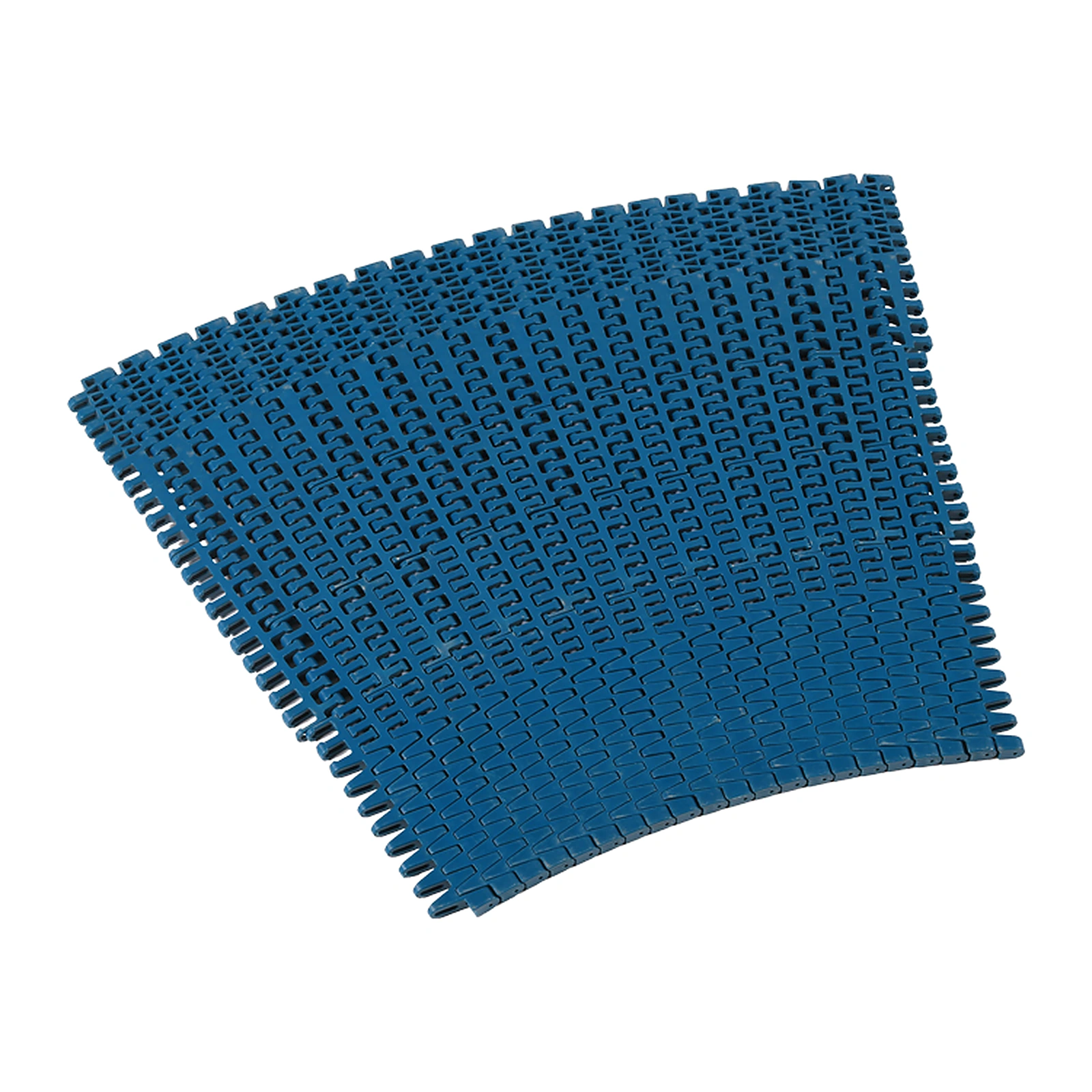
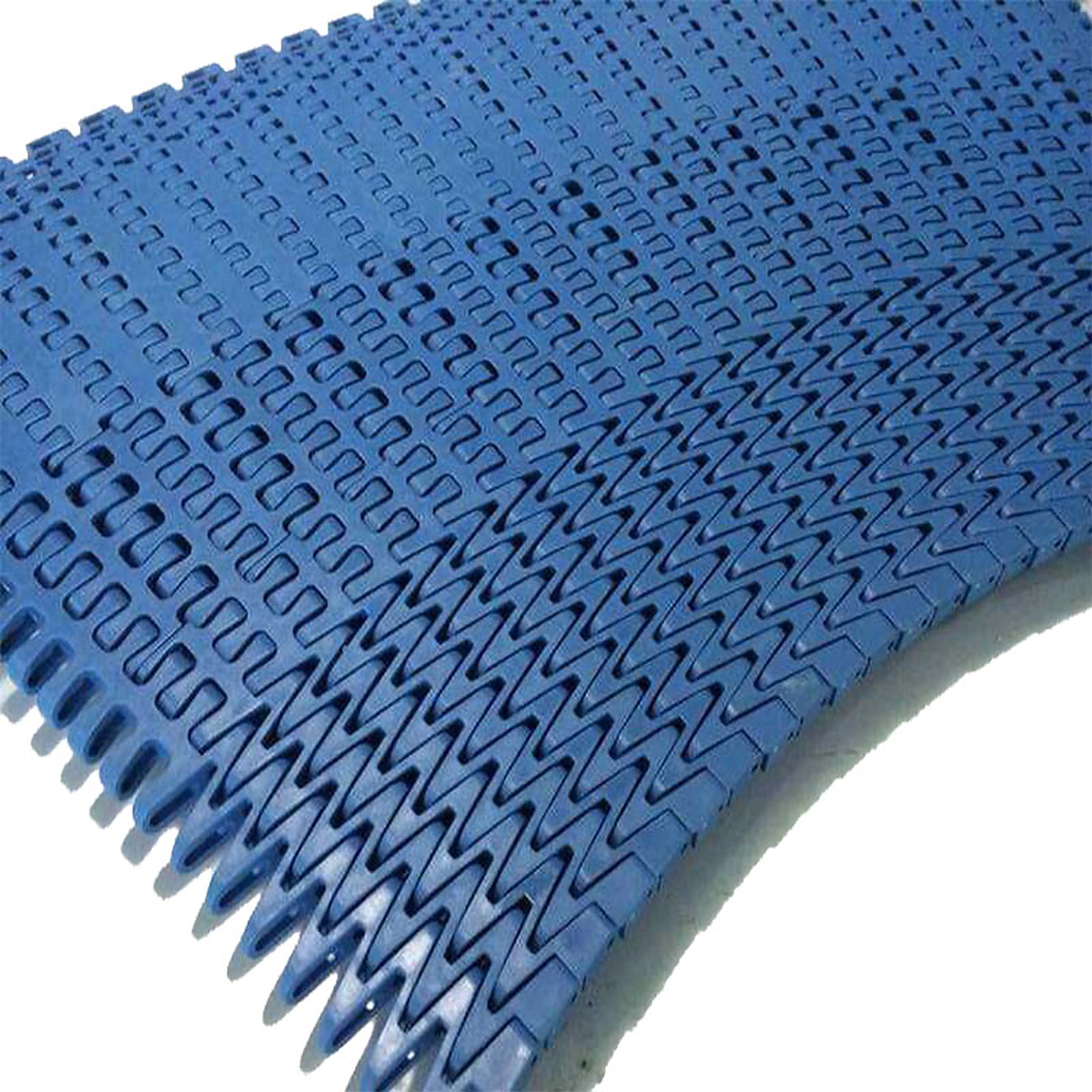
CSTRANS supplies radius modular belt families in 25.4, 38.1, 46 and 50 mm pitches. They give conveyor builders a belt route through a planned turn, with flush-grid surfaces and a model-specific pop-up option in the S3810 family. Selecting the belt alongside the curve, supports and entry and exit interfaces helps a product stay on one carrying path as the line changes direction.
Belt family
Match the Belt Family to the Route
The 25.4 mm group includes S2501, S2541 and S2542; 38.1 mm options include S3810, while S4600 and S5001 represent the 46 and 50 mm groups. These are distinct families rather than interchangeable pitch choices. A curve imposes different travel distances at the inner and outer edges, so the belt form and its permitted radius must suit the conveyor geometry. This makes model identification and turn dimensions essential when replacing a belt or joining straight runs into a new layout.
Bend support
Keep Product Support Through the Bend
The radius range uses flush-grid surfaces. Its openings leave passages through the belt while the linked modules carry the product around the bend. CSTRANS also lists an S3810 pop-up form, a separate surface choice where raised elements need to be considered against the product base. The right contact pattern depends on product size, orientation and whether openings or raised features could affect its passage.
Line interface
Design the Turn as a Line Interface
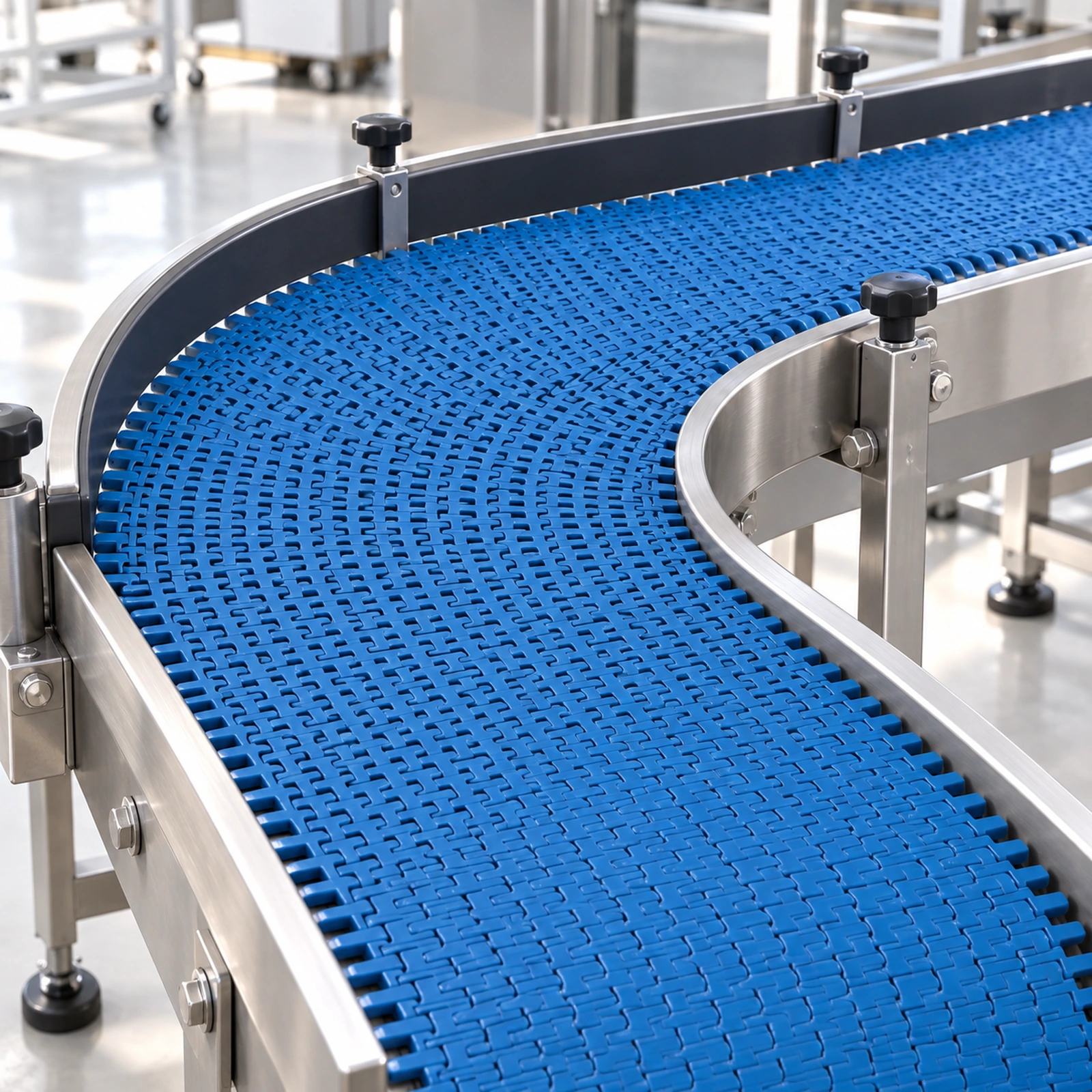
The belt, curve support and side guidance must work together as the inside edge closes and the outside edge takes the longer path. At the same time, drive engagement and the handoffs into and out of the curved section still need to suit the chosen belt. Planning these interfaces together can let a line change direction without inserting another conveyor transfer at the bend. The actual width, centerline radius, support arrangement and mating drive details must be checked for the selected model; one turn ratio should not be applied across all families.
Application / Line Context
Consider a straight infeed feeding a curved section and then another straight run. The product first meets the radius belt at the infeed, travels while the belt geometry accommodates unequal inner and outer paths, and leaves at a discharge interface. Pitch and surface affect the contact under the product; the curve and guides affect its path; the transfer positions determine how it moves between conveyor sections. For a retrofit, an existing model reference, belt width and curve drawing reveal more than a pitch measurement alone. For a new route, they help establish whether the bend can remain a continuous carrying surface within the available floor layout.