
Conveyor Return Rollers
CSTRANS supplies conveyor return rollers, including the 810 rubber-covered quiet wheel and return wheels in a separate product group. A return wheel meets the moving strand below the carrying run. Its contact surface and position affect the route back through the conveyor, so replacement fit involves the return path as well as the wheel mounting.
Send An Enquiry
Conveyor Return Rollers Models
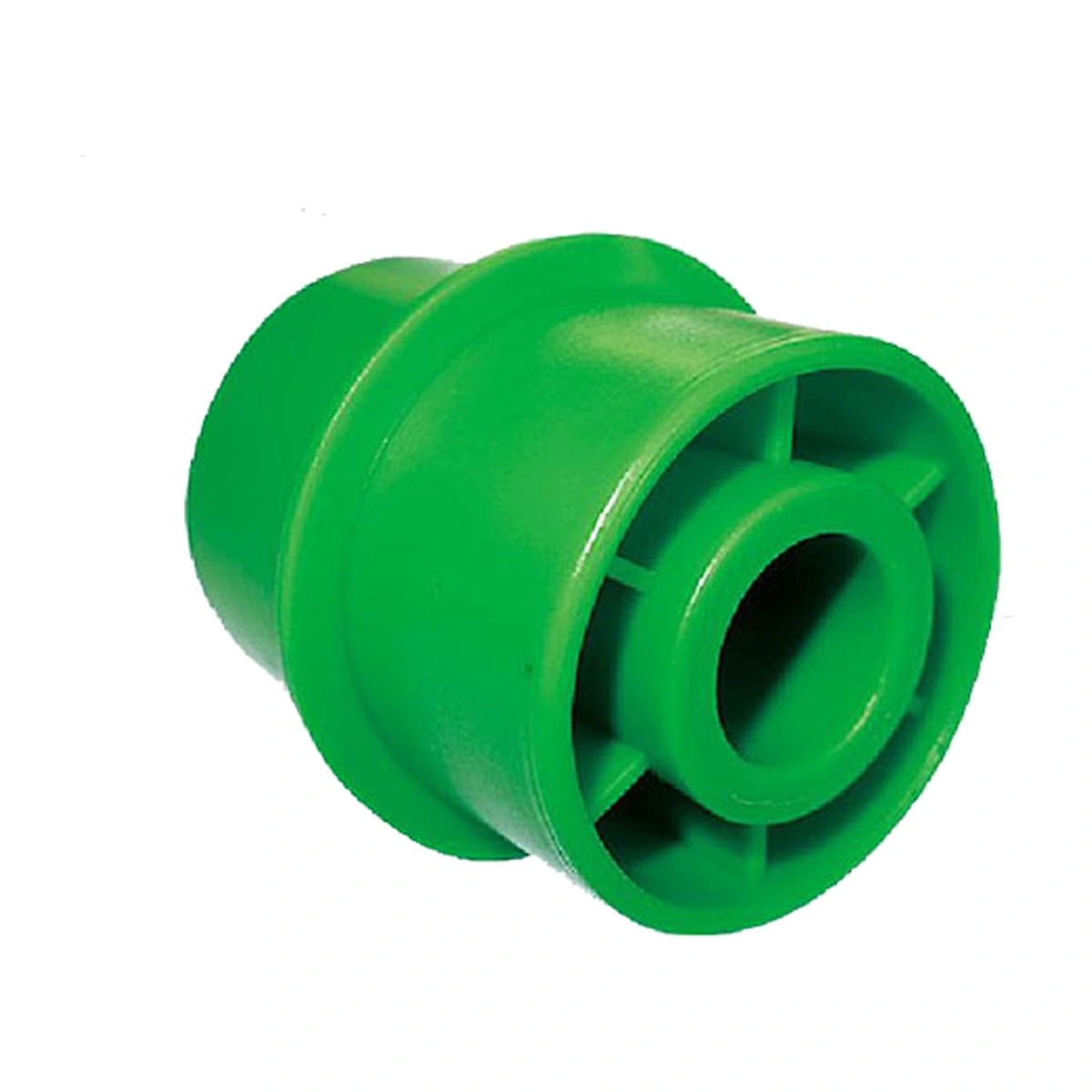
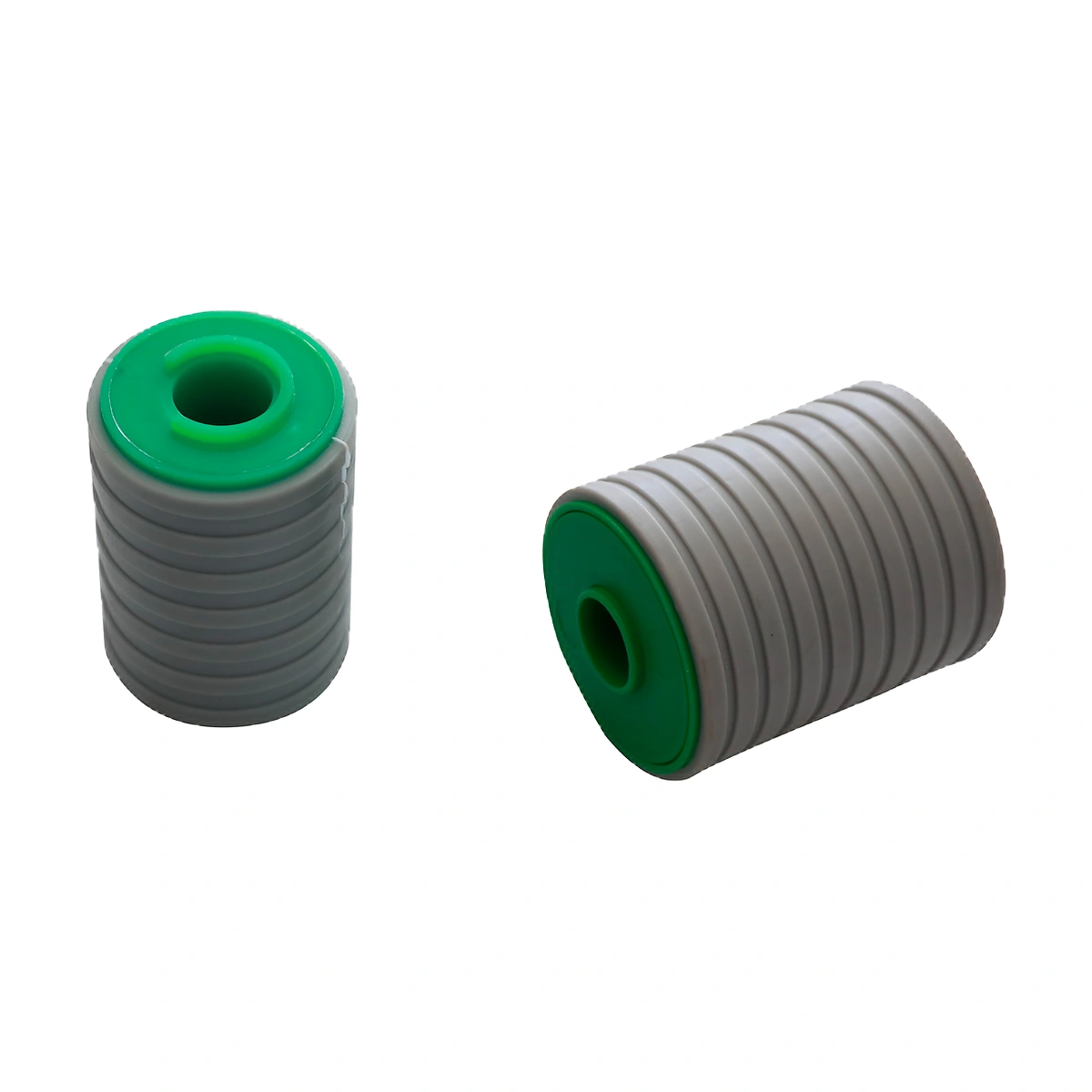
Return contact
Manage Contact on the Return Run
The 810 wheel has a rubber-covered contact surface for the returning strand. At the support point, the rubber gives the strand a compliant contact face, while a freely turning wheel replaces sliding over a fixed support with rolling contact. The wheel still needs to sit where the returning strand reaches it without rubbing the frame or changing the intended path into the next support.
Return route
Support the Route Back Through the Conveyor
CSTRANS also has a separate return-wheel group. After products leave the carrying run, the moving strand still needs a controlled route beneath the frame. Wheel height and position affect its approach to the next support, available clearance and sag. A poorly placed wheel can force contact with surrounding structure. Its location therefore belongs in the return-path layout with the drive and tail positions. Identify the contact first: 801–809 return wheels and the 810 act on the return strand; the 915 roller side guide meets product sides; 85/125 transfer components support products between conveyors. At a snub position, a roller or pulley redirects the moving strand to change its approach or wrap around an adjacent wheel. Record that position with the mounting drawing.
Frame fit
Make the Replacement Fit the Frame
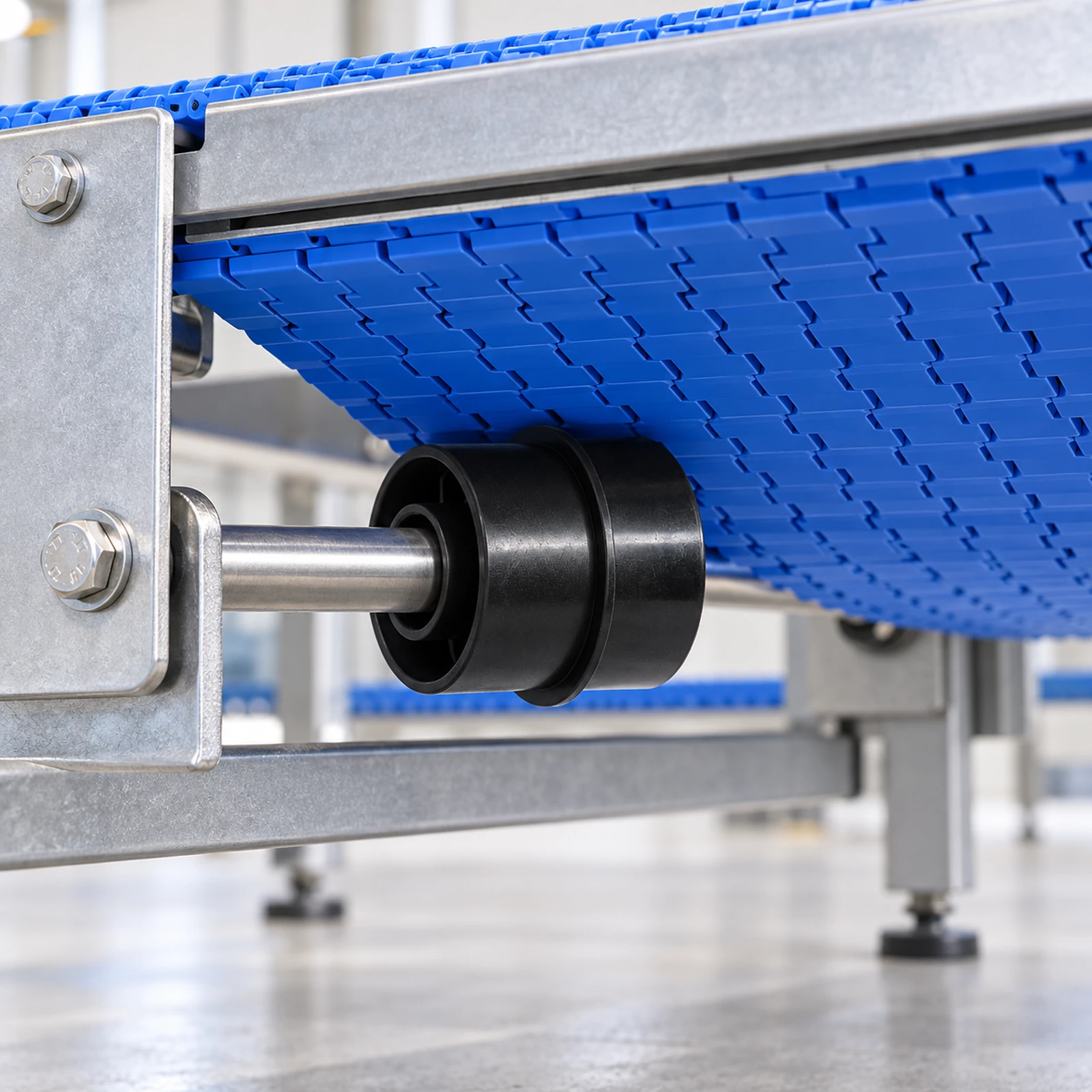
A return wheel must sit on its intended axle and clear the frame. Outer diameter changes contact height; bore and axle geometry govern mounting and rotation. A visually similar replacement may still alter the path or interfere with another component. CSTRANS can review a wheel photo or drawing against its installed location.
Application / Line Context
The return strand travels from the drive area beneath the carrying run toward the tail. The 810 rubber surface may moderate repeated contact at a suitable support point. Wheel position shapes sag and clearance; axle fit affects whether it rotates as intended. A disturbed return route can then change how the strand approaches the next support and re-enters the carrying run.