
在新标签页中打开

Electric Vehicle Battery Manufacturing

Define the cell, carrier, module, or pack before reviewing conveyor-component fit.

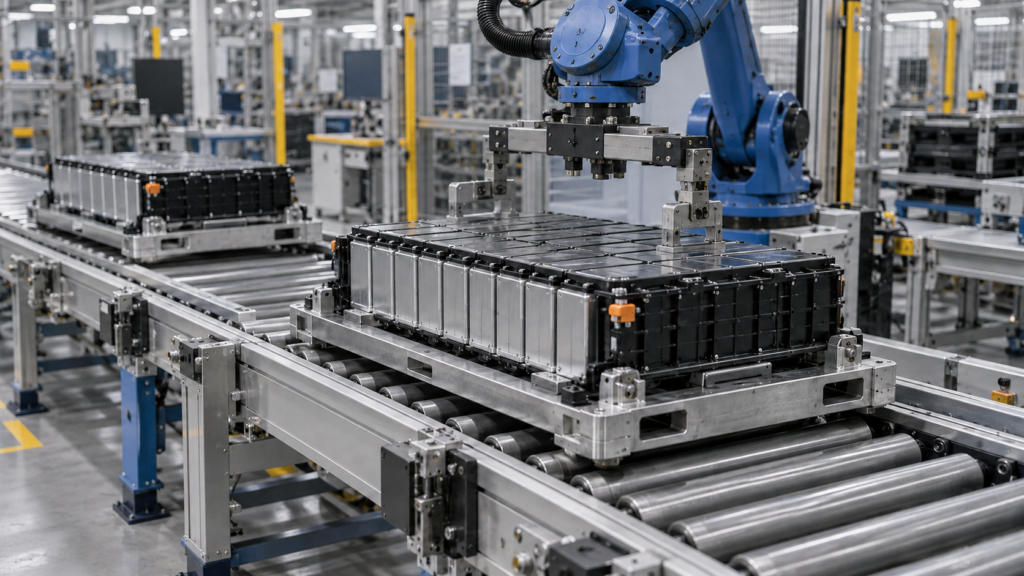
Illustrative EV battery module carriers on a roller conveyor beneath a handling robot

Separate the Manufacturing Stage From the Handling Task

Battery manufacturing includes cell production, formation and ageing, and module or pack assembly. The item being moved can change from an individual cell to a loaded carrier or a larger assembly. Each request needs a defined contact surface, load, and interface to the next station.

CSTRANS has conveyor-industry background in battery-line applications. On this component website, support focuses on identifying conveyor-chain and flexible-chain supporting parts for the actual handling task. Suitability for a battery process is reviewed for the individual component and installation.

Locate the Interface That Needs Support

Cell Format and Carrier Contact

Cylindrical, prismatic, and pouch cells present different shapes. A cell carried directly and a cell held in a tray or fixture also present different contact surfaces to the conveyor.

Identify the cell format and whether the chain contacts the cell, tray, or carrier. CSTRANS can review the existing chain series and supporting guide or wear-strip request from that interface. The fixture and handling method must remain suitable for the cell.

Carrier Transfers Between Assembly Stations

At a module-assembly station, the carrier connects conveying with an operation such as joining or inspection. Transfer support and guide alignment matter, while the station’s positioning accuracy depends on more than the conveying chain.

Share the carrier base, transfer arrangement, chain reference, and guide profile. This helps separate a chain replacement from a guide, bend, or support-part request. Station controls, fixtures, and positioning equipment require their own engineering review.

A Heavier Module or Pack

A module or pack can change the load, centre of gravity, and support interface. A component considered for a cell carrier should not be assumed suitable for a larger battery assembly.

Provide the loaded weight, carrier footprint, and support arrangement before discussing a component. Heavy-load suitability needs technical confirmation against the conveyor and carrier design; a plastic chain is not a default recommendation for every module or pack route.

Illustrative battery module carrier and roller support interfaces beneath a handling robot
Battery-assembly handling context: define the workpiece and carrier before component review.

Identify the Existing Part and the Process Conditions

Keep the chain series, width, and part reference with the request. For a sprocket, identify the mating chain and the known teeth and bore details. For supporting hardware, include the guide profile, bend geometry, or mounting interface that must match.

State any specified electrostatic-discharge, dry-room, cleanliness, temperature, or chemical-exposure requirements. These are conditions for technical review, not capabilities established by an industry label. Component matching does not establish a complete battery-line or process-equipment offer.

Discuss a Defined Handling Interface

Browse the chain or supporting-component family, or send the existing part and carrier details. Confirm the load and process requirements for the exact proposed item before purchase.