在新标签页中打开

Food-Processing Conveying

Component matching starts with the food, its contact surface, and the conditions during processing and cleaning.

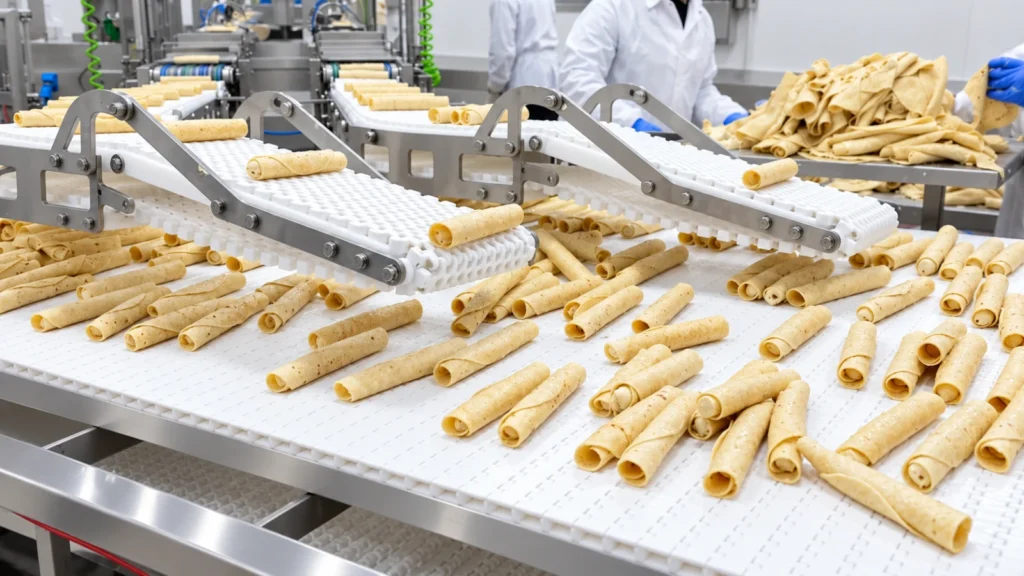
Food products on a conveying line

Food Handling Changes With the Product

Loose food, food on a tray, and sealed packs have different contact and support requirements. Dry crumbs or seasoning can collect around moving parts; a wet process may leave a different residue. The cleaning routine introduces another set of conditions.

CSTRANS supplies conveyor chains, plastic modular belts, sprockets, and supporting hardware. We help identify a replacement or supply option with the operating and material requirements kept alongside the part reference.

Connect the Process Problem to the Component

Residue Around Hinges and Guides

Product residue can collect at belt hinges, guides, or parts that are difficult to reach. A replacement belt alone does not determine whether the complete conveyor can be cleaned effectively.

Describe where residue collects and which component is being considered. CSTRANS can review the identified chain, belt, wear strip, or guide request. Access, drainage, and the cleaning method remain part of the conveyor’s hygienic-design review.
Different Exposure During Cleaning

The conditions during production may differ from the conditions during cleaning. Cleaning temperature, chemicals, concentration, and exposure time can affect the material choice.

Share the process and cleaning conditions separately. This allows the candidate component’s material requirements to be discussed for the actual exposure, rather than selecting from colour or appearance. Required food-contact documentation must be confirmed for the exact item.

Small or Fragile Products at a Transfer

A small product can lose support at a gap, while a fragile product may be affected by a change in conveying height or contact. A tray or sealed pack presents a different base to the same transfer.

Pair the product dimensions and contact arrangement with the existing belt or chain reference. CSTRANS can help narrow the component family; the transfer and support geometry still need to be checked for that product and installation.

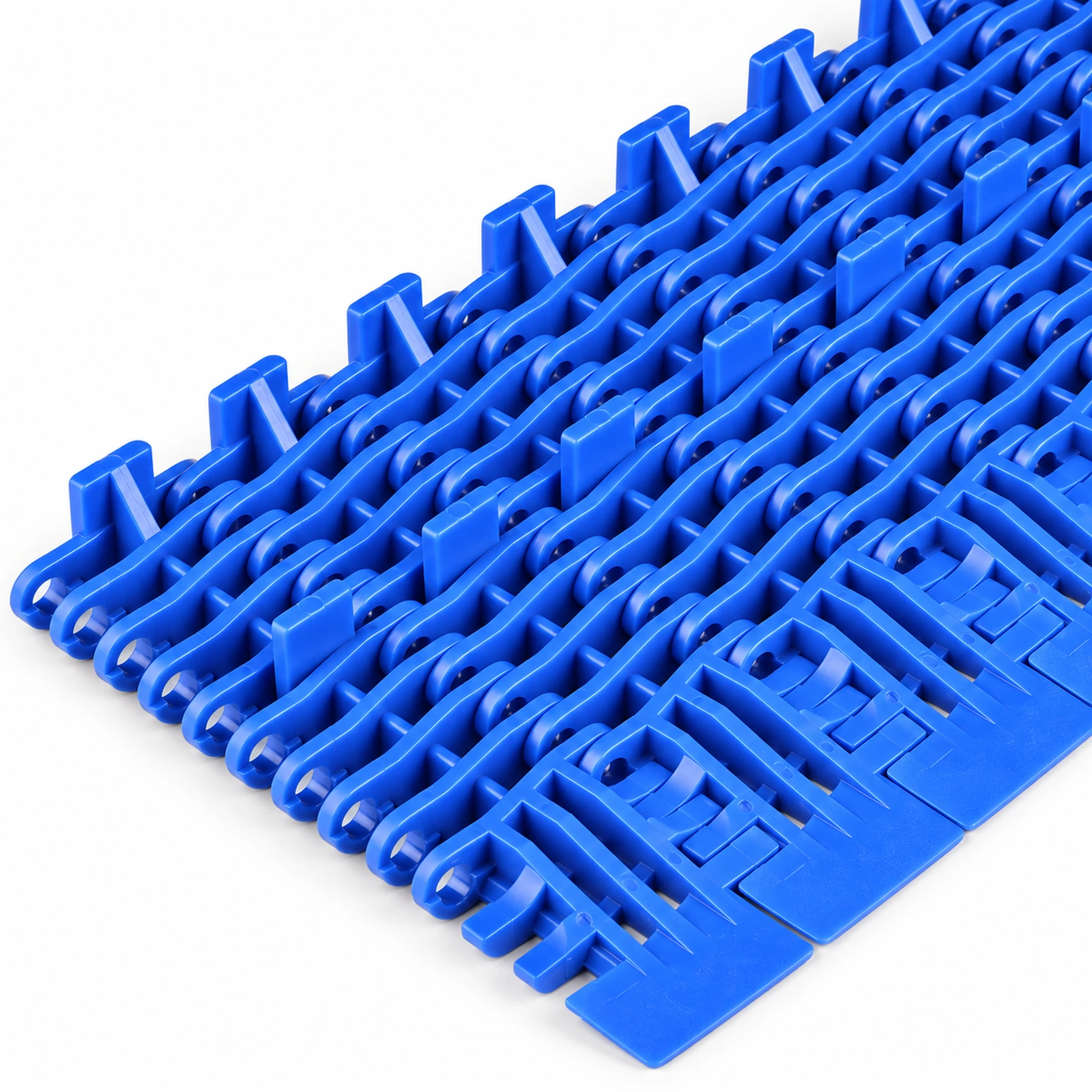
Close view of blue plastic modular belt hinges and underside
Identify the chain or belt; confirm the material requirements for its actual food-handling task.

Keep the Part and Its Requirements Together

Include the chain or modular-belt series, material, width, and available reference. If a sprocket is required, identify the chain or belt it must match. State whether contact is with unpackaged food, a tray, or packaging, and identify any material or documentation requirements.

Temperature, chemical exposure, load, speed, and food-contact suitability are reviewed for the selected component. A food-industry label or a white belt is not evidence of suitability.

Discuss the Part in Its Operating Context

Browse the chain or modular-belt collection, or send a brief with the food-handling and cleaning conditions available. Confirm the exact item’s suitability before purchase.