Low Back Pressure Chain
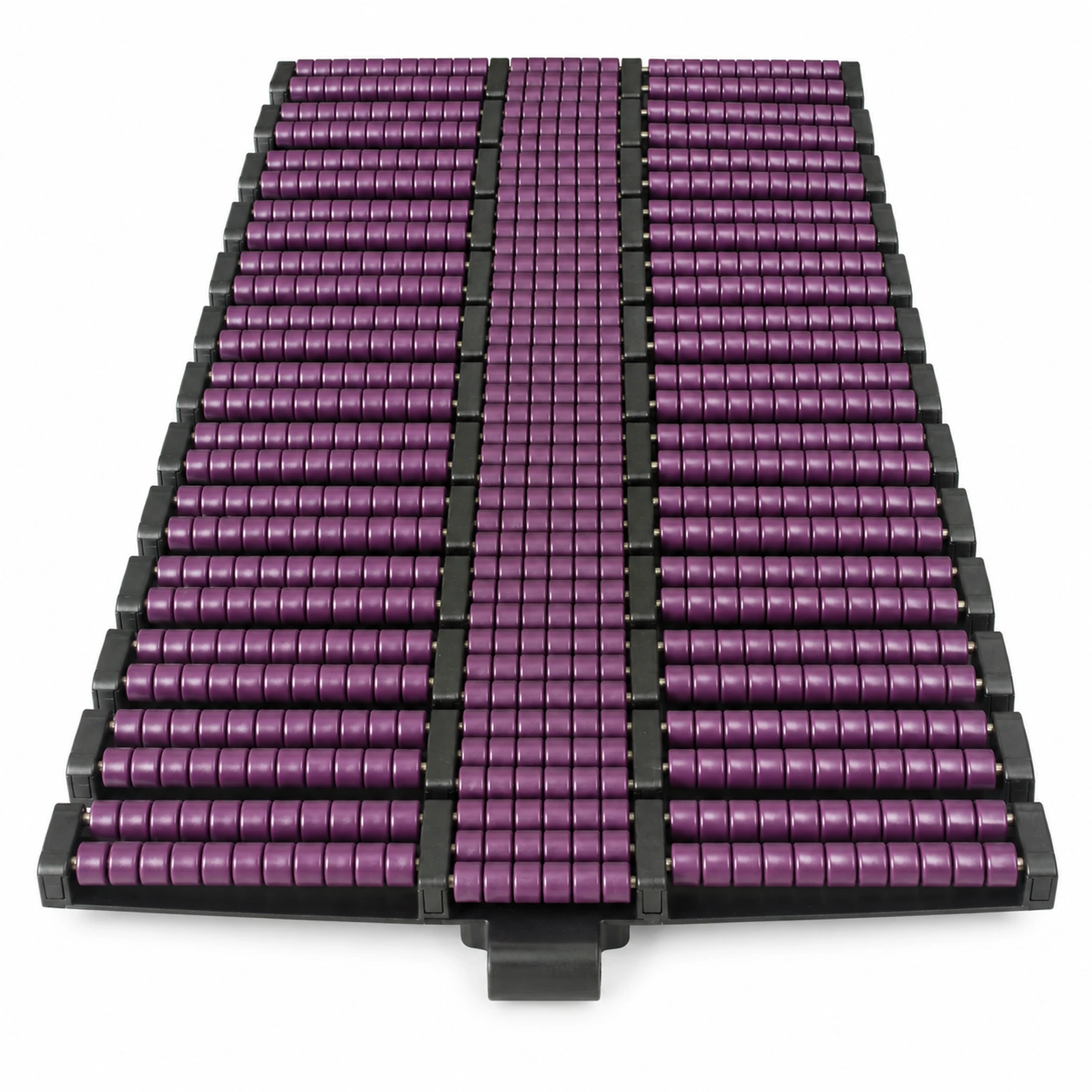
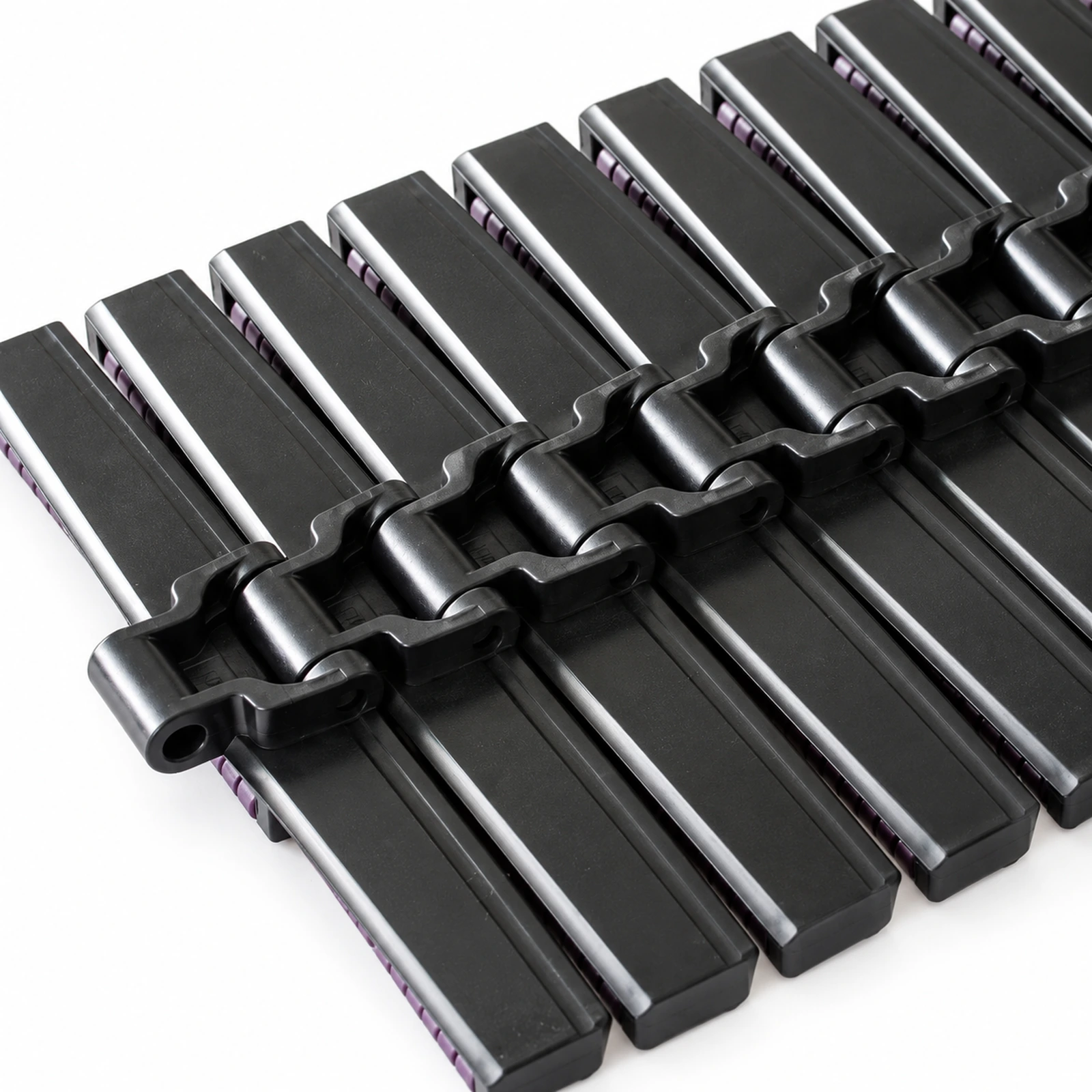
CSTRANS supplies roller-top low back pressure chains for straight conveyor runs and side-flexing turns. The range includes straight-running 821-PRRS and 822-PRRS, plus turning LBP882TAB and LBP883. Their roller carrying surfaces allow packs to queue while the chain continues moving, reducing sliding contact at the product base. Choosing the correct chain also means matching its underside, curve guidance and drive to the conveyor already in place.
Product queue
Let Products Queue Without Dragging on a Flat Top
On a conventional flat-top chain, a stopped pack remains in sliding contact with the moving chain. The roller rows on these chains can turn beneath a stationary load, reducing that sliding action and the push transmitted through a queue. This gives cartons or cases waiting before a downstream machine a more suitable contact surface on a moving accumulation lane.
Route family
Straight and Turning Families Serve Different Routes
821-PRRS and 822-PRRS are straight-running roller chains; their undersides follow the 821 and 828 plastic-chain forms respectively. LBP882TAB and LBP883 are turning roller chains, with undersides related to the 882 and 880M forms. That distinction matters when a queued product must pass a curve: the carrying surface needs a chain and guide arrangement that follows the route, while the rollers continue to manage product contact. LBP883 uses a ferritic stainless-steel pin, so its pin and track arrangement needs checking against the installed turn rather than treating every turning chain as interchangeable.
Drive handoff
Match the Chain to Its Drive and Handoffs
Replacing a roller chain by top appearance alone can miss the underside that engages the drive and runs in the track. CSTRANS can compare the existing 821-, 828-, 882- or 880M-related backing form with the required sprocket, guide and wear-strip path. At either end of an accumulation section, chain height and the transfer gap affect how a pack enters or leaves the roller surface. Checking both interfaces helps avoid a handling problem at the boundaries.
Application / Line Context
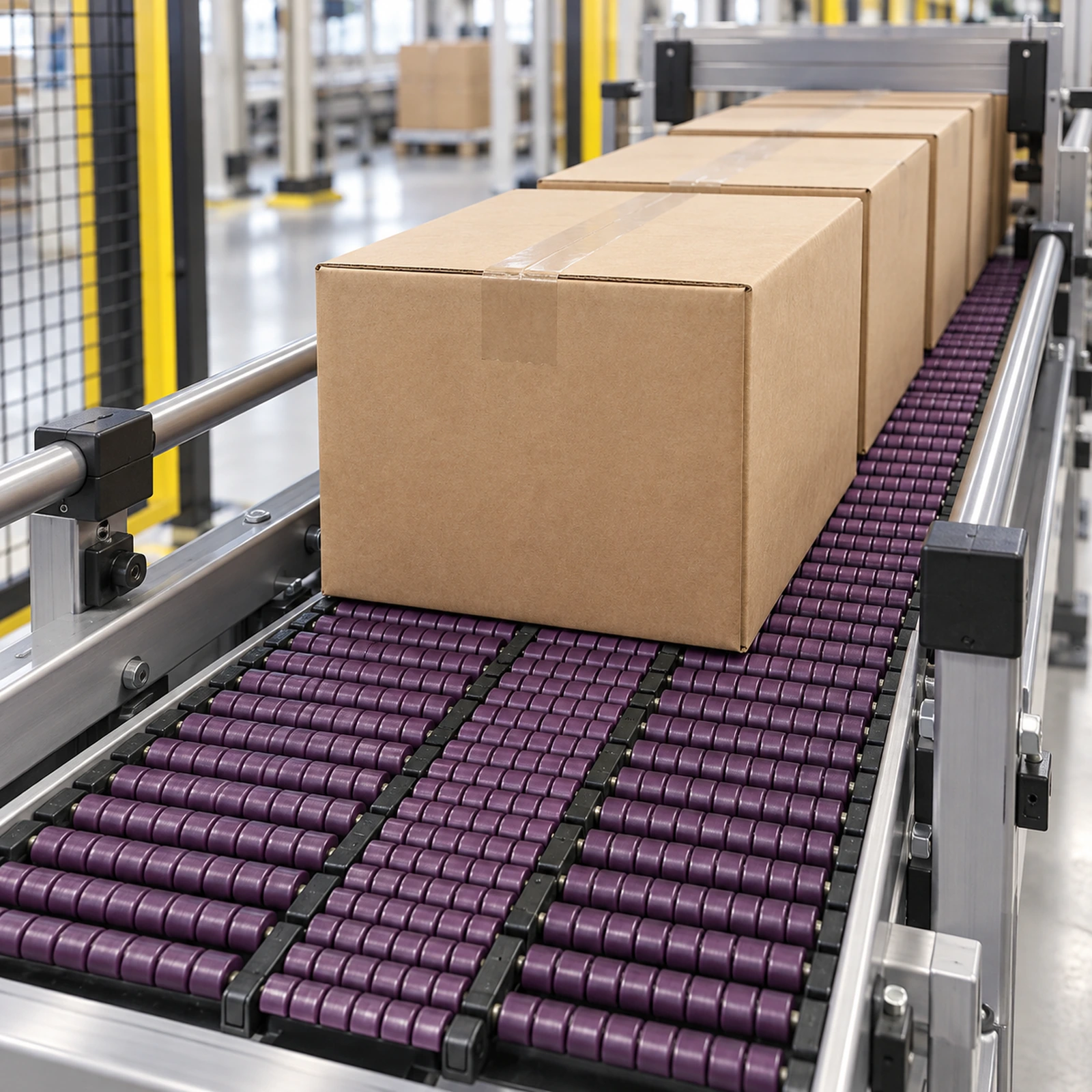
An upstream conveyor may continue feeding while a case packer or other downstream station pauses. Roller contact lets products wait over a moving chain with less sliding at their bases; queue length and stop location then affect how pressure builds between packs. On a turn, the chain must follow the guide path while the load remains supported across its base, so curve geometry and retention matter alongside roller action. At discharge, the receiving conveyor needs a suitable height and gap: even a low-friction accumulation surface cannot compensate for a poor handoff. Drive engagement and wear-strip support determine whether the chain itself tracks consistently through the full section.