Plastic Modular Belt Sprockets
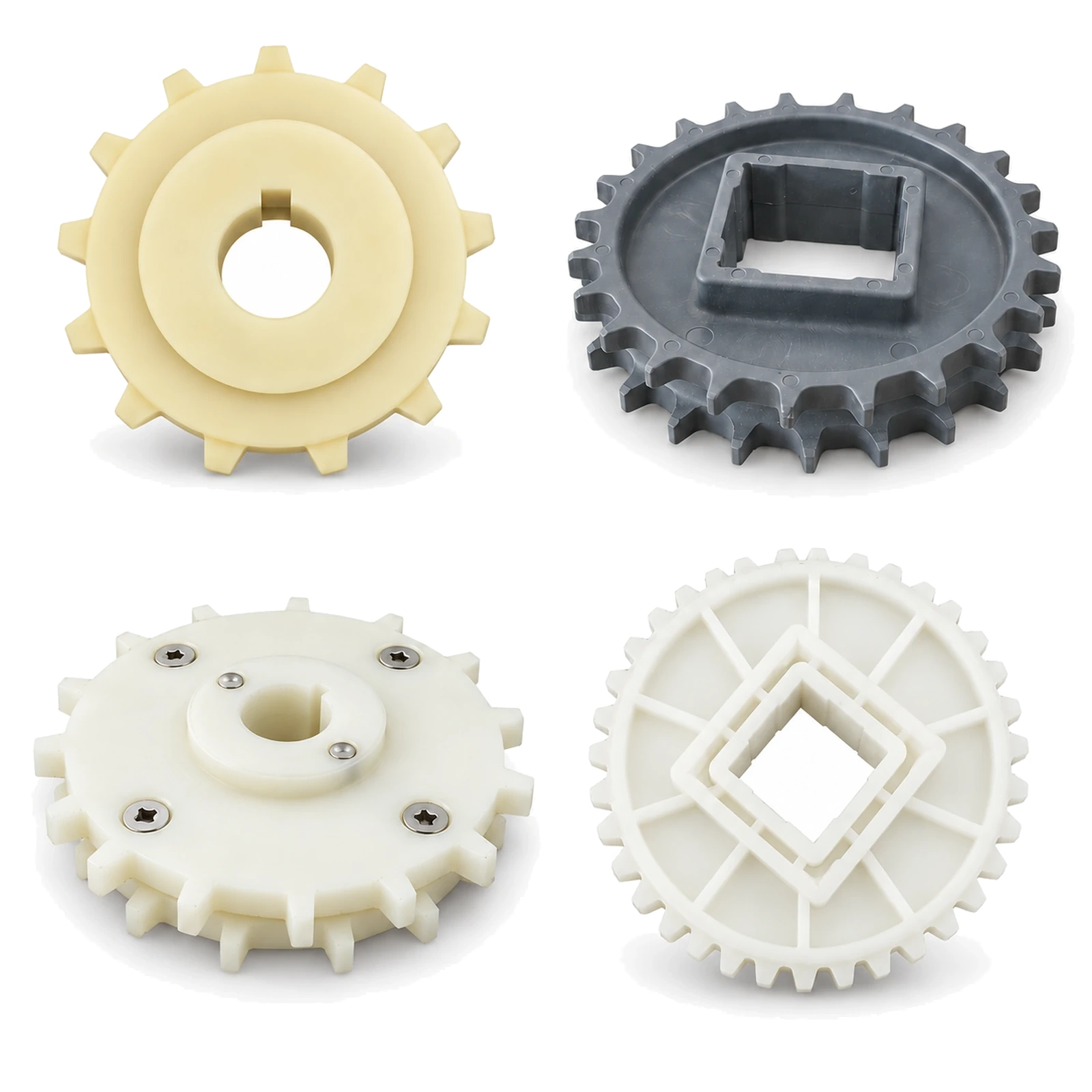
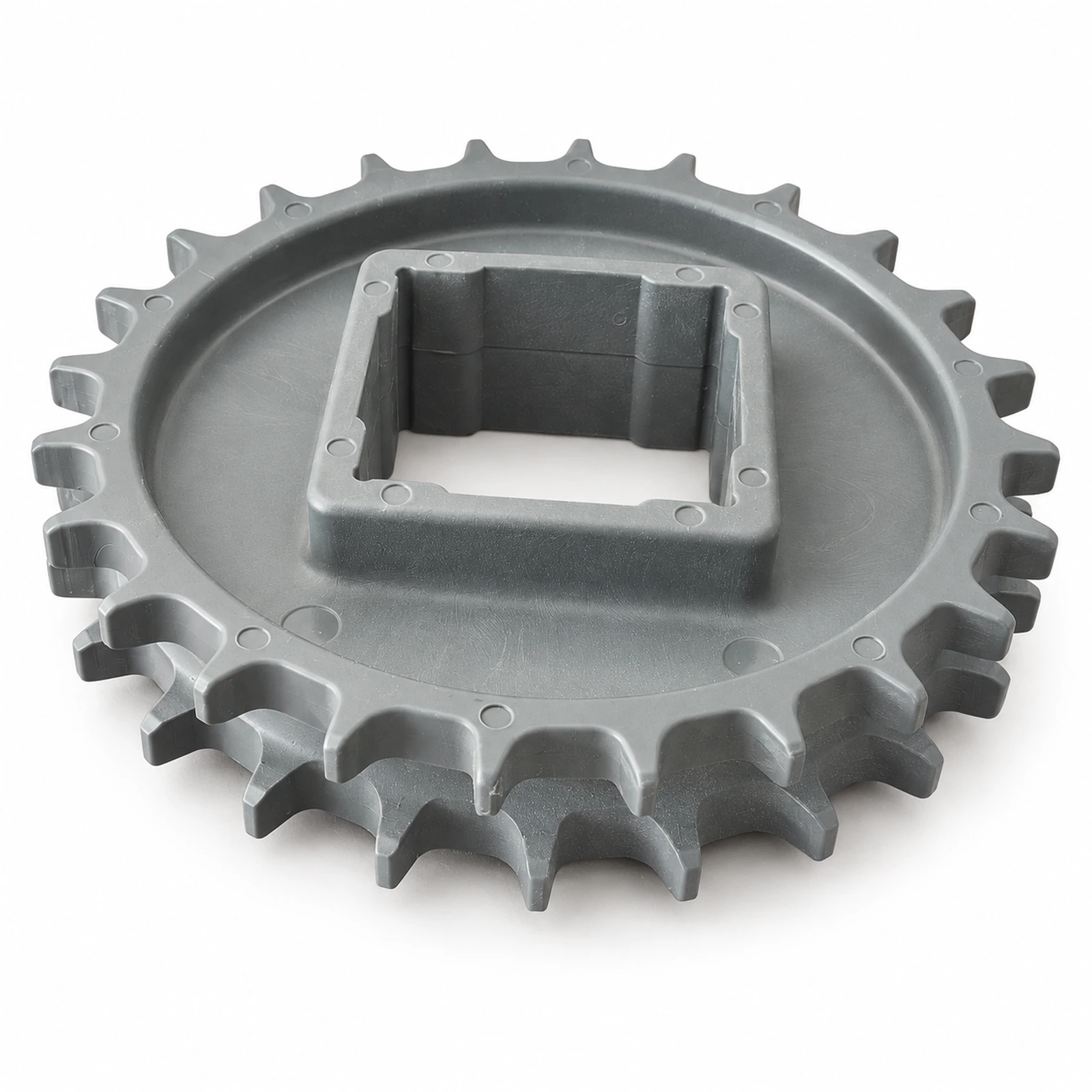
CSTRANS supplies standard injection-molded plastic modular belt sprockets for the 1520, 2720, 5712 and 5713 belt families. The range spans 15.2, 27.2 and 57.15 mm pitches; a sprocket for one series should not be selected by outside diameter alone. CSTRANS can help match the belt family to the drive interface, then check how the sprocket fits the shaft and positions the belt at the end of the conveyor section.
Belt family
Start with the Exact Belt Family
The 1520 belt is a 15.2 mm-pitch family, 2720 is 27.2 mm, and 5712 and 5713 sit in the 57.15 mm-pitch group. CSTRANS identifies standard injection-molded sprockets for all four. Pitch alone is not a complete match: even 5712 and 5713 should be checked by exact series before specifying a sprocket. Correct tooth-to-belt engagement transfers shaft rotation into belt travel and avoids treating a similar-looking wheel as an equivalent replacement.
Shaft fit
Fit the Sprocket to the Shaft
After the belt series is identified, the shaft connection still needs checking. Bore shape and size, keyway or other drive connection, tooth count and hub clearance affect whether the selected sprocket can mount and engage at the intended shaft position. CSTRANS can work from an existing sprocket, shaft drawing or measured dimensions to review that fit. A belt-series match does not resolve an incorrect bore or an unsuitable diameter at the drive end.
Drive placement
Place the Drive Within the Belt Route
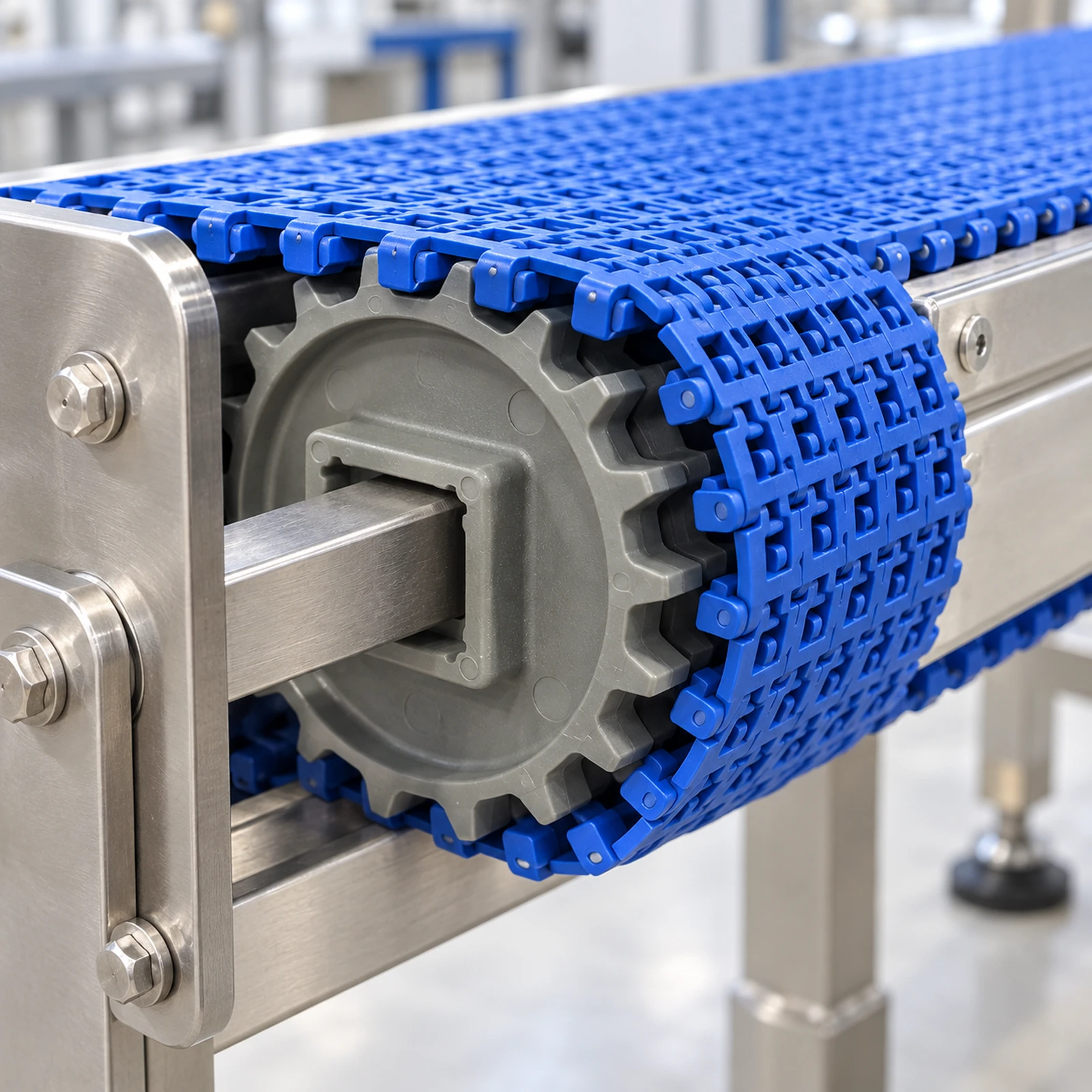
Sprocket spacing along the shaft needs to suit the belt width and its engagement locations. The drive also sets how the belt wraps around the end of the conveyor; that geometry affects its relationship with return support and the receiving section. CSTRANS can review the belt width, shaft layout and transfer position together so the sprocket choice supports consistent belt travel and a workable product handoff, not simply rotation at the shaft.
Application / Line Context
On a straight modular-belt conveyor, the shaft turns the sprocket and its teeth engage the underside of the belt. If the tooth form does not match the series, the belt cannot follow the intended drive path reliably. If the bore or drive connection does not suit the shaft, the wheel cannot transmit rotation as planned. Across a wide belt, sprocket locations need to align with belt construction while the support path guides the return run. At discharge, sprocket diameter and belt wrap influence the end geometry, which in turn sets the gap and elevation relationship to the next conveyor. These checks connect drive fit to product movement through the line.