
Tabletop Chain
CSTRANS supplies plastic tabletop conveyor chains for straight runs and side-flexing turns, including the 820, 821, 880 and 882 families. Our work includes mould development, production and supply, with in-house tooling for selected tabletop-chain families. Compare chain width, hinge construction, curve retention and matching sprockets for the selected model. See our manufacturing capabilities for production processes, inspection and selection support. POM is one material used in the range; material and pin construction follow the exact model.
Send An Enquiry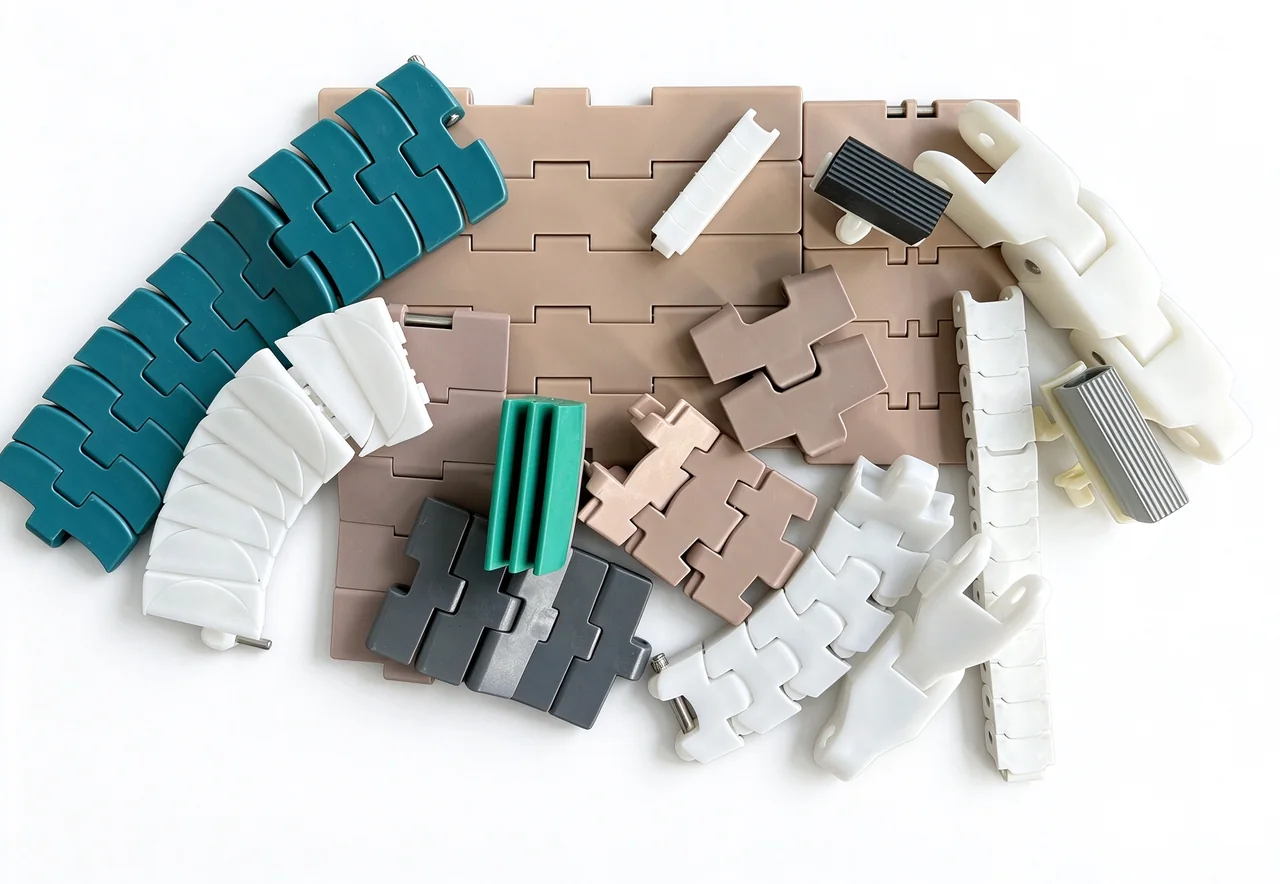
Table Top Chain Series

Straight lanes
820 and 821 Straight-Running Tabletop Chains
820 single-hinge tabletop chain: 4 mm plate thickness, with plate widths from 63.5 to 190.5 mm.
821 double-hinge tabletop chain: 4.8 mm plate thickness, with plate widths of 190.5, 254 and 304.8 mm.
Compare the carrying width and hinge construction with the existing chain or line drawing before ordering. These plate and hinge formats help equipment teams match the carrying footprint to the product base and lane arrangement.
Curved route
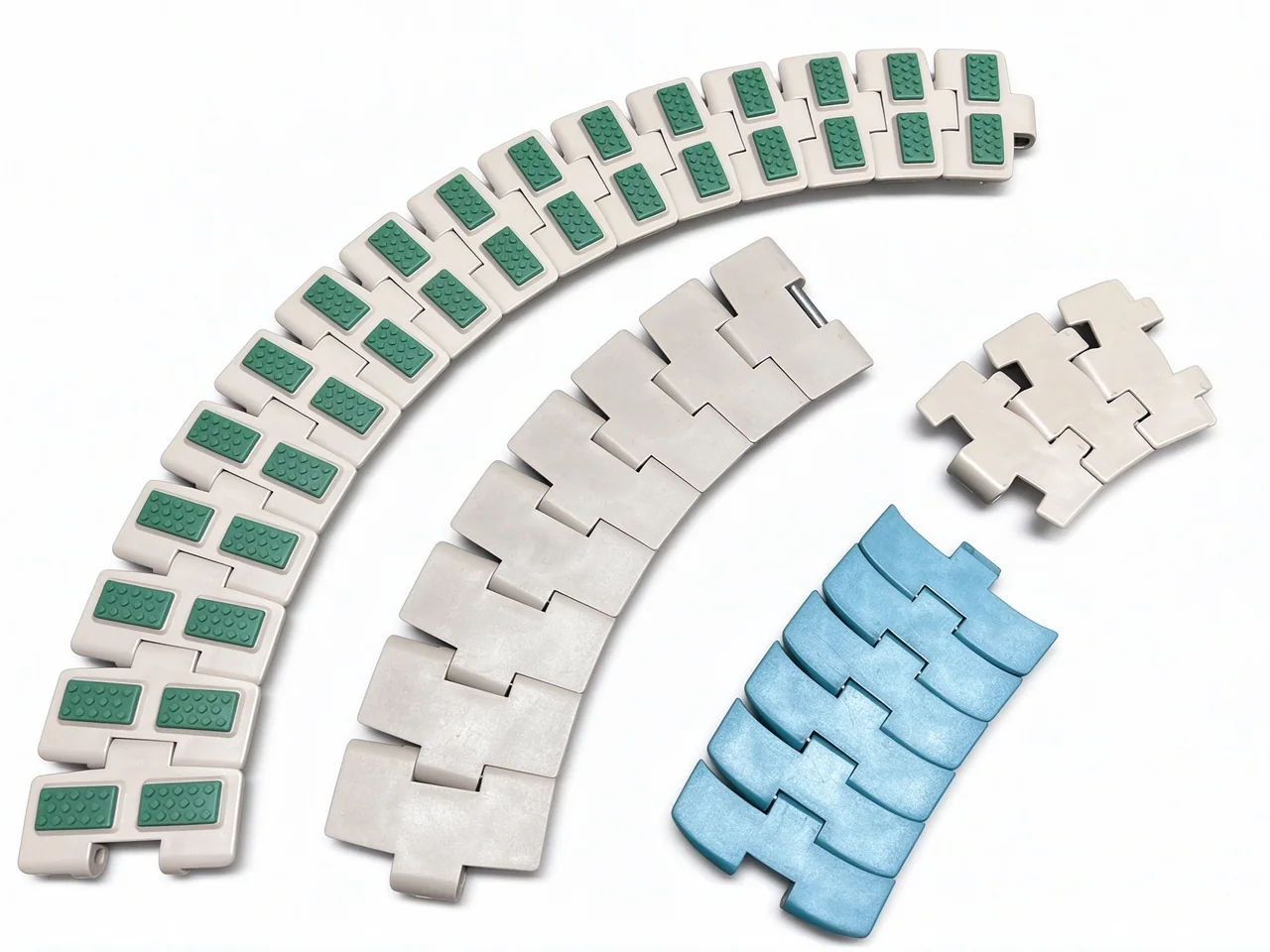
880 and 882 Side-Flexing Tabletop Chains
880TAB: widths of 82.6 and 114.3 mm.
882TAB: widths including 127, 190.5 and 304.8 mm.
880M: magnetic guide-track arrangement; confirm the chain and track as a pair.
880TAB-BO: a 200 mm minimum turning radius.
Match the chain, curve retention and model-specific radius to the guide track. The chain, track and bend geometry work together so the links stay guided while products follow the curve on one carrying surface.
Drive handoff
Tabletop Chain Sprockets and Guide Fit
The 880TAB and 882TAB require different sprockets; their sprockets cannot be exchanged. Use the chain sprocket references to check the chain series, tooth count, shaft fit and drive or idler duty before ordering. Set the receiving section at a suitable height and gap to support containers at discharge. For a broader check of chain construction and operating conditions, see our plastic conveyor chain selection guide.
Application / Line Context
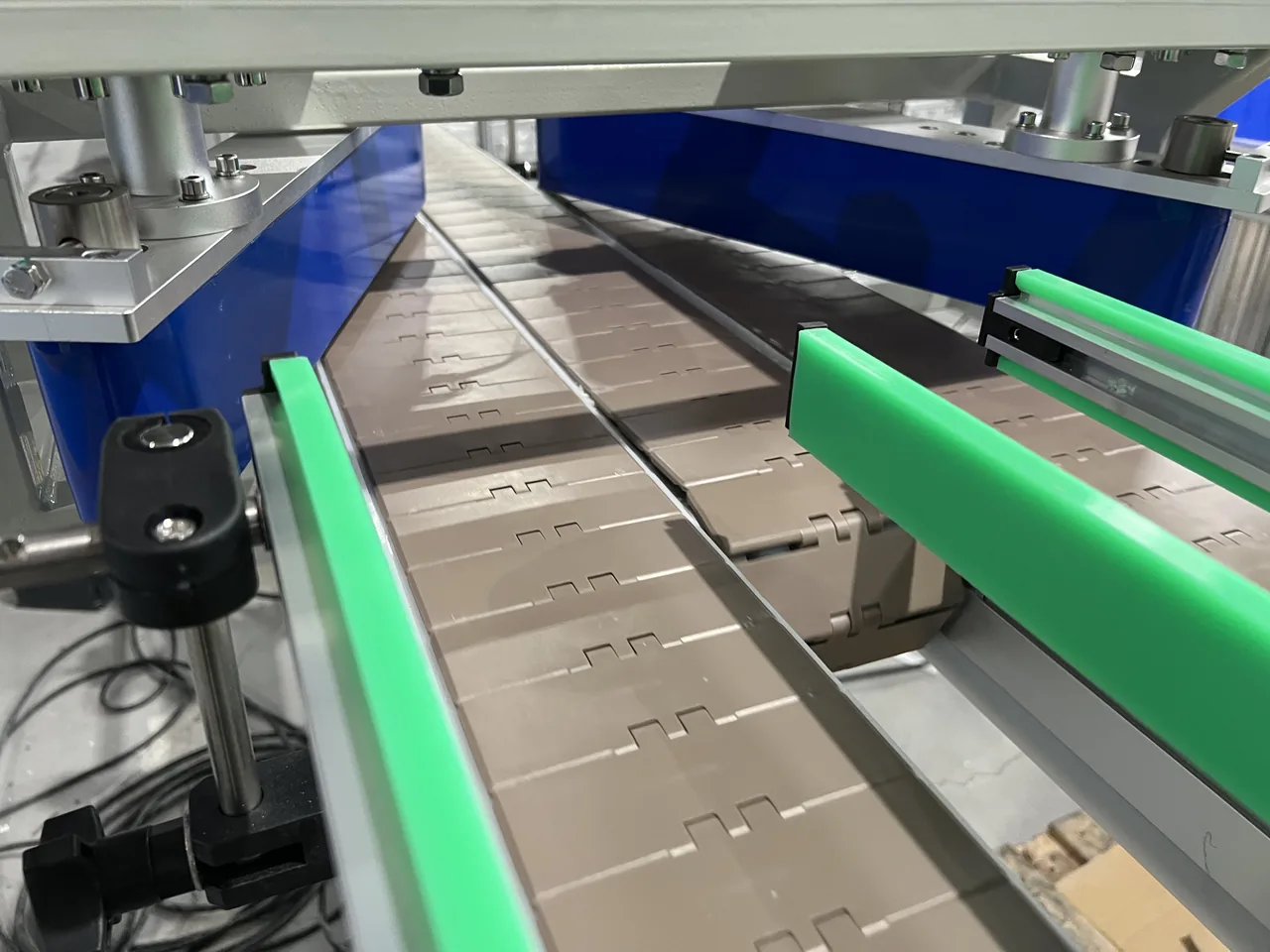
On a bottle line, chain width and side guidance set the usable lane while linked top plates carry each base. If downstream flow slows, products may slide against the moving chain; guide position then affects stability. At a bend, TAB or magnetic retention needs the corresponding track and a model-appropriate radius to keep chain travel aligned. At discharge, gap and elevation determine how a small base crosses to the receiver. These interfaces connect the straight run, turn and downstream machine into one product route.