
Conveyor Mounting Hardware
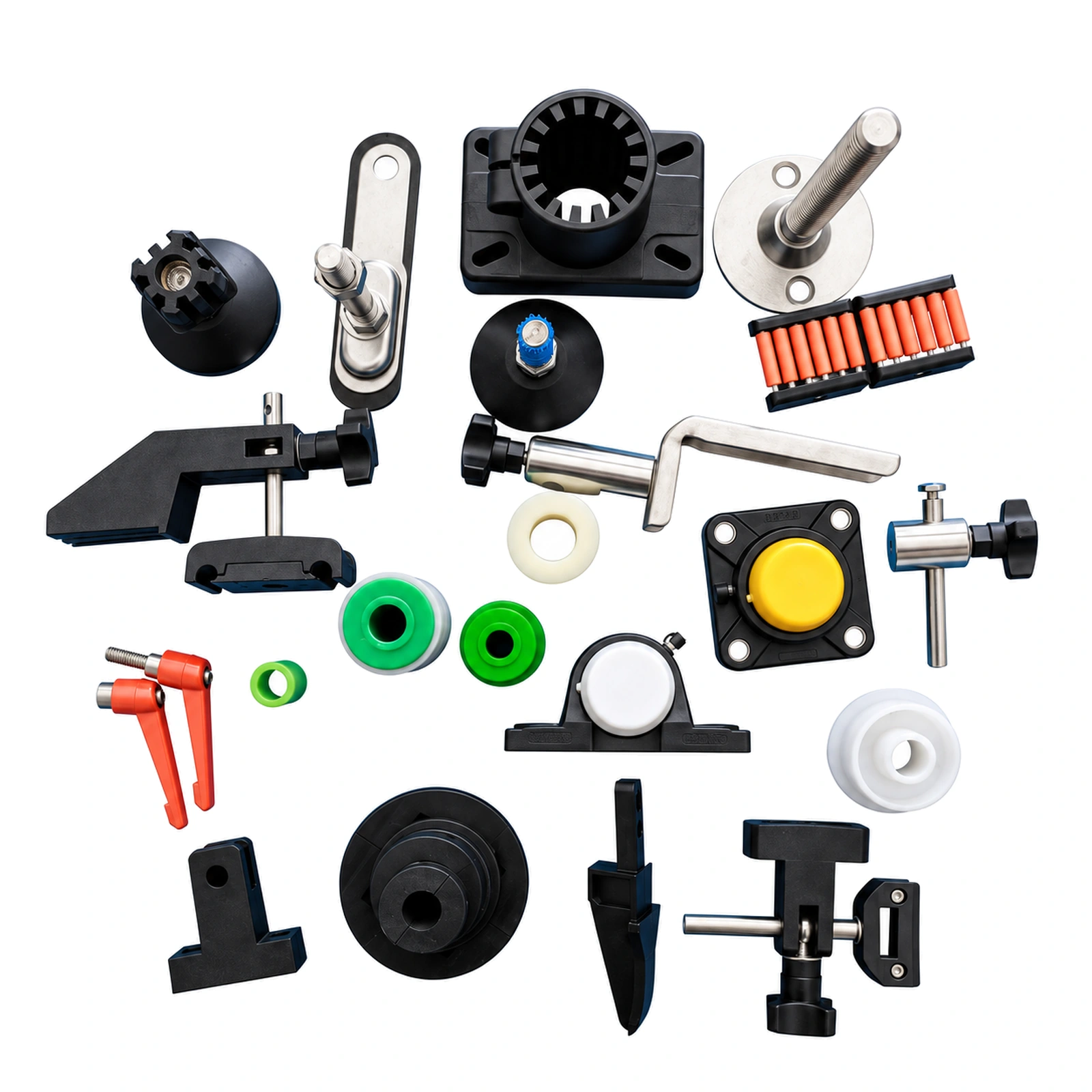
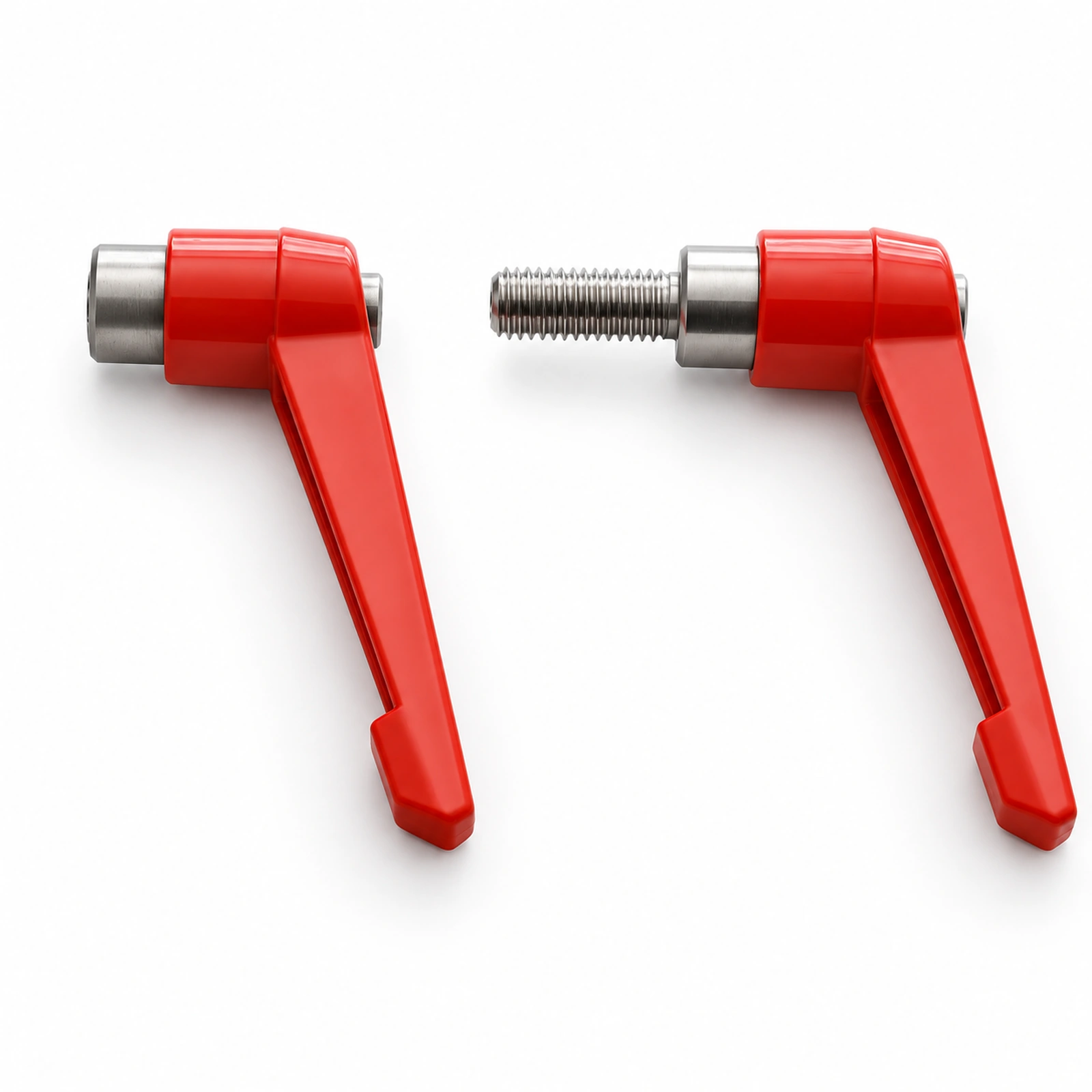
CSTRANS supplies conveyor mounting hardware for equipment access and adjustment: detachable and non-detachable hinges, plus swivel handles with internal or external threads. These parts connect a moving cover or an adjustment point to the conveyor structure. Hinge hole spacing, the mating thread and the space around the part determine whether access remains practical after installation.
Access method
Choose How an Access Panel Opens
CSTRANS supplies detachable and non-detachable hinges. One lets a cover or service panel leave its fixed side; the other keeps the two sides connected while open. That difference affects the room needed to reach a chain, guide or drive area. A removable panel can clear a crowded service zone, while an attached panel needs a safe resting position. The hinge choice therefore changes access to the line.
Pivot position
Keep the Pivot Where the Frame Needs It
For CSTRANS hinges, the stated size refers to mounting-hole spacing. That distance places the hinge on the frame and panel. A mismatched replacement may shift the pivot or require new holes, changing the panel's opening path. In a close conveyor layout, the pivot also needs clearance from guides, covers and the product path. Hole spacing is therefore a functional frame interface.
Adjustment reach
Reach the Adjustment Point
CSTRANS swivel handles have internal or external threads and can rotate through 360 degrees. They are generally stainless steel. Thread form determines the mating connection; handle rotation helps place the grip around nearby beams or covers. At a guide adjustment, a handle that threads on but cannot turn within the available space is still a poor fit. The turning envelope matters alongside the thread.
Application / Line Context
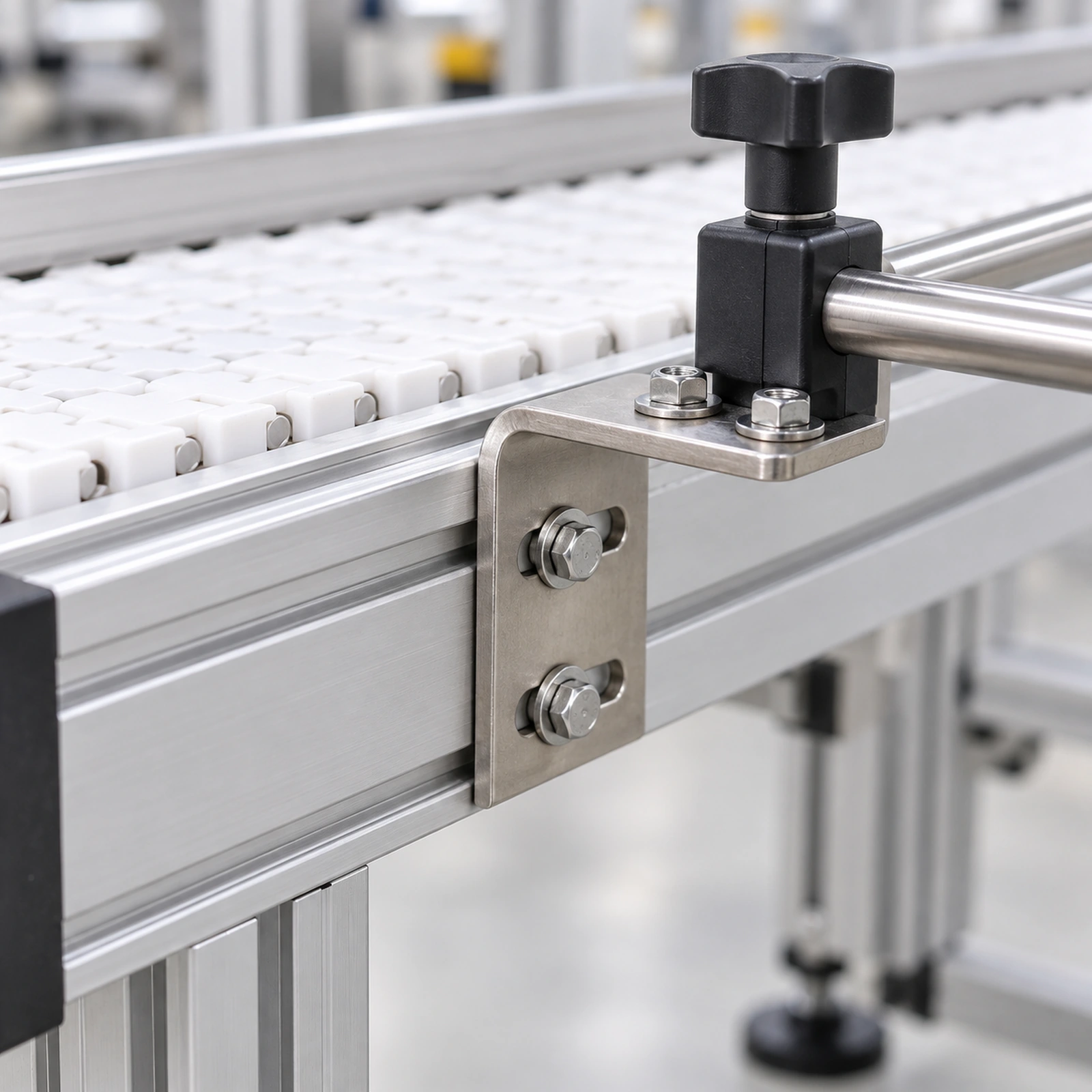
Access hardware sits beside the product path. A hinge mounted at the wrong hole spacing can move an opened cover into a guide rail or neighboring section. A removable cover can expose a chain or drive area where swing space is limited. At an adjustable guide, the handle thread must meet its mating part and the grip must clear the frame and product route. These interfaces shape service access after assembly.