
Identify the installed chain, pins, and track before cleaning. With the conveyor isolated, clean and inspect the top plates, hinge joints and pins, underside, return supports, drive sprocket, and guide or retaining track. Verify the specified lubrication mode, restore the guards, and clear the area before the authorized restart. Observe the first run from the designated position and log the findings in the cleaning and restart checklist.
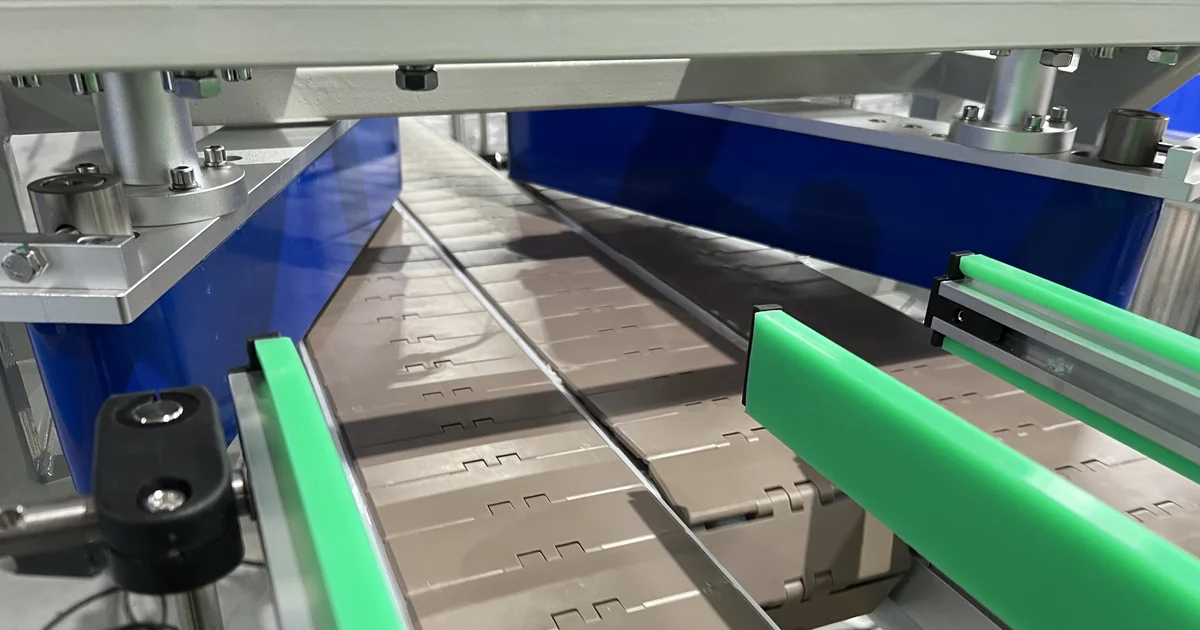
Identify the Chain, Pins, and Track
Record the full chain model, pin material, track or support part number, and the line’s lubrication mode. Use the parts list or layout drawing to mark straight sections, curves, and any guide changes. The chain profile can help locate the cleaning points even where the same plate material is used on both sections.
On the 820 straight-running chain, check the single-hinge joints and the underside where the links bear on the supports. On a curve with 880TAB side-flexing chain, also check both retaining-tab paths beneath the plates. Both chains in these configurations have POM (polyoxymethylene) top plates and stainless steel pins. Where the installation uses 880TAB/881TAB corner tracks in UHMW-PE (ultra-high-molecular-weight polyethylene), include the track when checking whether the cleaner suits the materials.
Isolate the Conveyor and Confirm the Approved Cleaning Method
Have authorized personnel follow the site’s energy-control procedure before removing guards or reaching into the conveyor. Include connected equipment that can move the chain or feed material into the work area. Control stored energy and verify isolation before opening access points. For U.S. work within the scope of OSHA 29 CFR 1910.147, use paragraphs (d) and (e) for applying and releasing energy control.
Match the site’s approved cleaning method to the residue and the exposed components. Loose dry debris and a dried product film may call for different methods. Check compatibility for the plates, pins, and tracks, as well as any bearings, seals, or drive components the method can reach. For wet cleaning, confirm the product, concentration, temperature, pressure, contact time, rinse, and drying steps against the equipment instructions, site procedure, and chemical supplier’s directions. Identify how the procedure gives access to hinges, areas behind guides, and the return run.
Check the Top Plates, Joints, Return, and Track After Cleaning
- Top plates and hinge joints. Look across the carrying surface and into the plate gaps. Check for trapped product, chipped edges, raised plates, and pins displaced from their specified seated position. On an 820 straight run, check the contact surface under the links and the supports it runs on.
- Guide and retaining track. Check the side guides and their joints for deposits, loose fasteners, and wear marks. On an 880TAB curve, use the 880TAB guide detail to locate the inner and outer tab channels in the installed track. Check both tab paths and the joins at the curve entry and exit through the access points in the equipment instructions. Residue in a channel can catch a tab even after the carrying surface has been cleaned.
- Drive and return. Check the sprocket tooth spaces and the return supports where residue can collect or be carried back to the top run. Note trapped debris, damaged teeth, or fresh rub marks and record the location before it is cleaned again or adjusted.
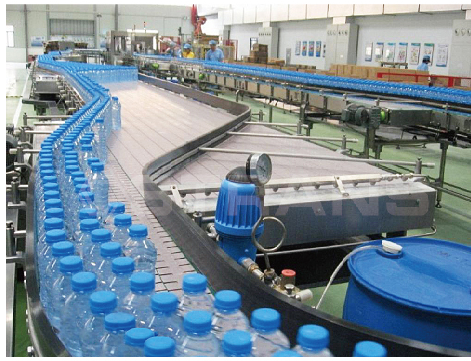
For help identifying the route and retaining features, see the guide to straight-running and side-flexing conveyor chains.
Verify the Line’s Lubrication Mode
For a line specified to run dry, check that the contact surfaces meet the site’s cleanliness requirement and leave the line in its specified dry condition. For a lubricated line, confirm the approved lubricant, the specified delivery points, and the required delivery check in the line procedure. If that check requires the conveyor to run, carry it out under the authorized restart or test procedure.
A deposit at a single guide joint gives you a location to clean and recheck. Several specified lubrication points without delivery call for a check of the supply and applicators. Record which condition you found so the next shift can follow the right check.
Restore Guards and Observe the Authorized Restart
Reinstall any parts removed for cleaning, secure the guards, and clear tools and materials from the conveyor. Confirm personnel are clear and follow the site sequence for releasing energy control, notifying affected personnel, and authorizing the restart. Where the line requires sanitation sign-off, record that clearance before returning it to production.
From the designated observation position, watch the chain enter the drive and pass through the inspected straight and curved sections. Note the first point where it rubs, catches, lifts, or travels unevenly. Stop the conveyor if you find a problem. Reapply and verify isolation before another hands-on inspection or adjustment. If work covered by OSHA 1910.147 requires temporary energization for testing or positioning before servicing is complete, follow paragraph (f)(1) and reapply energy control before resuming the work. If the chain runs smoothly and bottles still tip or jam, use the bottle conveyor maintenance guide to trace the first point of product contact.
Record the Cleaning and Restart Results
Copy the table into the shift log. Record each finding at its location, who owns the corrective action, and what the retest showed. Use the relevant drawing or procedure revision to identify the required condition. Keep any item that affects release open until it meets that condition. Add rows for other stations on the line.
Line and shift: ______ · Chain model and pin material: ______ · Track ID: ______
Cleaning procedure and revision: ______ · Lubrication mode: ______
| Location or check | Finding | Required condition or reference | Action and owner | Retest or release |
|---|---|---|---|---|
| Straight carryway and supports | ||||
| Hinges, pins, and underside | ||||
| Side guides or curve retaining track | ||||
| Drive sprocket and return | ||||
| Lubrication mode and delivery, if fitted | ||||
| Guards, clearance, and restart observation |
Checked by and time: ______ · Restart authorized by and time: ______ · Sanitation release, if required: ______
Example entry. Residue at the inner channel of curve C2. Assign maintenance to clear the channel using the approved cleaning procedure while the conveyor is isolated. Record the channel recheck, then log whether the chain travels smoothly through C2 during the guarded restart.
If a damaged part needs identification, use the tabletop conveyor chain range to match the series. Keep the full model, chain width, and a track cross section together in the replacement request.