
Start bottle conveyor maintenance at the first catch, lean or rub. Check the guide joint where side contact begins, the gap and height step where a bottle base catches at a transfer, or the affected links when rocking follows a section of chain. If bottles pass individually but jam when a queue is released, check guide contact and how the next machine accepts that queue.
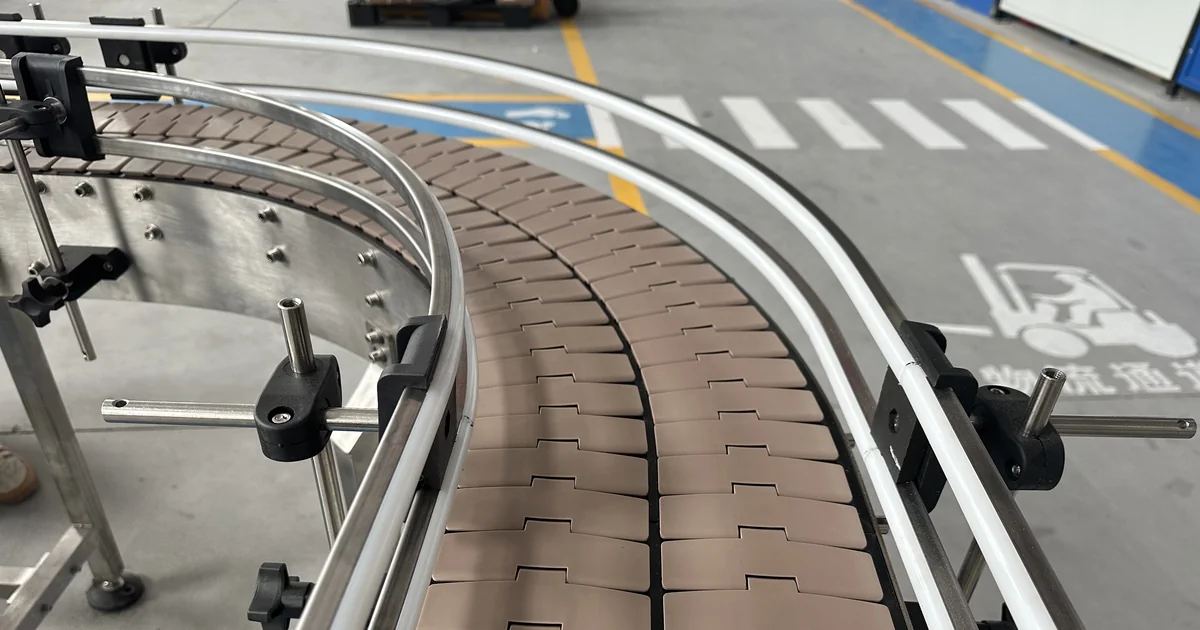
Mark the first abnormal contact
First abnormal contact is the earliest place a bottle starts to lean, rub, slow or catch during the fault. Record this point from outside the guards, along with the station, bottle format and empty or filled state. A jam may spread back from that point, so also record where the line eventually backs up. If the fault began after a format change or washdown, include the time of that change.
Identify the operating state using the line’s normal controls and records. A single bottle passing through a clear lane, a steady stream of bottles, and a group released after accumulation put different demands on the same transfer. Keep the bottle format and recorded settings the same when comparing those observations.
Before clearing a jam, removing a guard or making hands-on checks, authorized personnel must apply the site’s lockout/tagout procedure. Isolate hazardous energy from the conveyor and connected equipment that can affect the work, control stored energy, and verify isolation. Restore guards, confirm personnel are clear and follow the site’s restart procedure before observing motion. U.S. OSHA 1910.147
Check the part the bottle contacts first
Side guides
Repeated scuffing at one height or a lean as bottles enter a bend gives you a place to check the rail. With the line isolated, compare guide width and contact height with the documented setting for that bottle. Look for a loose bracket or a rail joint that projects into the lane. A projection can catch the bottle while its base is still moving forward. If the scuffing started after a product changeover, use the guide rail adjustment procedure to recheck the width and contact height.
Chain and wear strips
If bottles begin rocking as the same portion of the chain passes, check that part of the chain for damaged links, displaced pins or a raised carrying surface. Also check the stationary support at the station. A worn or loose wear strip can cause the chain to ride unevenly at a fixed point, even when the chain itself looks intact. Use the exact series and the equipment manual for wear limits. Plastic conveyor chain selection
Transfer plates
When the front edge of the bottle base catches as it crosses a handoff, measure the open gap and height step at the bottle path. Check the plate edge and, on a roller plate, look for damaged or stuck rollers during the isolated inspection.
A height step is the vertical difference between the sending and receiving surfaces. Measure both heights at the bottle path from the same fixed reference. Record whether the receiving surface is higher or lower.
The load-bearing footprint is the part of the bottle base that actually rests on the conveyor. Record its span in the direction of travel. A short support span gives the bottle less overlap with the sending and receiving surfaces as it crosses a gap. Compare the gap and height measurements with the transfer drawing for that bottle format. If the bottle base loses support at the junction, compare the available transfer layouts.
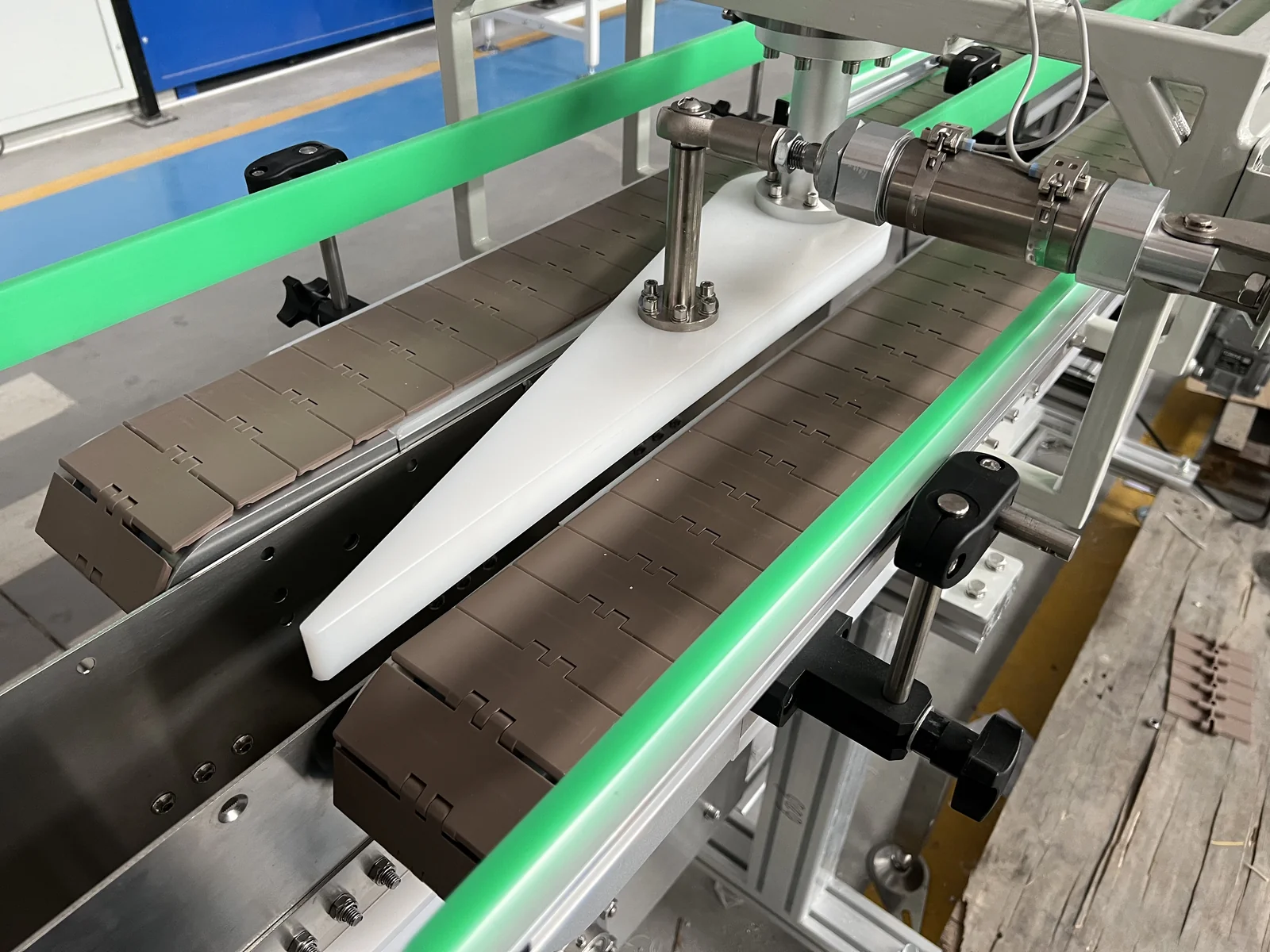
Check what changes when bottles accumulate or the line has been cleaned
When single bottles pass but a released queue jams, record where the queue begins. Watch how the next machine accepts the first few bottles. At a narrowing lane, bottles may push one another into the guide before reaching the transfer. Have the line owner compare the observed stop-and-release sequence with the recorded settings and check the adjacent station before changing the guides or transfer plate. Low back pressure accumulation
If the symptom first appears after cleaning, record which surfaces were wet or had visible residue and check the cleaning record against the procedure for the installed materials. Surface condition affects how bottles slide across a plate or rub against a rail. Compare it with the last trouble-free run for the same bottle format. Use the cleaning agents and lubrication specified for the installed chain, belt and guide materials. If the affected surface is a modular belt, check the cleaning method for the belt and its supports.
Count the queue during a slowdown
From outside the guards, count bottles entering and leaving the affected section during the same time window. Record the elapsed time and the location of the first lean or catch. The queue grows by the number entering minus the number leaving.
For example, suppose 40 bottles enter a lane and 30 leave during a 20-second slowdown. The queue gains 10 bottles: 40 − 30 = 10. The average incoming rate is 120 bottles/minute, and the outgoing rate is 90 bottles/minute. The same result can be calculated as (120 − 90) × 20 ÷ 60 = 10 bottles.
Put these counts beside the contact observation in the log. If the first lean occurs as the lane fills, the next check includes queue release and the receiving machine. Keep the same counting points when comparing the run after a correction.
Record what happens on restart
Use one line of the log for each operating state observed during the site’s restart procedure. Keep these fields with the observation:
- Product and event: bottle code, empty or filled state, station and time.
- Contact geometry: guide width and contact height, transfer gap and height step, and the bottle’s load-bearing span.
- Correction and result: the part inspected, work completed, technician and result under the original operating state.
If the original symptom appeared during the release of a queue, observe that normal event before closing out the fault.
Restart observations for a bottle conveyor
| Operating state | Record the first symptom | Where the result directs the next check |
|---|---|---|
| Clear lane | First guide contact, lean or catch at a fixed station | Guide joint, transfer edge and the support under that section |
| Steady bottle flow | Whether the symptom repeats at a fixed station or follows a section of chain | Stationary wear strips and rails, or the affected chain links and pins |
| Release after normal accumulation | Where the first bottle shifts as the queue feeds the next machine | Lane narrowing, bottle-to-bottle contact and the receiving machine’s sequence |
| First run after cleaning | The first affected location and its surface condition | Cleaning record and the affected rail, chain or plate surface |
For example, a tall empty bottle may pass a plate alone but lean into a rail joint when a queue feeds the same station. Keep both observations in the record. The first shows how its base crosses the plate in a clear lane. The second directs the next check to the queue release and the rail joint. Record the correction, who made it, and the result under the operating state that originally reproduced the problem.
If the inspection identifies a replacement part, send the station, existing part number, bottle-base dimensions and the first point of contact through the CSTRANS contact form. Email photos or drawings to cs-conveyor@wxcsjm.com.
CSTRANS supplies conveyor chains, modular belts, guide rails and transfer components.