
Horizontal Plain Bend
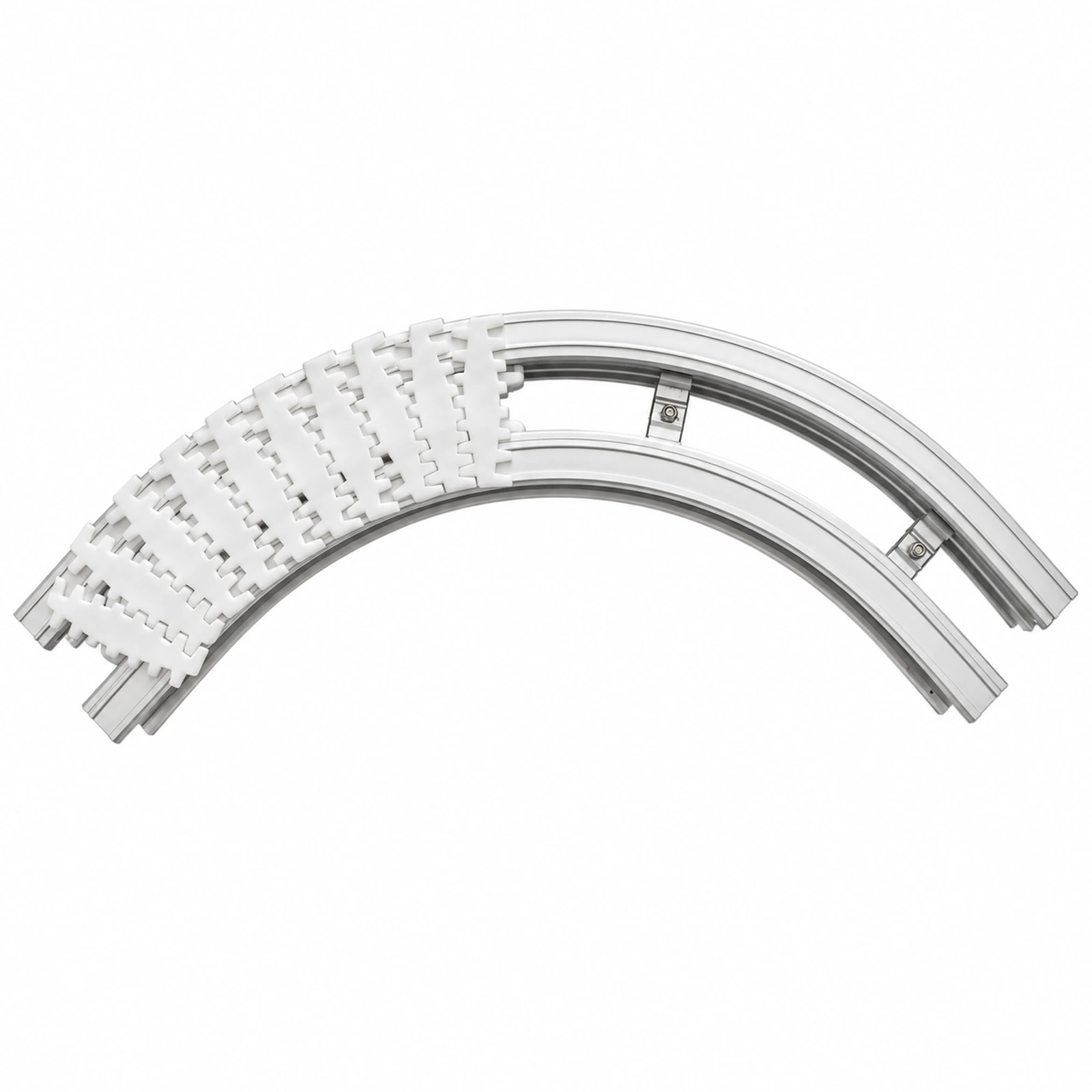
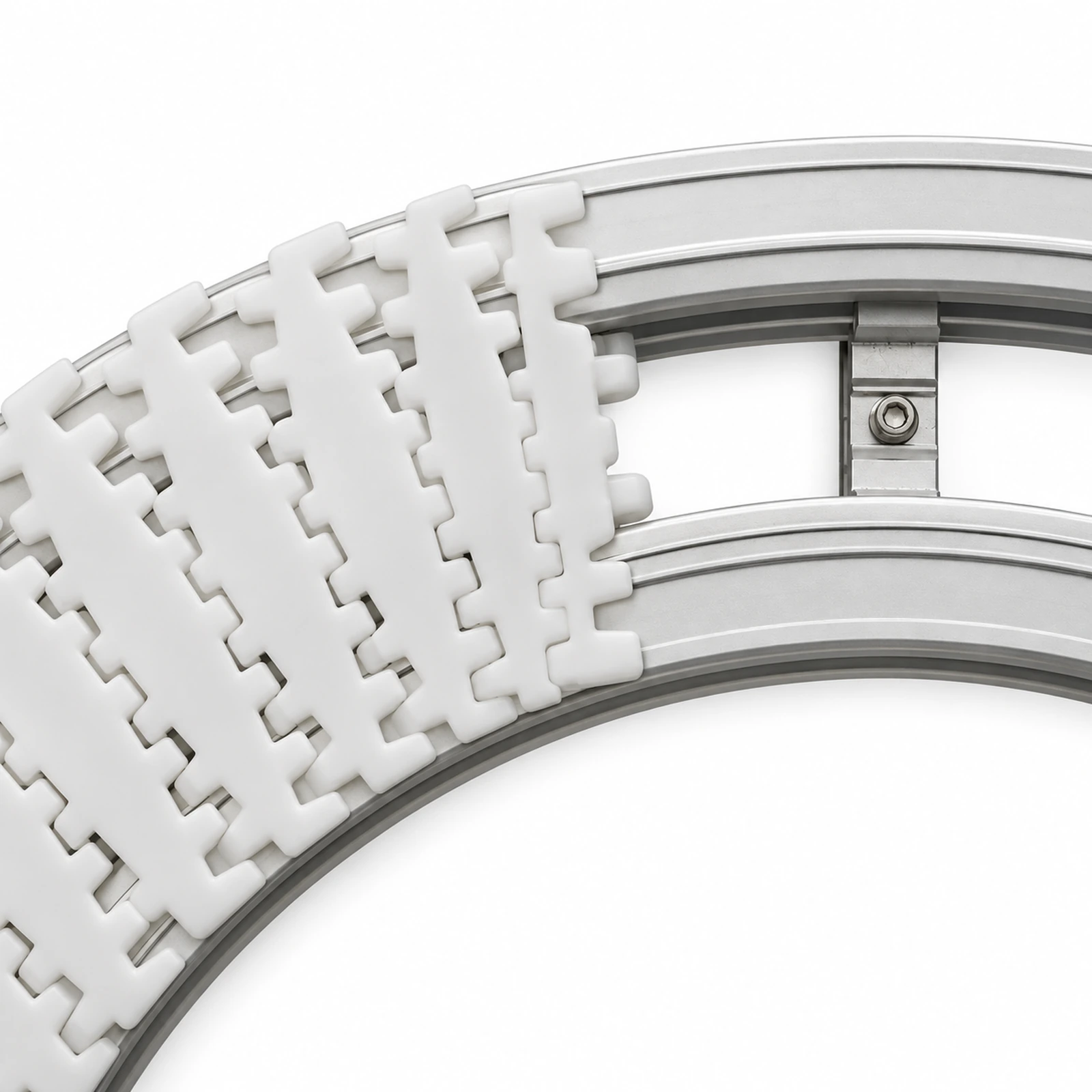
CSTRANS supplies horizontal bend components for flexible-chain routes, including disk-free paths and wheel-assisted assemblies for selected series. A horizontal turn keeps the same carrying run around equipment and into the next straight section. CSTRANS works from chain series, straight lead-in, bend angle and centerline radius so the chain, beam and product path meet at the exit.
Turn exit
Put the exit where the line needs it
A horizontal bend changes the route direction without creating a separate corner transfer. The straight length before the curve, turn angle and centerline radius place the bend between machines and define where the carrying surface reaches the next conveyor leg. These dimensions also affect the product's approach to side guidance and its position as it leaves the turn. CSTRANS can relate bend geometry to the actual chain route instead of treating a right-angle corner as a single standard part.
Turn type
Distinguish plain and wheel-assisted turns
Disk-free horizontal turns for the 63/83/103 and 140 families have different minimum-radius requirements, which affect whether a plain curve fits the available corner. A wheel-assisted horizontal assembly for 63/83/103 instead uses a plastic disk, cast bracket, aluminum half-beam and shaft. The disk is common across those three series, but only the 83 and 103 castings are common; the 63 casting has a lower center section. This matters when an existing turn is repaired: matching the wheel alone cannot establish that its bracket and beam will fit the installed chain path.
Track continuity
Continue the running track through the joins
The curved half-beam has to meet a straight beam at both ends while the chain remains supported on its wear strip. CSTRANS uses half-beam sections in horizontal-bend construction, with connection hardware joining the curved and main beam paths. Matching chain series, beam interface and guide position lets the chain enter the bend without a step in its running track. At the exit, the same alignment keeps the product moving toward the receiving section rather than forcing an extra handoff at the corner.
Application / Line Context
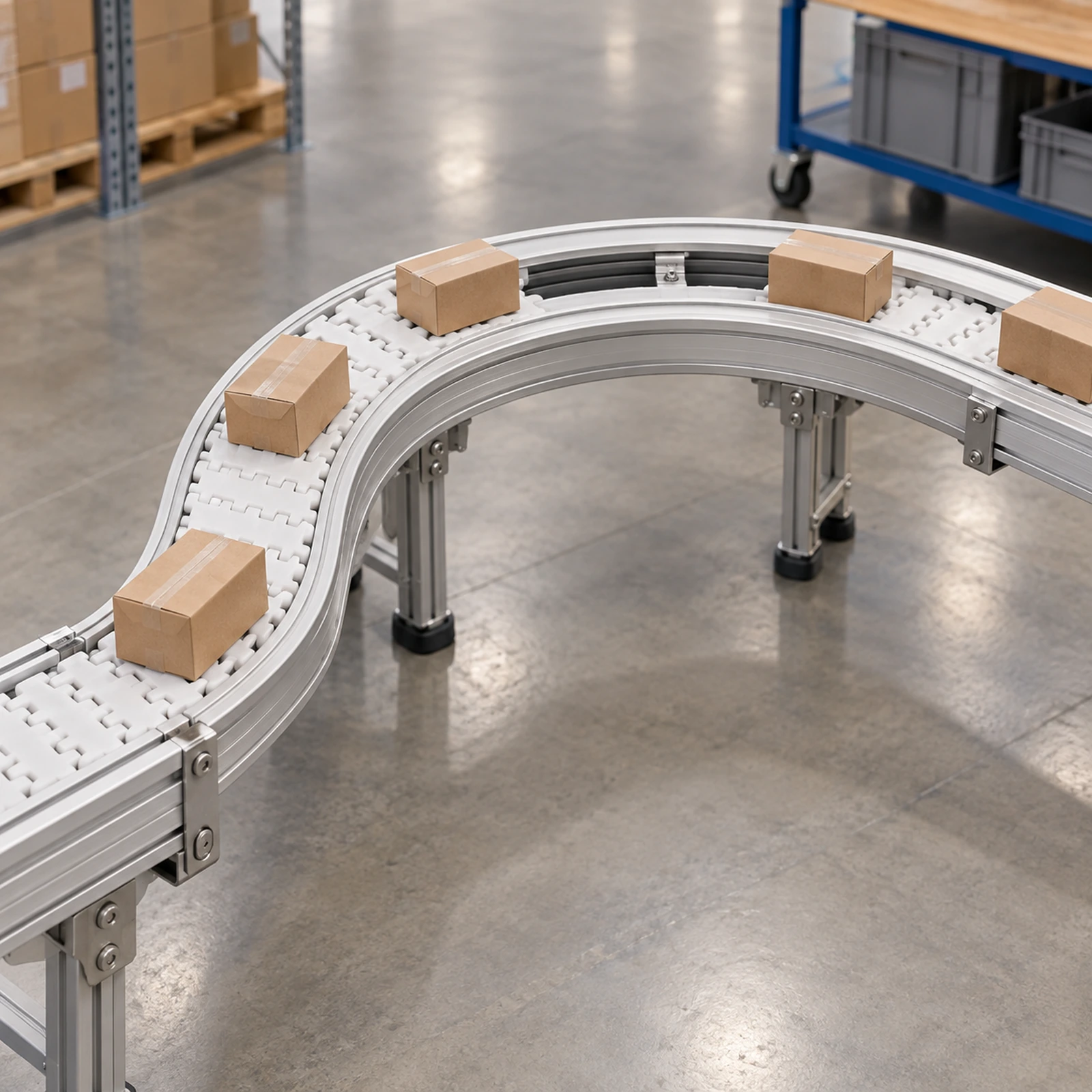
Where a packaging line turns around a machine, the product enters on a straight supported chain run. Through a plain bend, the curved track and guide redirect both chain and product; through a wheel-assisted turn, disk contact changes the chain's inner-curve support. The selected chain surface and side guide still have to control the product's orientation. At the bend exit, beam alignment, receiving height and transfer gap influence whether the product moves smoothly to the next section. The disk-free radius requirement and the 63 versus 83/103 bracket difference make the actual route and installed bend form important replacement details.