
140 Horizontal Plain Bend
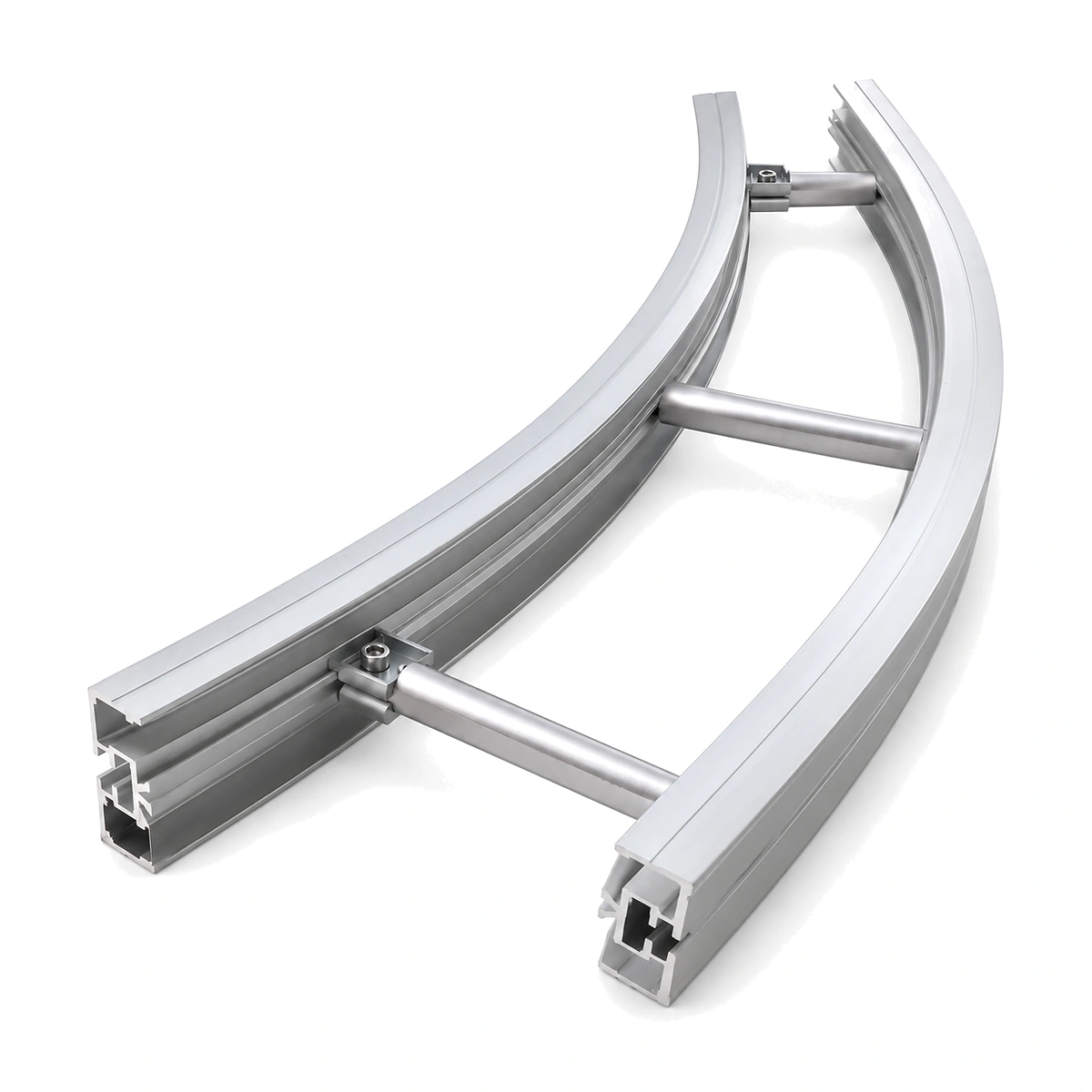
The 140 horizontal plain bend redirects a 140-series flexible chain along a curved track. The chain version needs to be identified before the bend and adjoining beams are selected.
- Family
- 140
- Bend type
- Plain track
- Selection
- Chain version and curve
The 140 family includes different chain/beam configurations. Send the actual chain reference and beam section rather than choosing from the series number alone.
Start With the 140 Chain Version
The 140 family includes flat-chain and toothed-chain arrangements with different supporting components. A plain bend must continue the running geometry of the selected arrangement through the turn.
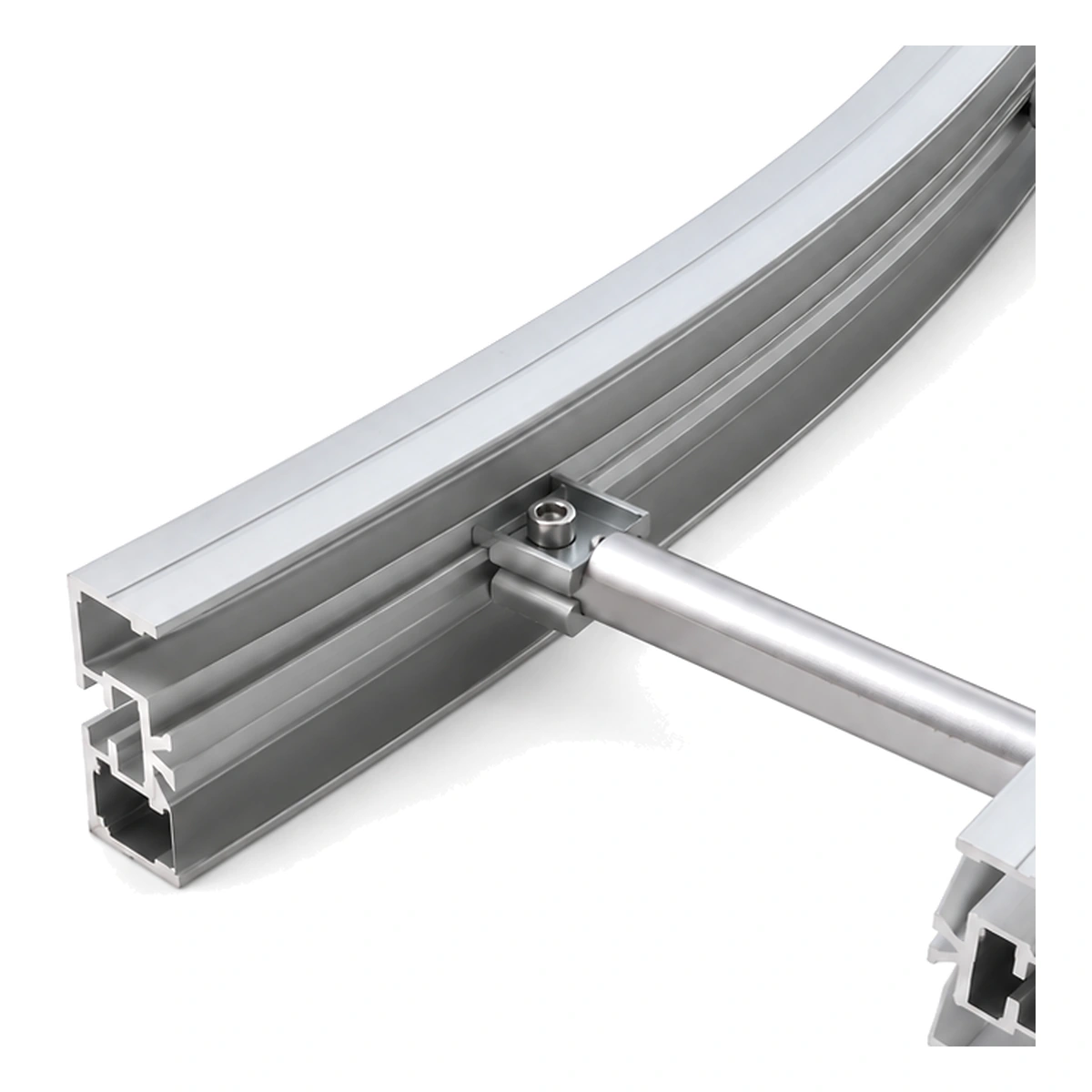
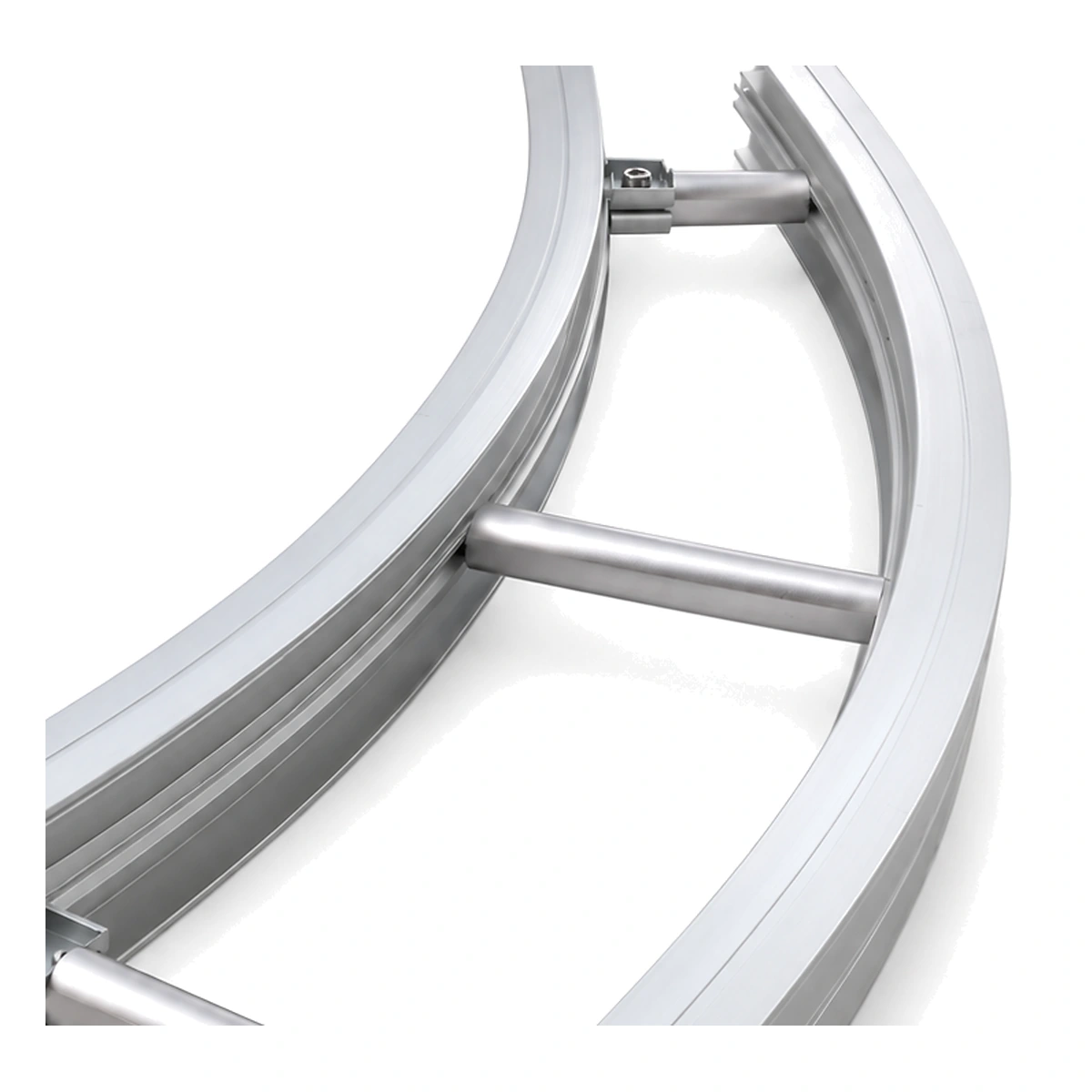
The route turns without an inner wheel. Its curved support and wear surfaces need to follow the chain's permitted side-flexing path. Confirm the bend geometry for the actual chain rather than applying a minimum-radius note to every configuration.
Specifications
| Parameter | Specification |
|---|---|
| Chain family | Specification: 140 |
| Component | Specification: Horizontal plain bend |
| Configuration check | Specification: Flat-chain or toothed-chain arrangement |
Dimensions & Fit
Supply a dimensioned plan with the required radius reference and turn angle. Show the beam sections at both ends and identify the carrying and return paths.
Check product overhang and the clearance around the inside guide. Confirm the accepted bend dimensions before fixing adjacent machinery in place.
Continue a Wider Chain Route Through a Curve
A 140-series route may carry products whose footprint extends beyond the chain. During a turn, the guides and chain support need to accommodate that footprint together.
The curve also contributes sliding contact to the chain circuit. Review the full route with its operating load and speed before selecting the drive arrangement.
Discuss a 140 Plain Bend
Send the exact 140 chain version, beam section and proposed curve plan. Include load, speed and quantity for the bend review.