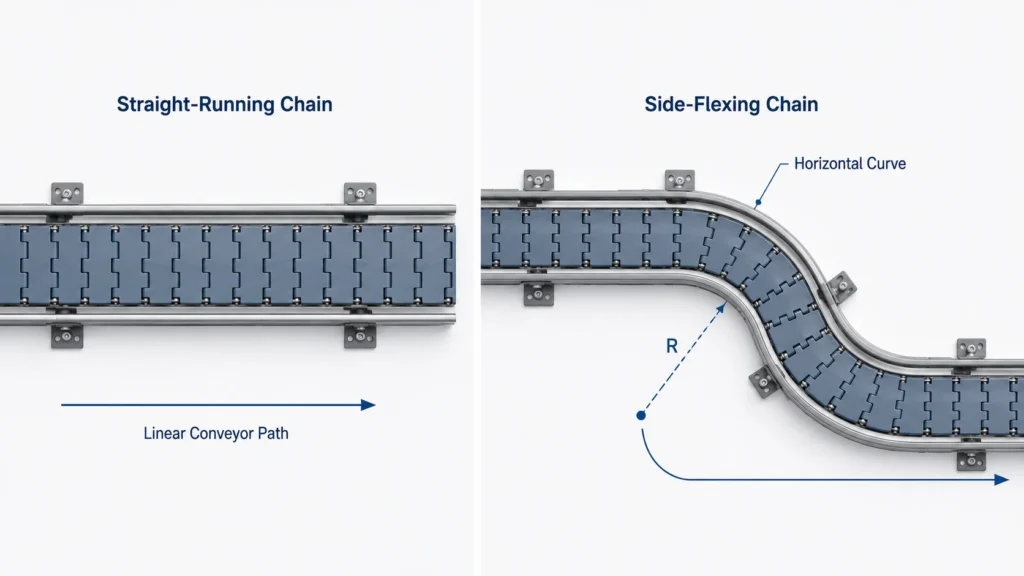
A side-flexing chain is designed to articulate laterally so the conveyor can follow horizontal curves. A straight-running chain is designed for a straight conveyor path and cannot follow the same curved track.
A curve changes how the chain is guided, how tension builds, where friction and wear occur, and how stable the product remains through the turn. Check curve geometry, guidance and chain loading for the selected side-flexing chain.
A side-flexing chain can also run through straight sections, but every curved section must stay within the chain’s permitted radius and track design.
Choose the route first, then assess its geometric, load and guidance requirements.
What Is a Side-Flexing Chain?
A side-flexing conveyor chain can bend sideways as it travels, allowing one conveyor to run through both straight sections and horizontal curves. The curved track guides and retains the chain as the conveyor changes direction.
A side-flexing chain has a series-specific minimum permitted curve radius. A tighter curve than the chain allows can cause poor tracking, higher chain loading, and faster wear.
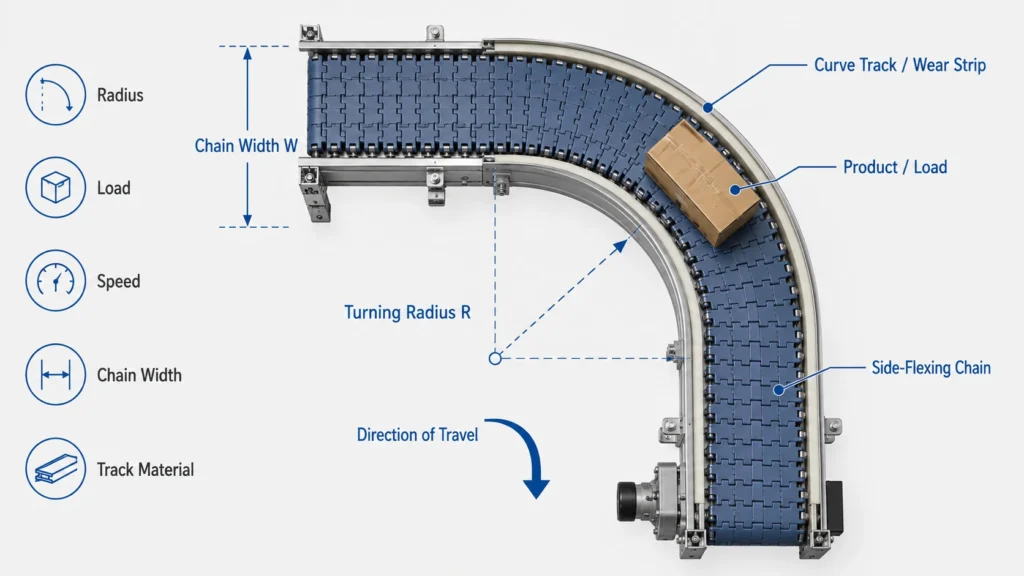
A curve also increases friction and chain tension. Product load, conveyor speed, chain width, curve length, lubrication, and wear-strip material all affect how heavily the chain is loaded through the bend.
First confirm that the chain can physically follow the required radius. Then check whether the curve forces, tension, and wear remain acceptable under the real operating conditions.
Side-Flexing Chain vs Straight-Running Chain
The main difference is simple: a side-flexing chain can follow a horizontal curve, while a straight-running chain is designed to travel in a straight chain path. That one difference changes the conveyor layout and the way chain load must be calculated.
| Design factor | Side-flexing chain | Straight-running chain |
|---|---|---|
| Conveyor path | Straight sections and horizontal curves in one continuous chain path | Straight chain path |
| Lateral articulation | Designed to articulate sideways | Not designed for horizontal side-flexing |
| Direction change | Chain can follow a curved track within its permitted radius | Requires another conveyor, transfer, turntable, or other direction-change method |
| Curve geometry | Minimum curve radius and curve retention must be verified | No horizontal curve geometry in the chain path |
| Chain loading | Straight-run pull plus additional friction and tension through curves | Mainly straight-run friction and chain pull |
| Key selection inputs | Load, speed, width, material, curve radius, curve angle/length, and retention method | Load, speed, width, material, and straight-run length |
| Typical use | Continuous conveying where the route must turn without transferring the product to another conveyor | Simple straight conveyor sections |
A side-flexing chain removes the need for some direction-change transfers, but every curve adds geometry, friction, and chain-load requirements for the selected curved route.
Applications for Side-Flexing Conveyor Chains
Use a side-flexing conveyor chain when the conveyor route must turn horizontally while products remain on the same continuous chain path. Typical applications include bottles and containers, cartons, packaged food, production-line components, and other unit loads that need continuous conveying through curved layouts.
A side-flexing chain can change direction without a separate transfer, turntable, or another conveyor at every turn. This can simplify product flow where repeated transfers would create extra handling or stability problems.
For a straight conveyor path, a straight-running chain is usually the simpler choice. Every horizontal curve adds track geometry, friction, chain pull, wear, and product-stability requirements.
Use side-flexing capability when continuous curved product flow provides enough value to justify the added curve-design requirements.
Side-Flexing Chain Selection
Start with the conveyor path and required curve radius. Then check product load, chain width, conveyor speed, allowable chain pull, chain material, curve-retention requirements, wear-strip material, lubrication, and the operating environment. The selected chain must meet both the geometric limit of the curve and the tension generated through the complete conveyor path.
The diagrams show a turning radius R. Measure the layout radius from the reference line specified on the drawing for the exact chain model and width. Check horizontal side flex separately from backflex on the return path. For example, the CSTRANS 882TAB specifications list a 610 mm minimum side-flex radius and a 40 mm backflex radius across the listed sizes. The 40 mm backflex figure does not permit a 40 mm horizontal turn.
For an existing conveyor, also verify chain pitch, sprocket compatibility, track dimensions, and curve geometry before selecting a replacement. Match the chain and sprocket by exact series and engagement geometry.
A chain that runs correctly on the straight section may still exceed its radius, tension, or wear limits in the curve.
Is a Side-Flexing Chain the Same as a Flexible Chain Conveyor?
A side-flexing chain is the conveying-chain component that can articulate through a curve. A flexible chain conveyor is the complete conveyor system, including the chain, conveyor beam, wear strips, curves, drive, idler, guides, and supporting structure. Flexible chain conveyor systems commonly use multi-flexing plastic chains.
A side-flexing chain serves layouts that require horizontal curves, and those curves add their own geometry, tension, friction, and wear limits.
Use a straight-running chain when the conveyor path can stay straight. Use a side-flexing chain when continuous curved conveying provides enough value to justify the added curve-design requirements.
For chain selection or replacement, send CSTRANS your conveyor layout, required curve radius, chain width, speed, and product load for review.
Related products
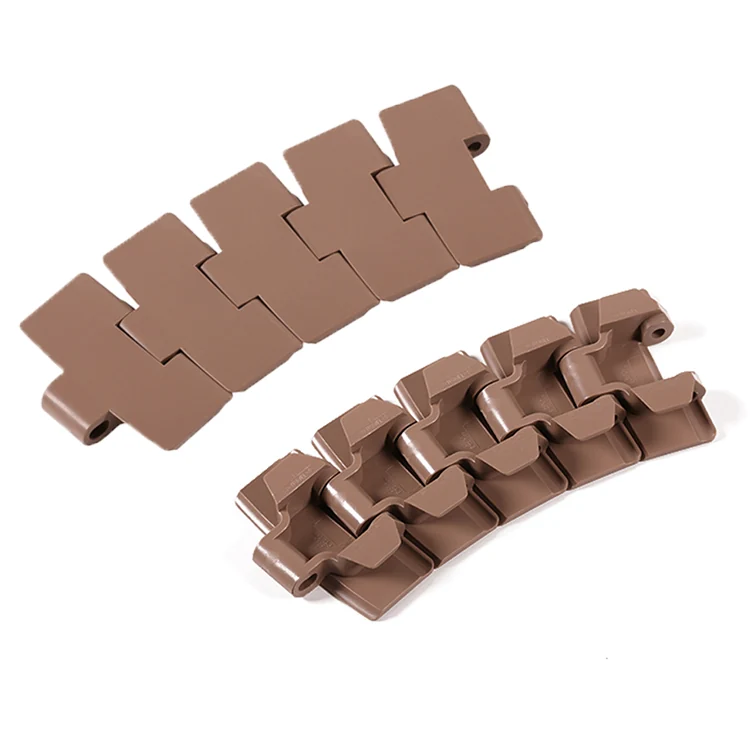
880TAB Side Flexing Top Chains
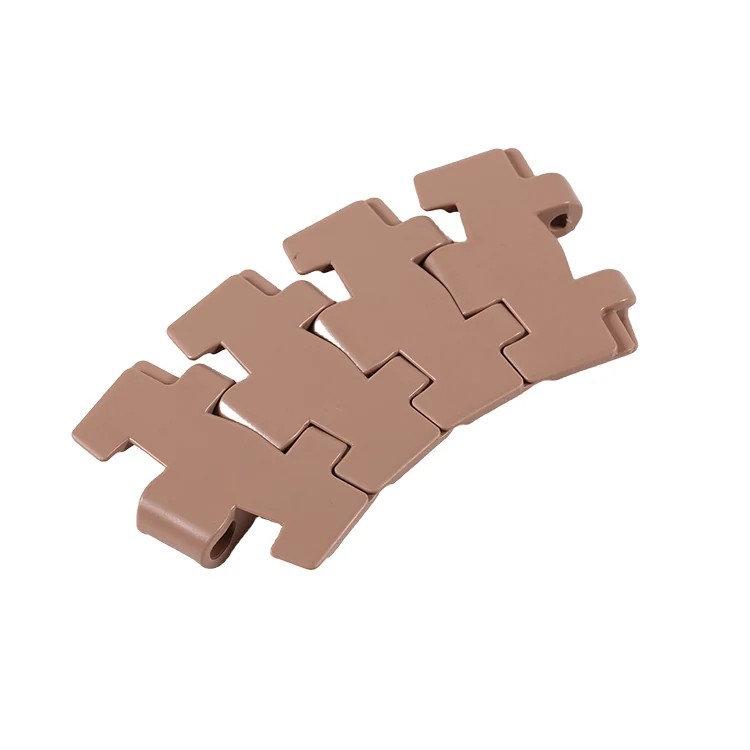
878TAB Plastic Side Flex Top Conveyor Chains
Browse side-flexing tabletop chains
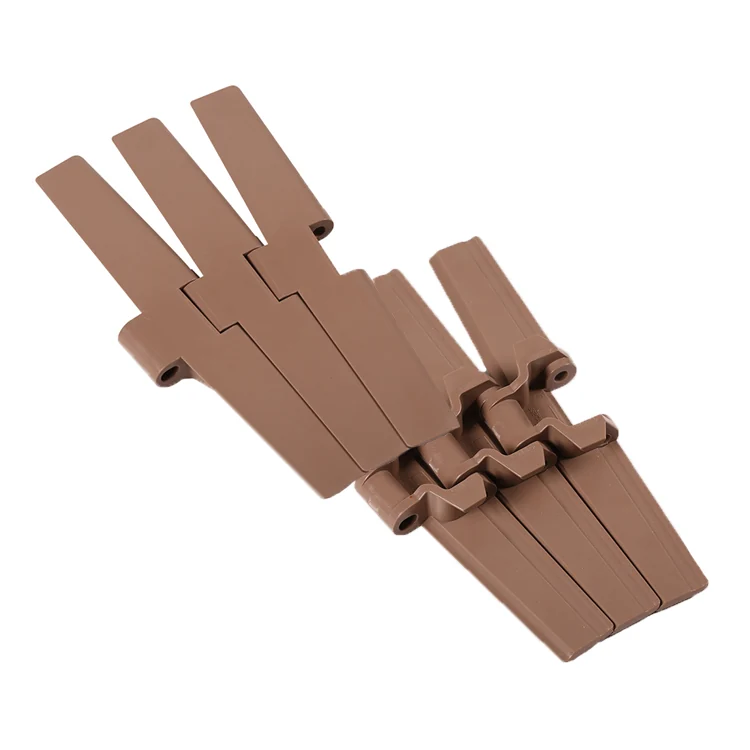
882TAB Side Flexible Plastic Chains
Original publication date: Oct-17-2023