
CC600 Chain
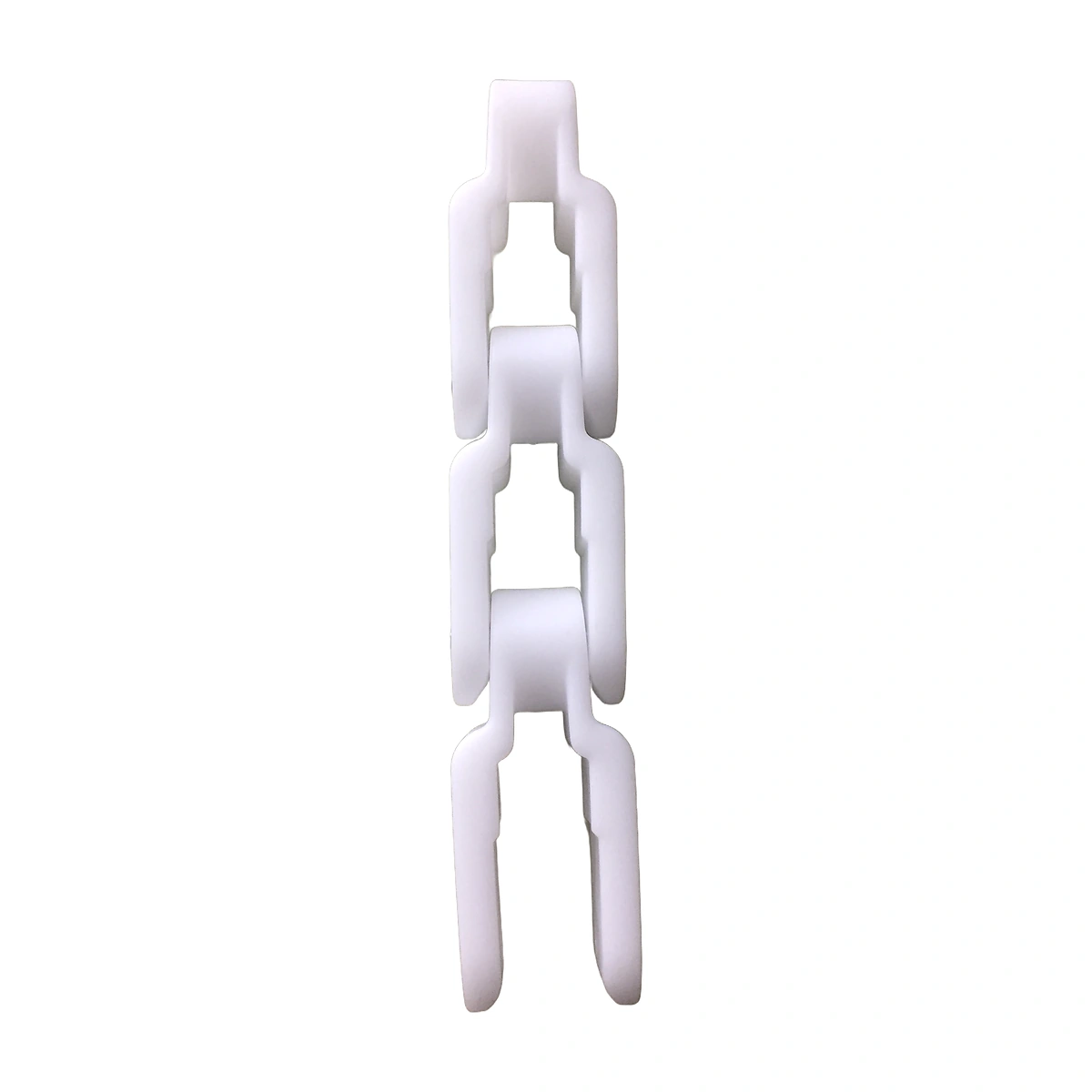
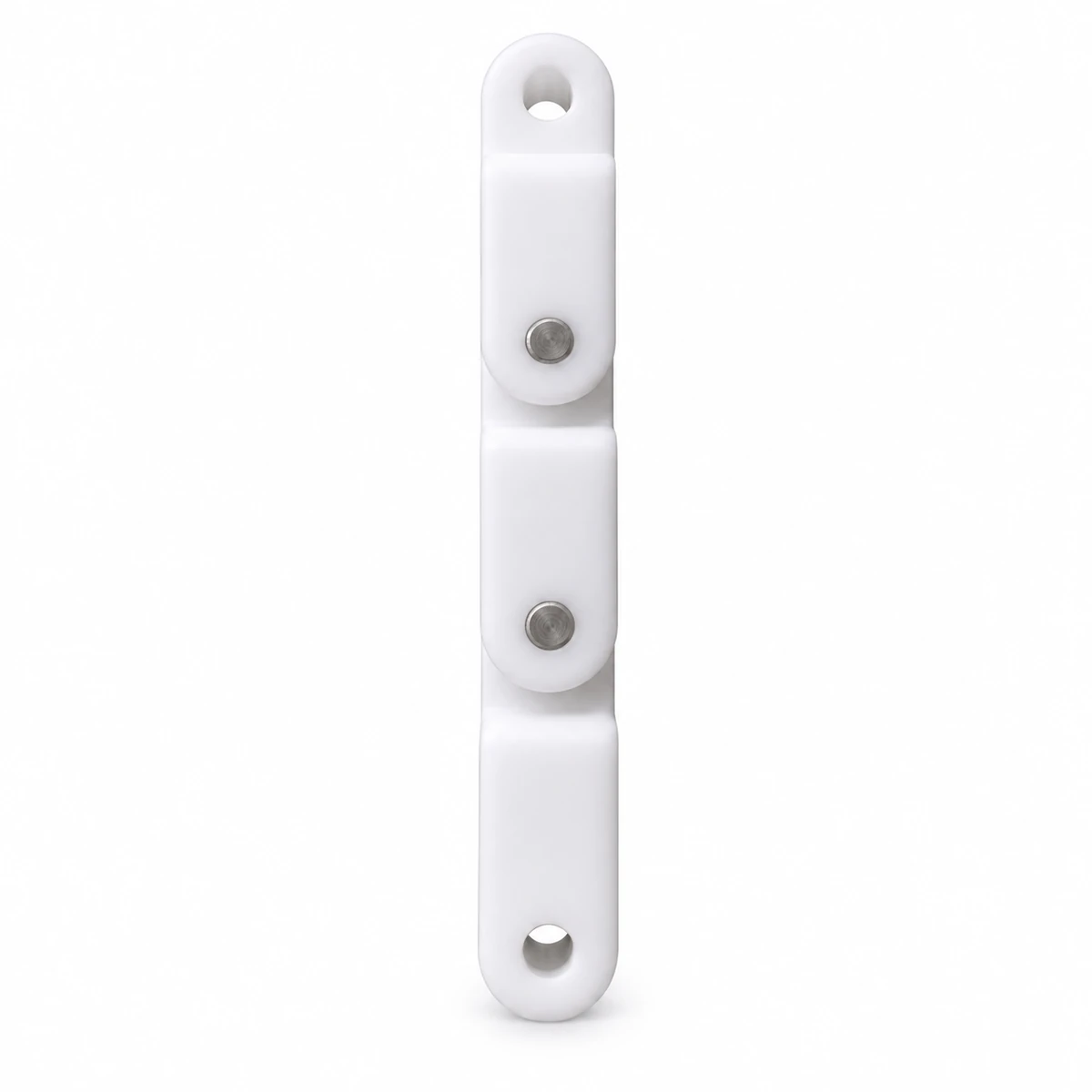
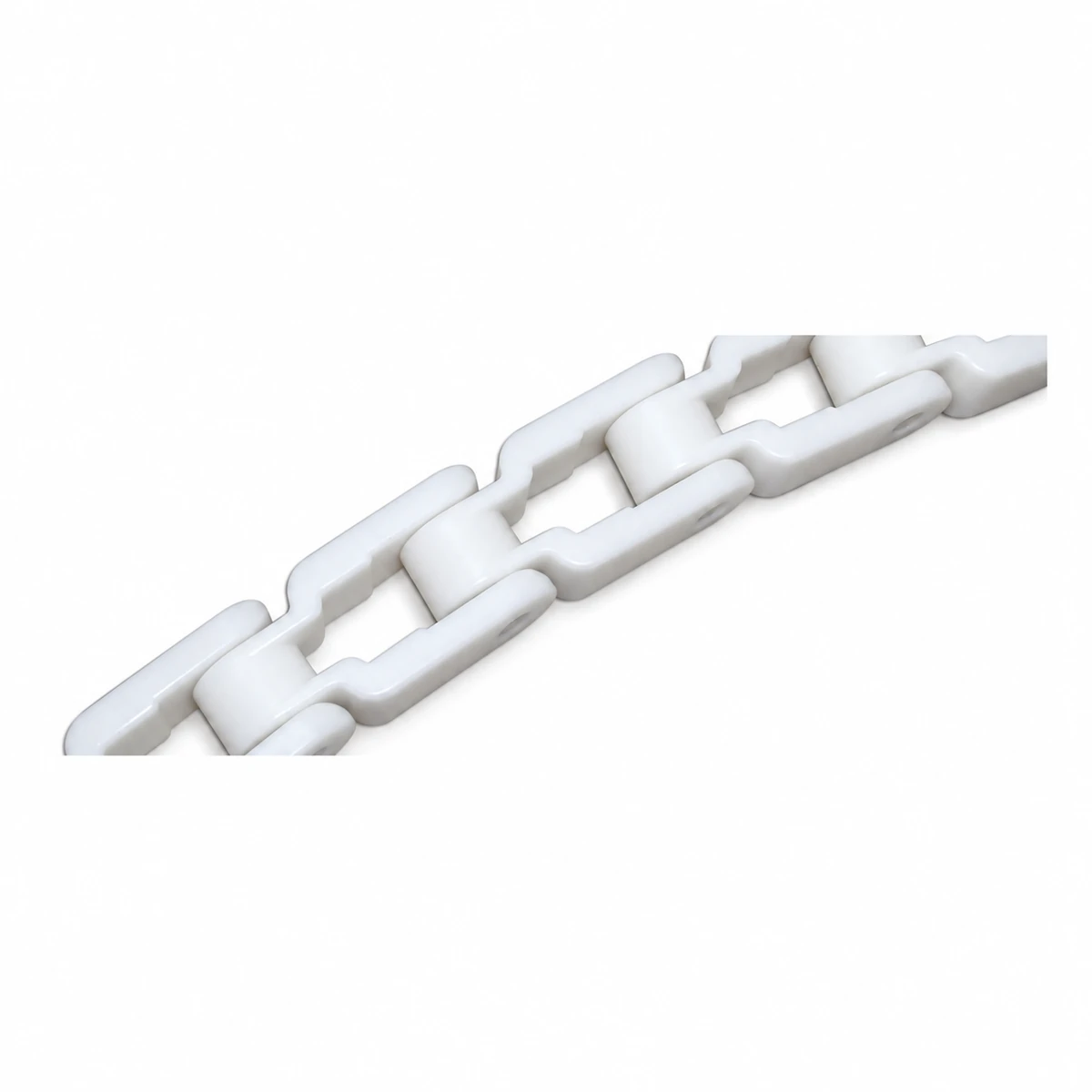
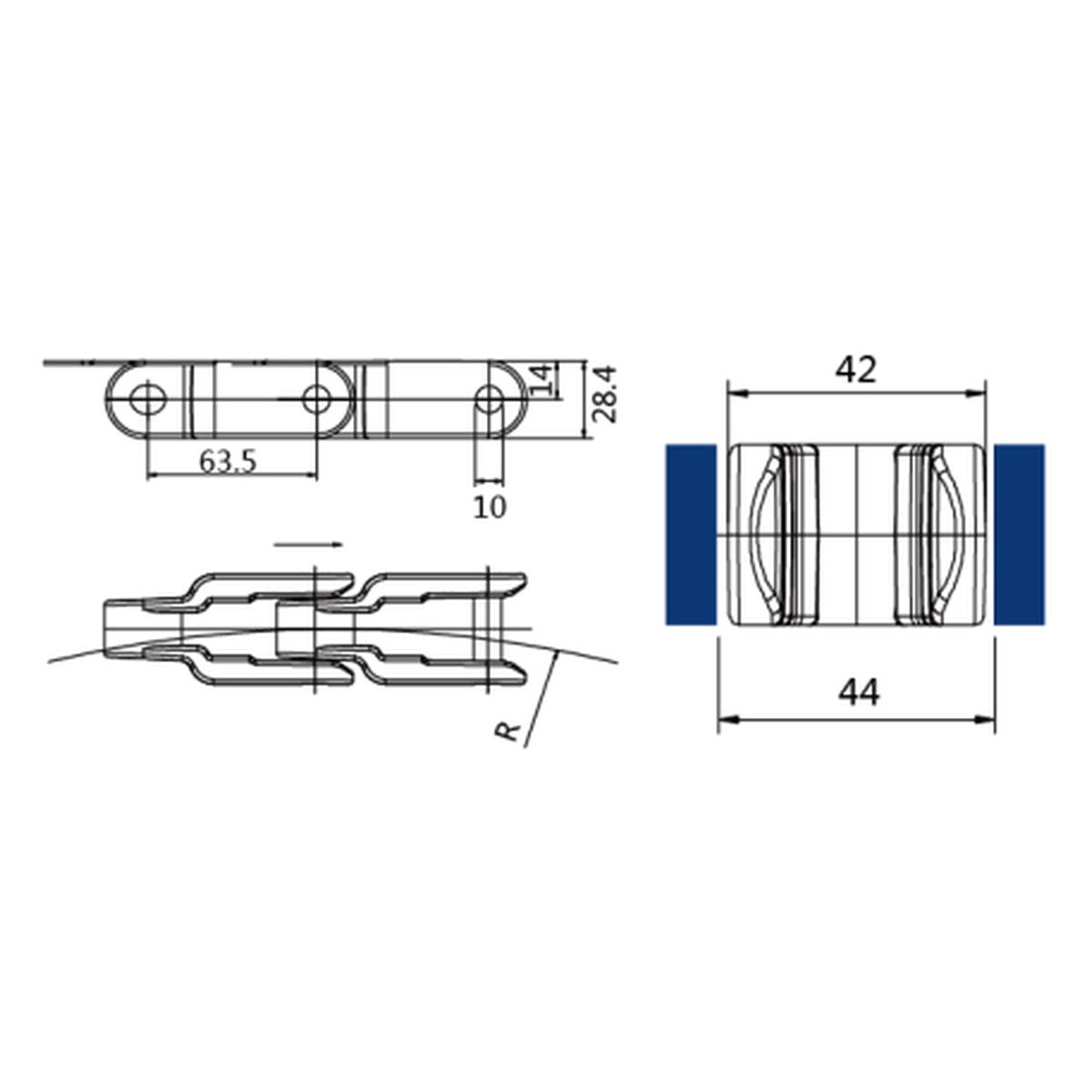
CC600 is a narrow POM case chain with stainless steel pins. Its articulated links provide a running lane beneath cases or carriers that need support along selected lines of their base.
- Plate Width
- 42 mm
- Material
- POM
- Minimum Curve Radius
- 600 mm
Put the Running Lane Beneath a Supported Base Area
Compare chain position with the case's feet, ribs and recessed areas.
Matching Sprocket
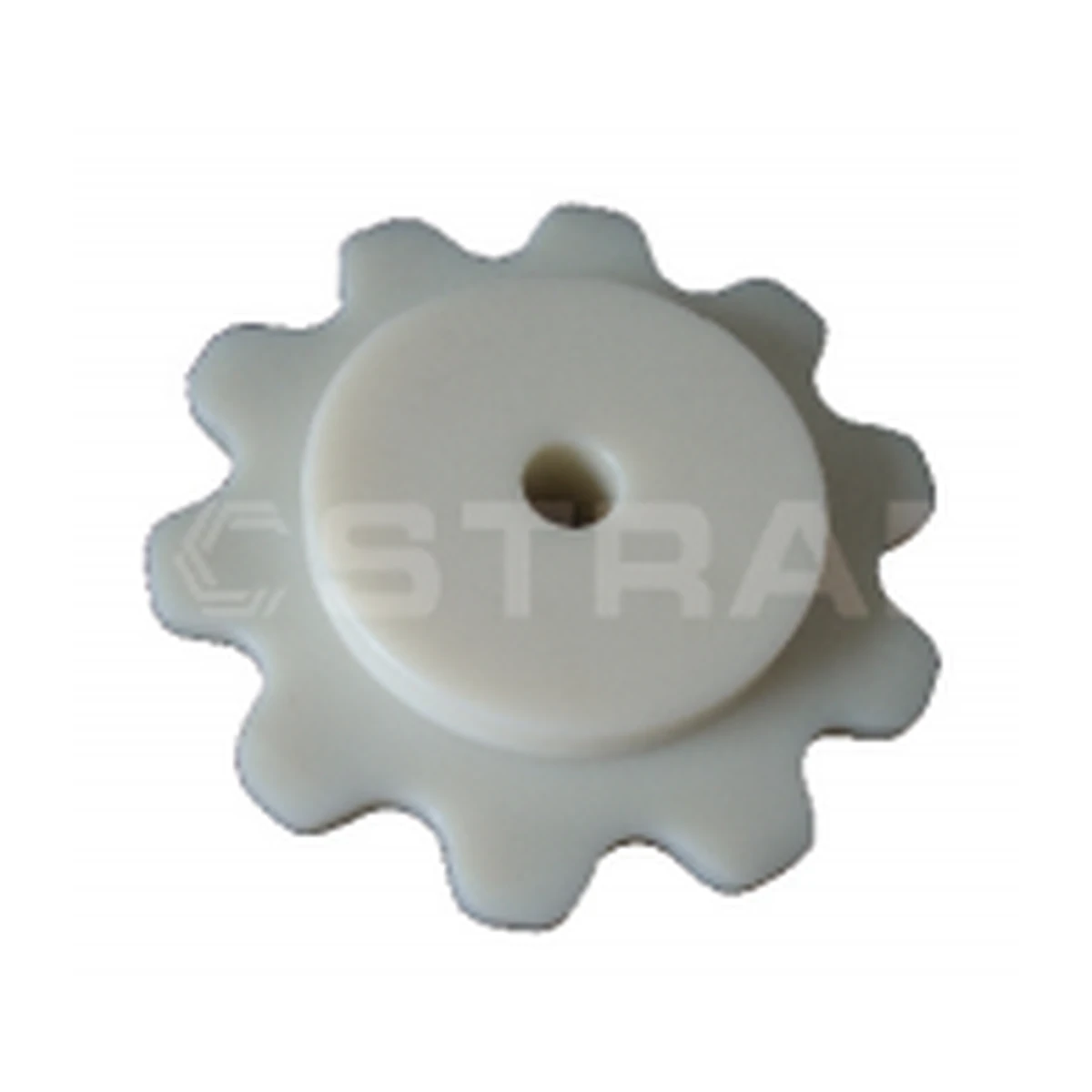
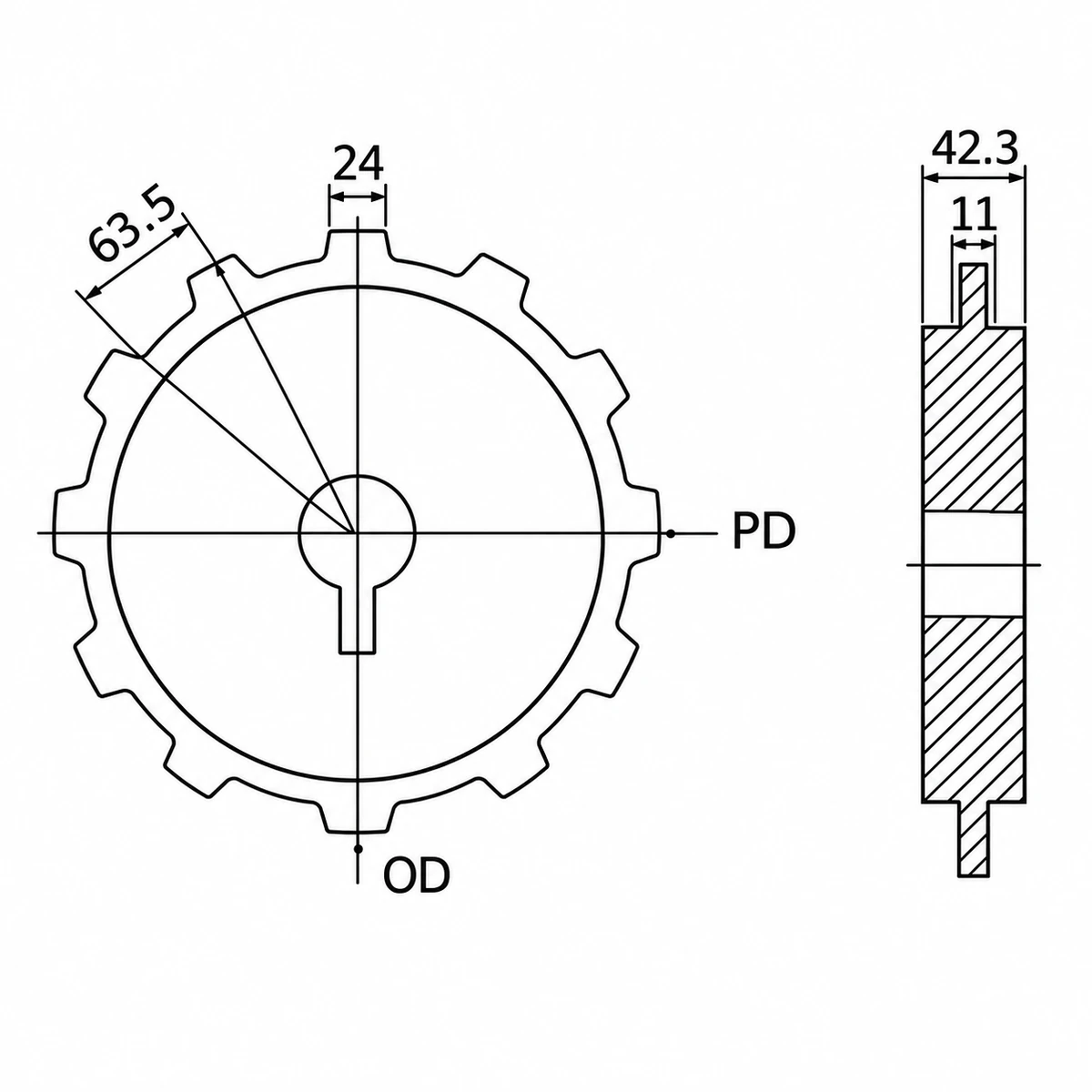
For CC600-series chains. Confirm the tooth count and shaft opening.
Matching Sprocket
For CC600-series chains. Confirm the tooth count and shaft opening.
Support Cases Along Narrow Running Lanes
The CC600 upper surfaces carry the base while the central links articulate through the route. With a larger case, parallel lanes can place contact beneath the load-bearing ribs instead of supporting every part of the base.
The lane arrangement must work through the curve as well as on straight runs. A rib that is centered above a chain at entry can move relative to that support as the case turns.
Specifications
| Parameter | Specification |
|---|---|
| Plate material | Specification: POM |
| Pin material | Specification: Stainless steel |
| Plate width | Specification: 42 mm / 1.654 in |
| Minimum side-flex radius | Specification: 600 mm / 23.622 in |
| Reverse radius | Specification: 75 mm / 2.953 in |
| Reference mass | Specification: 2.13 kg/m / 1.431 lb/ft |
Check Lane Spacing Through the Turn
Use a base drawing to locate the contact ribs and feet. Compare those points with the running lanes at the start, middle and end of the curve.
Confirm the actual link and sprocket engagement with a sample. Review the vertical return against the reverse radius separately from the horizontal route.
Moving Rigid Cases Between Stations
Case conveyors can carry broad products on two or more narrow chain lanes. A rigid base distributes support between those lanes; a flexible base may sag or catch if the spacing is unsuitable.
At a transfer, align the next support beneath the same useful base areas. A continuous outside conveyor edge does not establish continuous support beneath a recessed case.
Request CC600 for Your Running Lane
Send the required chain length and quantity with the case-base dimensions and lane spacing. Include the curve and drive references for CSTRANS to compare support and chain fit.