
Choose a rubber-top modular belt if the carton stays in place on the belt during normal travel, stops and restarts, and transfers cleanly to the receiving surface at the top. Consider a cleated belt when the carton needs a physical stop behind it or when the feed needs separate pockets. If the carton lifts an edge or tips, check how the load sits inside the carton and how the conveyor supports it through changes in slope before choosing a belt.
Check Whether the Carton Slides or Tips
From outside the guards, watch the downhill edge of a carton against a seam between belt modules. If the carton moves downhill relative to the seam while its base stays flat, it is slipping. If the carton and seam move downhill together relative to the frame after a stop, have maintenance check the drive and brake arrangement. When an edge lifts first, check how the carton is loaded and where its base loses support, especially at a change in slope. If the transition needs changing, check belt support and transfer geometry together.
Test Rubber-Top Grip Through Stops and Restarts
Compare both belt surfaces with the same cartons at the intended incline and speed. Include the weights, loading orientations and bottom finishes that run on the line, along with any moisture or dust present in service. The 2720F rubber-top belt has a 27.2 mm pitch. Check where its textured rubber sections meet the carton base, especially where tape or folded flaps change the contact. During an approved trial, follow the same cartons through steady travel, a stop and a loaded restart. Record four observations.
- Movement on the belt. Use the same seam between belt modules as a reference. Note when the carton slips downhill and how far it moves.
- Stability at each transition. As the carton enters the incline and again at the crest, watch for an edge lifting, a corner catching or a bottom flap bouncing.
- Grip as conditions change. Compare grip on a clean, dry belt with grip under the dust or moisture normally present on the line. Check again after routine cleaning.
- Release at the top. Watch whether the receiving conveyor takes the carton smoothly or the trailing end hangs back on the rubber pads and the carton turns.
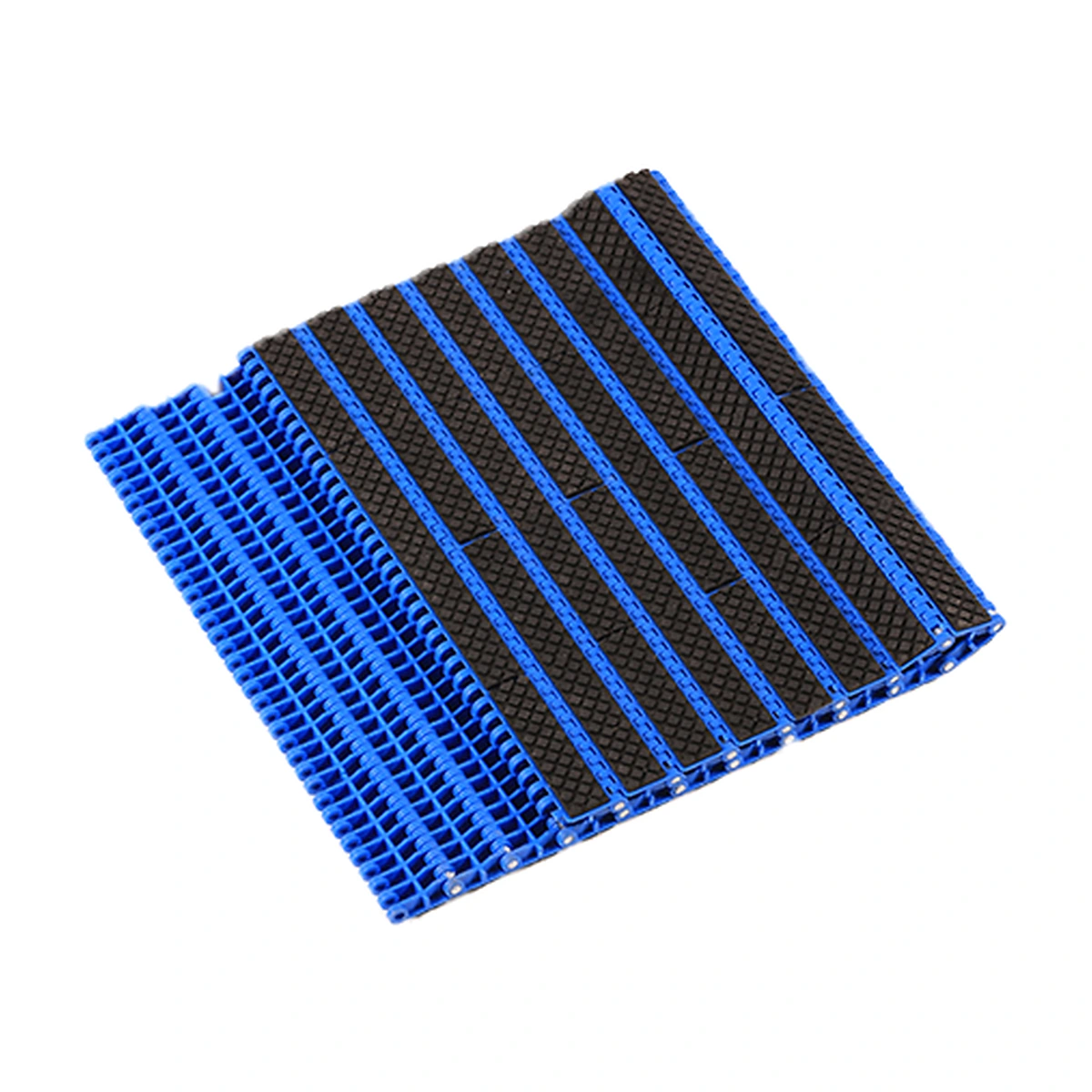
On a stationary 15° incline, a rigid carton that stays flat on the surface needs a coefficient of static friction of at least tan(15°), about 0.27, to hold without a flight or other restraint. At that threshold, static friction is just enough to balance the downhill pull of gravity. Through a start or stop, the carton also has to follow the belt’s change in speed. Check for tipping on the slope and through the transition, and confirm release at the top.
Fit a Flight to the Carton and the Belt Path
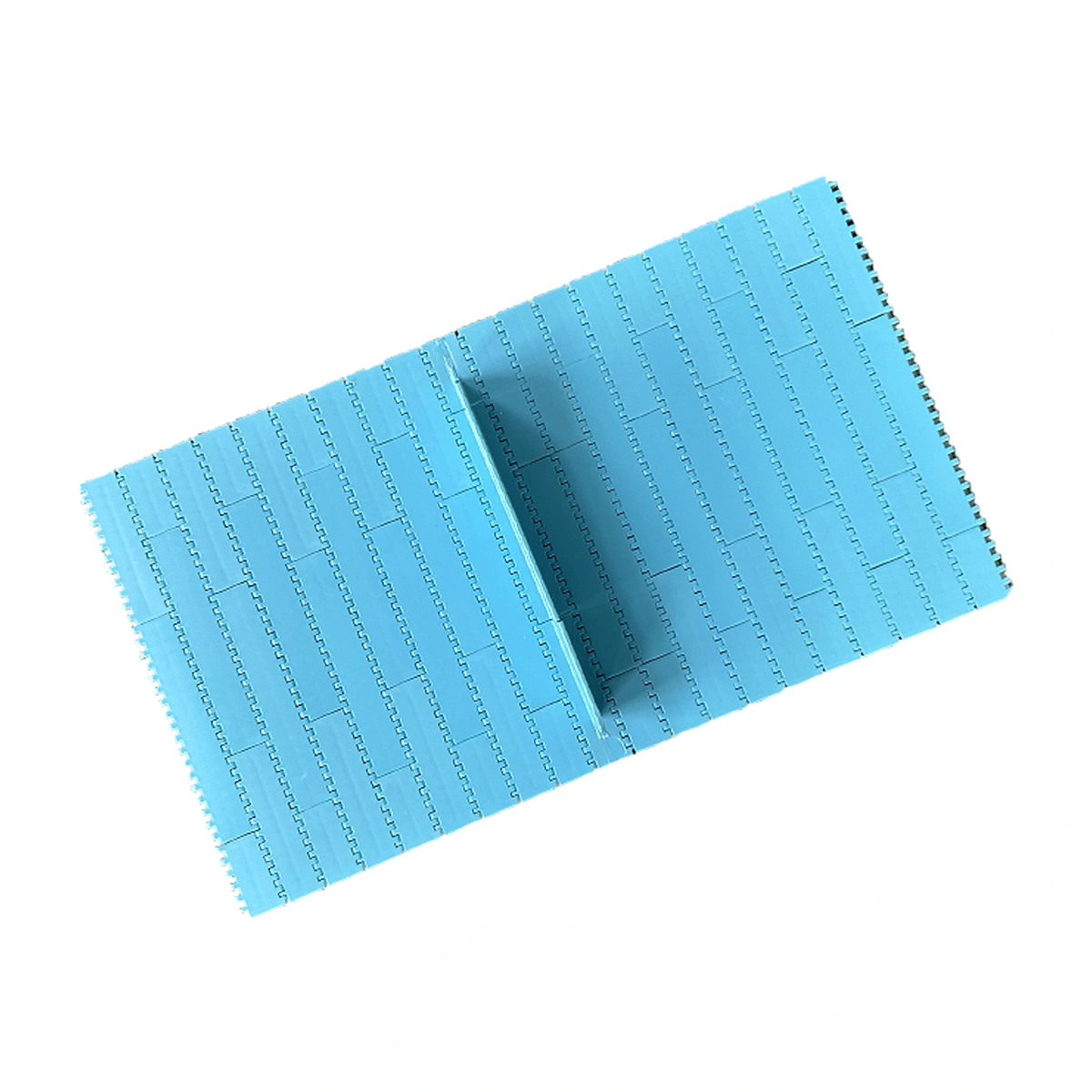
Set the flight height so it supports the downhill face of the carton clear of a weak flap or seam. On a 27.2 mm-pitch 2720D flight layout, compare the 25, 50 and 100 mm reference heights with that contact point and the room available at the infeed and discharge. Confirm the height, belt width and flight spacing together for the selected configuration.
Use the carton’s length in the direction of travel to check the clear space between the flights. Measure the pocket between the facing surfaces of adjacent flights and the repeat distance between corresponding faces. Time the infeed so the carton settles in the pocket before the next flight reaches the loading point. On the 2720D, M is the offset from the belt edge to the end of the flight. Use it with the installed side guide position to check clearance.
Check the Handoff Before You Choose the Belt
Follow the same cartons from the infeed to the receiving conveyor during the trial. Each carton should settle at the infeed, stay in position on the belt and leave in the required orientation. With a rubber top, watch whether the receiving surface takes over without the carton’s trailing end hanging back. With flights, check that the carton leaves freely as the flight rounds the discharge and that the flight clears the receiving equipment and fixed parts along the return. If a carton lifts or turns at the handoff, check the transfer gap and receiving surface against the carton’s footprint before changing the belt.
Observe approved running trials from outside the guards. Follow the site’s energy-control procedure and verify isolation before opening a guard or entering a conveyor danger zone to inspect or measure. For a belt quote, send the belt width, length and quantity along with the carton’s loaded weight, bottom finish and dimensions in its travel orientation. Include the incline angle, line speed, infeed rate (cartons per minute), stops and restarts, and any moisture or dust that affects grip. Show the infeed, discharge and return on a sketch, with the proposed flight pattern and available return clearance if you need cleats.