
LBP883 Roller Top Chain
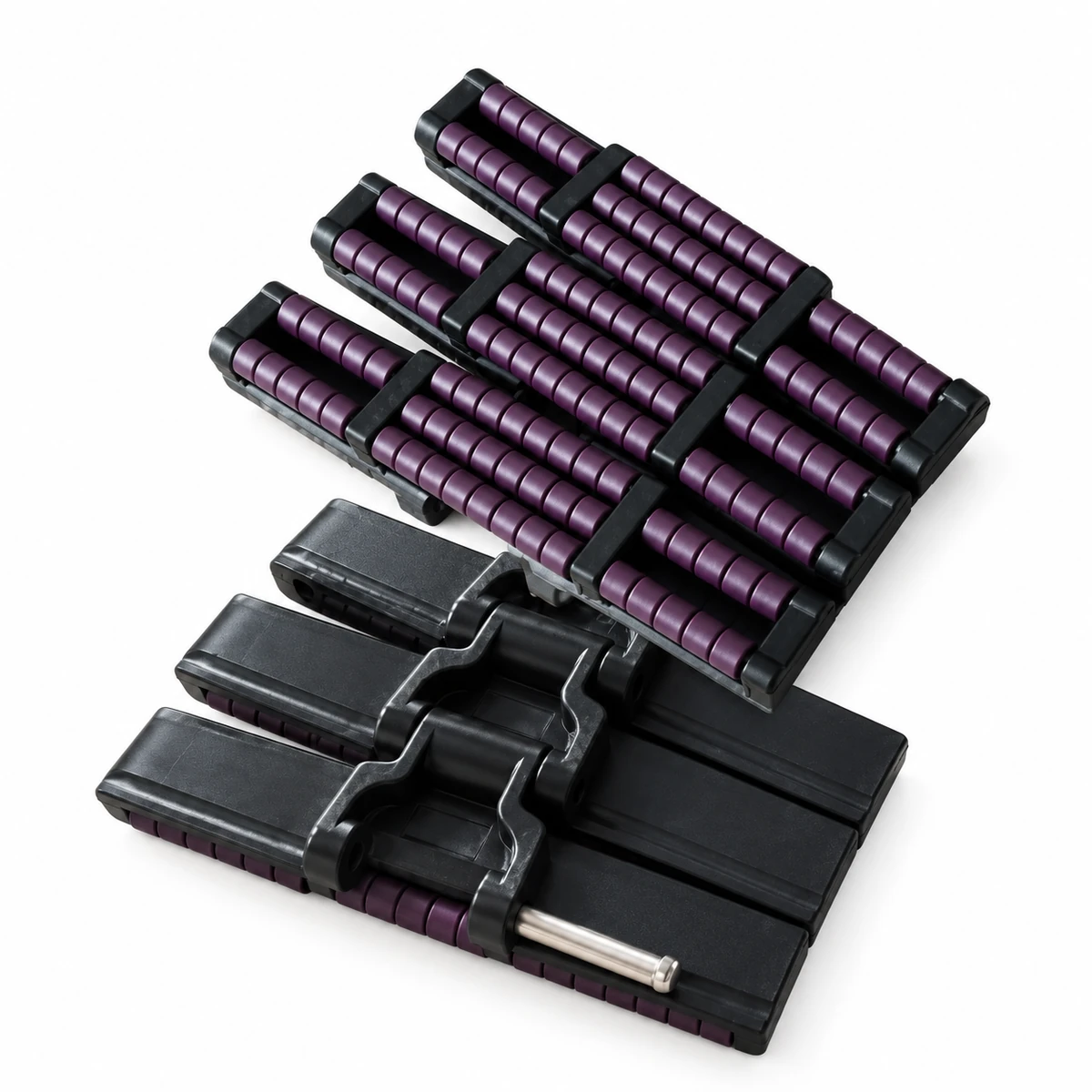
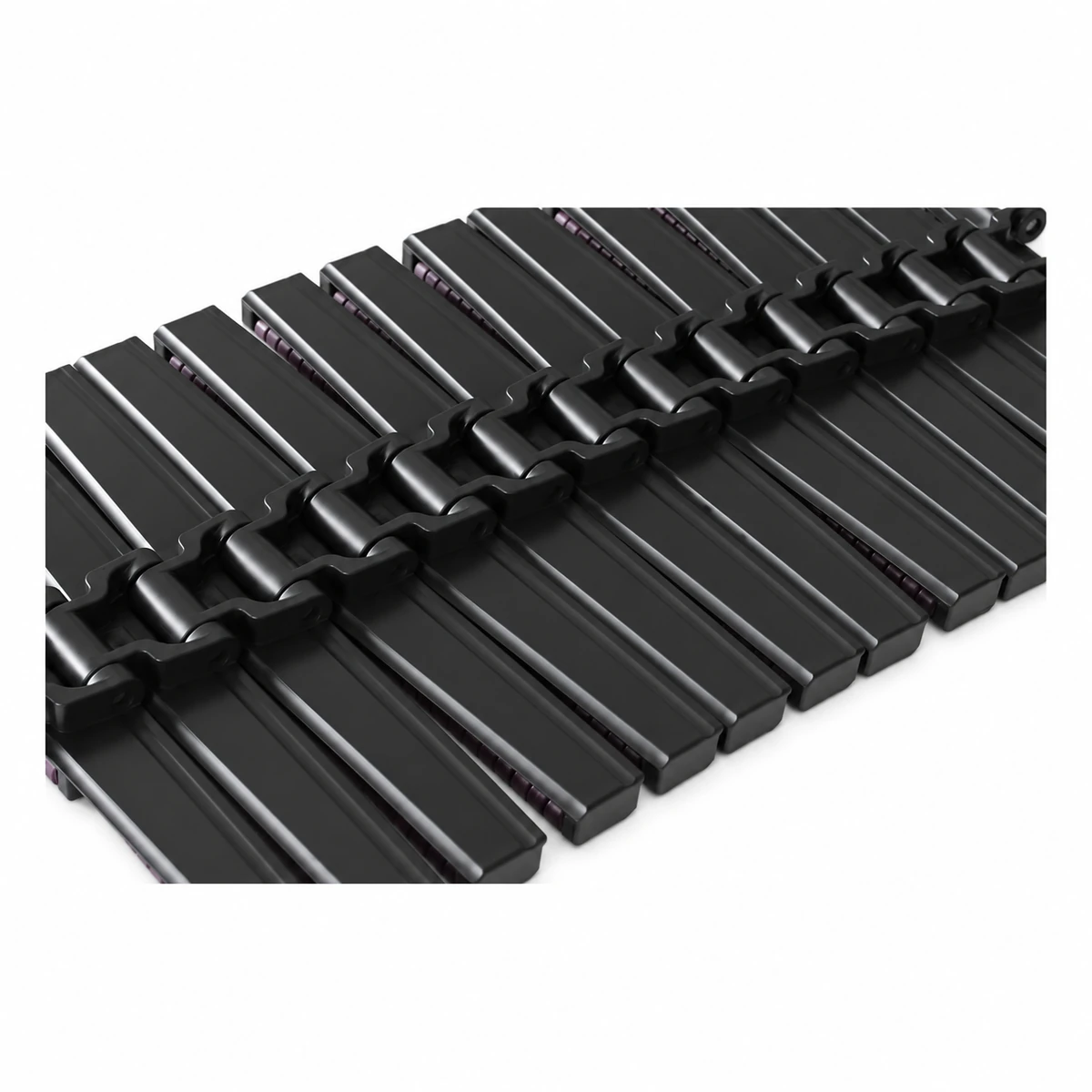
LBP883 provides a roller surface on a side-flexing plate chain. Its three wide plate options support packaged products through a curved route where the product may also need to queue.
- Plate Widths
- 190.5 / 254 / 304.8 mm
- Minimum Curve Radius
- 610 mm
- Roller Material
- POM
Use the Contact Span for the Product Check
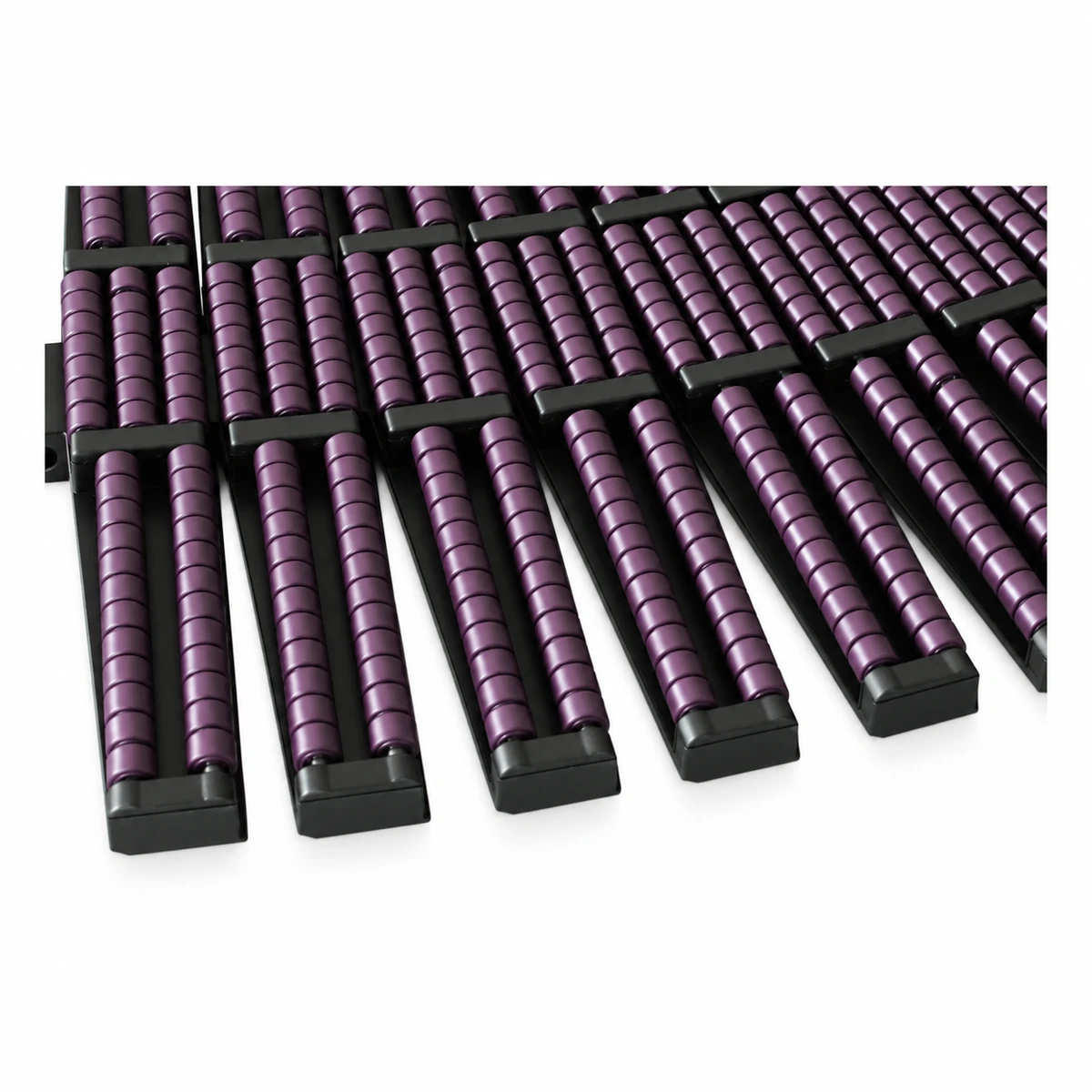
A wide plate does not mean the rollers extend across its full width.
Support Across a Wide Roller Pattern
LBP883 carries the product on roller rows above the plate. The rollers permit movement between the product and chain, useful in a queue where upstream conveying continues during a downstream pause.
The chain also articulates sideways. Through a curve, the product's support shifts relative to the roller pattern and the side guides. A broad flat base and a pack with narrow feet need different support checks even when both fit within the plate width.
Specifications
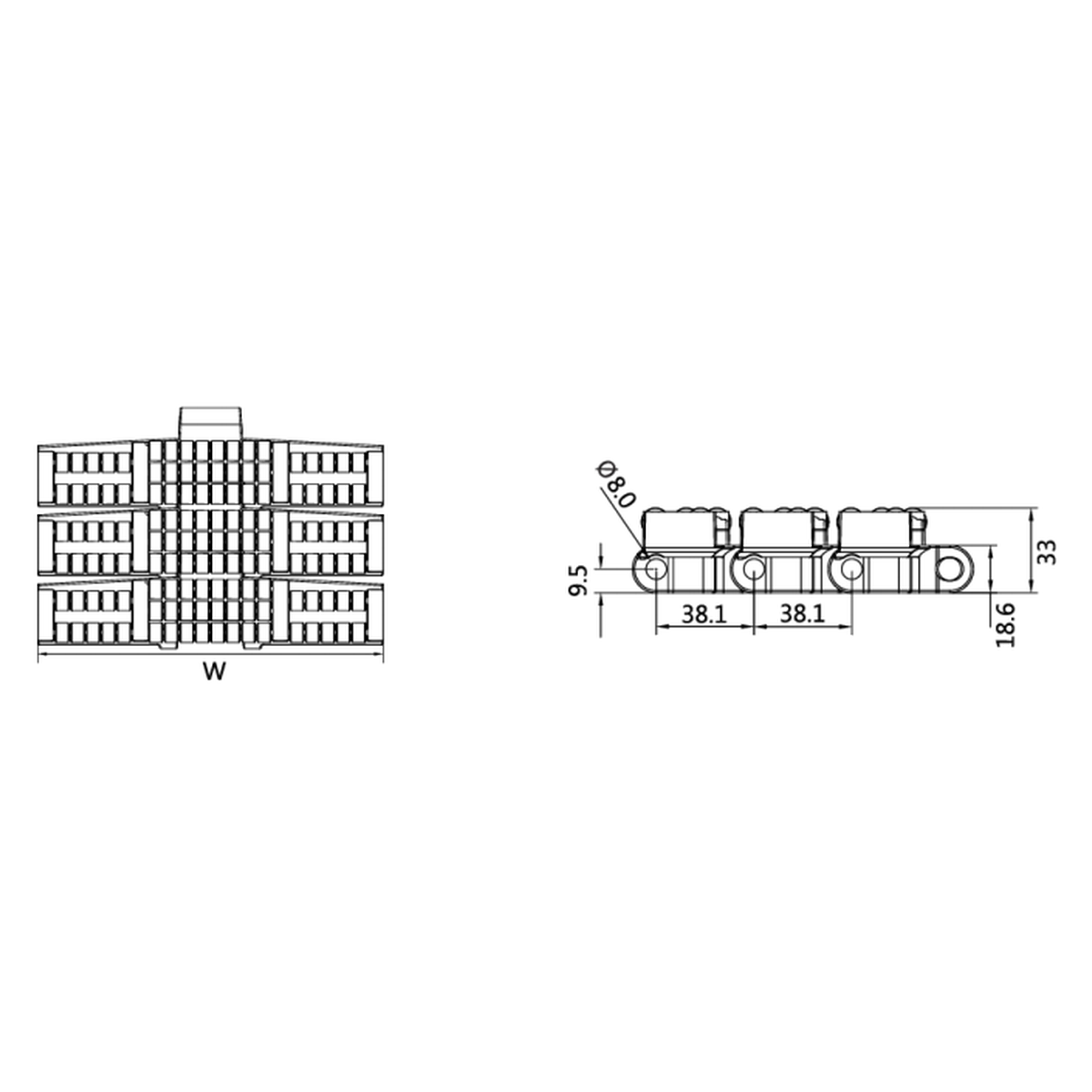
Plate and rollers: POM. Pins: stainless steel. Minimum reverse radius: 101 mm. Minimum side-flex radius: 610 mm.
| Type | Plate Width (mm) | Roller Width (mm) |
|---|---|---|
| LBP883-K750 | Plate Width (mm): 190.5 | Roller Width (mm): 174 |
| LBP883-K1000 | Plate Width (mm): 254 | Roller Width (mm): 238 |
| LBP883-K1200 | Plate Width (mm): 304.8 | Roller Width (mm): 289 |
Plate widths correspond to 7.5, 10 and 12 inches.
Follow the Product Through the Curve Exit
Compare the plan radius and support section with the installed chain. Review the smallest product's contact with the rollers at both the inner and outer sides of the turn.
Check the handoff at the roller-top height. Guides should bring the product into the receiving lane without forcing its base sideways across an unsupported gap.
Turning a Queue Toward the Next Station
A side-flexing roller chain can carry a buffer around a corner before packs enter a downstream machine. Rolling contact lets the chain move beneath restrained products.
The curve also changes the direction of the queue. Pack stability depends on the footprint, guide position and stop arrangement, especially when a tall product leaves the bend and accelerates into a straight lane.
Review an LBP883 Roller Lane
Send the width code, required length and quantity with a curve drawing. Include product-base details and the transfer arrangement so CSTRANS can review support through the turn and discharge.