
83H Cleated Flexible Chain
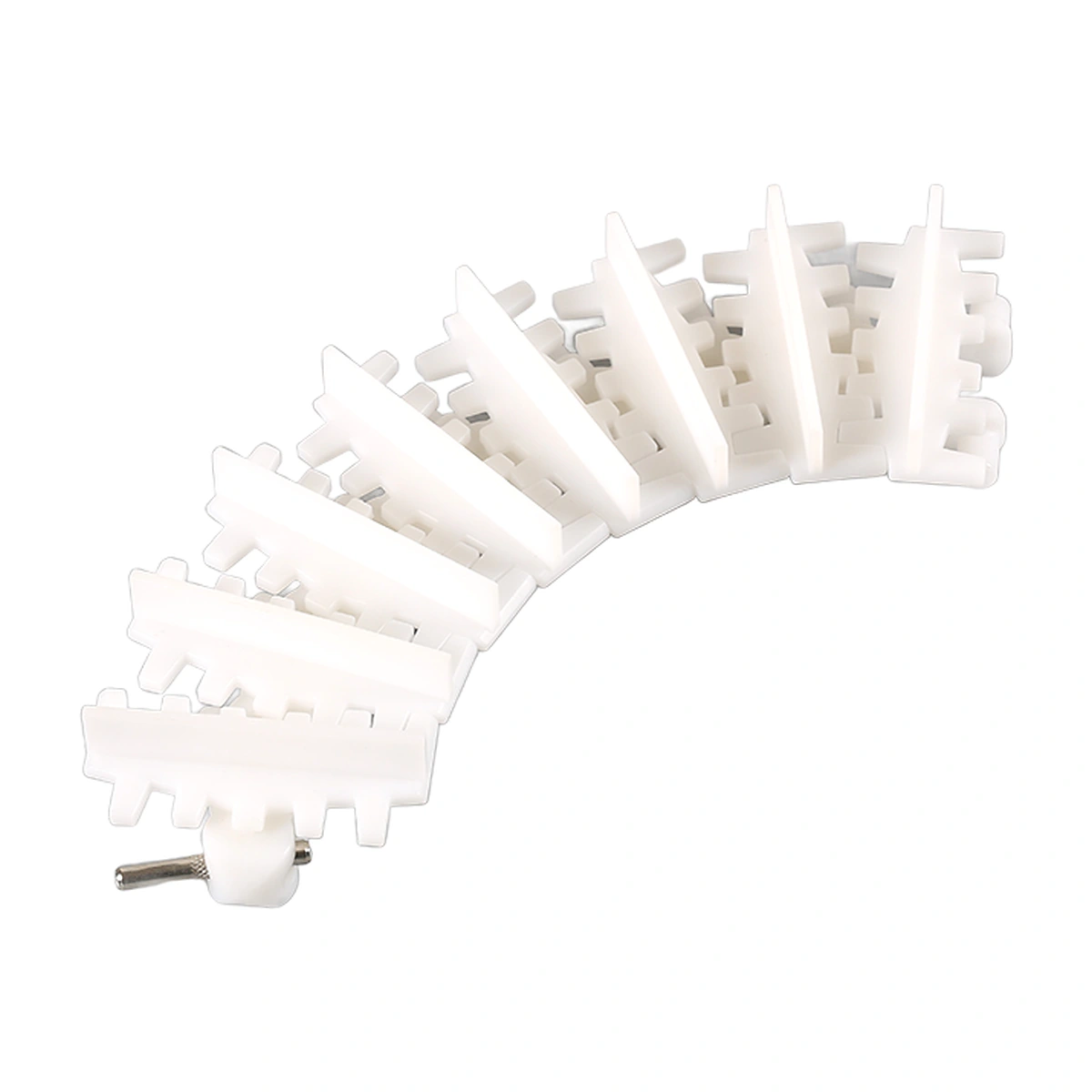
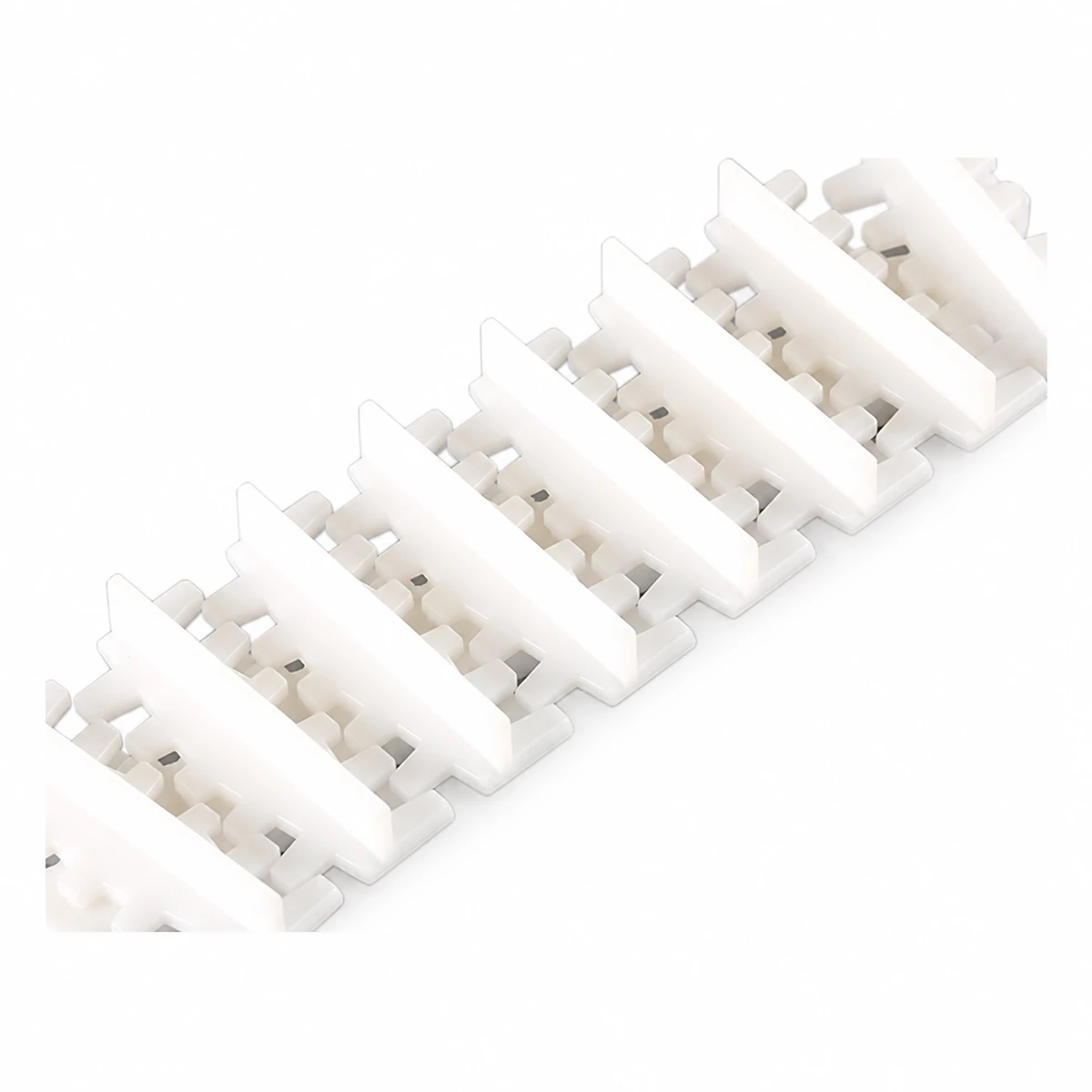
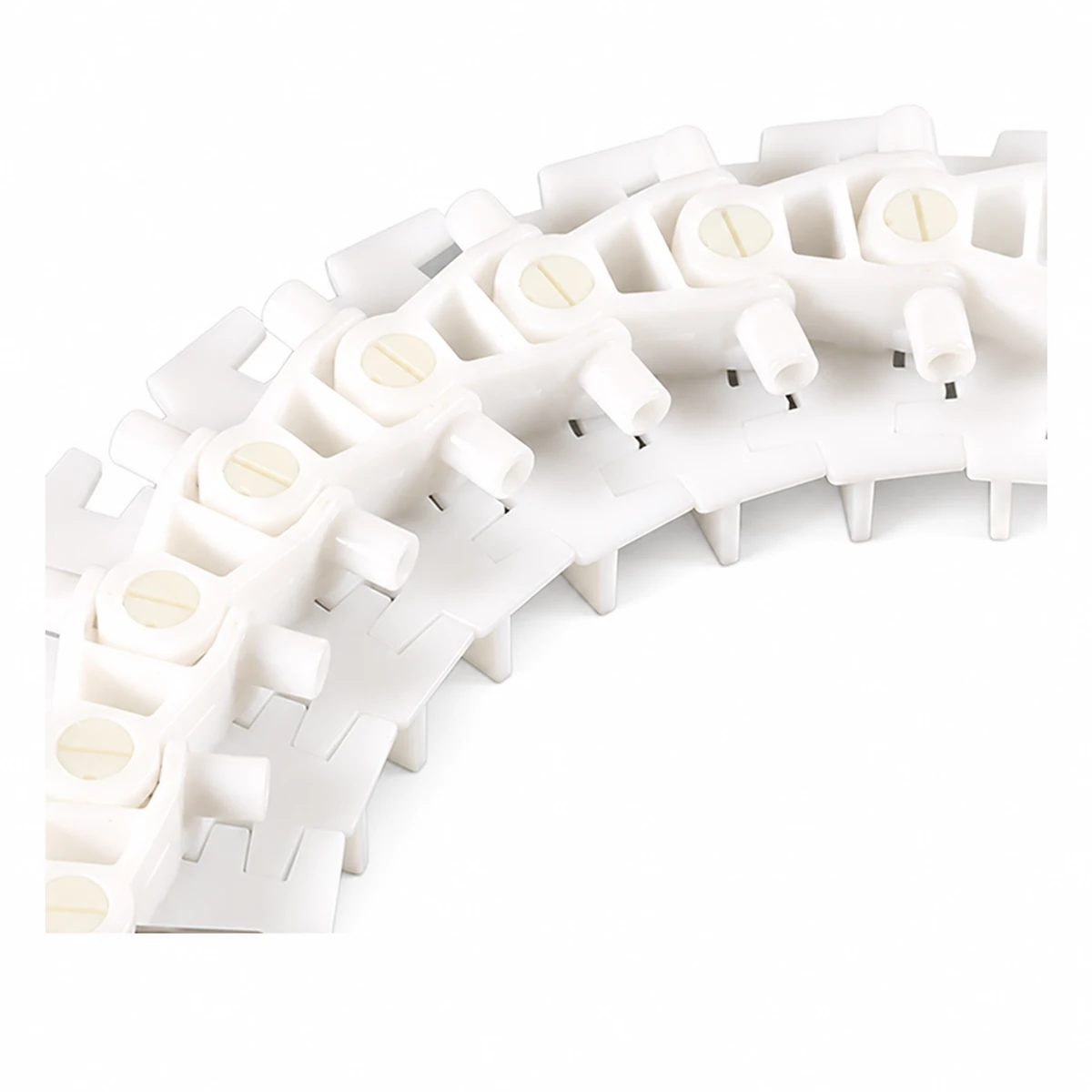
83H carries upright straight cleats on an articulated POM chain. The cleats provide a physical contact face behind the product, useful where conveying depends on product position as well as contact with the chain surface.
- Model
- 83H
- Surface Feature
- Straight cleats
- Body
- POM
Allow Space for the Cleats to Return
Cleat clearance matters around the drive, beneath the conveyor and at each transfer.
Matching Sprocket
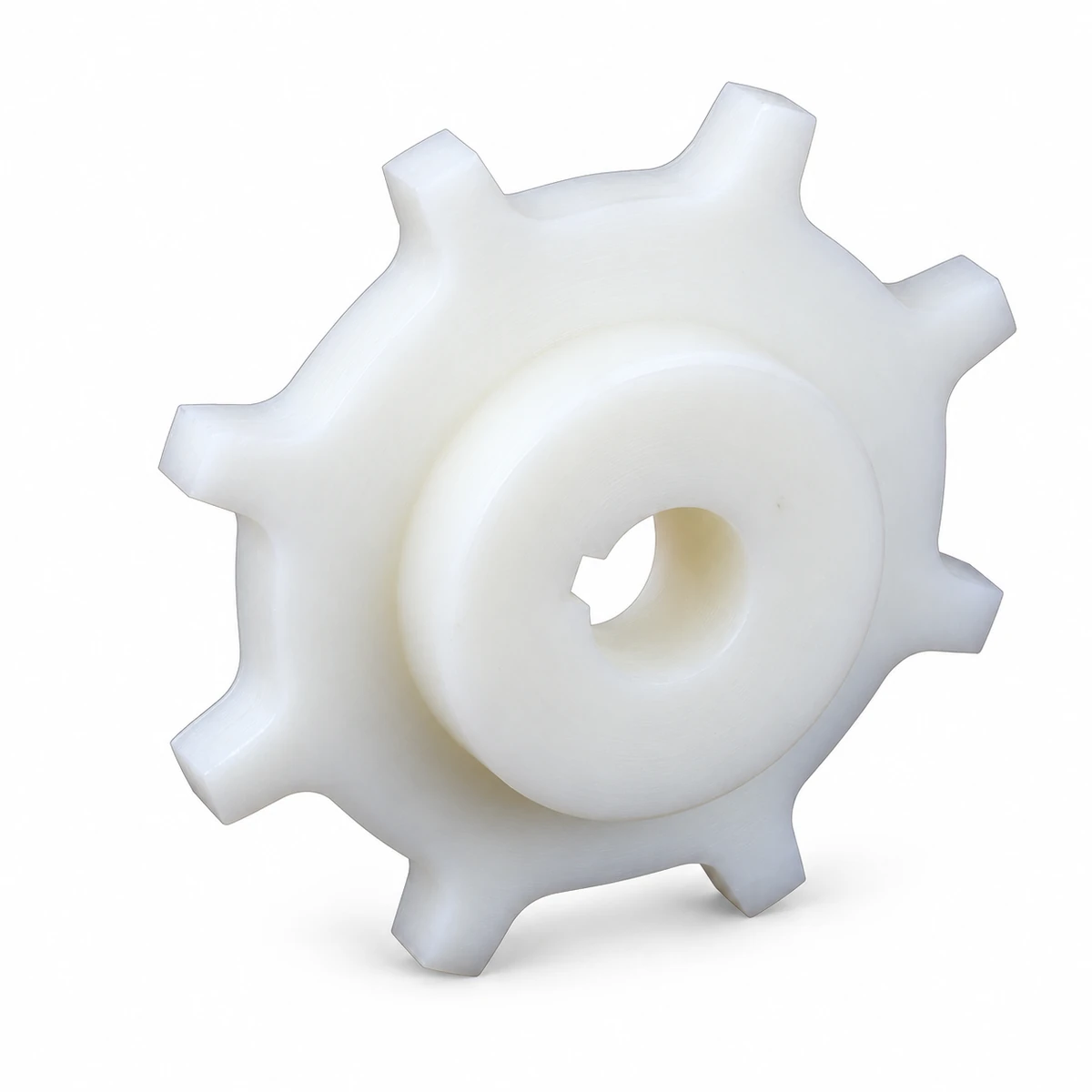
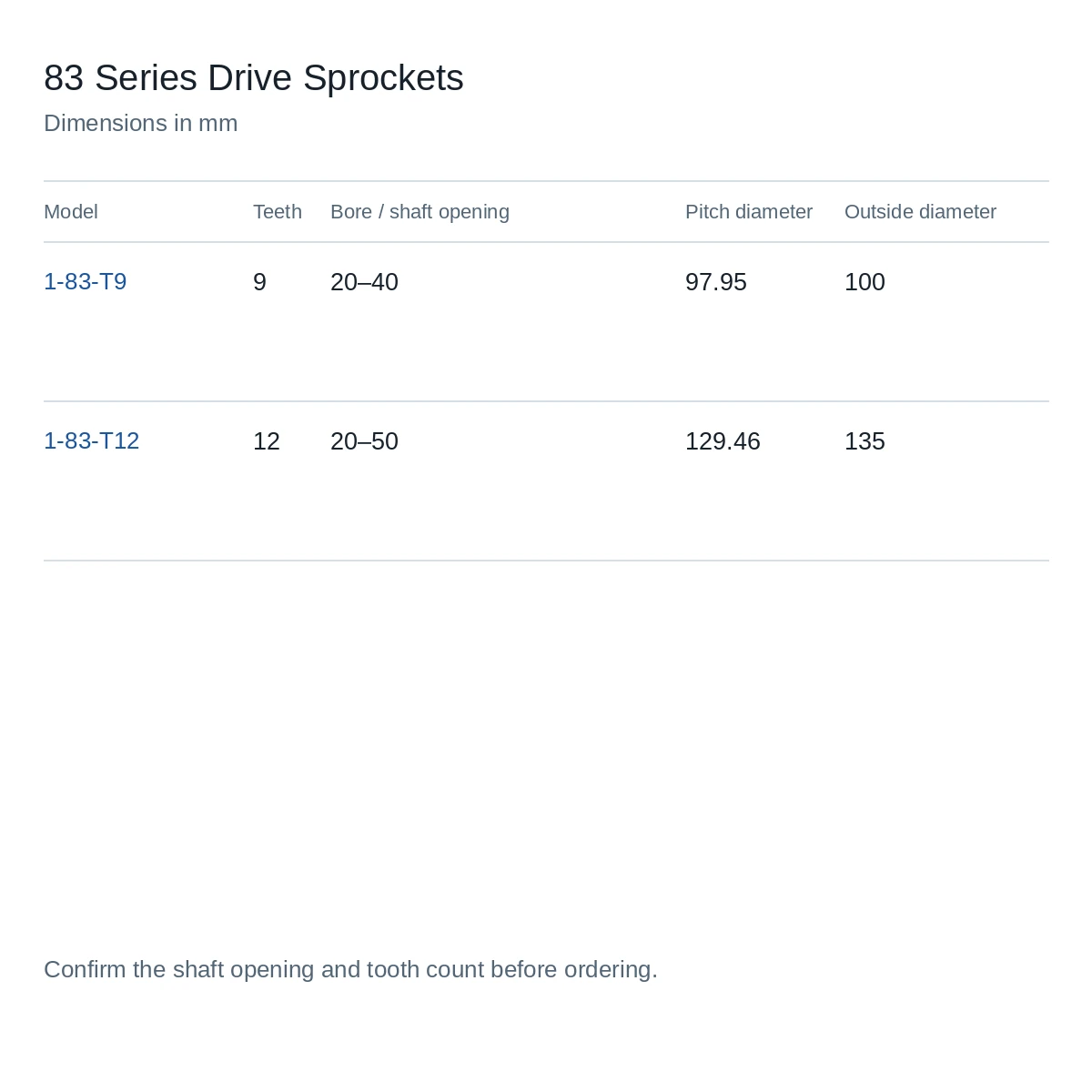
For 83-series chains. Confirm the tooth count and shaft opening.
Matching Sprocket
For 83-series chains. Confirm the tooth count and shaft opening.
A Contact Face Behind Each Product
A raised cleat can push against a product instead of relying entirely on friction between the chain surface and the product base. On a conveyor that presents individual items to the next operation, cleat spacing and the product length determine where that contact occurs.
83H links articulate through the route while the cleats rise above the carrying surface. A taller cleat changes both the contact position on the product and the swept space around the chain. Check this space at the conveyor ends before choosing a variant.
Specifications
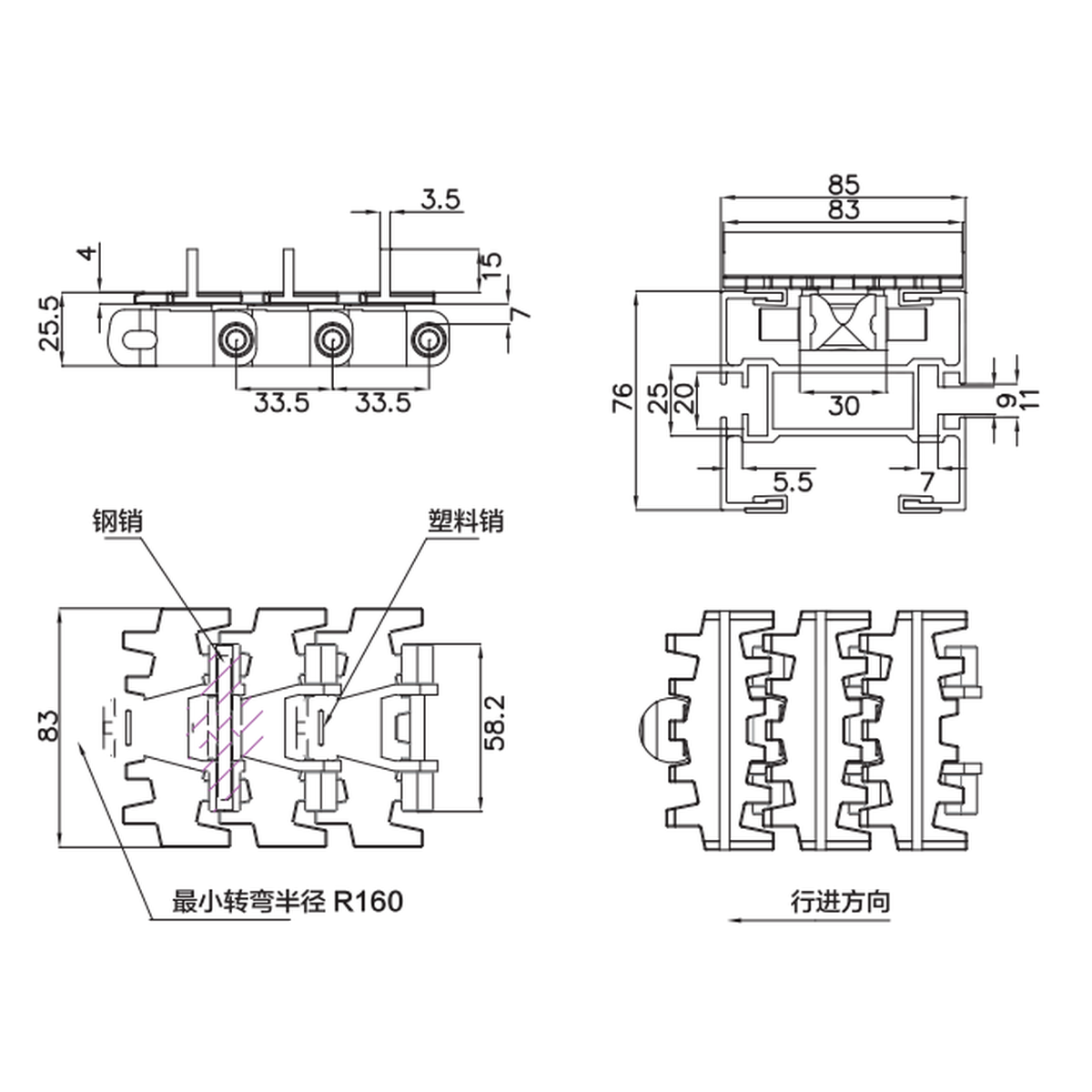
83H Construction and Variant Data
| Parameter | Specification |
|---|---|
| Model | Specification: 83H |
| Body | Specification: POM |
| Joint ball material | Specification: PA6 |
| Pin material | Specification: SUS201 |
| Colour | Specification: White |
| Listed tensile load | Specification: <5,000 N / <1,124 lbf |
| Listed conveyor length | Specification: ≤12 m / ≤39.37 ft |
| Listed speed | Specification: ≤40 m/min / ≤131.23 ft/min |
| Listed service temperature | Specification: −20 to 90 °C / −4 to 194 °F |
| Cleat Variant Reference | Reference Chain Mass |
|---|---|
| 15 | Reference Chain Mass: 1.22 kg/m / 0.820 lb/ft |
| 20 | Reference Chain Mass: 1.25 kg/m / 0.840 lb/ft |
| 30 | Reference Chain Mass: 1.28 kg/m / 0.860 lb/ft |
Select the cleat variant against a dimensioned drawing. Operating limits need assessment for the assembled chain and duty; tensile load is not a product-weight capacity. Review speeds above 30 m/min and frequent start-stop operation.
Set Cleat Contact and Clearance Together
Compare the product length with the proposed cleat spacing. The contact face should engage the intended part of the product without striking a fragile edge or lifting the base.
Measure the full return envelope, including clearance beneath the track and around the end wheels. At an incline transition, check the changing angle between the product base and cleat. A receiving conveyor also needs room for the cleat to turn away after the product transfers.
Moving Spaced Products Through an Elevation Change
Cleated conveying is useful when individual products need a trailing contact face during travel. On an inclined section, the cleat can oppose backward movement while the base remains supported by the chain. Product shape, incline and cleat arrangement determine whether the contact is suitable.
The cleat also occupies space between products. A feed arrangement must admit each item into that space, and the discharge must let the item leave before the cleat follows the chain around the end.
Request an 83H Configuration
Send the required cleat variant, chain length and quantity with a dimensioned product sketch. Include cleat spacing, incline geometry and available return clearance for CSTRANS to review the arrangement.