
63C Cleated Flexible Chain
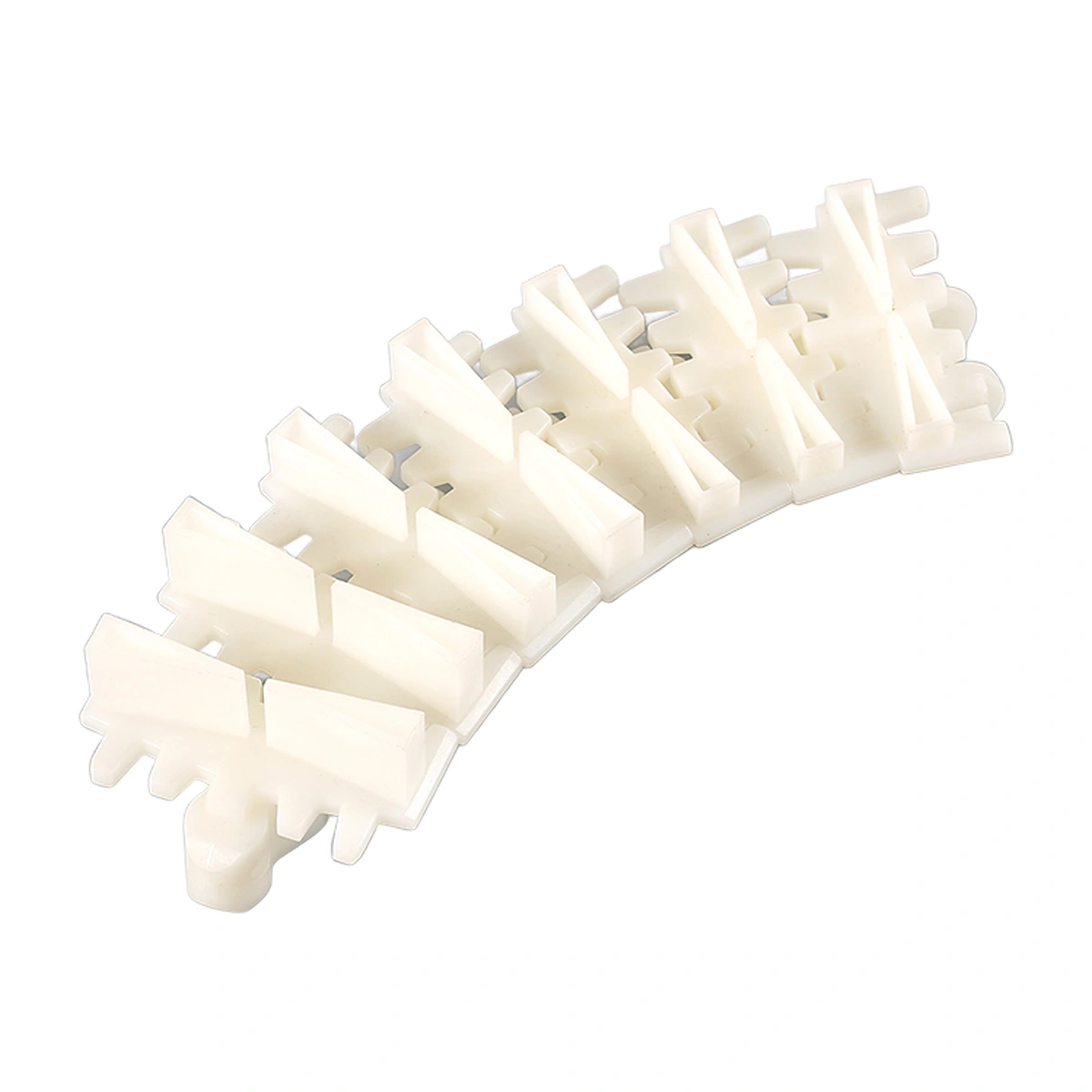
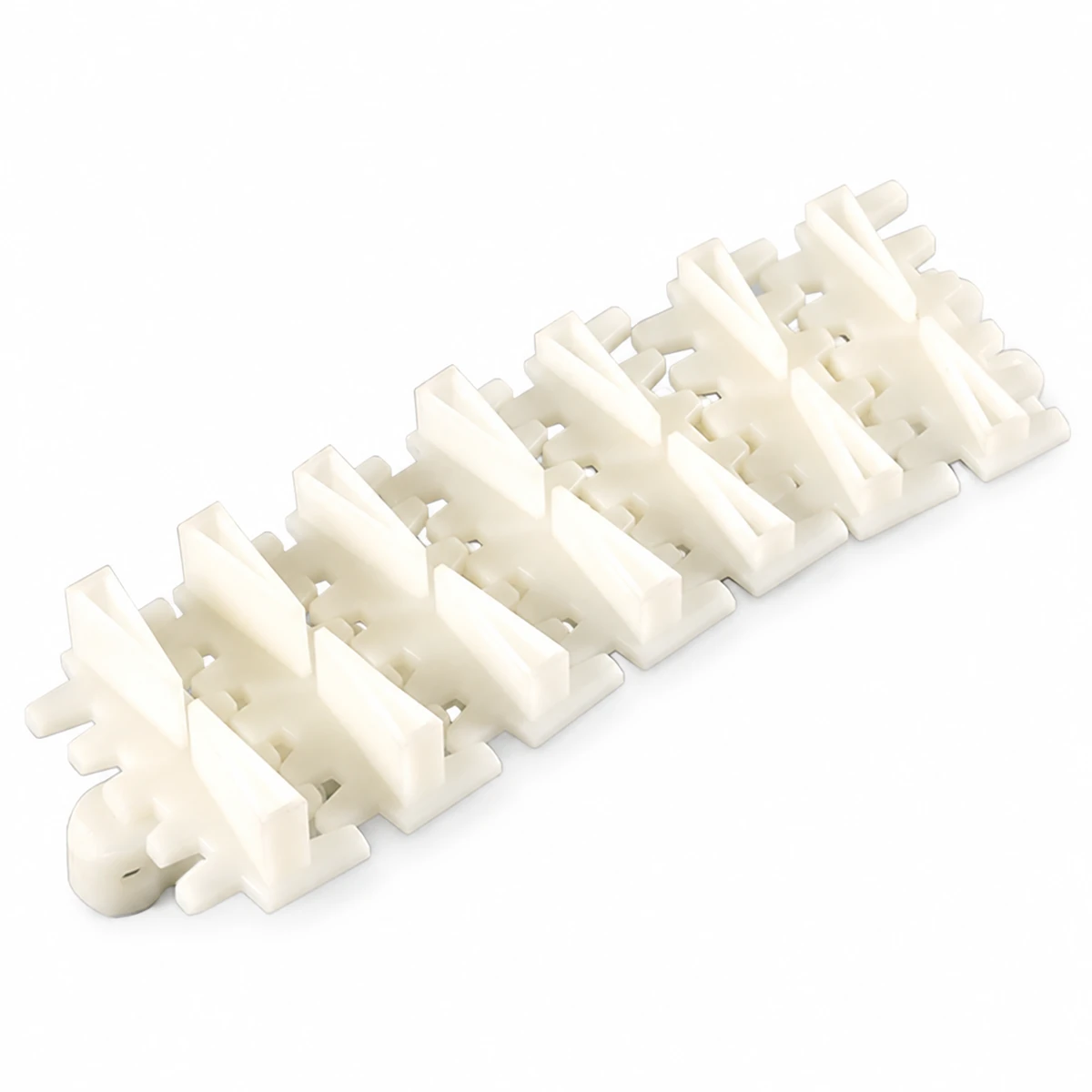
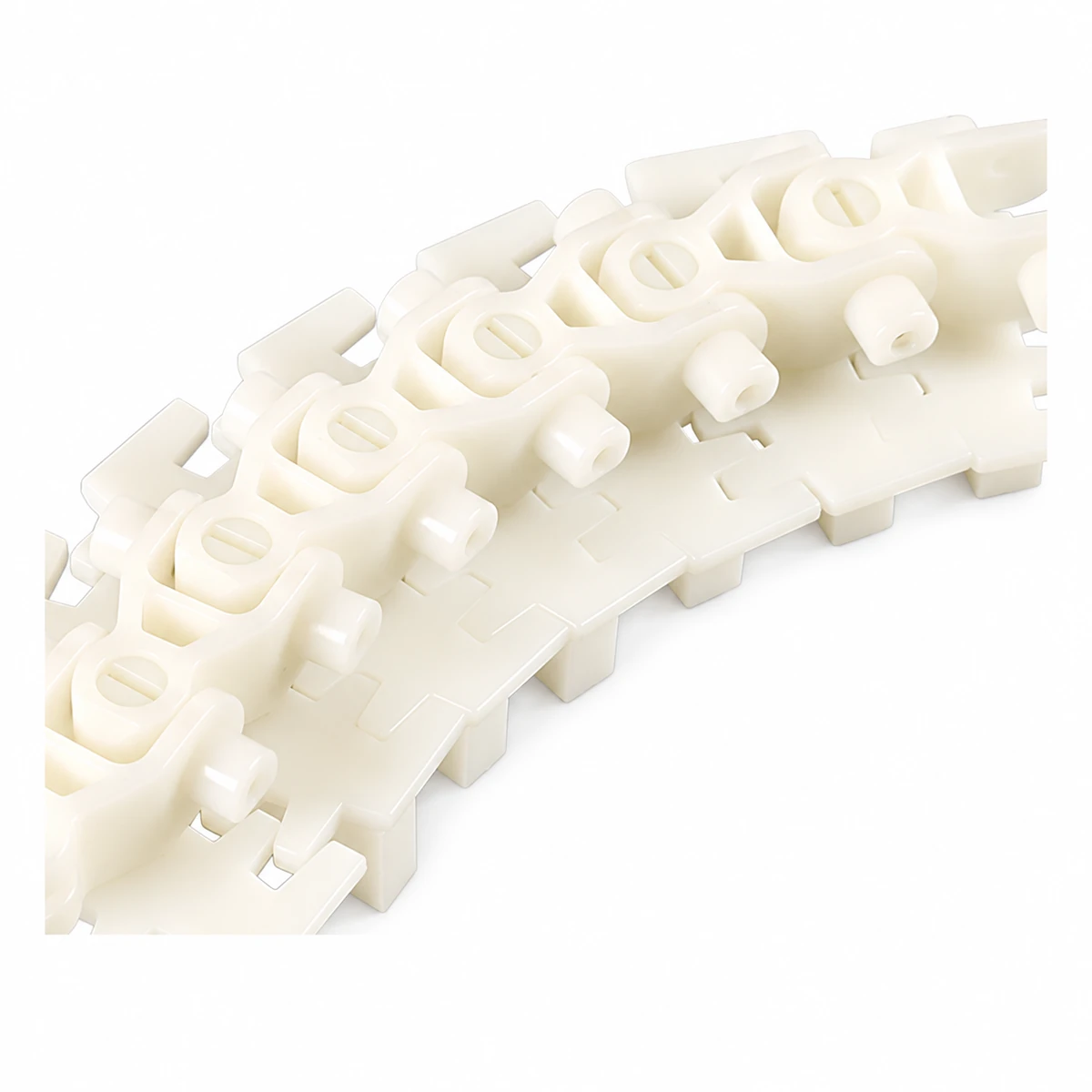
The 63C adds raised triangular cleats to a fingered flexible-chain plate. The cleats provide contact above the carrying face for products that need a pushing or locating feature.
- Model
- 63C
- Carrying Feature
- Triangular cleats
- Body Material
- POM
Match cleat height and spacing to the product's contact point. Check the complete moving profile through the return and transfer.
Matching Sprocket
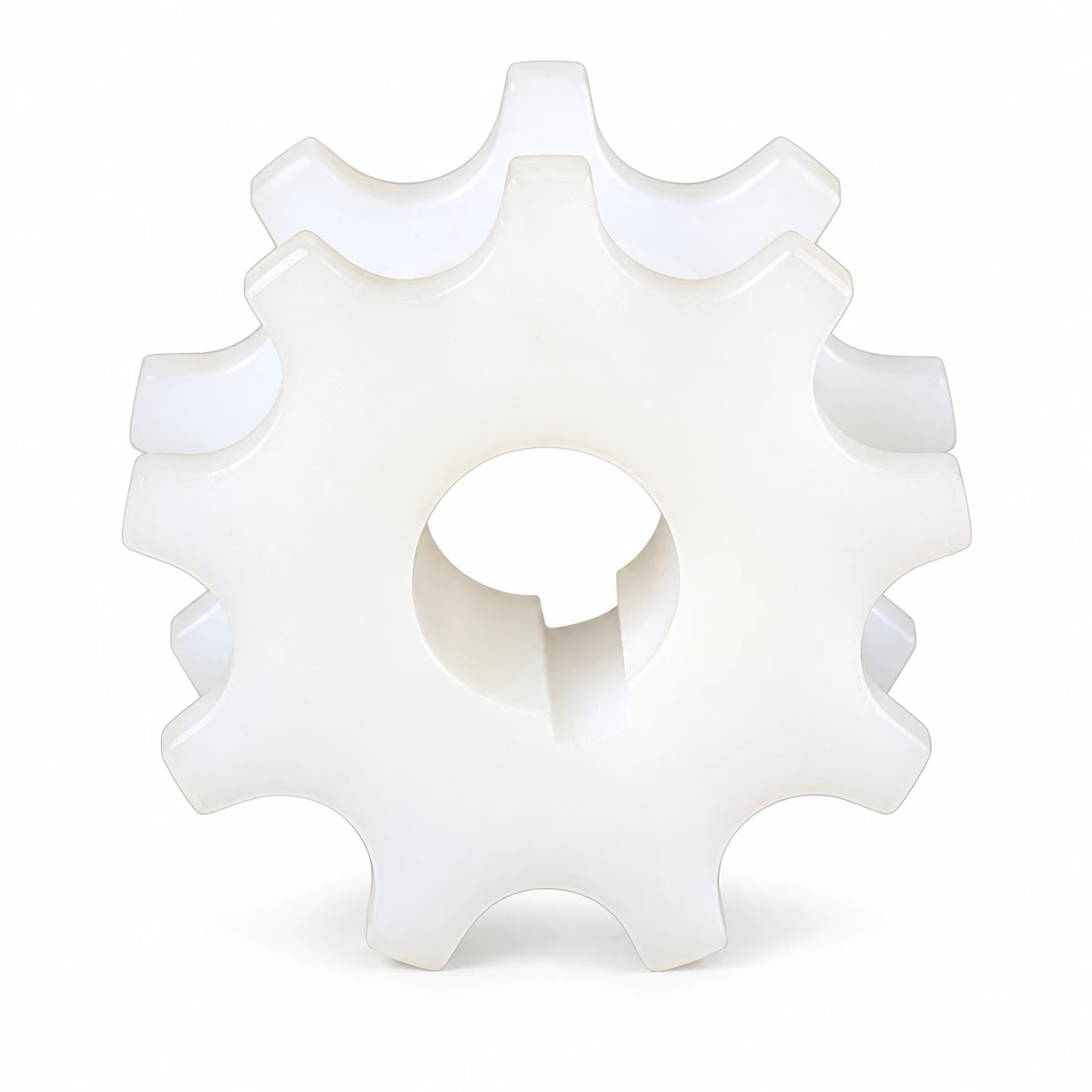
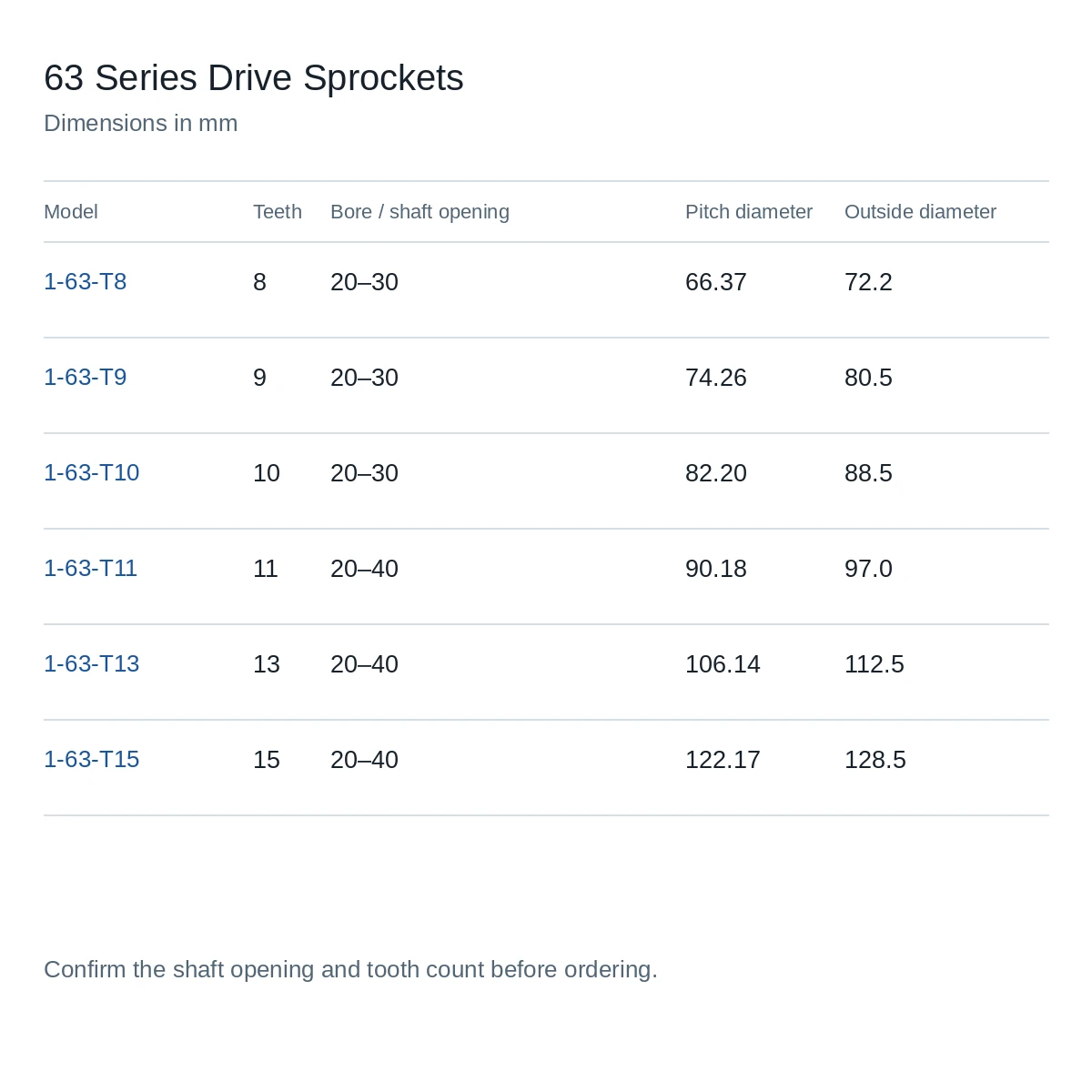
For 63-series chains. Confirm the tooth count and shaft opening.
Matching Sprocket
For 63-series chains. Confirm the tooth count and shaft opening.
Engage the Product Above the Plate
The 63C uses a raised feature to contact the product above its base. That changes the load path compared with a plain plate, where movement depends on surface contact underneath. The chosen cleat must reach a useful contact point without interfering with the product shape.
Cleat arrangement also determines the available space for each product. Review spacing along the chain together with the product length and feed timing. The fingered plate and central joint still need support through the conveyor route.
Specifications
Technical Specifications
| Parameter | Value | Converted Value |
|---|---|---|
| Model | Value: 63C | |
| Weight | Value: 0.80 kg/m | Converted Value: 0.5376 lb/ft |
| Colour | Value: White | |
| Body Material | Value: POM | |
| Joint Component Material | Value: PA6 | |
| Pin Material | Value: SUS201 | |
| Conveyor Length | Value: ≤12 m | Converted Value: ≤39.3701 ft |
| Speed | Value: ≤50 m/min | Converted Value: ≤164.042 ft/min |
Dimensions & Fit
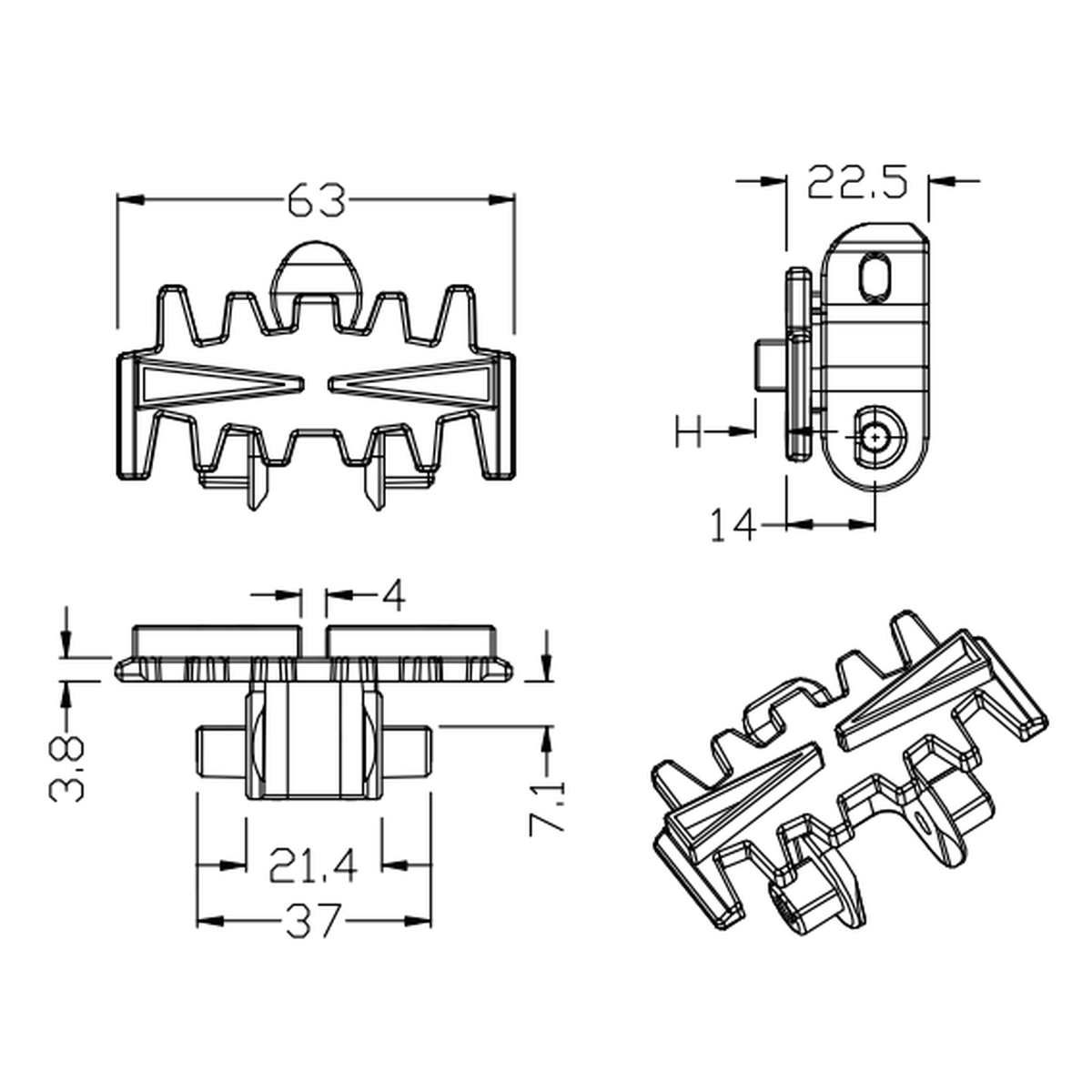
Provide the required cleat height and placement on a dimensioned drawing. Show the product's contact face and where it should sit between successive cleats.
Check clearance as the cleated links pass the return end. At discharge, allow the product to leave the cleat without catching against a fixed guide. Match the underside and drive reference separately from the raised top profile.
Push or Locate Products Between Stations
A cleated chain can move a product by contact at a raised surface, for example when a pack needs a defined position relative to the moving chain. The pack's shape determines whether the cleat pushes it, supports it or causes it to tip.
At loading, the product needs room to enter its intended position before the next cleat arrives. At unloading, it needs a clear release path. Those transitions deserve the same attention as steady conveying between them.
Request a 63C Quote
Send the 63C reference, required length and quantity with the product contact drawing. Include cleat height, spacing and the loading and discharge arrangements.