
1901C Raised Top Modular Belt
The CSTRANS 1901C raised top modular belt has repeated raised contact features above its linked rows. The 19.05 mm pitch identifies the belt family; the contact pattern distinguishes this version.
- Model
- 1901C
- Surface
- Raised top
- Pitch
- 19.05 mm / 0.75 in
Compare the Base With the Raised Pattern
Check where the product actually rests, particularly when it has small feet or a flexible bottom.
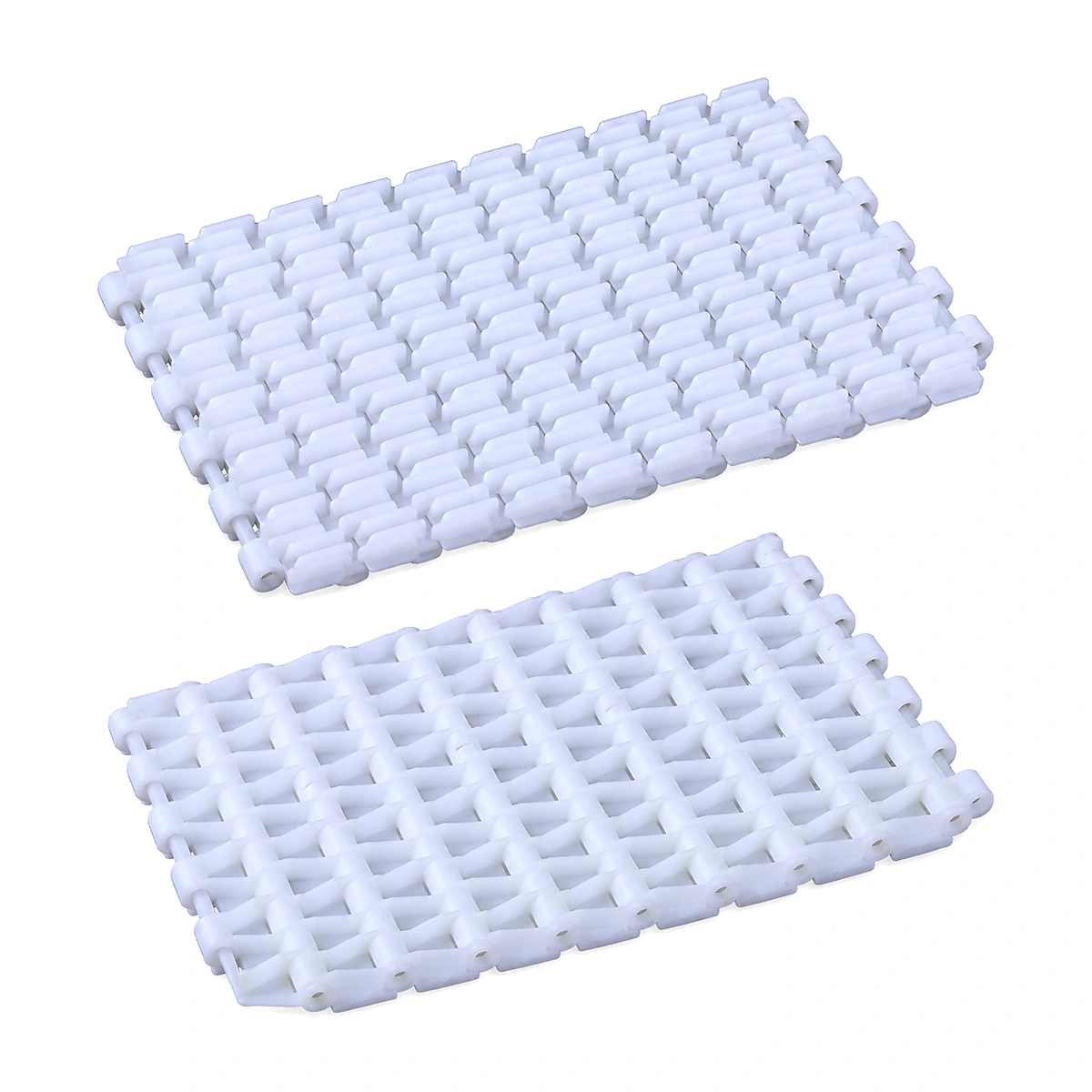
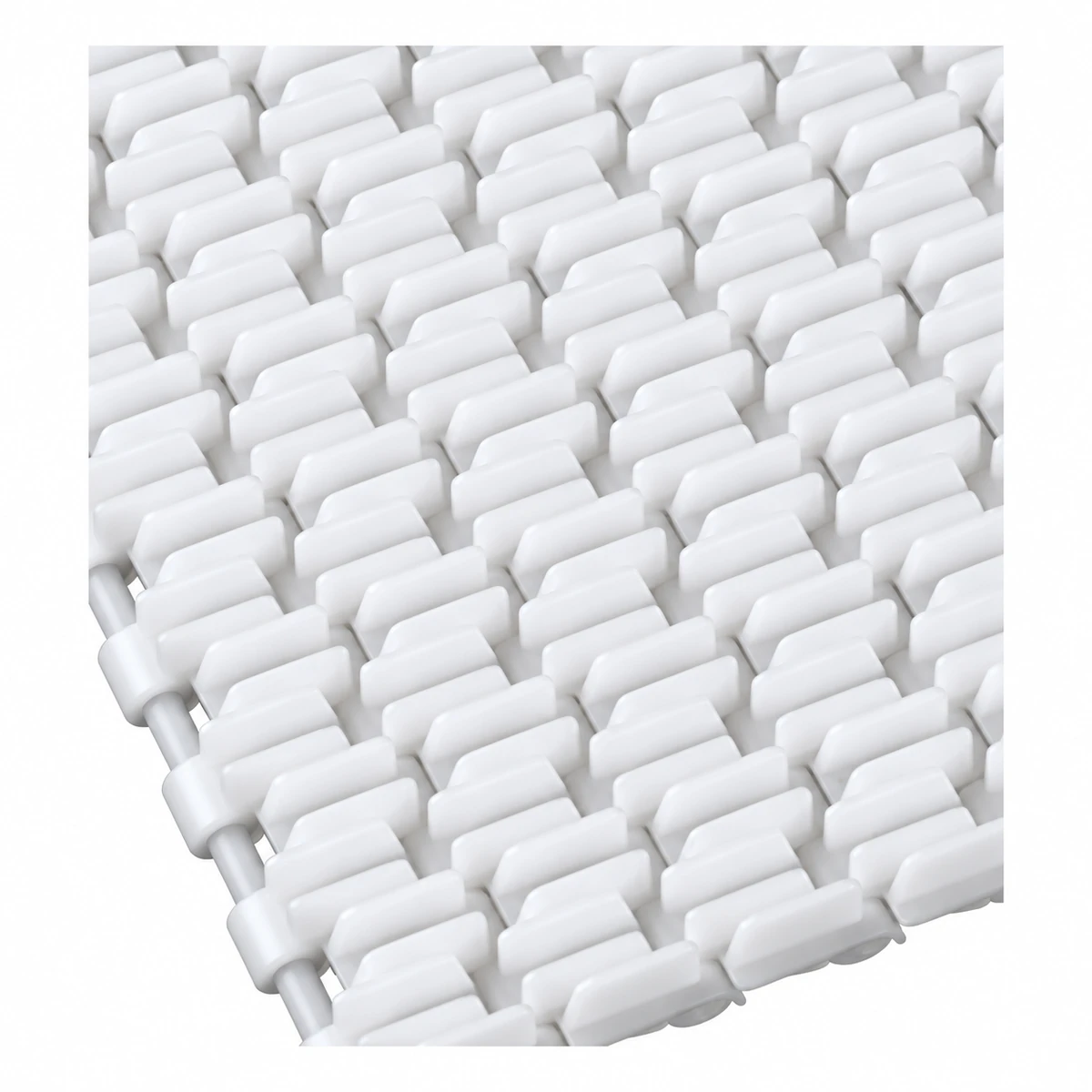
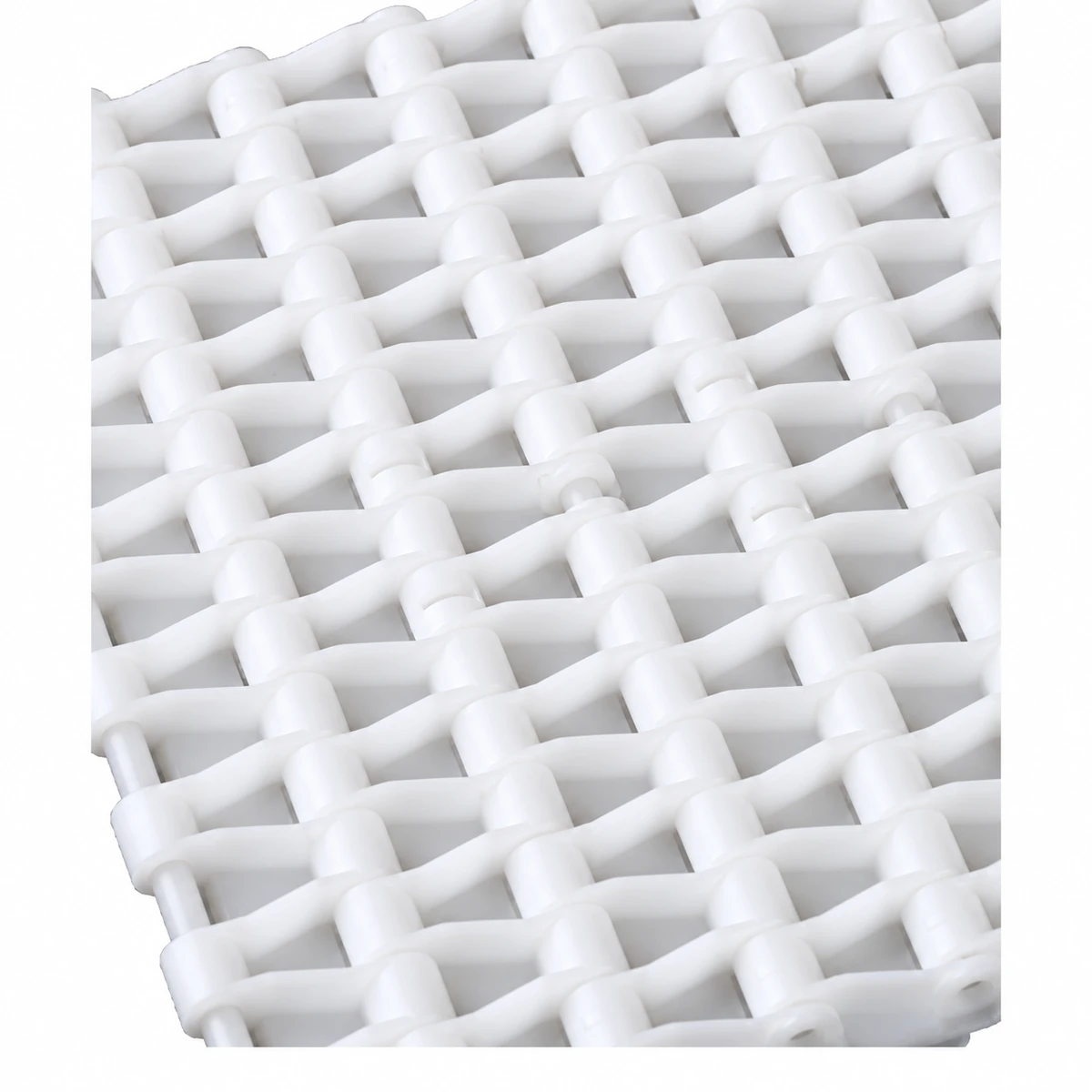
Product Contact Above the Module Body
The 1901C raises the contact pattern above the underlying rows. A product can rest on those higher areas rather than across the entire flat module body. The amount and position of contact depend on the base shape.
This surface needs a different contact assessment from a smooth flat-top belt. A broad rigid bottom can bridge several raised features, while a small foot or flexible pack may settle between them. Review the pattern with the actual product.
Specifications
| Parameter | Specification |
|---|---|
| Model | Specification: 1901C |
| Family | Specification: 1901 |
| Surface | Specification: Raised top |
| Pitch | Specification: 19.05 mm / 0.75 in |
Match the raised profile and module connections to the required carrying duty.
Check the Contact Height and Underside
Compare the raised surface with guides, stops and the receiving conveyor height. Use an installed side view to show where the product base sits relative to surrounding hardware.
Confirm the finished width and drive engagement from the existing belt or a dimensioned reference. The raised pattern must also clear the return supports as the belt travels beneath the conveyor.
Assess a Raised Contact Surface for Your Product
A raised-top belt can be considered where the product needs to rest on separated contact areas along a straight conveyor. The geometry makes the contact footprint especially relevant for packages with rims, feet or a compliant base.
At a transfer, the base leaves the last raised feature before reaching the next surface. Check that change in support with the product's travel orientation. A small or soft base may respond differently from a broad rigid tray.
Review a 1901C Contact Pattern
Send a photograph or drawing of the required raised surface, finished width, belt length and quantity. Include the product-base shape and transfer height so CSTRANS can review the contact geometry.