
1873-D Gripper Chain
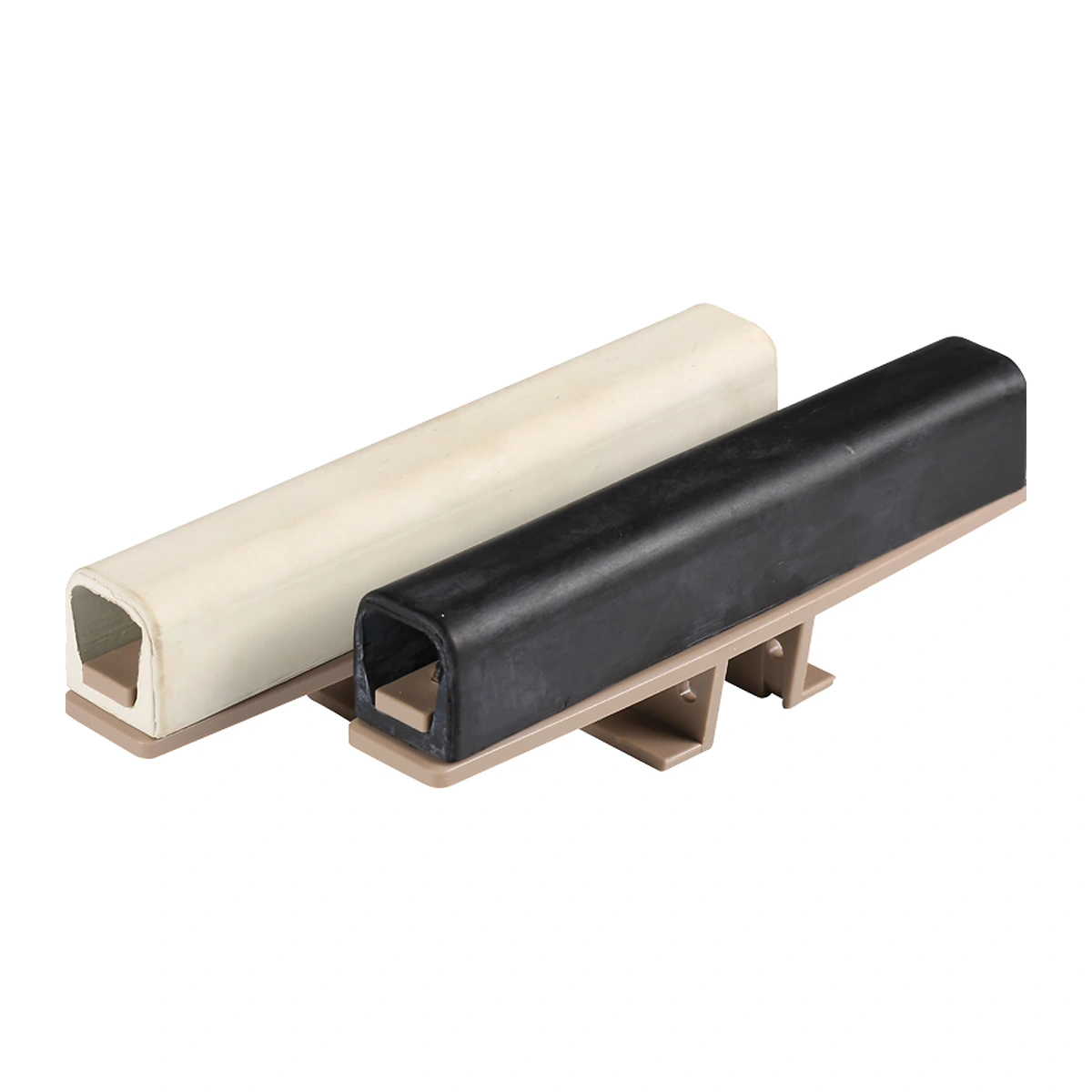
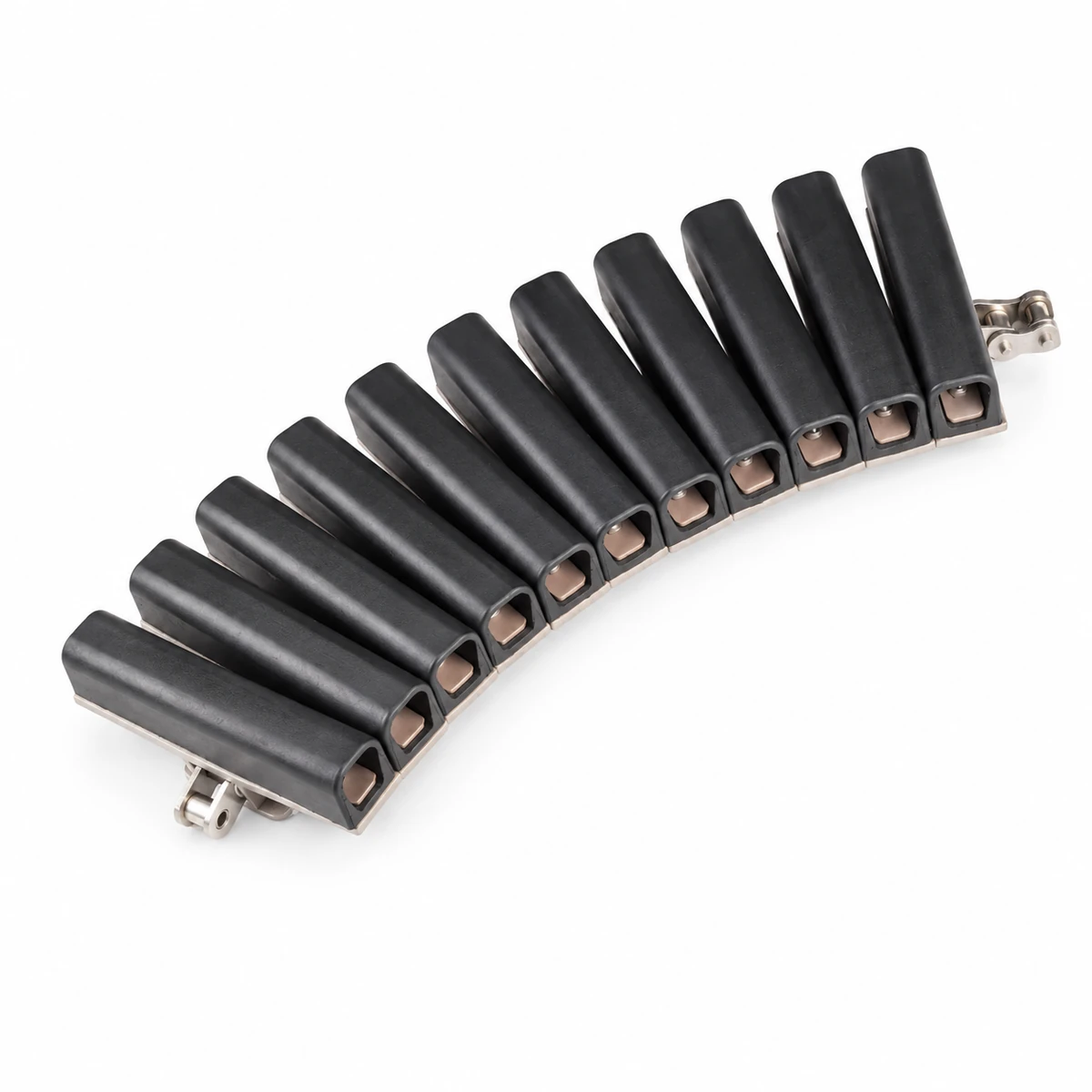
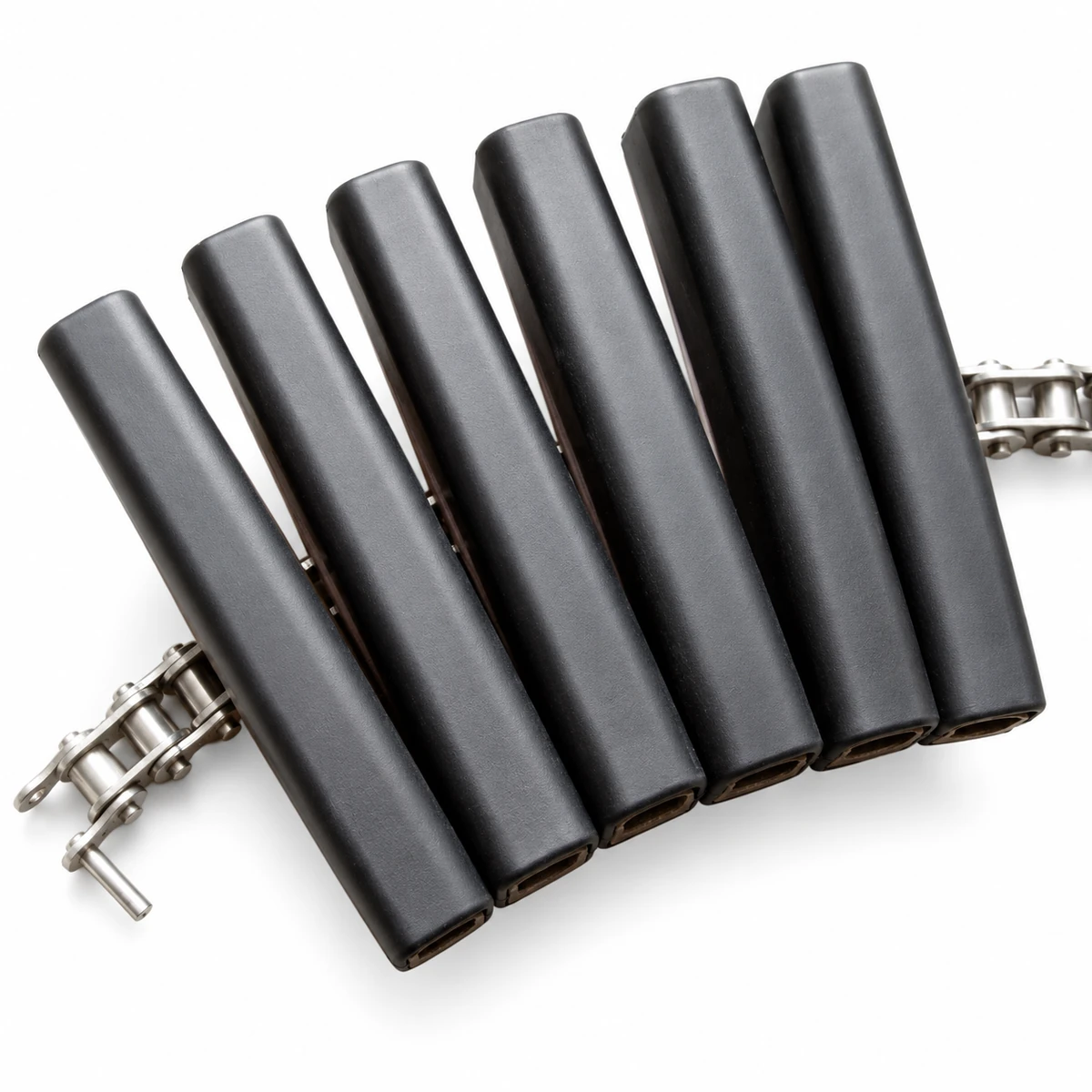
1873-D mounts natural rubber contact blocks on POM plates carried by a 12A roller chain. The raised block face provides side contact for guided gripping arrangements.
- Contact Material
- Natural rubber
- Plate Material
- POM
- Base Chain
- 12A roller chain
Set the Contact Gap Around the Product
The grip depends on block compression and product shape, not plate width alone.
A Broad Contact Block on Each Plate
The D-style attachment presents a broad rubber face to the product. In an opposed-chain arrangement, the gap between the two contact surfaces determines how the blocks engage the product.
The POM plate supports the attachment while the metal roller chain drives the assembly. Product contact, chain support and drive force are different parts of the selection. A tensile rating would not establish the permissible grip pressure on a bottle.
Specifications
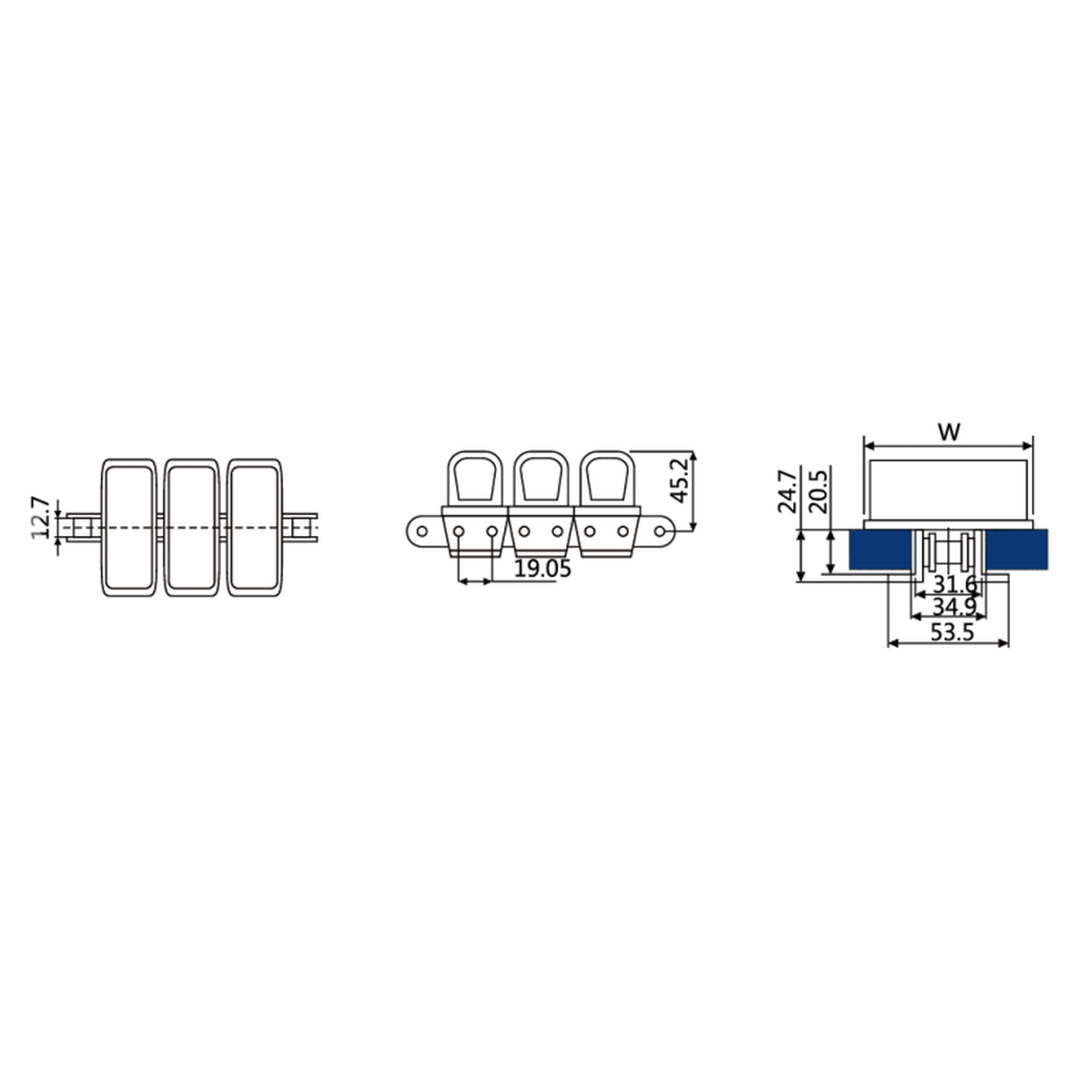
| Width Reference | Plate Width (mm) | Rubber Width (mm) | Minimum Curve Radius (mm) |
|---|---|---|---|
| K325 | Plate Width (mm): 82.6 | Rubber Width (mm): 80 | Minimum Curve Radius (mm): 356 |
| K600 | Plate Width (mm): 152.4 | Rubber Width (mm): 152 | Minimum Curve Radius (mm): 457 |
| K750 | Plate Width (mm): 190.5 | Rubber Width (mm): 186 | Minimum Curve Radius (mm): 457 |
Plate: POM. Contact block: natural rubber. Base: 12A roller chain with carbon steel or stainless steel options. Reverse radius: 150 mm.
Compare the Contact Face and Product Profile
Identify where the block meets the bottle, can or other product. Review gap, compression and contact height across the full size range.
Leave space for the raised blocks through the end turn and return. At entry and exit, establish how the product gains and loses side support without dropping or being squeezed against another surface.
Side Contact Through a Handling Transition
Opposed gripper chains can contact the sides of a container while it changes elevation or orientation. The arrangement needs controlled engagement before the base loses support and controlled release onto the next section.
A thin-walled container and a rigid can respond differently to compression. Trials with the actual product are needed to establish contact settings; attachment material alone does not establish a lifting capacity.
Review an 1873-D Gripping Arrangement
Send the width reference, product profile, intended contact gap and quantity. Include the route and entry/exit support arrangement for CSTRANS to review the block contact.