
1500C Rubber Top Modular Belt
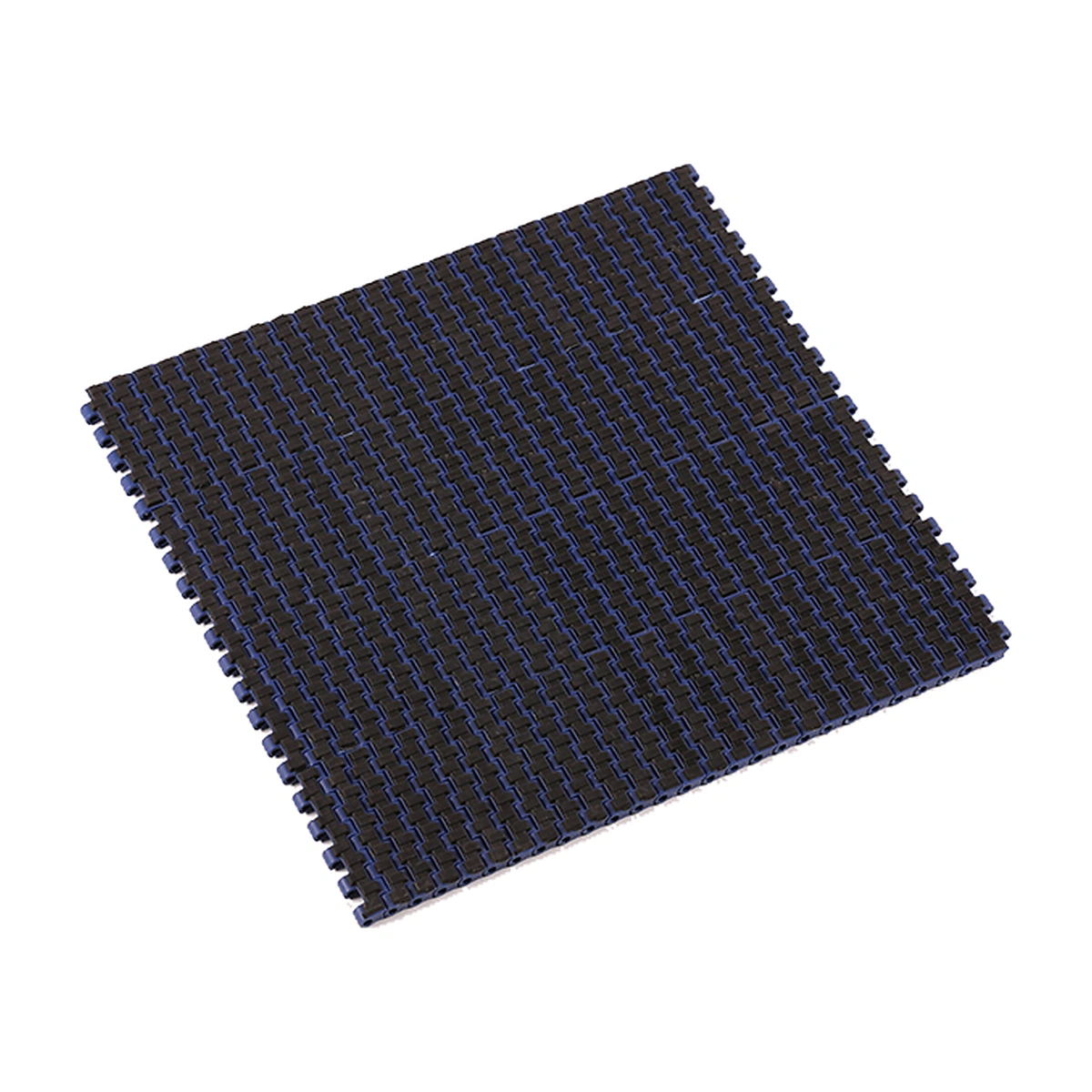
CSTRANS supplies the 1500C rubber top modular belt with rubber contact areas above connected plastic modules. The surface is intended for conveying duties where product traction needs attention.
- Carrying Surface
- Rubber top
- Base Materials
- POM / PP
- Backflex Radius
- 25 mm
Check Contact With the Actual Product
Rubber contact, base finish and wet or dry conditions affect how the product moves with the belt.
Add Rubber Contact to a Modular Carrying Surface
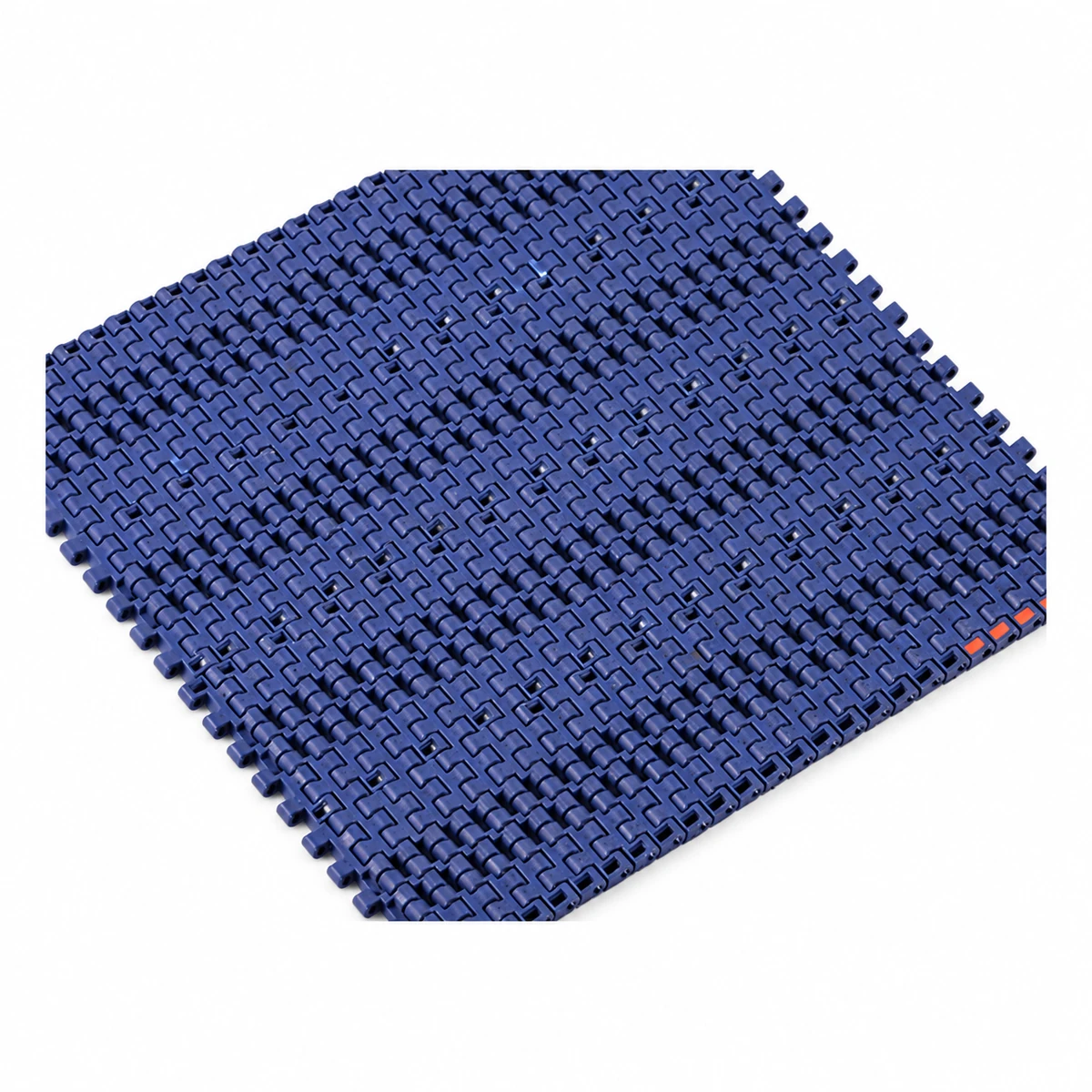
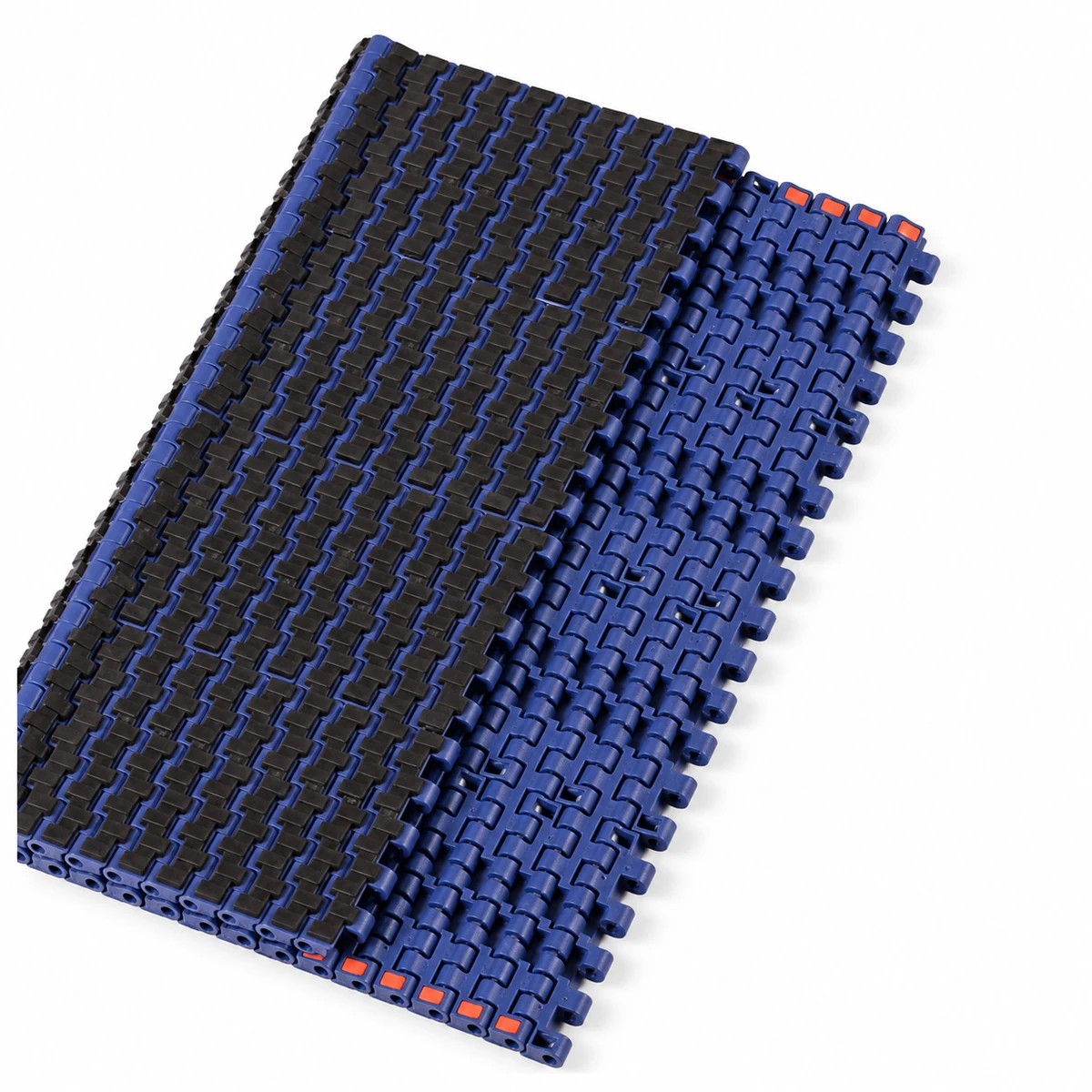
The 1500C places rubber at the product contact surface while the plastic modules form the connected belt body. Product movement depends on contact with those rubber areas. A narrow foot may contact the pattern differently from a broad package base.
Use the rubber-top configuration when reviewing a traction requirement, such as a change in elevation or a controlled feed. The required incline and product retention must be assessed for the actual load and surface condition.
Specifications
| Parameter | Specification |
|---|---|
| Model | Specification: 1500C |
| Surface | Specification: Rubber top |
| Base materials | Specification: POM / PP |
| Pin materials | Specification: POM / PP / PA6 |
| Pin diameter | Specification: 5 mm / 0.197 in |
| Open area | Specification: 0% |
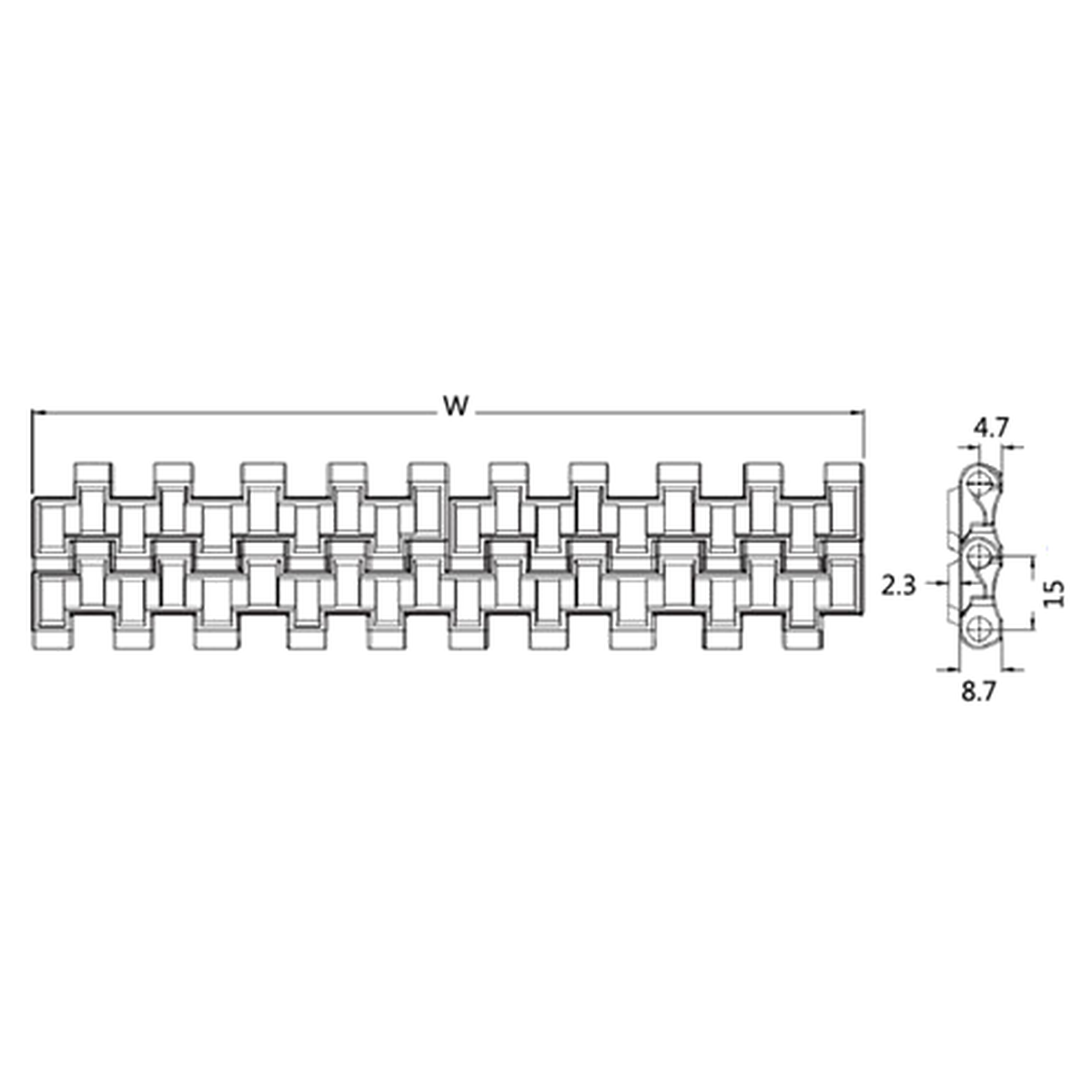
| Nominal widths | Specification: 85 / 170 / 255 / 340 / 425 / 510 mm |
| Nominal width formula | Specification: W = 85 × N mm |
| Backflex radius | Specification: 25 mm / 0.984 in |
| Belt mass | Specification: 8 kg/m² / 1.639 lb/ft² |
N is a positive integer. Review the rubber contact surface together with the base material for the process temperature and cleaning conditions.
Allow for the Rubber Contact Profile
Compare the carrying height and side clearance with the installed belt. Show where the rubber areas contact the product, especially if the base has ribs or feet.
Order the rubber-top belt at the required assembled width. The 1500 family's sprocket-positioning constraints mean that cutting the belt to width on site is not recommended. Confirm the finished width and side clearance before ordering.
Check the 25 mm backflex radius against the return path. At a transfer, assess how the rubber surface releases the product onto the next conveyor. A receiving speed difference can change product movement at the handoff.
Convey Packs Where Traction Matters
On an inclined or controlled-feed section, the rubber contact areas can help the product follow the moving belt. Suitability depends on incline, loading and contact conditions; select using the actual package base.
A stop or accumulation zone introduces sliding against the rubber. Review that duty separately, since a surface selected to grip during travel may change the product response when motion is restrained.
Discuss Your 1500C Traction Duty
Send belt width, length and quantity with the product-base material and required incline or feed arrangement. Include wet or dry conditions, temperature and any accumulation duty.