Choose a Cleaning Method for the Installed Modular Belt
Remove loose particles with the approved dry-collection tool, rinse water-soluble residue, and use a material-compatible detergent for attached films. Clean the joints, underside and support-contact areas as well as the top surface.
Plastic modular conveyor belts consist of connected modules with joints, rods or pins, and an underside drive interface. Include these areas in the cleaning plan. Disinfection and hygiene acceptance require the site’s separate approved procedures and verification.
Stop and Isolate Before Inspecting or Cleaning
Use the equipment’s lockout/tagout and maintenance procedure before hands-on inspection, manual cleaning or component removal. Verify that hazardous and stored energy are controlled before work begins. In the United States, OSHA 29 CFR 1910.147 covers servicing activities, including cleaning, when workers may be exposed to unexpected startup or hazardous-energy release.
Stop, isolate and verify a safe state before touching the belt, reaching into joints, removing pins or using handheld cleaning tools near moving parts. Follow the installed automatic cleaner’s operating procedure separately from manual cleaning. If the isolation or access procedure is unclear, have the personnel responsible for the equipment establish it before work begins.
Match the Method to Residue and Component Conditions
Read the Residue Before Choosing a Method Category
Distinguish material resting on the surface from material attached to it. Also record whether it is on top, inside a joint, at an underside drive feature or between the belt and a support. The same residue can be easy to reach on a flat surface and shielded at a contact interface.
Remove loose fragments with the approved tool and collection method before addressing an attached film. This exposes the surface and prevents large pieces from remaining in joints. For attached residue, compare what dissolves or loosens it with the materials and locations that the method will expose:
| Residue | Removal Mechanism and Method Judgment | What to Check Afterward |
|---|---|---|
| Sugar that has not dried or caramelized | Water solubility supports an approved rinse. Heat can make caramelized residue harder to remove. | Remaining film and residue carried into joints or runoff paths |
| Grease or oil film | Water alone does not dissolve the film. A compatible alkaline detergent is a candidate for removing this organic residue. | Film remaining on the top, pins or underside |
| Protein residue | Remove and preclean before it dries and adheres. More heat can denature protein and make removal harder. | Material still attached or hardened in accessible areas |
| Mineral deposits, such as limescale | An acidic cleaner can address inorganic deposits, provided the actual components tolerate that chemical and exposure. | Deposits remaining at the affected location and signs of material damage |
A mineral deposit trapped under a support presents two separate problems: the chemical must address the deposit, and the method must reach it. Provide a cleaning path to the shielded contact surface. Resolve the location and access path as well as the residue type.
If the approved procedure leaves attached material, identify the remaining soil and location before changing the method. Increasing pressure, heat or chemical strength by trial can introduce a different compatibility problem without reaching the missed area.
Wet Cleaning or Dry Removal?
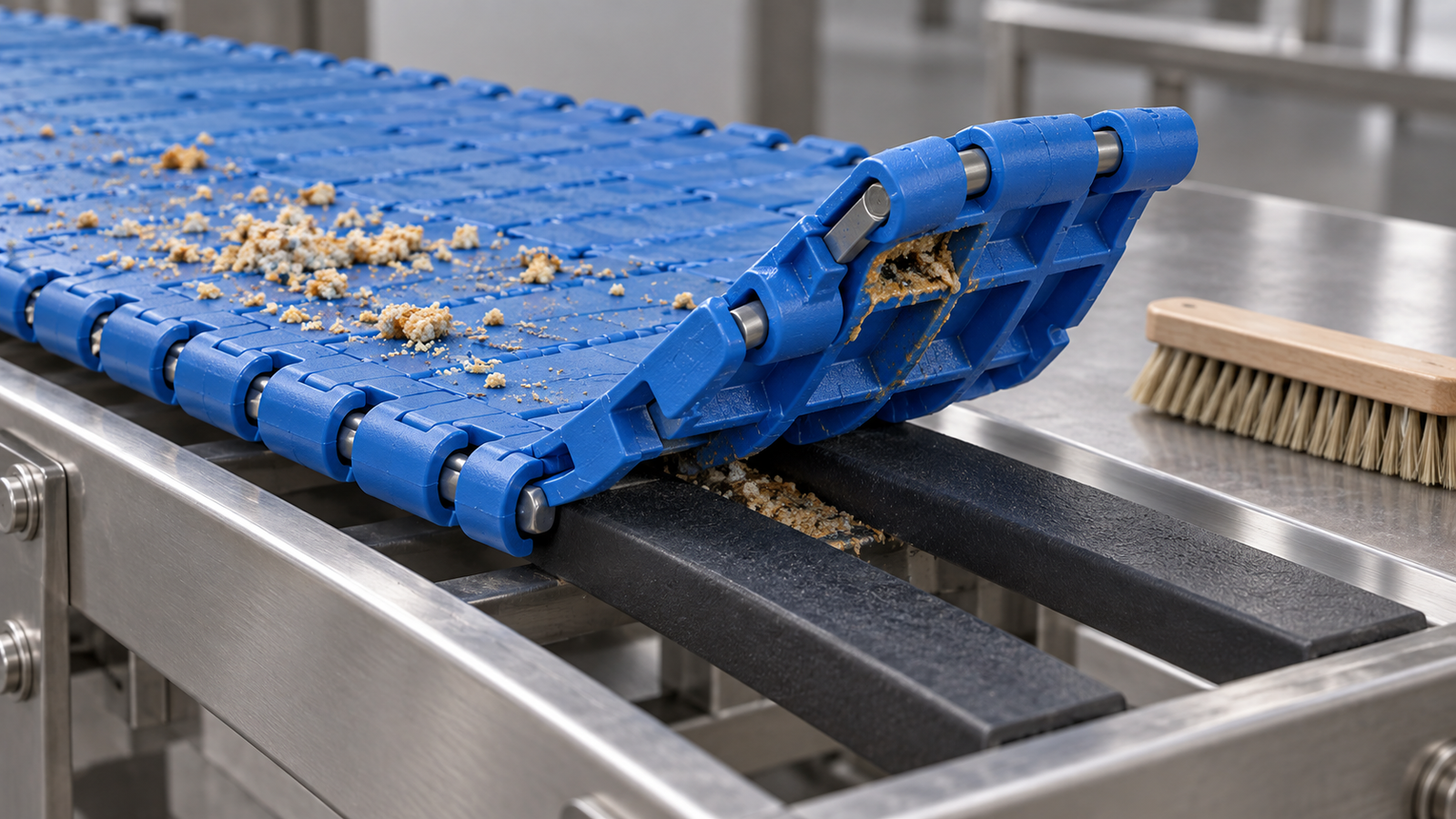
Dry collection can suit loose, dry particles when the site permits that method and the tool can reach the soil. Adding water may turn powder into an attached paste or move it into joints. Wet cleaning can help dissolve soluble soil and remove loosened residue, but it also introduces runoff, drying and water-compatibility requirements. A film that water cannot dissolve may need an approved detergent and mechanical action. Compare removal, access and the resulting moisture condition together.
In low-moisture food processing, the return-to-service condition deserves particular attention. 21 CFR 117.35(d) addresses clean, dry, sanitary food-contact surfaces before use and, following wet cleaning, sanitizing when necessary and thorough drying. Select the method and acceptance checks through the facility’s validated cleaning process.
Apply Material and Access Limits to the Selected Category
A cleaner may remove the soil while damaging a component. An acidic method considered for mineral deposits, for example, still needs the installed acetal grade’s chemical limits checked. Acid- or chlorine-containing agents deserve particular attention with POM. The removal mechanism and the material-compatibility assessment answer different questions; neither substitutes for the other.
Check the actual chemical identity and working concentration, contact temperature, exposure time and cleaning frequency against the installed material combination. Record these exposure conditions when comparing processes.
The access method also needs approval. A brush or scraper must suit the actual surface and joints; a rinse needs a route to the residue and a way to remove the loosened material. Use the equipment-specific method and its stated limits.
Belt Body, Pins and Supports
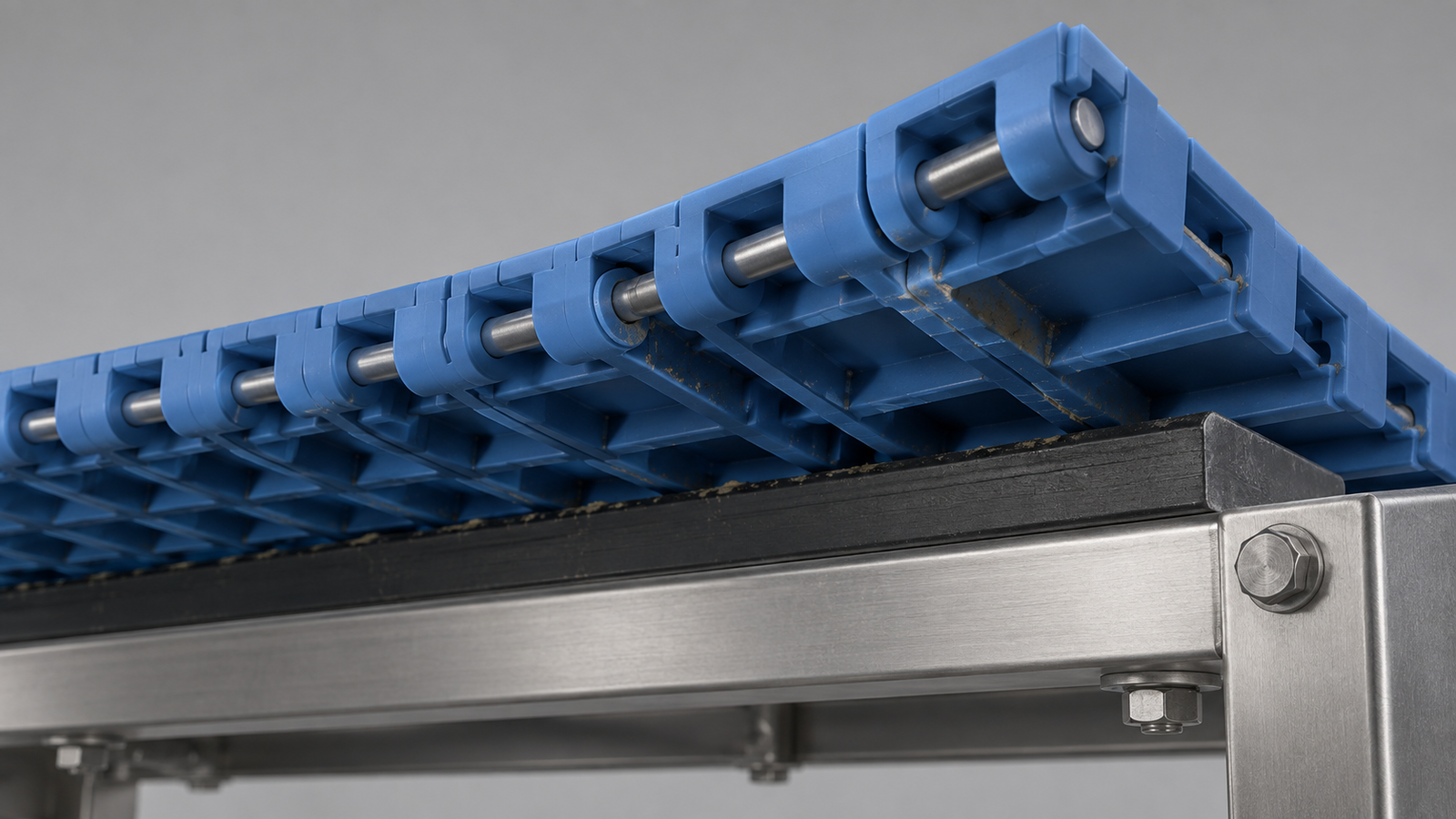
Identify the connecting pins or rods and the wear strips or other supports separately from the belt modules. The complete combination can include different pin materials, supports and fastening parts; compatibility must cover each exposed component, including the belt body, pins, supports and fasteners.
The joint and support contact also affect access. Some hinge areas open farther as modules articulate around a sprocket; underside ribs can shield a cleaning path. A jet that reaches the exposed top may miss residue behind a hinge or rib. Sprocket size and belt construction affect that geometry, so an installed cleaning arrangement must suit the actual configuration.
For a new or rebuilt conveyor, the modular belt conveyor design guide shows how to plan the support, return and end geometry around those access needs.
Inspect concealed pin areas and underside wear-strip contacts as well as the top surface. If inspecting those areas requires lifting, repositioning or opening the belt, follow the documented maintenance access method; do not improvise disassembly to complete a cleaning step.
Check the Approved Procedure and the Accessible Areas
Before cleaning, verify that the procedure names the installed belt or an explicitly approved configuration, the method and tools, any agent and its conditions, the access steps, and the required inspection or acceptance checks.
After the prescribed cleaning and removal or rinsing steps, inspect the areas the procedure makes accessible: the conveying surface, joints, underside drive features and support-contact locations. Check for remaining residue, damaged or missing modules, protruding or damaged rods, and damaged supports. Underside buildup can interfere with sprocket engagement even when the top looks clean. These are mechanical checks, separate from hygiene test results.
Also inspect for cracking, whitening, swelling or other changes in the material surface. These observations warrant investigation of chemical exposure alongside mechanical and environmental causes; assess those causes and address belt damage separately from soil removal.
Record a location that remains inaccessible or still contains residue. Resolve that access or removal problem with the equipment owner. Complete the site’s required acceptance and equipment-release steps before returning the conveyor to service.
Separate Cleaning Results From Sanitation Acceptance
Removing visible soil, verifying sanitation and confirming mechanical condition answer different questions. Include concealed hinges and the relevant residue targets in the acceptance checks. Use the facility’s specified visual, allergen or microbiological checks as applicable to the process. Use ATP, where specified, as an indicator of residual biological material; assess pathogens and allergens through their specified tests.
Reassess a Changed Cleaning Condition
A new agent, higher temperature, longer exposure or more frequent cleaning changes the conditions used to assess compatibility. Recheck the procedure and component data before adopting the change, even if the belt series stays the same. A new residue or a change in where it accumulates may also require a different access or removal approach.
For replacement components, identify the existing plastic modular belt and conveyor wear strips by series, part reference and material documentation. The food-processing conveying page provides the application context. With a component request, send the installed part details and the approved cleaning conditions so that the proposed replacement’s suitability can be checked against the actual process.