
Conveyor Sprocket
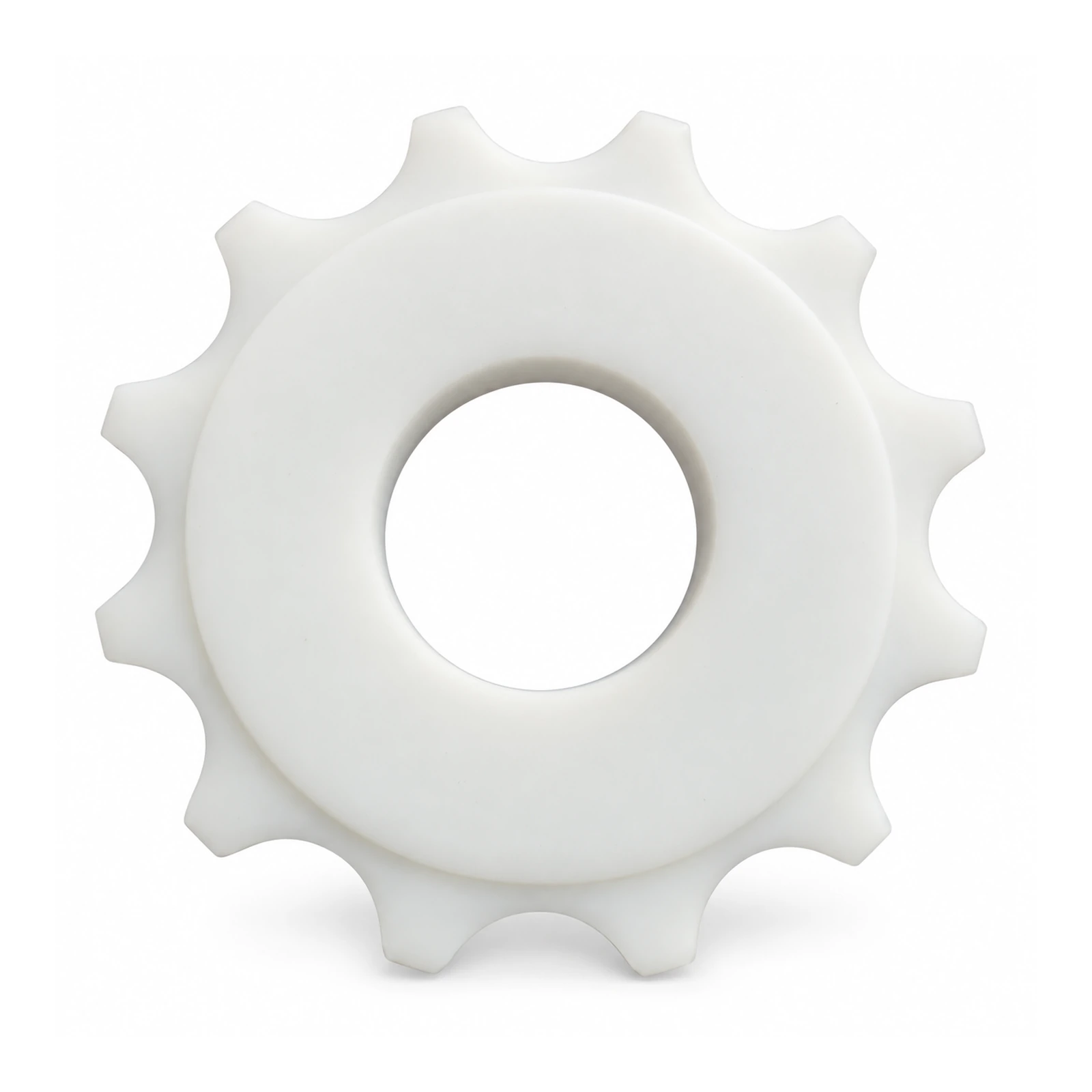
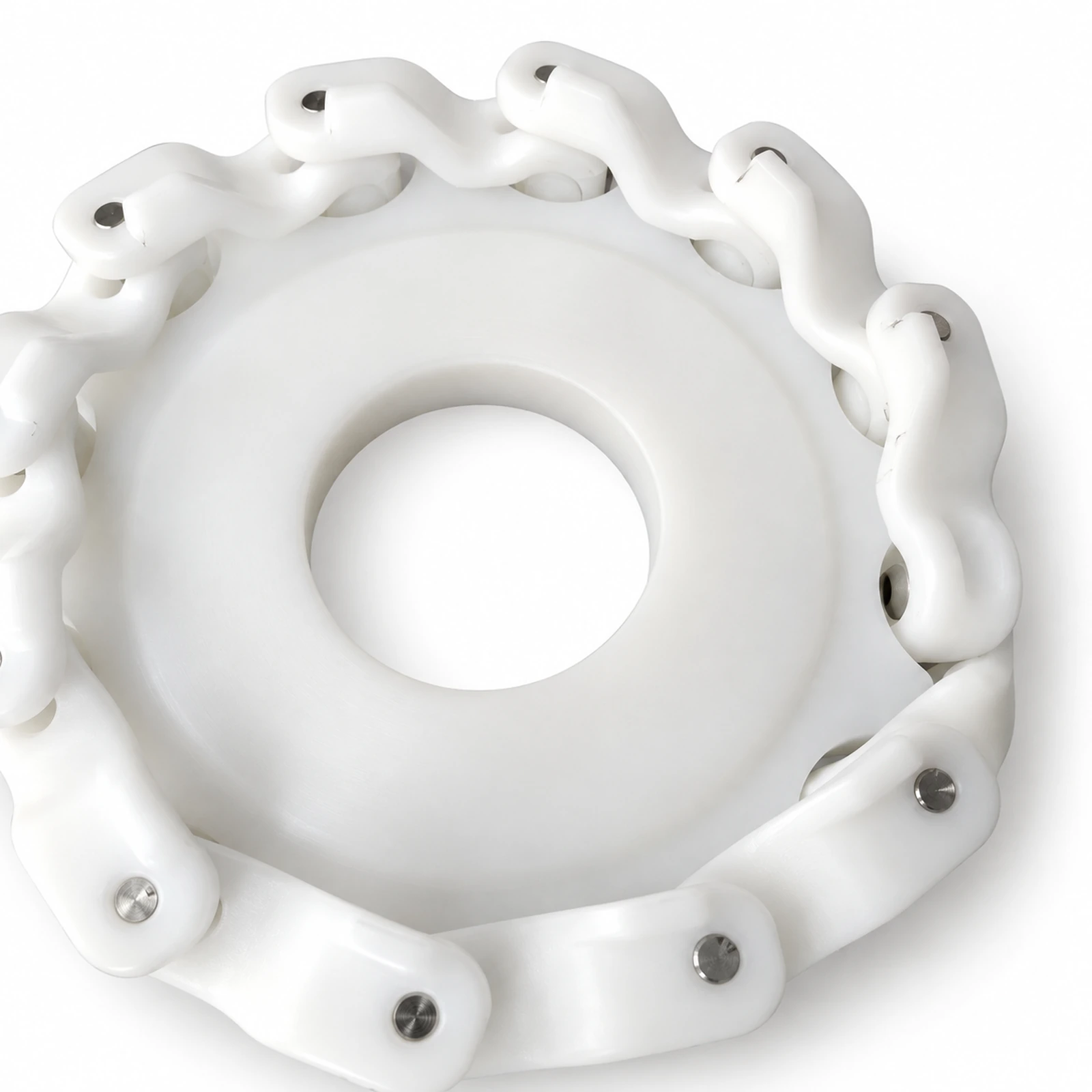
CSTRANS supplies conveyor sprockets for conveyor chains and selected plastic modular belts. The range includes machined and injection-molded forms, split and one-piece constructions, and drive and idler versions. Matching the tooth form to the chain or belt, then the bore and keyway to the shaft, keeps the drive interface consistent with the conveyor section it serves.
Subcategories
Series match
Match the Chain or Belt Series
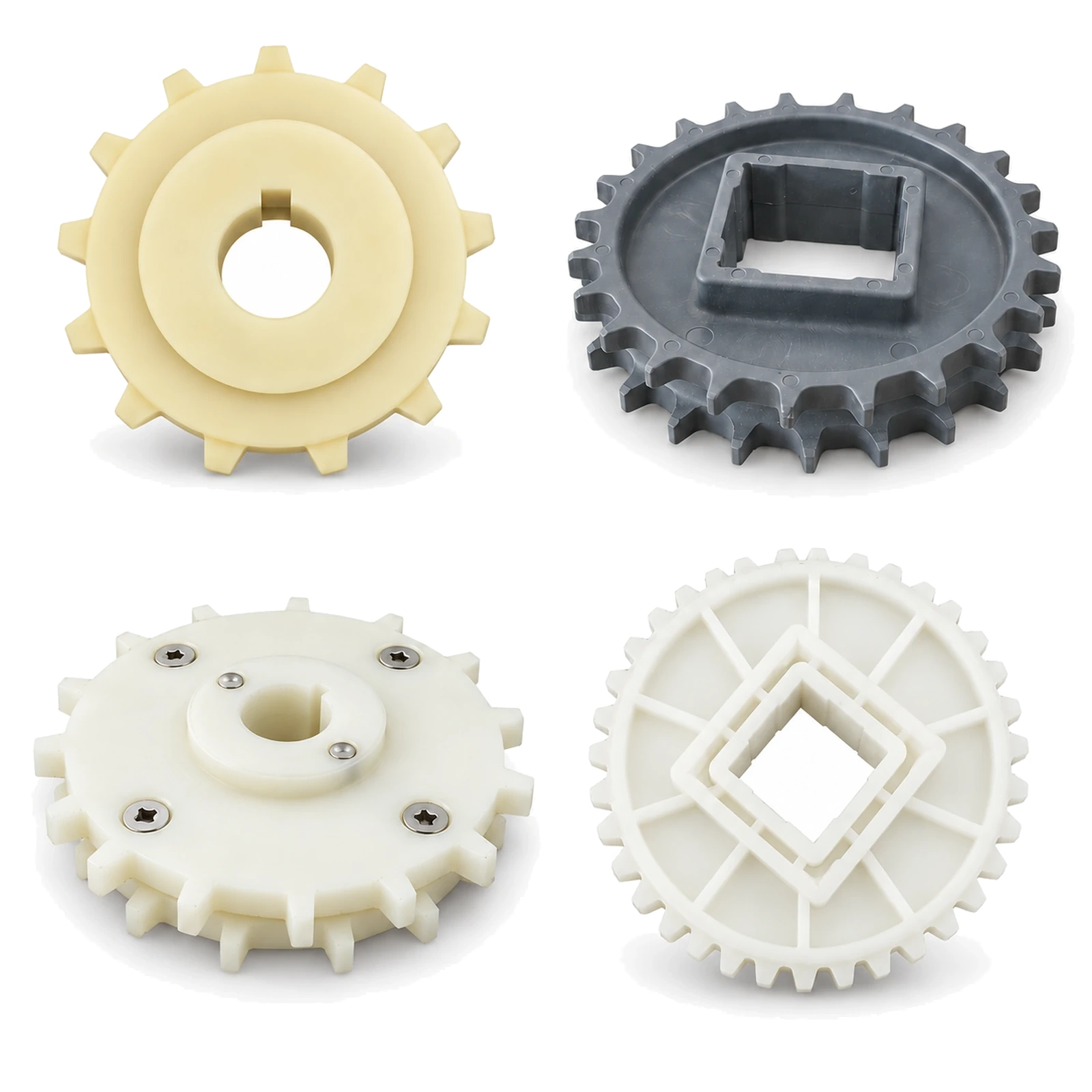
A sprocket must engage the moving surface it is built for. CSTRANS has standard injection-molded sprockets for 1520, 2720, 5712 and 5713 modular belt families, alongside sprockets for conveyor chain families. Some chain pairings are specific: the 821 plastic and 802 stainless-steel double-hinge chains can share a drive sprocket, but their idlers are not interchangeable. The 880TAB and 882TAB side-flexing chains need different sprockets. These distinctions matter when a replacement looks similar yet cannot track the existing chain correctly.
Shaft fit
Fit the Drive and Idler Shaft
Tooth count affects sprocket diameter and how the chain or belt wraps around the shaft. Bore, keyway and shaft arrangement determine whether that sprocket can be mounted and driven as intended. CSTRANS checks these dimensions against the chain or belt model and the shaft layout. Drive sprockets use a keyed connection; idler arrangements also depend on whether a bearing position or keyway is required. Checking these interfaces together avoids treating an outer-diameter match as a complete fit.
Construction
Choose a Construction That Fits the Installation
A split sprocket is made in two bolted halves; a one-piece sprocket is a single body. Where the equipment allows it, the split form can simplify access around an installed shaft during replacement. The suitable form depends on the series, available shaft space and whether the part belongs at the drive or the return end. CSTRANS can work from the existing component and the conveyor layout to identify a compatible configuration.
Application / Line Context
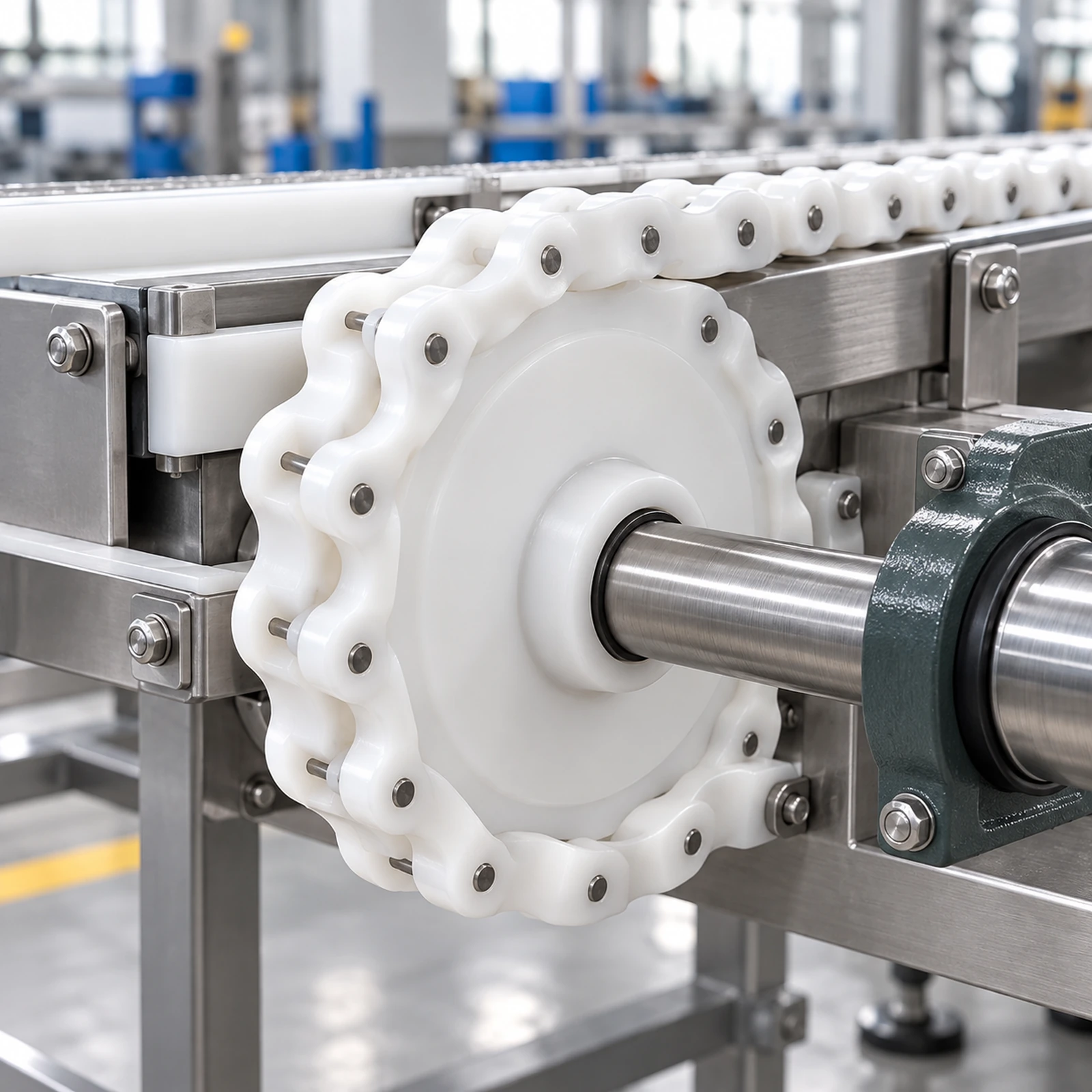
At the drive, sprocket teeth pull the chain or modular belt into motion; the tooth profile and series must correspond to that moving surface. Along a belt width, sprocket placement also relates to belt construction and shaft layout. At the return end, an idler guides the moving surface around the shaft without serving the same driving role. A wrong bore or keyway prevents a sound shaft fit, while an incompatible chain pairing can disturb engagement even when two sprockets appear alike. These details connect motor-side motion to the carrying surface and the return path, so a replacement decision affects more than the wheel itself.