
HU78 Case Conveyor Chain
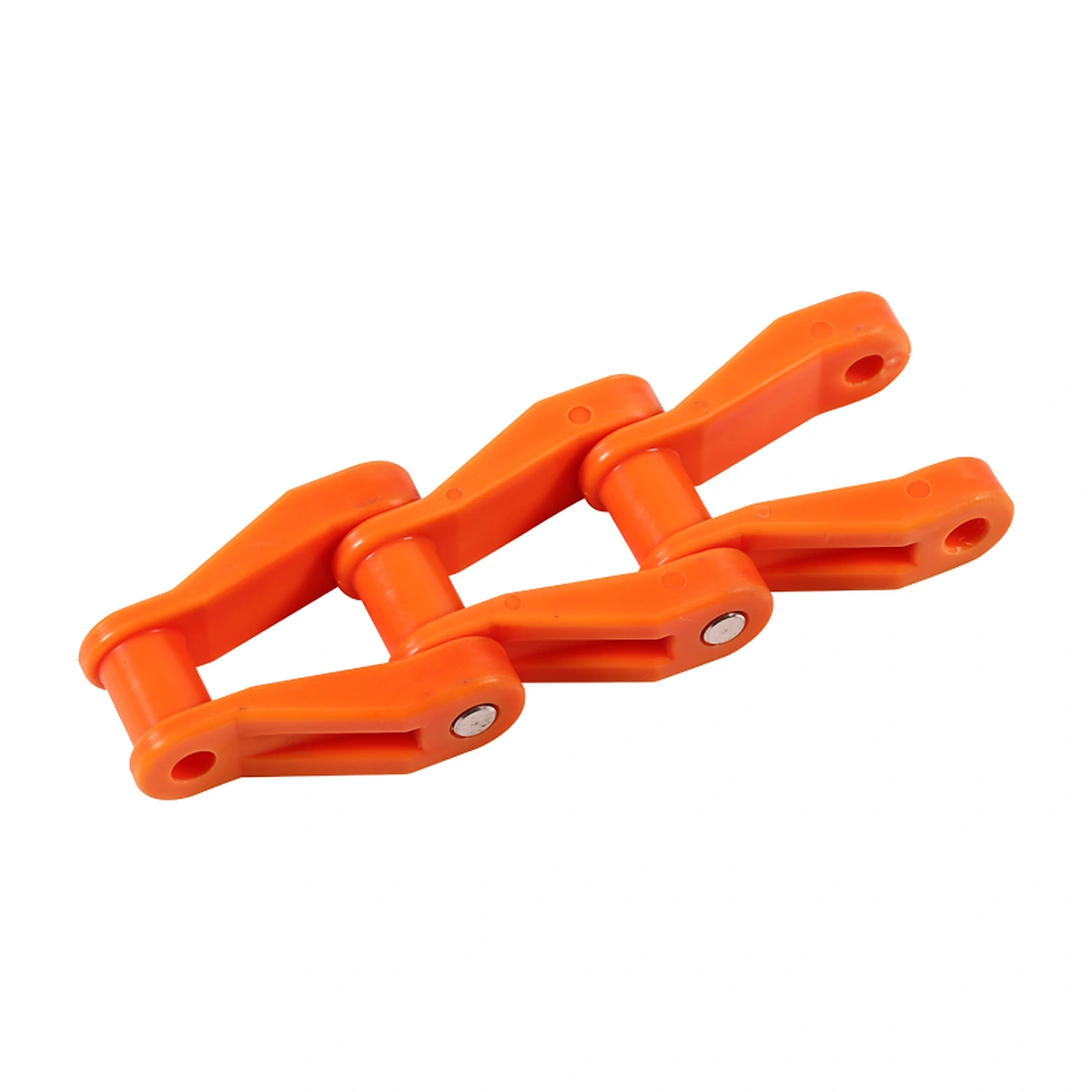
HU78 uses linked, open-centre sections to form a narrow case-conveyor running lane. Its forked links articulate at pin joints as the chain follows the installed path.
- Reference
- HU78
- Link Form
- Forked, open centre
- Component Role
- Case-conveyor running lane
Match the Installed Cross-Section
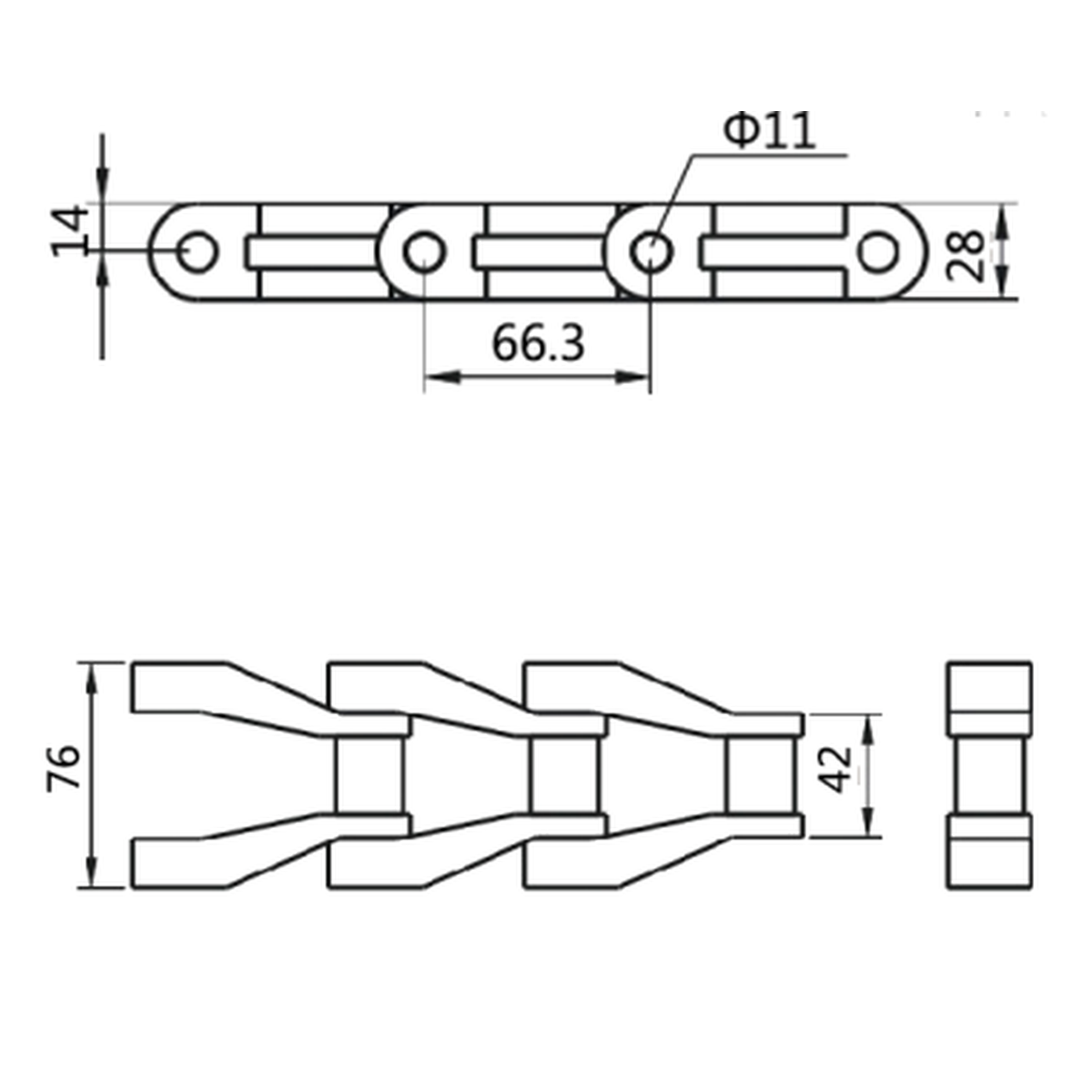
Compare the carrying faces, lower link profile and pin arrangement on a dimensioned sample.
Carrying Contact Along the Link Edges
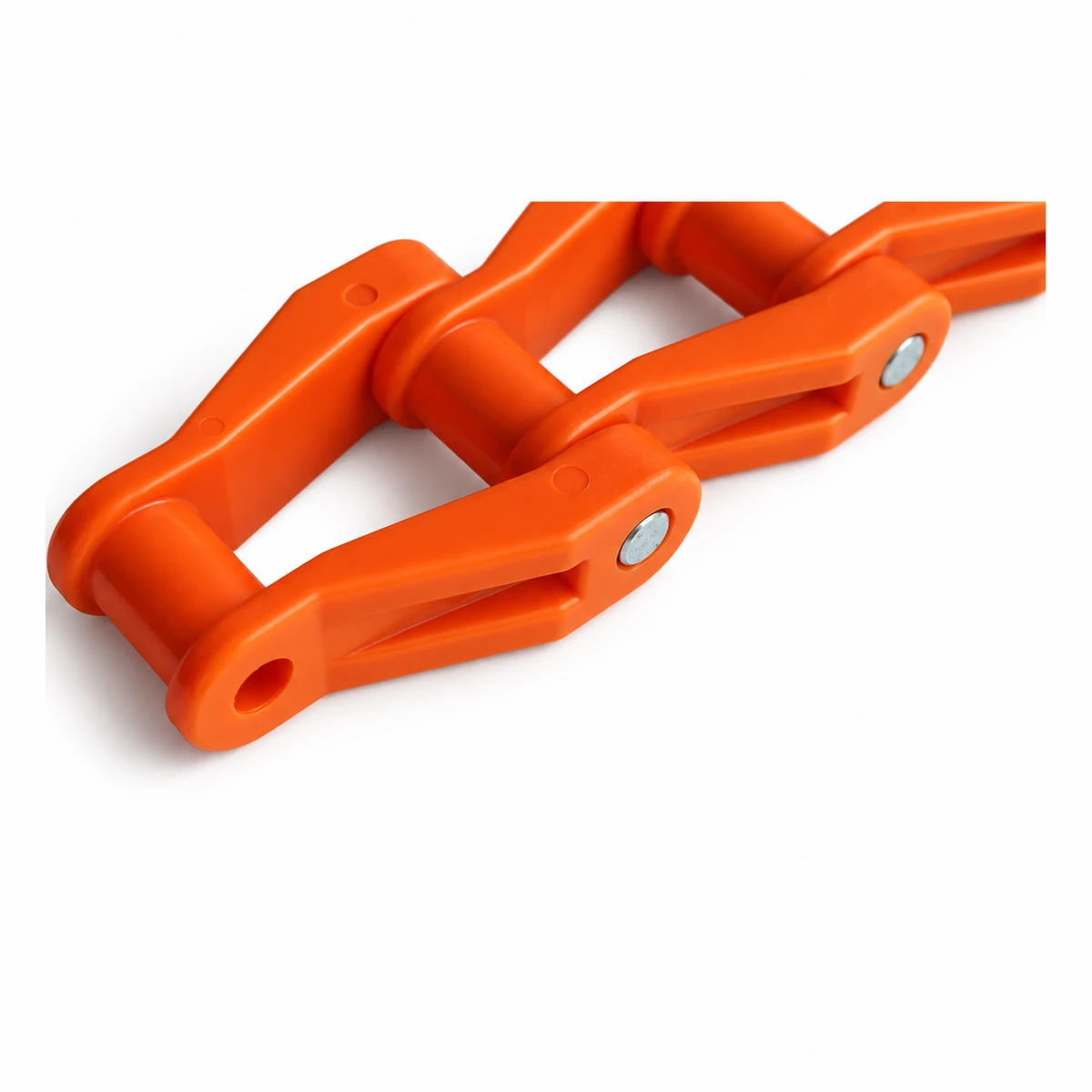
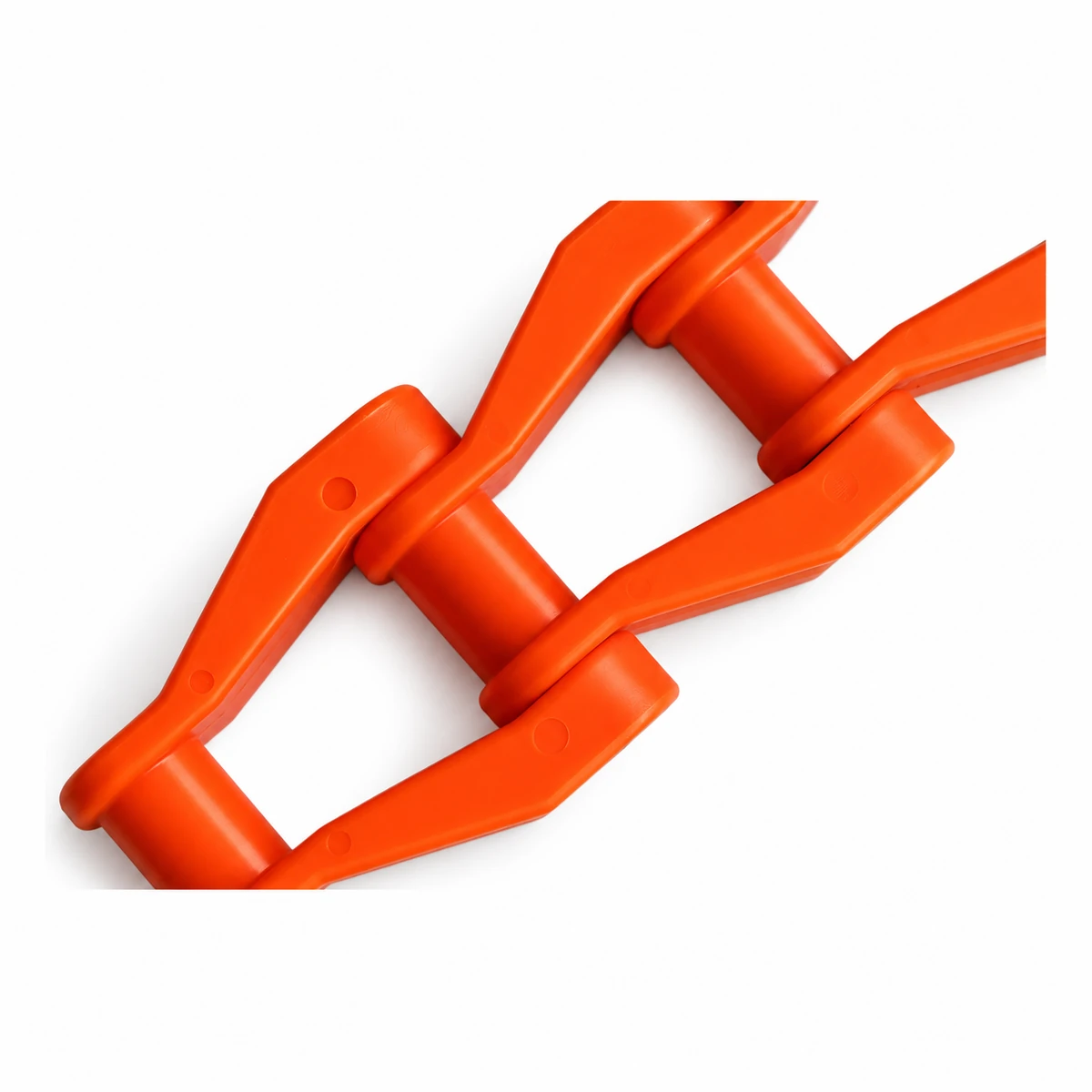
The HU78 link has an open centre between its carrying sides. A case base therefore needs to bridge those contact areas rather than rest on an uninterrupted plate.
The forked link ends connect successive sections at pin joints. Both the joint geometry and the carrying outline matter when comparing a replacement, especially if the installed chain's material or dimensions differ from a familiar catalogue reference.
Specifications
| Identification | Detail |
|---|---|
| Product reference | Detail: HU78 |
| Chain form | Detail: Articulated case chain |
| Carrying geometry | Detail: Open centre with side contact surfaces |
Establish Width and Joint Geometry Together
Measure the installed carrying width, link spacing and pin section from an unworn sample. Compare these with the track opening and drive engagement before finalizing the chain.
Check how the case base bridges the open centre. For a multi-lane arrangement, place the lanes beneath the base's useful contact areas and follow those points through the route.
Supporting Rigid Cases on Selected Contact Lines
An open-centre case chain supports the product along the chain's side surfaces. The base needs sufficient rigidity to bridge those surfaces and any space between parallel lanes.
A case with feet may need different lane positions from a case with continuous ribs. Check both the straight section and the transfer, where the support beneath each foot changes.
Compare Your HU78 Assembly
Send an existing chain sample or dimensioned drawing, required length and quantity. State the required material and operating environment so CSTRANS can review the exact variant and track fit.