
1874T Plate Top Chain
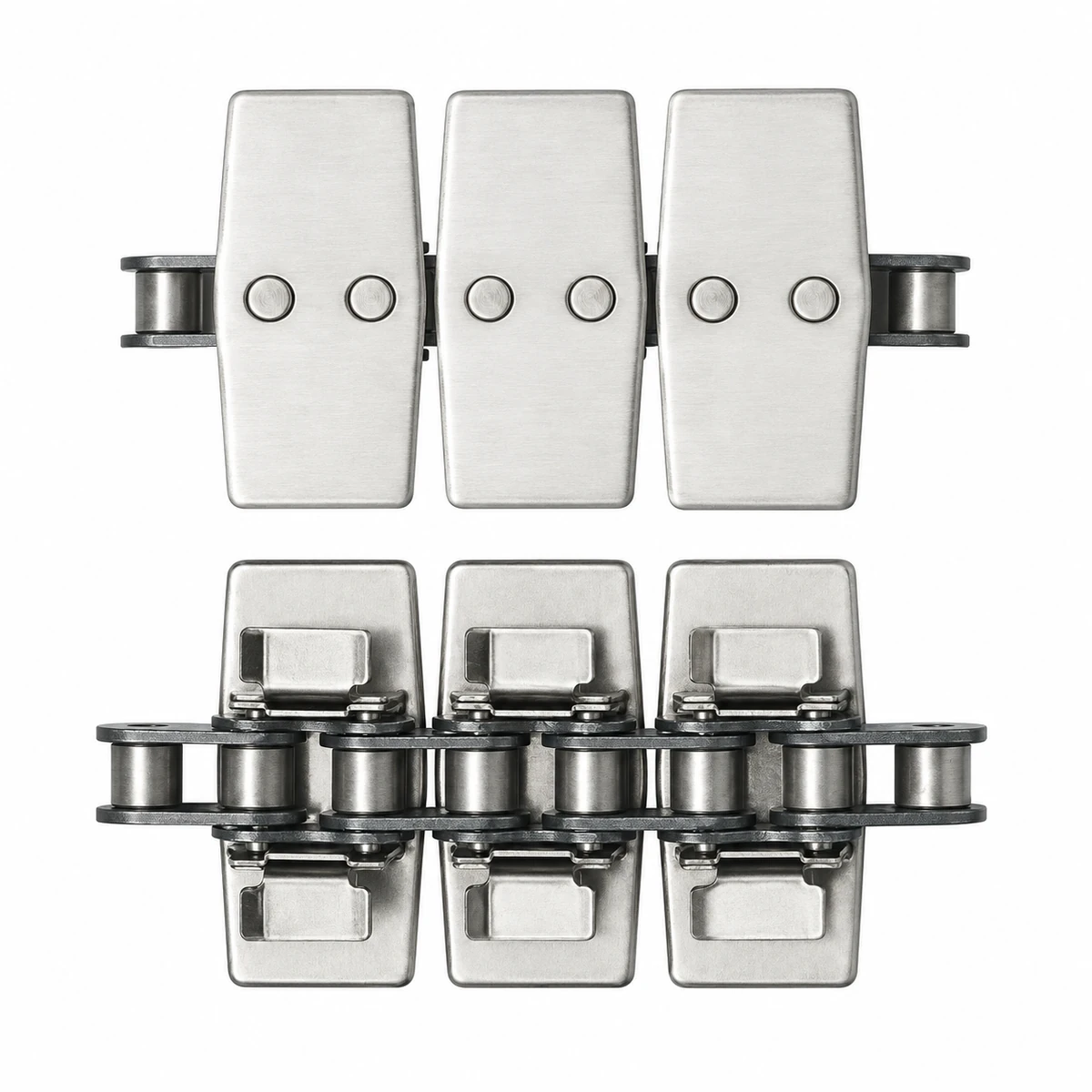
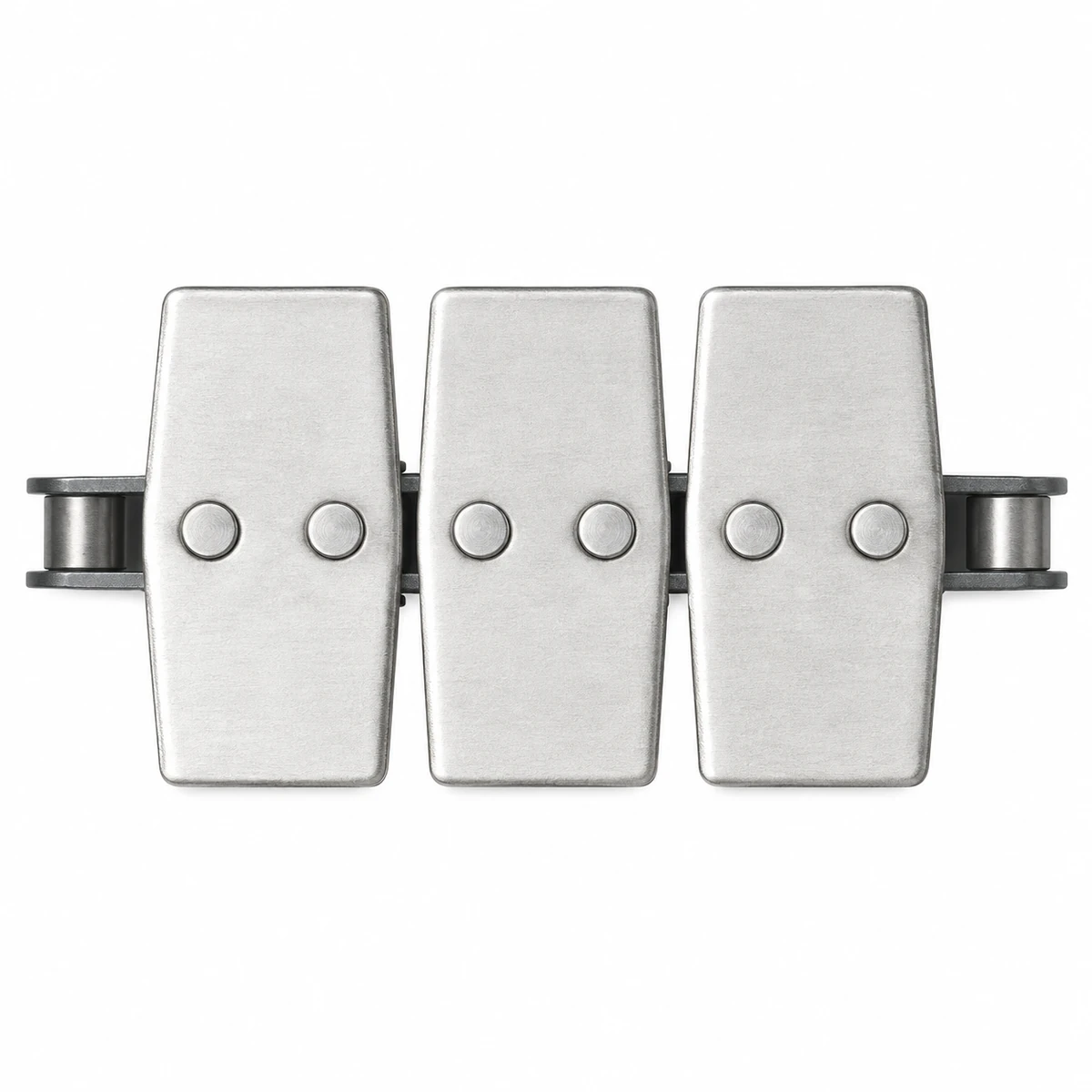
1874T combines metal carrying plates with a roller-chain base. Its 82.6 mm plate width forms a product-contact surface above the guided drive chain.
- Model
- 1874T
- Plate Width
- 82.6 mm
- Construction
- Metal plates on roller chain
Specify the Plate and Base Materials Separately
Confirm the required combination when comparing an installed chain.
A Metal Contact Face Above the Chain
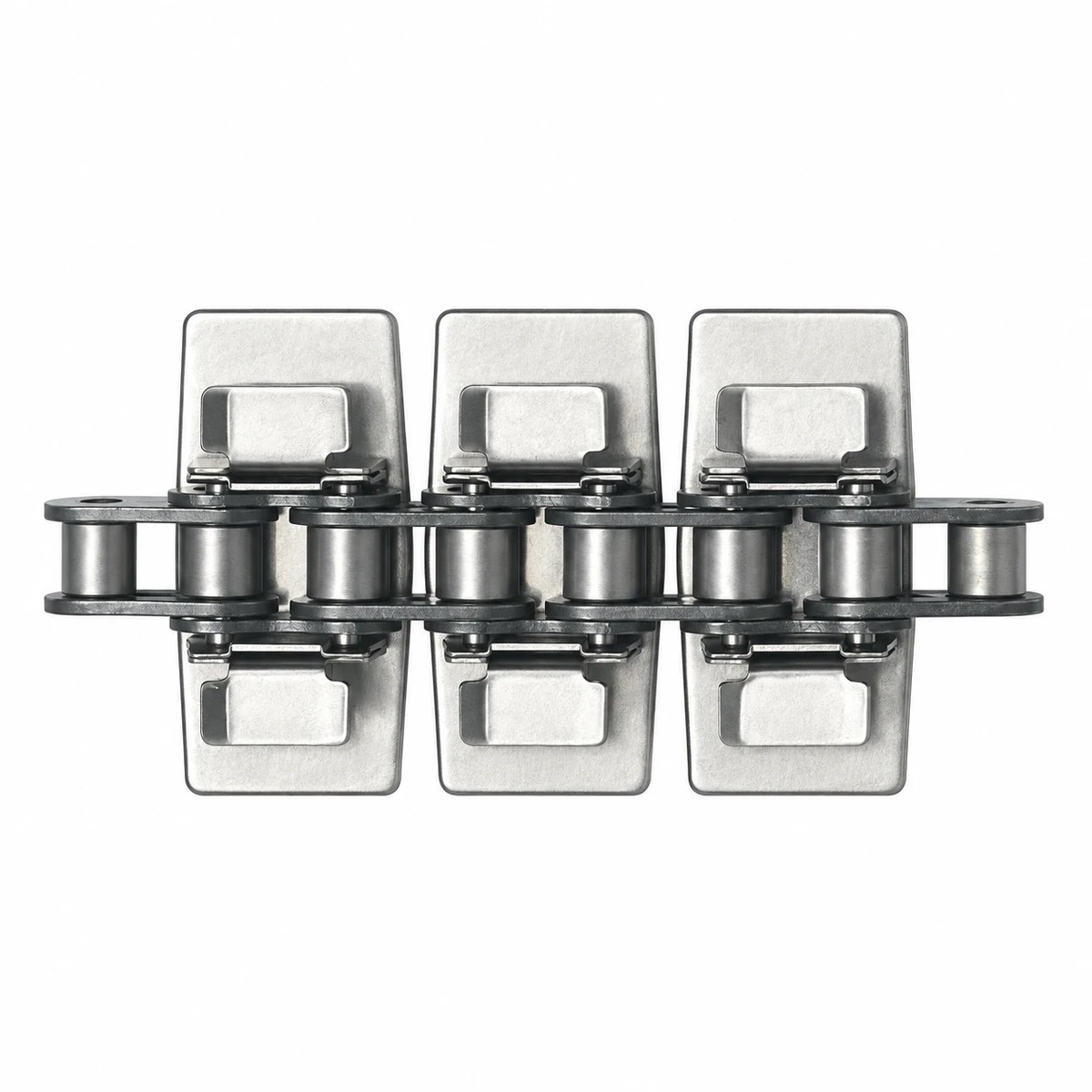
The top plates support the product while the roller chain below transmits motion. Plate construction, attachment and base-chain selection should be compared independently when choosing the assembly.
The metal surface does not establish a temperature or corrosion rating by itself. Match the material combination and operating conditions to the actual duty, especially where cleaning or product contact determines the required finish.
Specifications
| Parameter | Specification |
|---|---|
| Model / width reference | Specification: 1874T / K325 |
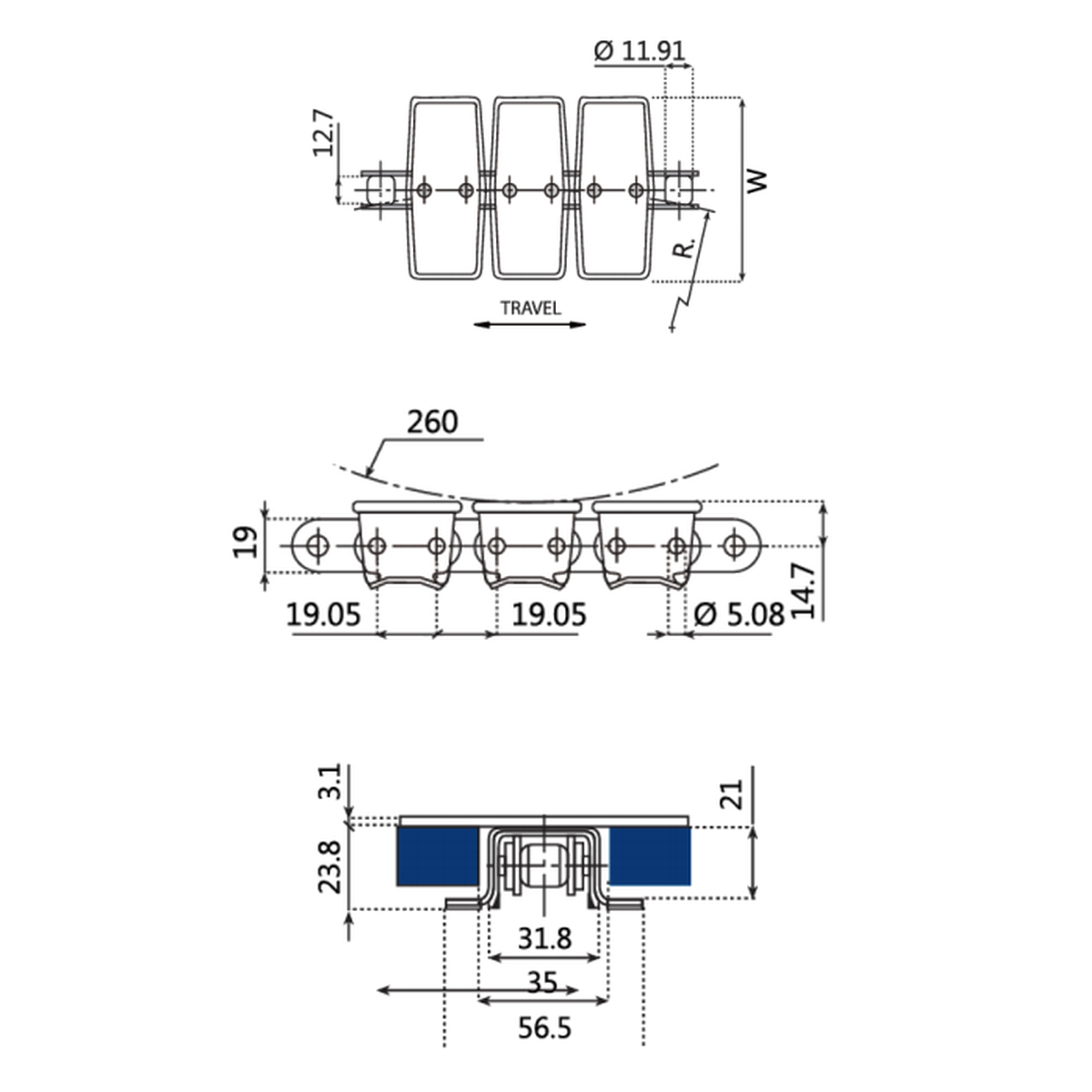
| Plate width | Specification: 82.6 mm / 3.252 in |
| Minimum curve radius | Specification: 380 mm / 14.961 in |
| Reverse radius | Specification: 150 mm / 5.906 in |
| Base-chain options | Specification: Carbon steel / stainless steel |
Confirm the complete material and load specification for the selected assembly before ordering.
Compare the Carrying Height and Track Section
Use the actual plate and lower-chain drawing to check support beneath the carrying surface. Verify plate edge clearance as adjacent links articulate.
At the conveyor ends, compare the complete plate envelope with guards and receiving support. Check the reverse bend independently from the horizontal curve.
Carrying Products on a Metal Plate Surface
A metal plate-top chain is relevant where the product-contact requirement calls for a metal carrying face. The base-chain drive and supporting track still determine how that face moves through the line.
At transfers, the product crosses successive plate edges. Review the base footprint and receiving gap so the change of support does not leave a narrow foot between plates.
Review an 1874T Assembly
Send the required material combination, chain length and quantity with an existing sample or drawing. Include the product contact and operating conditions for CSTRANS to compare the assembly.