
125 Roller Transfer Plate
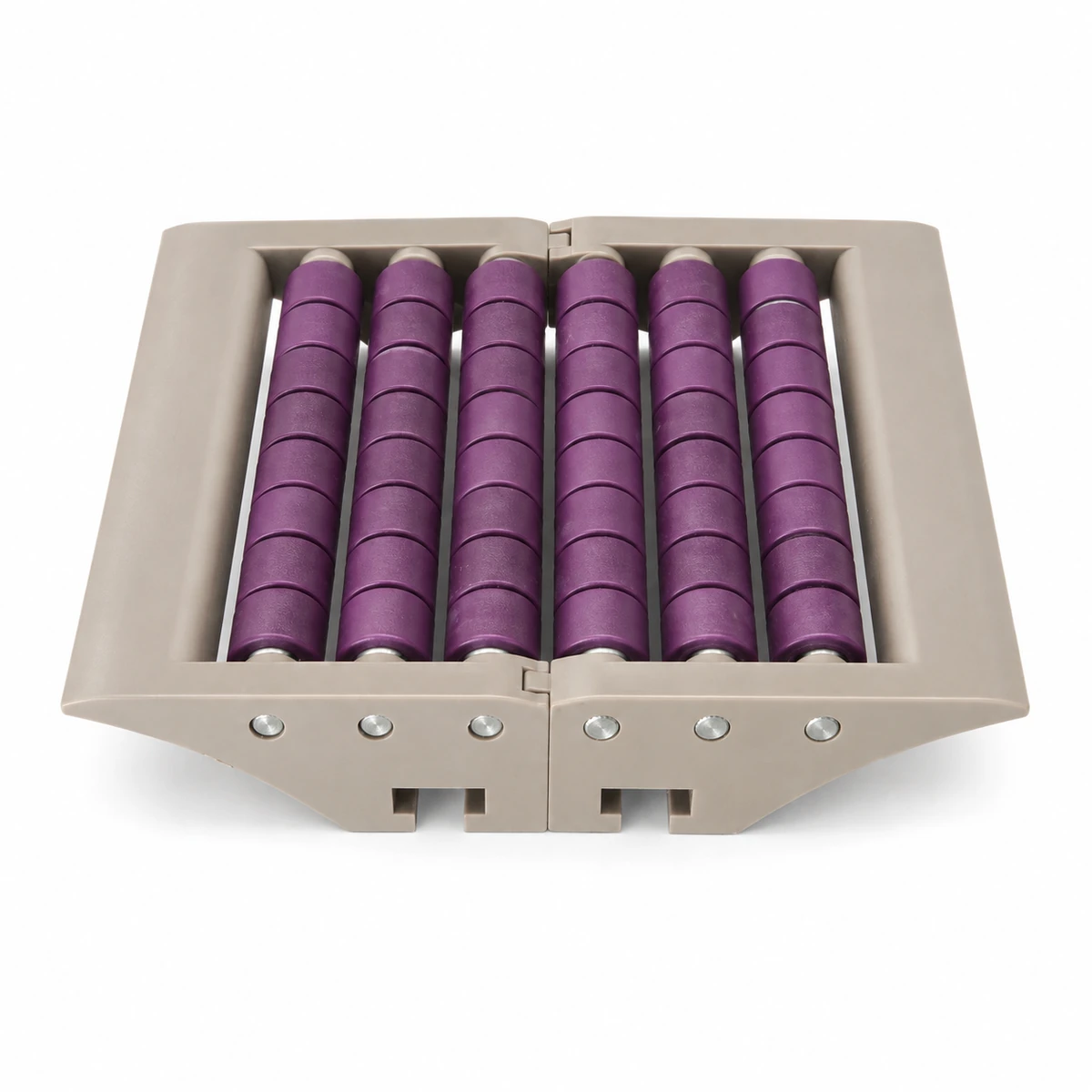
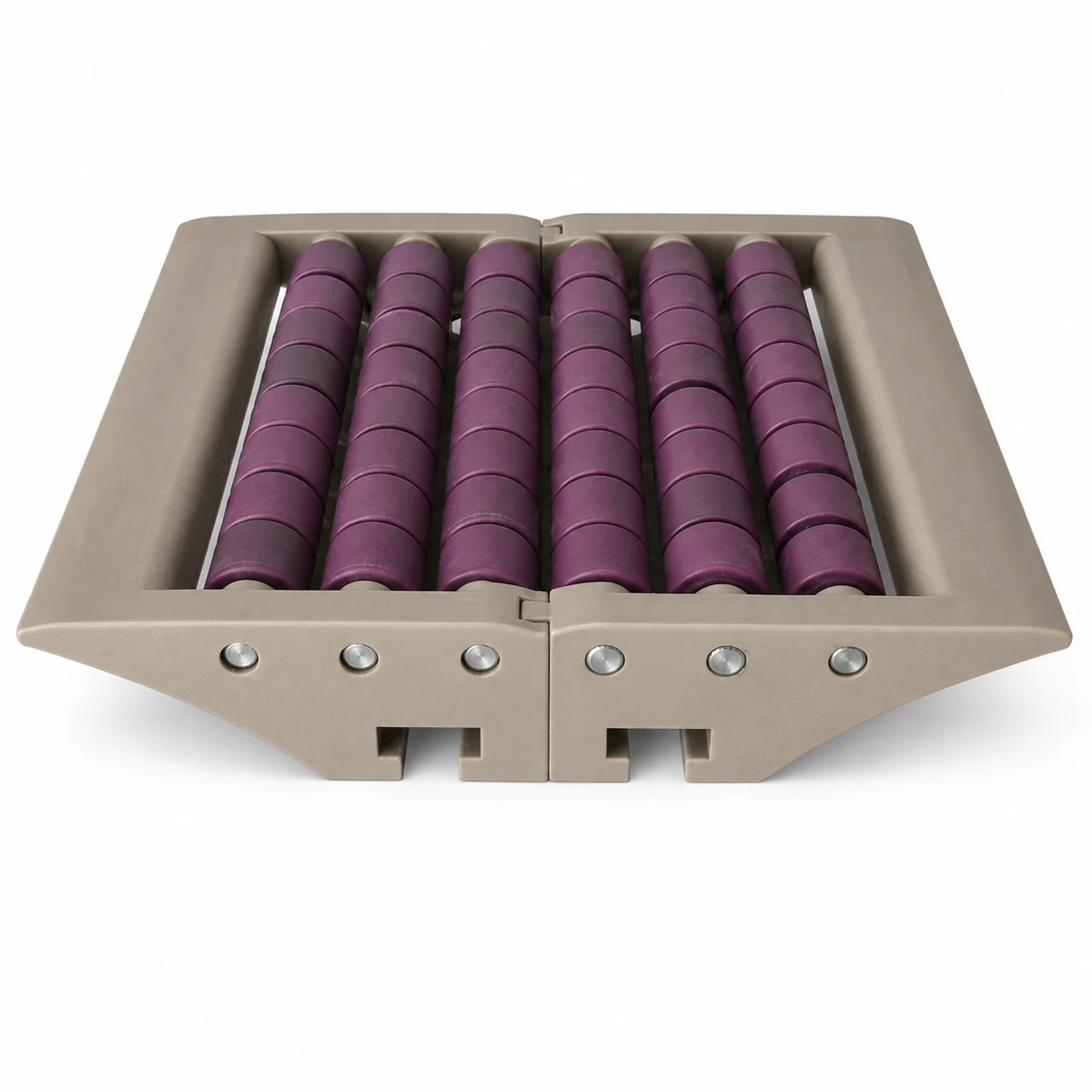
This transfer plate uses rows of purple rollers in a supporting frame to bridge a conveyor handoff. The rollers provide rotating contact beneath the product as it crosses the space between conveying surfaces.
- Reference
- 125 purple-roller plate
- Frame and Rollers
- UHMW-PE
- Roller Pins
- Stainless steel
Check the Product Base Across the Handoff
The product must remain supported as it leaves the upstream conveyor, crosses the rollers and reaches the receiving surface.
Carry the Product Base Between Conveyors
The plate places a set of small rollers in the gap between conveying sections. As the product crosses, its base contacts the rollers rather than an uninterrupted fixed plate. Roller orientation must agree with the intended transfer direction.
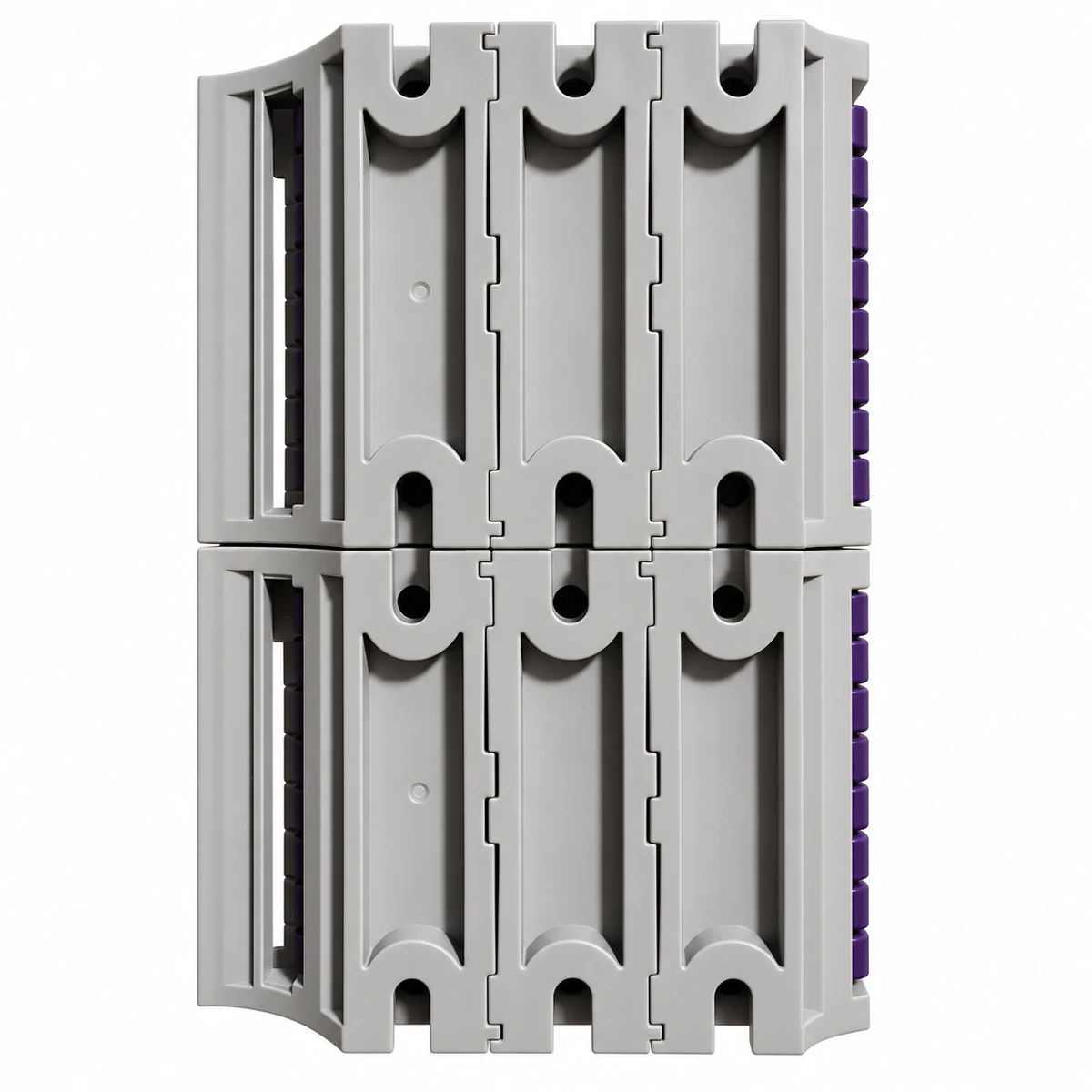
The frame and rollers are UHMW-PE, with stainless-steel pins supporting roller rotation. Select the plate layout around the product footprint and the available mounting space. The 125 reference distinguishes this purple-roller version from the blue A/B/C range.
Specifications
| Parameter | Specification |
|---|---|
| Product reference | Specification: 125 purple-roller transfer plate |
| Frame material | Specification: UHMW-PE |
| Roller material | Specification: UHMW-PE |
| Roller-pin material | Specification: Stainless steel |
| Function | Specification: Rolling support at a conveyor handoff |
Check Height, Gap and Roller Direction
Provide a section through the conveyor handoff showing both carrying heights and the space between them. Compare the plate envelope and its mounting points with the available support beneath the gap.
Check the smallest product base against roller spacing and the uncovered areas at each edge. The plate position must allow the product to reach the receiving conveyor without catching on its frame or losing support.
Rolling Support at a Conveyor-to-Conveyor Transfer
At a conveyor end, the carrying surface turns away while the product continues forward. A roller plate can provide intermediate support over the space before the receiving surface begins. The receiving height and the product's base shape affect that crossing.
Soft, narrow or irregular bases need particular attention because contact may fall between rollers or onto the frame. Evaluate the actual product at the intended transfer arrangement before settling the plate layout.
Review Your Transfer Gap
Send the handoff section, product-base dimensions and required plate quantity. Identify the purple 125 reference and include the available mounting space and direction of travel.