
Conveyor Chain
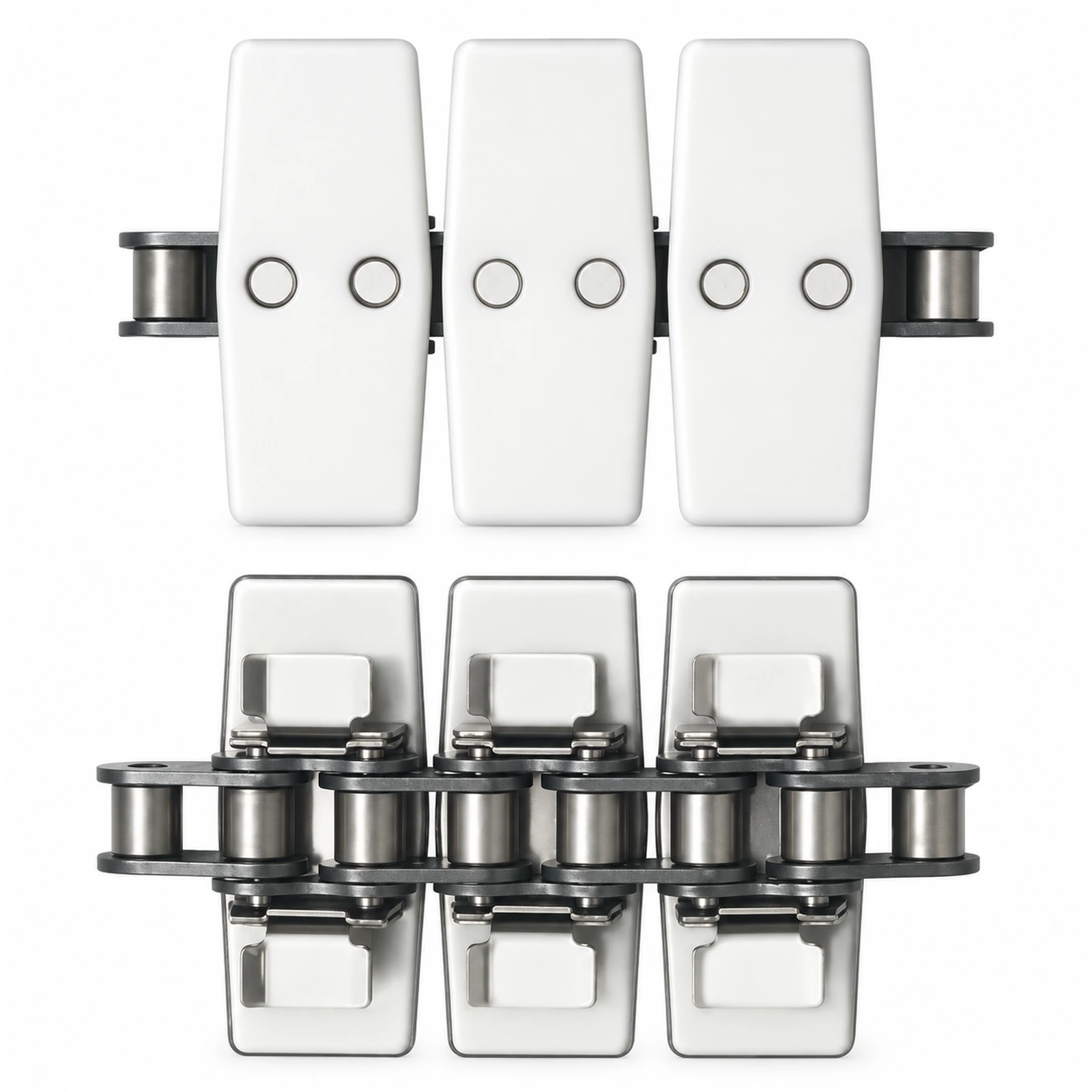
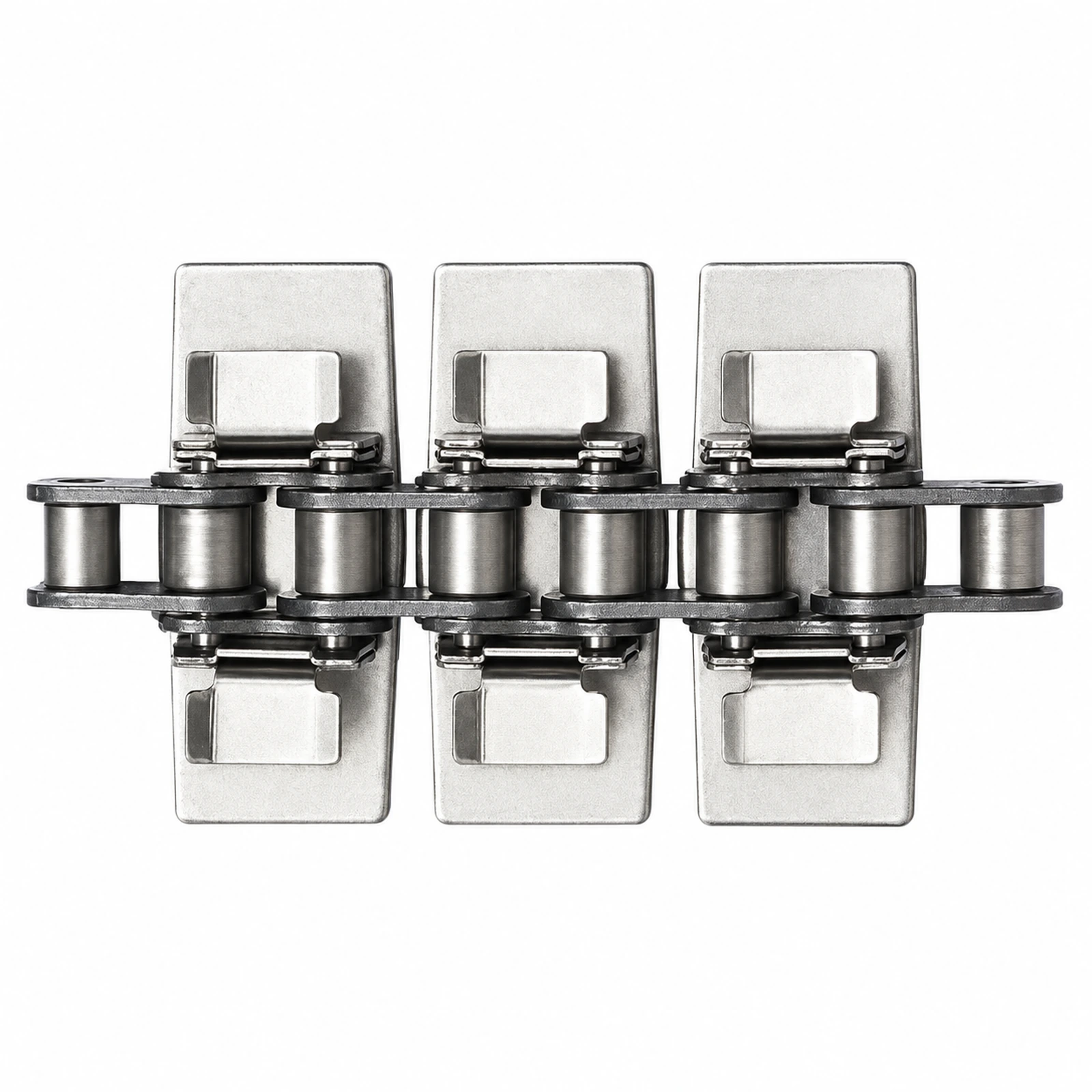
CSTRANS supplies conveyor chains for straight lanes, guided turns, compact flexible-chain routes and specialized handling. The range includes plastic tabletop, roller-top low-back-pressure, case, flexible and top-plate or gripper chains, with related sprockets and guides. Each family changes how a pack is supported, moved or held. Matching that behavior to the drive, track and handoff helps the chain work within the line.
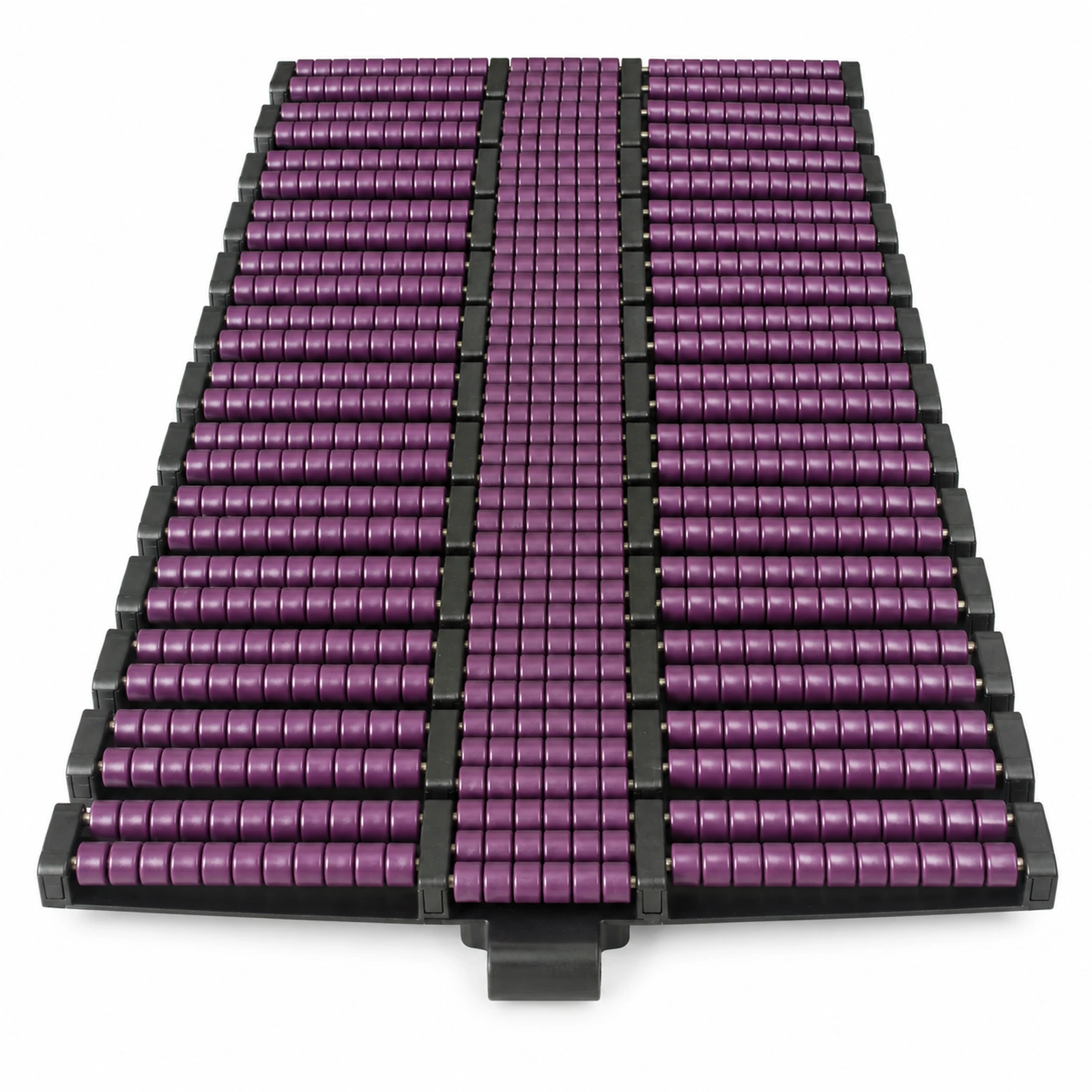
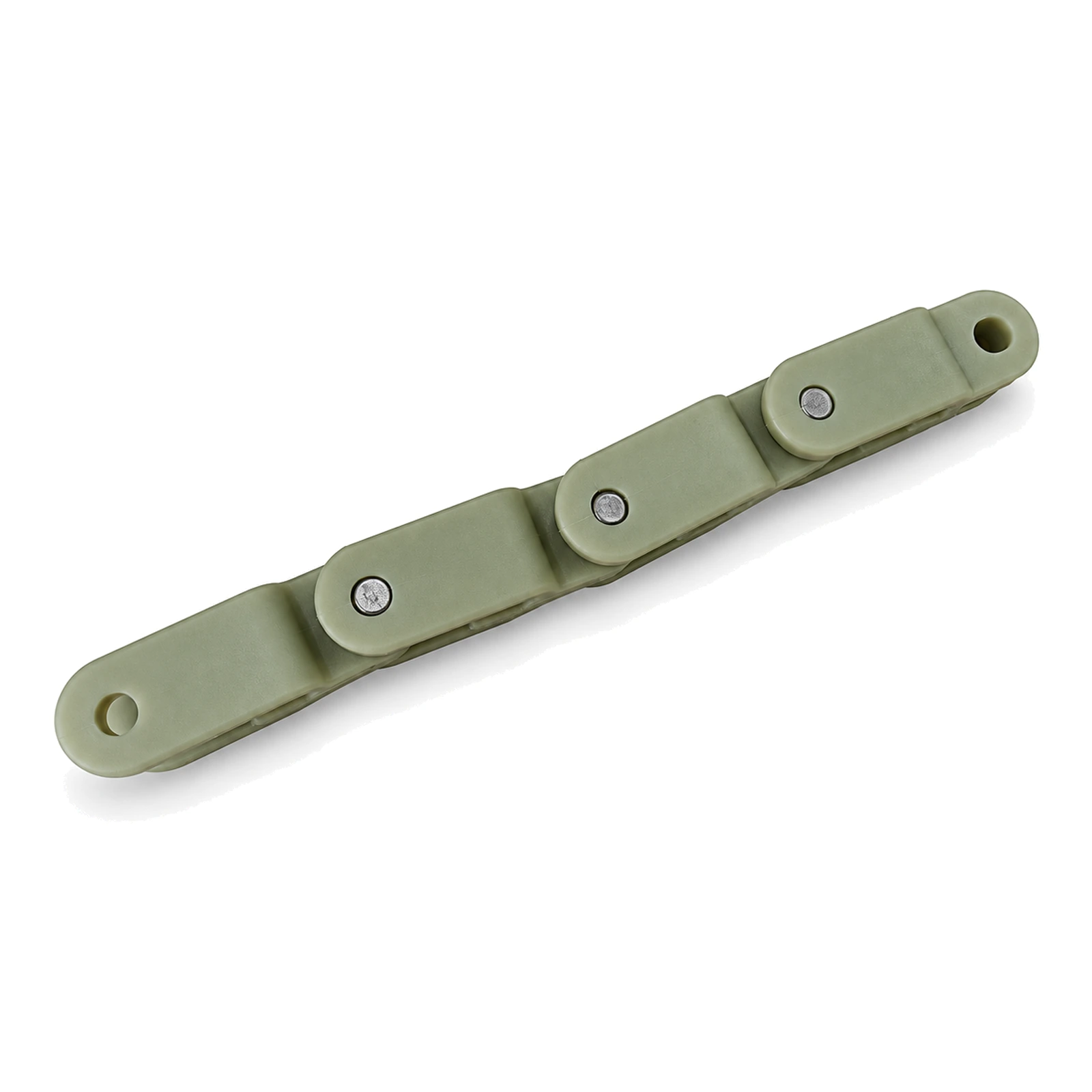
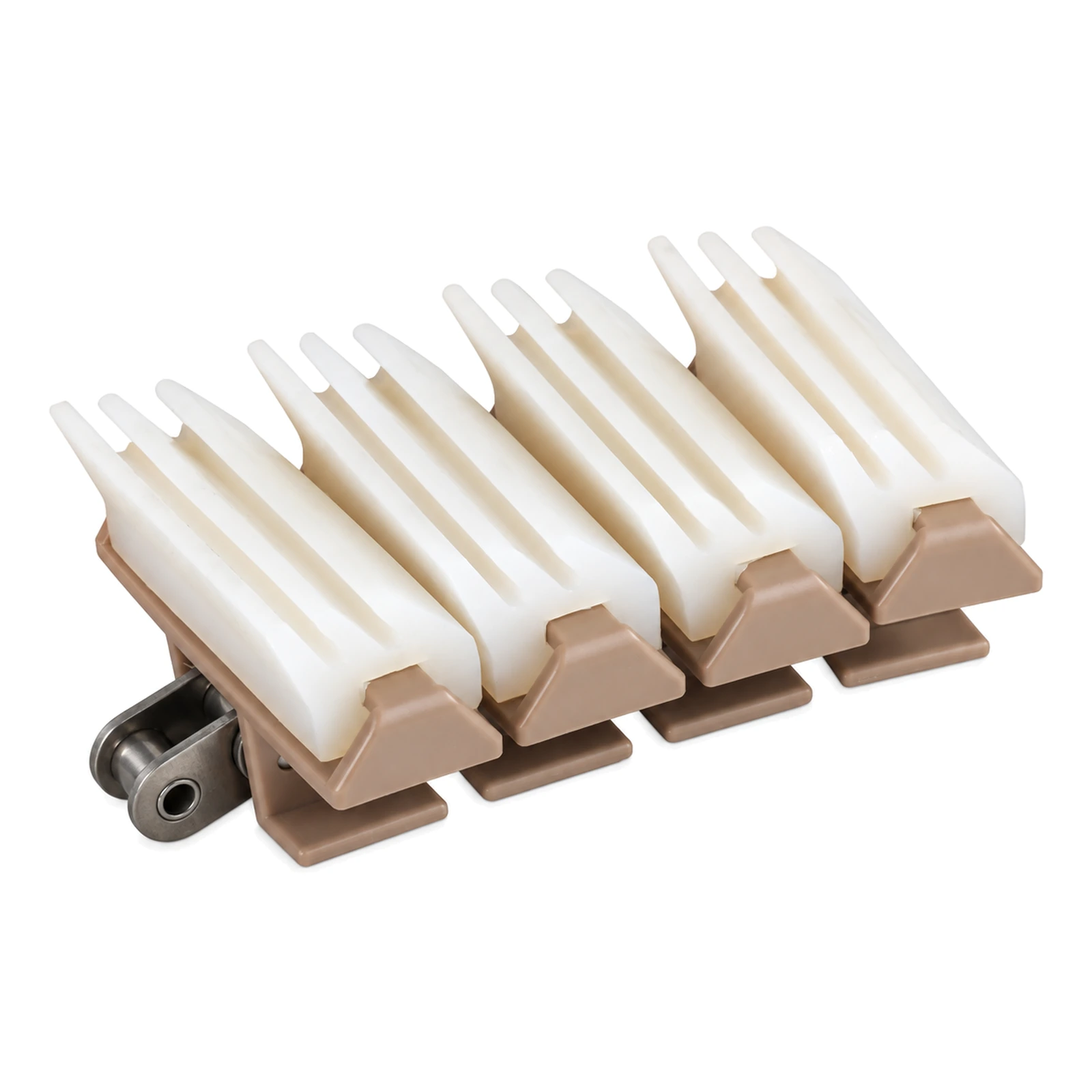
Product contact
Match the Chain to Product Contact
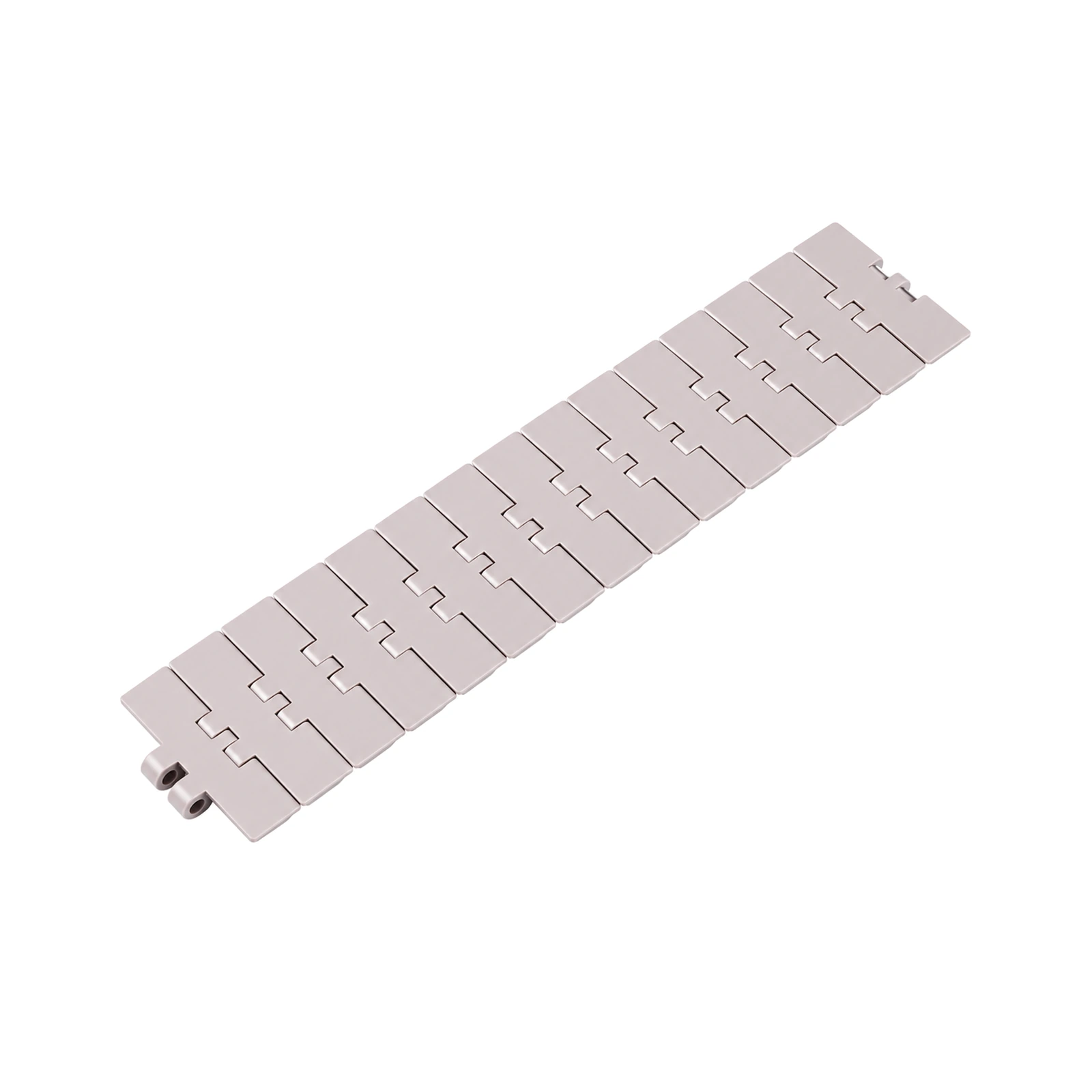
An 820 or 821 tabletop chain presents a flat surface for bottles, cans or packs. Roller-top 821-PRRS and turning LBP882TAB give a queued product rolling contact instead of continuous sliding against the moving chain, easing the push at a downstream stop. Case-chain families such as CC600/CC600TAB address carton packs, while 1873-D/G3/G4 gripper versions hold plastic bottles where side contact is needed. Product base, queue behavior and required hold determine the starting family.
Route fit
Follow the Actual Conveyor Route
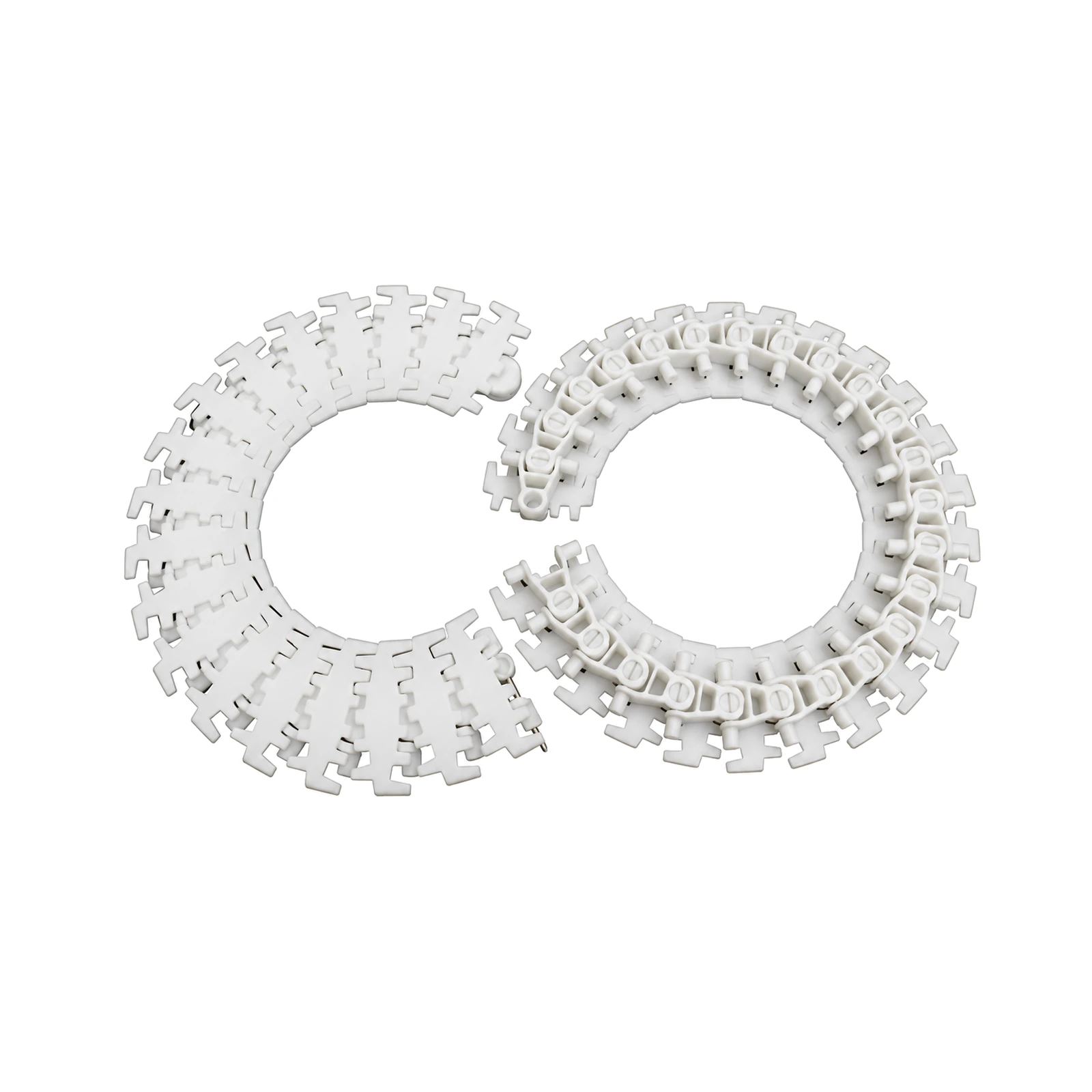
Straight-running 820/821 chains suit straight sections; 880TAB and 882TAB are side-flexing families for guided curves. For a compact beam-mounted path, CSTRANS offers flexible-chain widths including 63, 83 and 103, with matching bends, drive ends and supports. Case chains have their own geometry: CC600/CC600TAB has a 63.5 mm pitch and 42 mm width, while 1400/1400TAB has an 82.5 mm pitch and 50 mm width. Selecting for the route keeps product support continuous through a turn.
Drive and support
Fit the Drive and Support Path
Chain appearance alone does not establish sprocket or guide compatibility. The 880TAB and 882TAB families use different sprockets, and the flat-tooth and flat-plate forms of the 140 flexible chain require different drive and idler ends, beams and wear strips. CSTRANS can help match the selected chain with its drive parts, curve track or beam support and the entry and discharge interfaces. Correct engagement moves the chain; suitable guidance holds its path; a considered transfer lets the product cross into the next section without an avoidable support break.
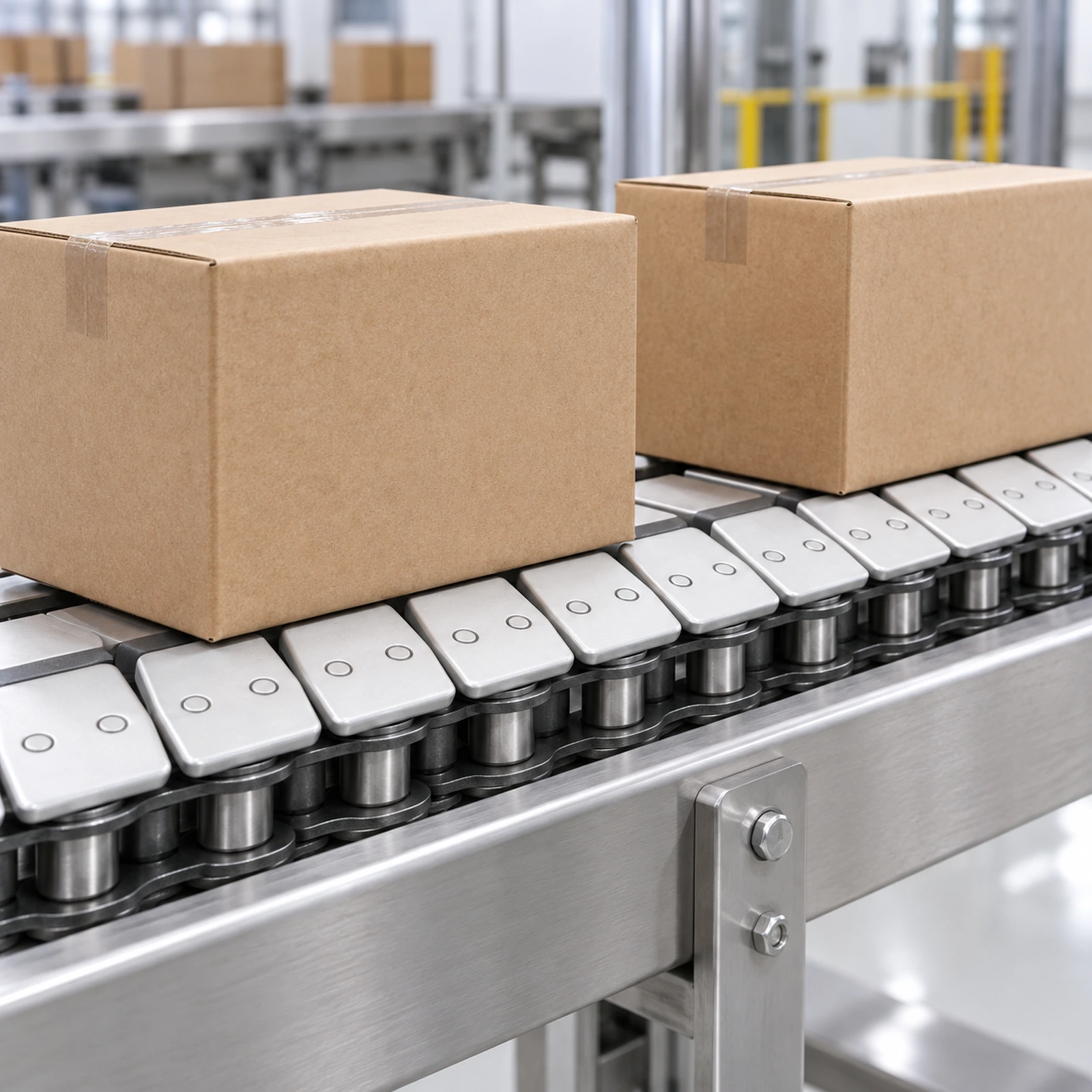
Application / Line Context
At a bottle-line stop, a roller-top chain can keep moving under stationary packs with less sliding contact, changing queue pressure. Around a bend, a side-flexing chain needs matching curve guidance so containers follow the route while the chain stays in its track. A flexible chain follows its beam and wear strip through a compact layout; its drive and bend components must fit the same form. Case chains carry carton packs; 1873 gripper chains hold plastic bottles from the side. Infeed position and discharge gap determine how these handling behaviors carry through to the next machine.