
103 Horizontal Plain Bend
The 103 horizontal plain bend guides the chain along a curved track without a turning wheel. The corresponding 105 mm beam family offers several radius and angle combinations.
- Chain / beam
- 103 / 105 mm
- Radius options
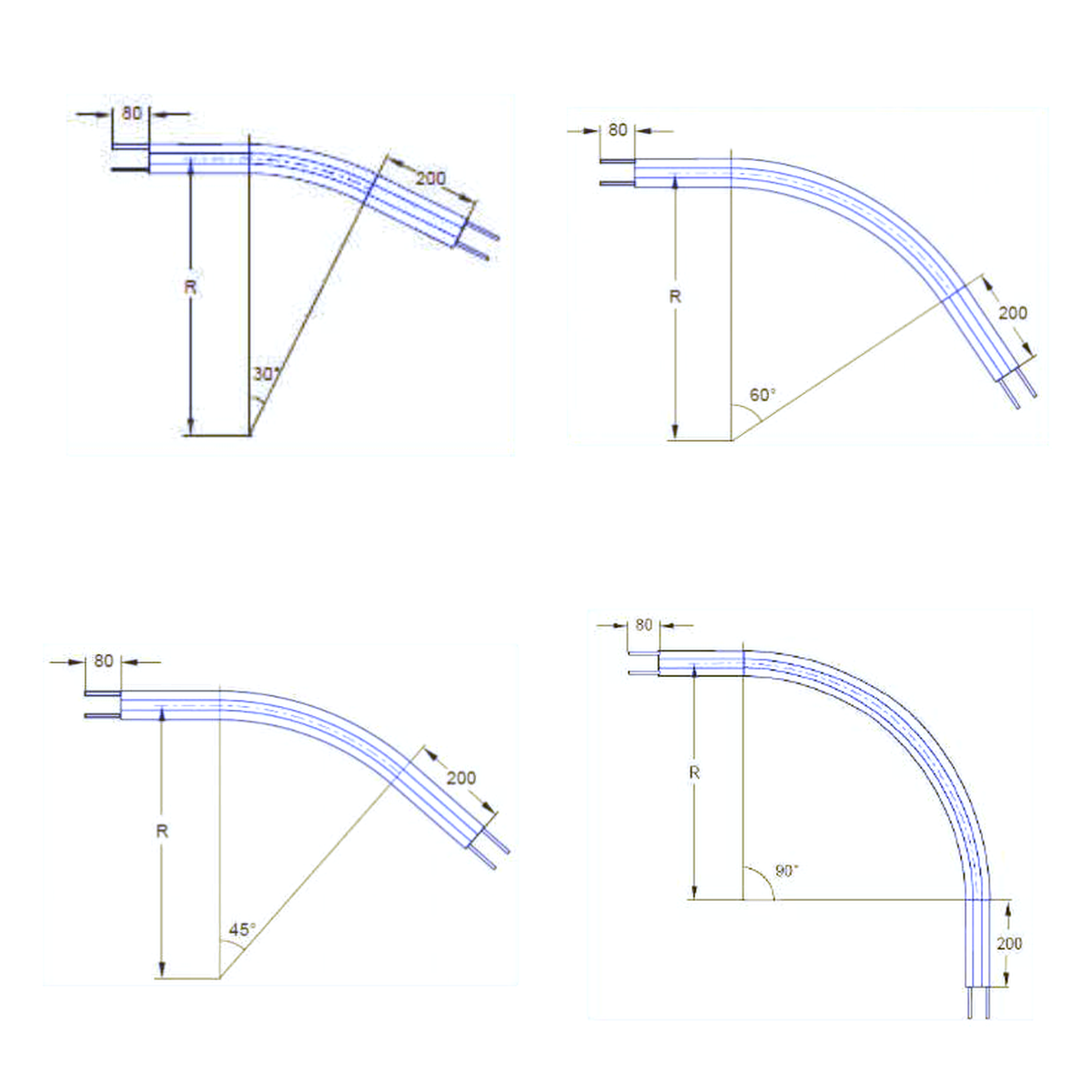
- 500 / 700 / 1000 mm
- Angles
- 30° / 45° / 60° / 90°
Choose the curve from the chain route and available layout space. Keep the radius reference consistent when comparing the bend with the installation drawing.
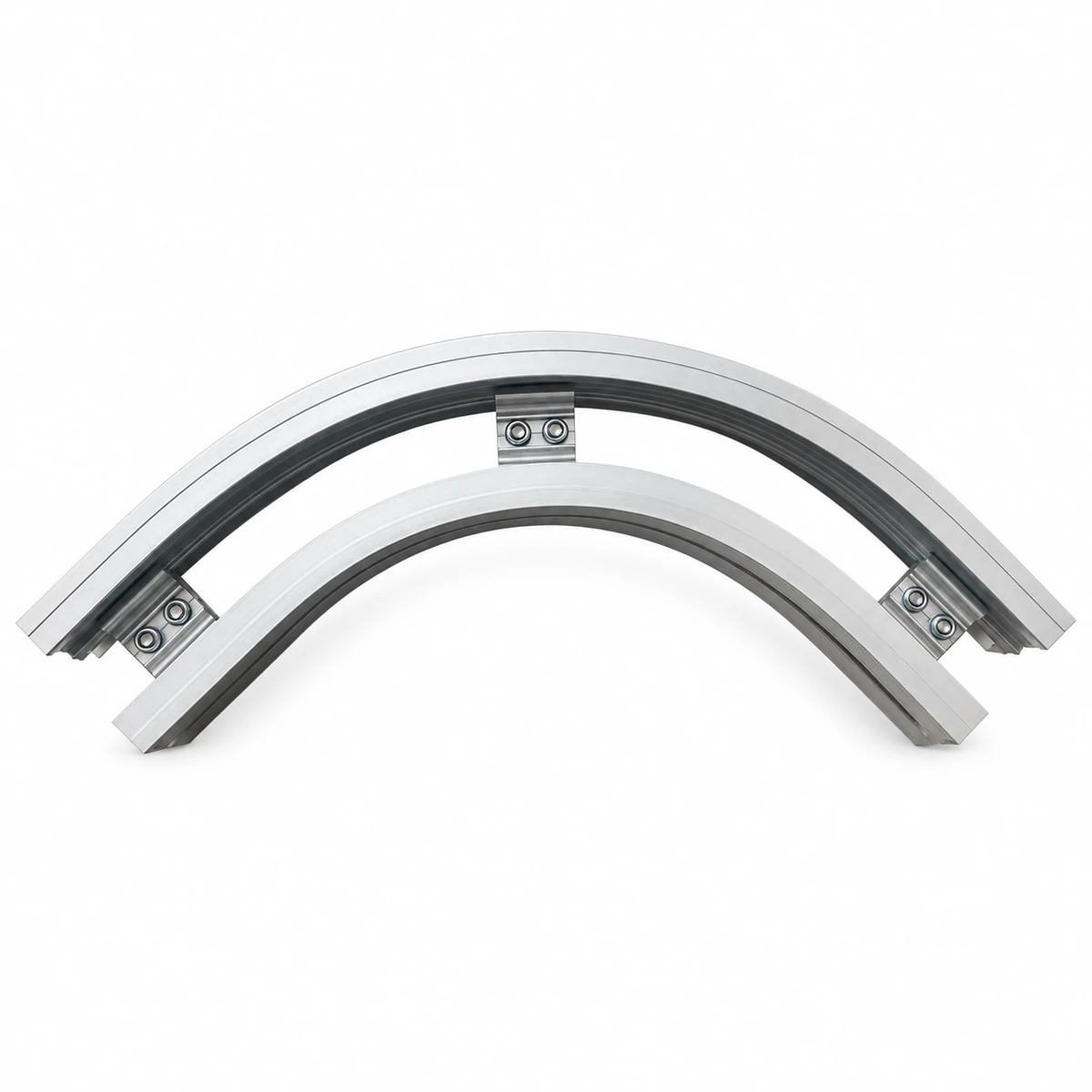
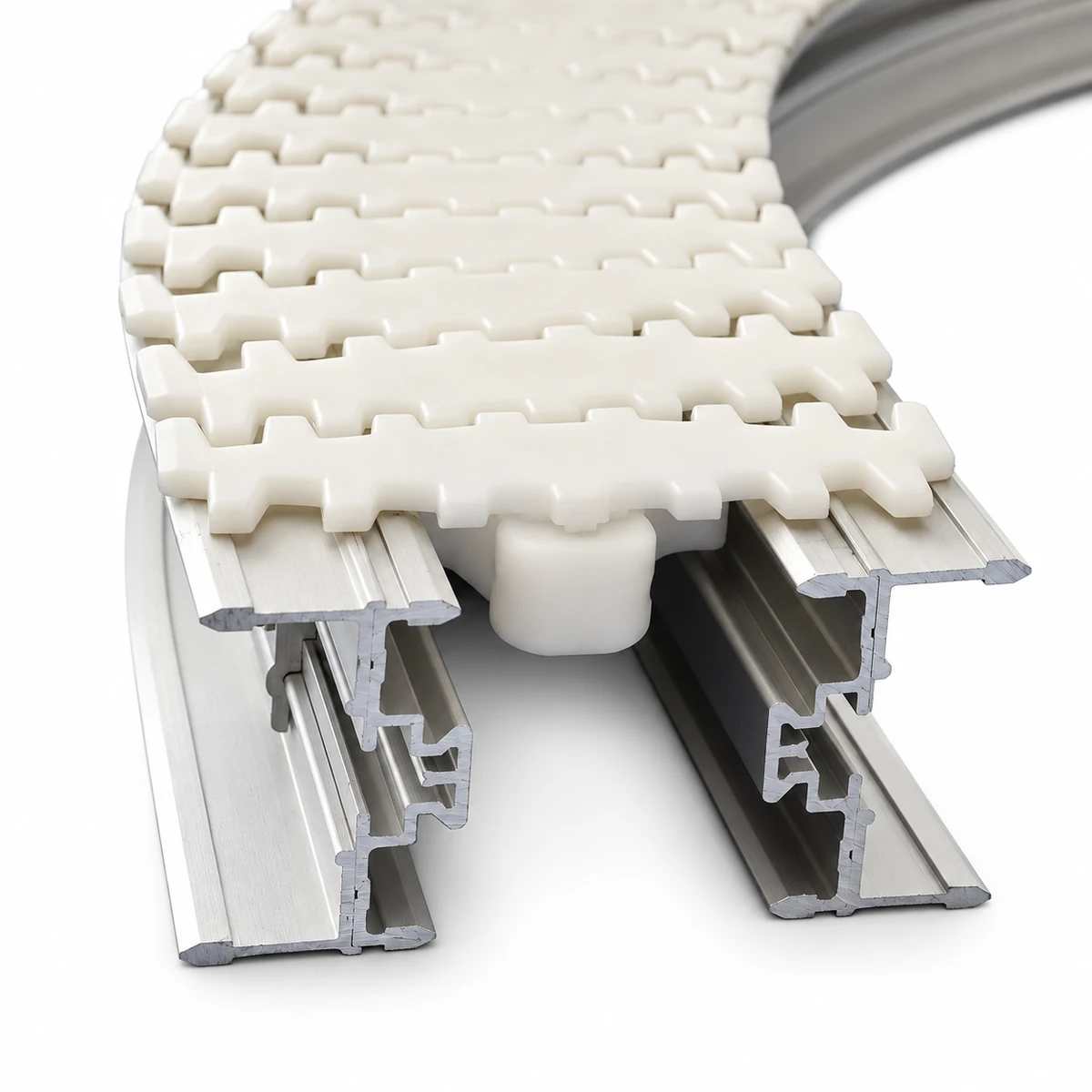
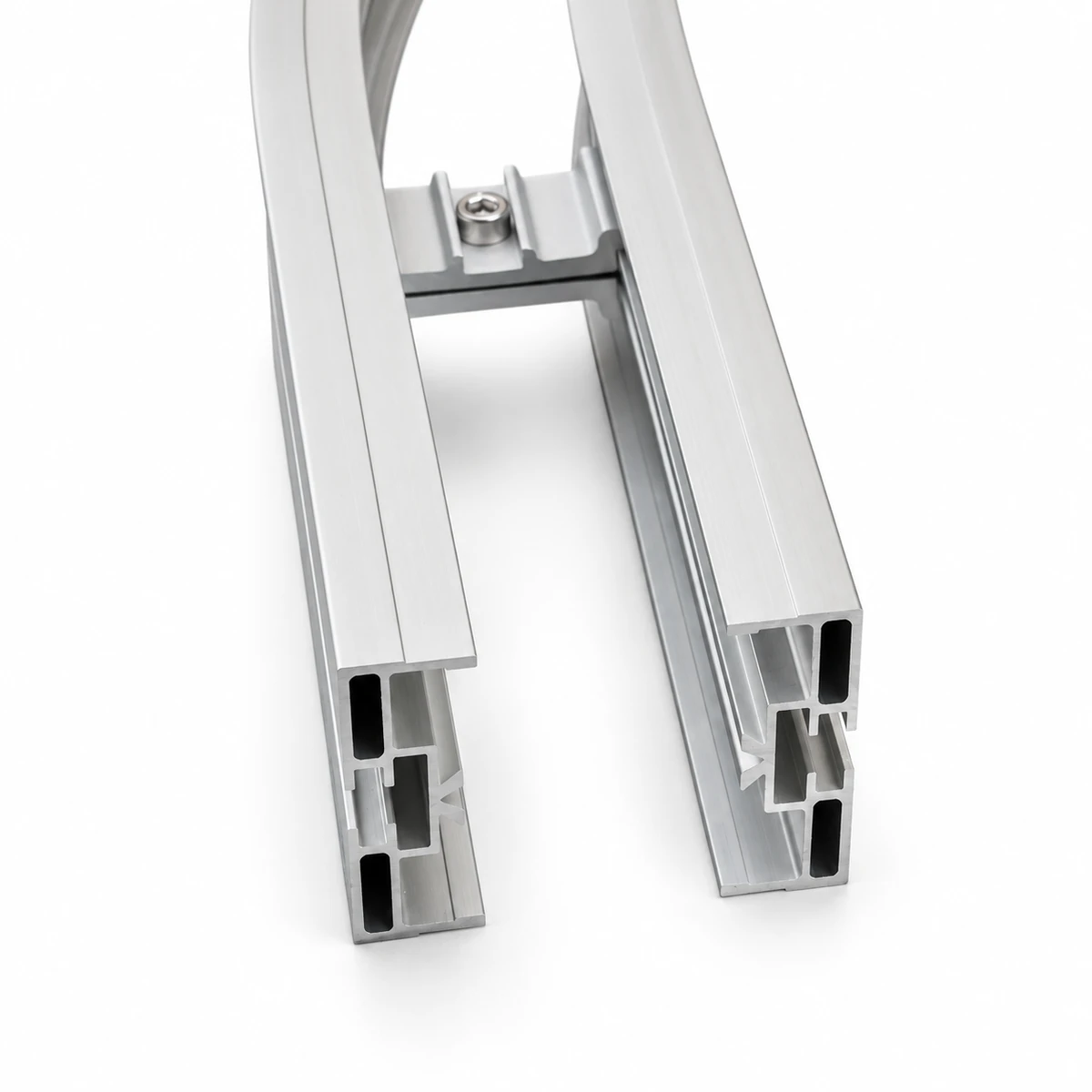
Guide the Chain Along a Curved Track
A plain bend carries the chain through the curve on its supporting track and wear surfaces. There is no wheel at the turn centre. The beam geometry and chain's side-flexing behaviour need to suit the same route.
For the 103 chain family, the matching beam width is 105 mm. Select the bend radius and angle together, then check the straight tangent positions. Those positions determine how the bend joins the surrounding conveyor.
Specifications
| Parameter | Specification |
|---|---|
| Chain width | Specification: 103 mm / 4.055 in |
| Beam width | Specification: 105 mm / 4.134 in |
| Radius options | Specification: 500 / 700 / 1000 mm |
| Bend angles | Specification: 30° / 45° / 60° / 90° |
| Listed radius tolerance | Specification: ±2 mm |
| Listed angle tolerance | Specification: ±2° |
| Material options | Specification: Aluminium / stainless steel |
Dimensions & Fit
Check the beam-end section and chain support level against both adjoining runs. Show the chosen radius, turn angle and tangent lengths in the layout.
Review wear-strip position and continuity at the joins. Include the chain style, product load and speed when assessing the sliding route through the curve.
Use a Sweeping Route Between Machines
The selectable radii allow a plain bend to follow a broader turn where the floor layout provides room. Product corners and guide rails still occupy space outside the chain route.
Several plain bends in one circuit add curved sliding contact. Assess the complete route when selecting the drive rather than treating each bend as an isolated component.
Request a 103 Plain-Bend Quote
Send the 103 chain reference, selected radius/angle and beam-end section. Include the conveyor layout, operating load and quantity.