
Conveyor Supports
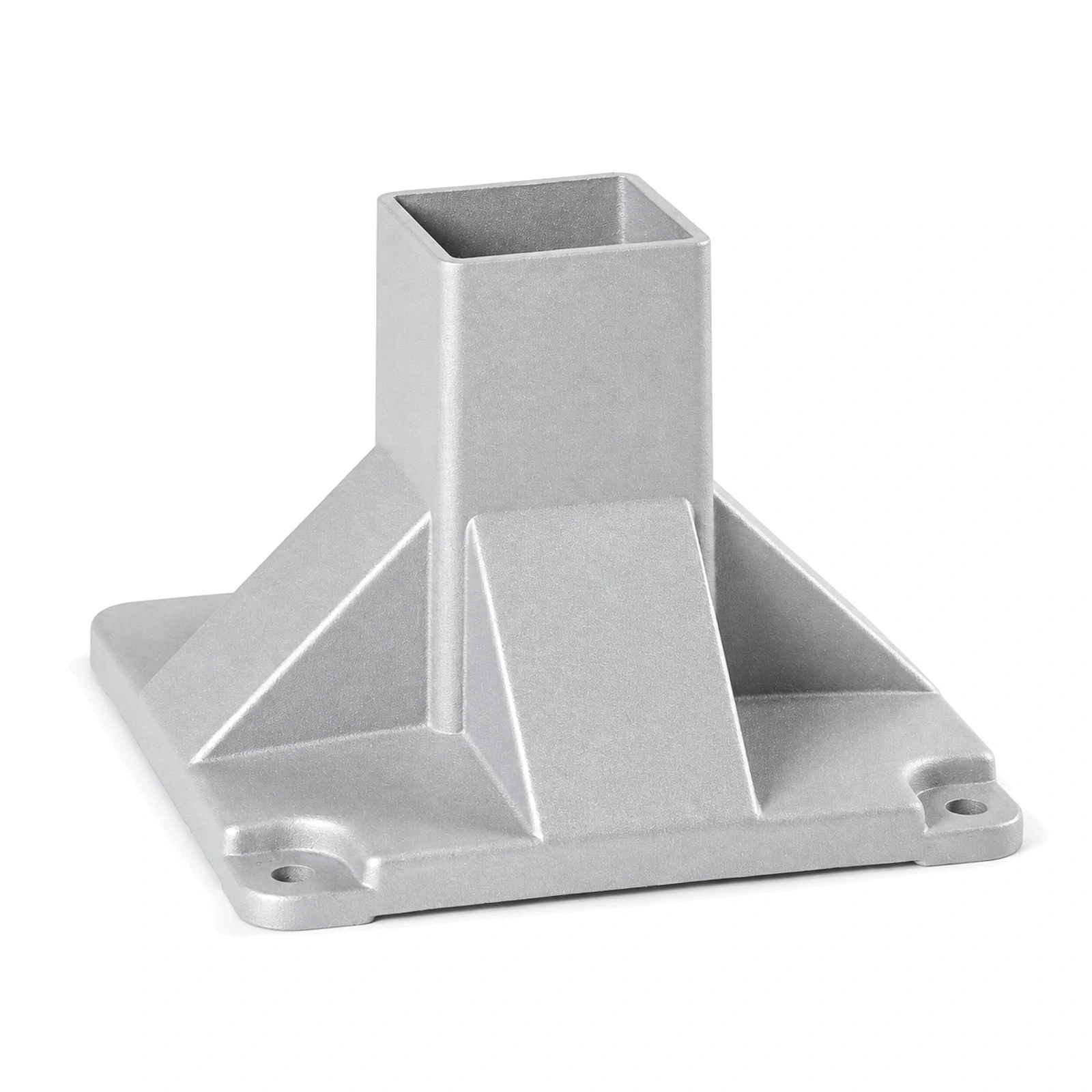
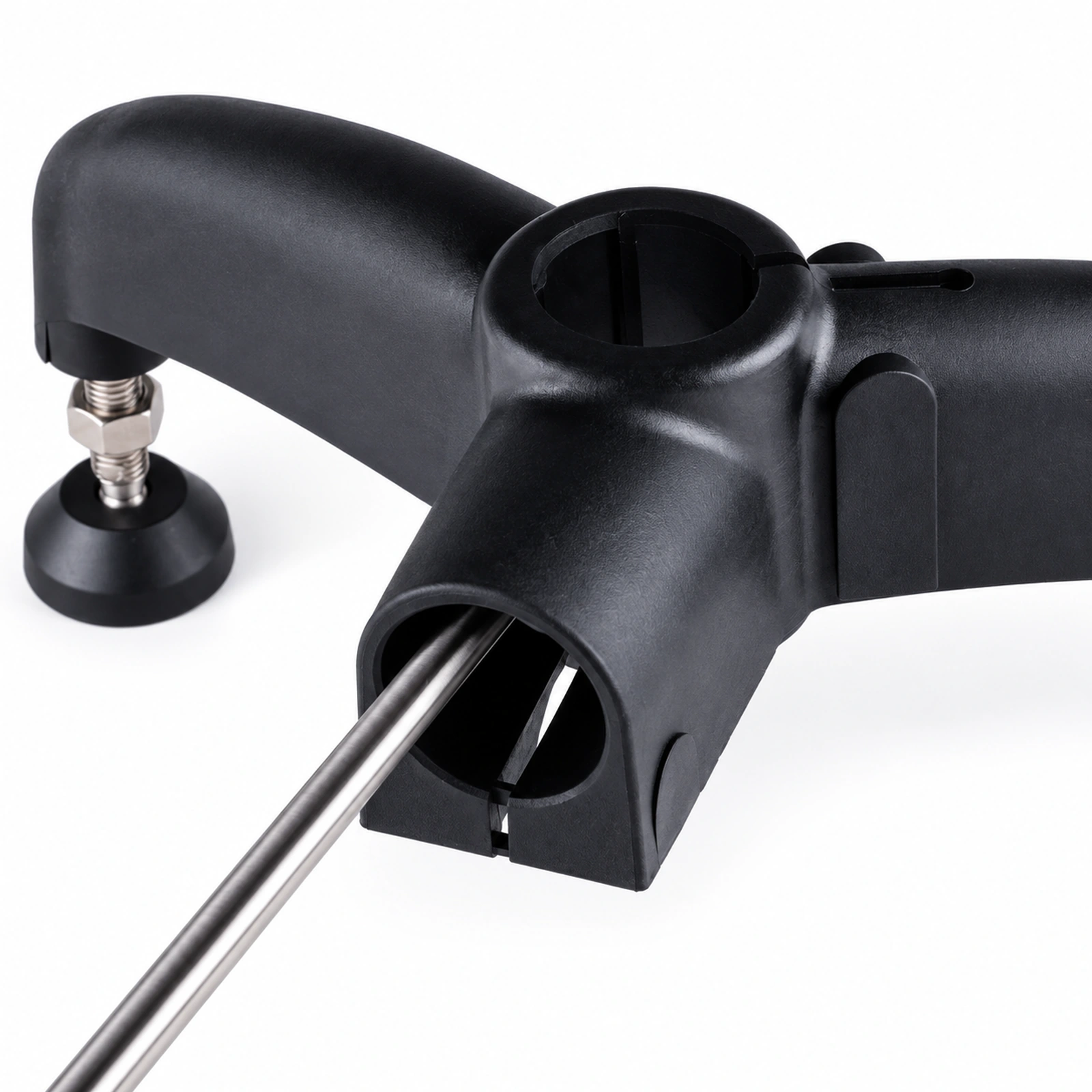
CSTRANS supplies conveyor supports in standard two-leg, 120° and 180° bipod, three-leg, and square two-leg forms. The range also includes square-tube end caps for a different upright connection. Base form, tube opening and leveling-foot thread all affect how a support fits beneath an existing or new conveyor section. Matching those interfaces helps keep the frame positioned for the product route and its adjoining equipment.
Floor footprint
Place the Base Around the Line
A support base must fit the floor area available beneath the conveyor, not just the frame above it. CSTRANS offers standard two-leg and three-leg forms, plus 120° and 180° bipod variants and a square two-leg version. The bipod angles change the direction in which the base extends from the upright. That gives equipment teams distinct footprints to consider near an adjacent machine, a turn or an infeed, where a support in the wrong place can obstruct access or complicate the conveyor route.
Tube interface
Match the Upright Tube Opening
CSTRANS lists top openings of 50.9, 60.3 and 63.5 mm for support bases, with 50.9 mm the most common. The 120°/180° bipod variants also have a side opening of 38 or 42 mm, with 42 mm the regular version. The top opening locates the upright tube; the side opening changes how a second member can meet the base. These dimensions turn a nominally similar support into a different fit. Checking the actual tube and any side connection keeps the support aligned with the intended frame position.
Foot connection
Complete the Foot Interface
The support bases pair with an M16 leveling-foot stud, and the feet are supplied separately. That distinction matters when replacing a base: the floor contact and the upright support both need compatible parts. For square tubes, CSTRANS also lists 40 × 40 and 50 × 50 mm end caps with M16 or M20 threaded holes. These square-tube interfaces have their own tube and thread match; they should be selected for the frame section in use. CSTRANS can help connect the base, upright and foot specification as one support assembly.
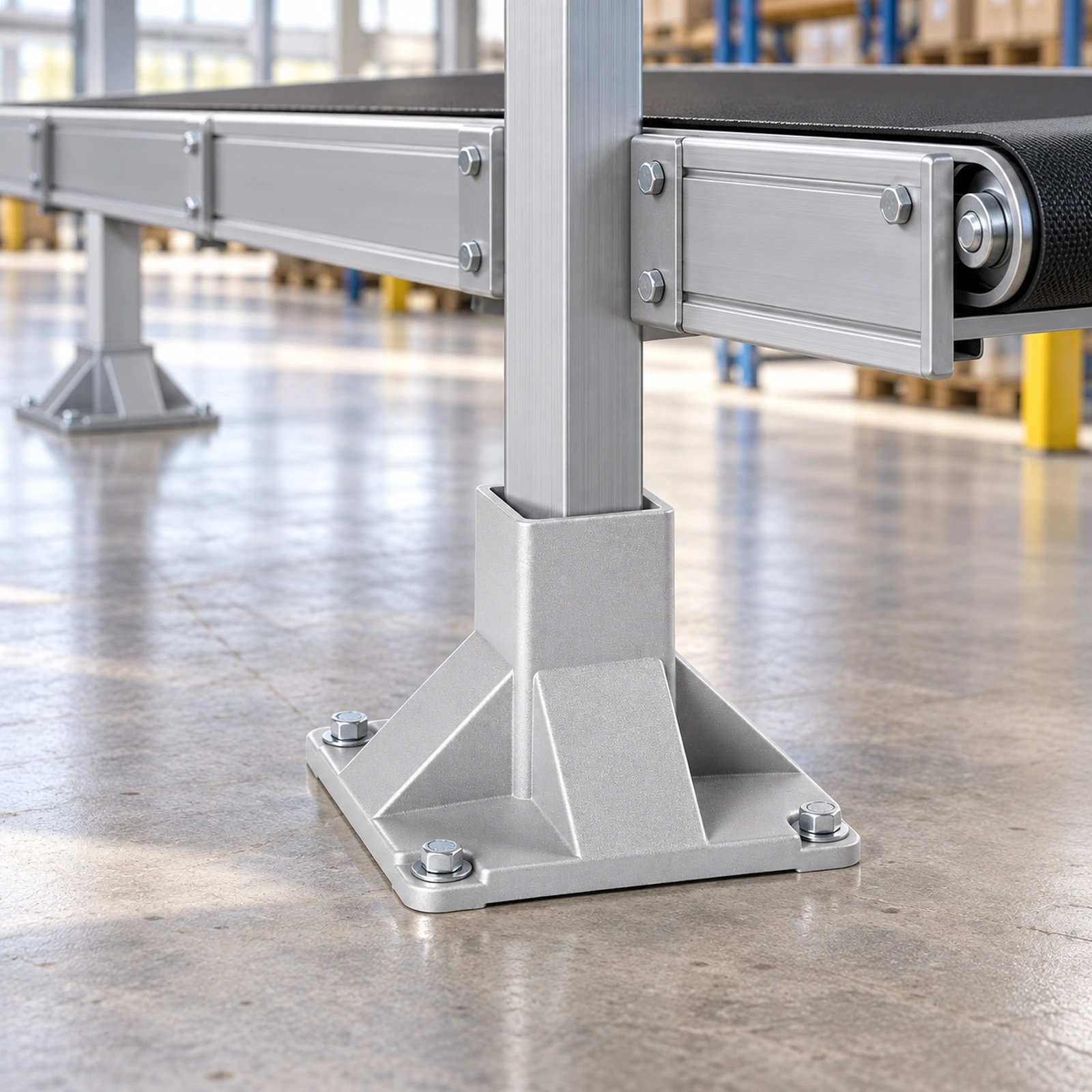
Application / Line Context
At an infeed or machine handoff, support height and tube seating influence the elevation of the conveyor frame and the gap to the next section. A mismatched opening can prevent the upright from locating as intended, making that alignment harder to hold. Through a turn, the leg direction determines where the base occupies floor space beneath the route; 120° and 180° bipod variants provide different placement geometry where access is constrained. At the floor, the M16 stud and separately specified foot complete the contact interface. Together, these choices affect frame position and the product path through adjacent conveyor sections, even though the support itself never touches the product.