

在新标签页中打开

Beverage Conveying

Component support for the bottle and can path between filling, labelling, and packing.

Bottles on a beverage conveying line

Follow the Container Through the Line

A container may move through filling and labelling as an individual bottle, then leave packing as a grouped product or case. These are different conveying tasks. Container shape, base support, guide contact, and the stops between machines affect the component discussion.

CSTRANS supplies conveyor chains and flexible-chain supporting components. We help frame a request around the chain, bend, wear strip, guide, or support that needs to fit the existing route.

Where Component Choice Matters

Upright Containers at Transfers and Bends

A tall bottle with a small base can lose support at a transfer or press against a guide around a bend. Empty and filled containers may behave differently on the same route.

Review the chain width and reference together with the bend geometry and guide position. CSTRANS’s chain and supporting-component ranges provide separate routes for the conveying surface, wear strips, and guide hardware, helping you identify which part the request concerns.
Queues Between Machines

If one machine stops while the upstream conveyor continues, containers can queue and push against one another. Changing a chain alone does not resolve the line’s accumulation behaviour.

State whether containers stop on a moving chain, how they contact the guides, and where the queue forms. This context helps review the candidate chain and wear-strip material; the line’s control and accumulation design need a separate engineering check.

Format Changes and Worn Guide Parts

A different bottle diameter or height changes the contact position. A worn guide or bend profile can also make a replacement request more specific than the chain model alone.

Use the existing series, guide profile, bend radius, and mounting dimensions to discuss a replacement. Supporting parts can be reviewed alongside the chain while keeping their fit requirements distinct.

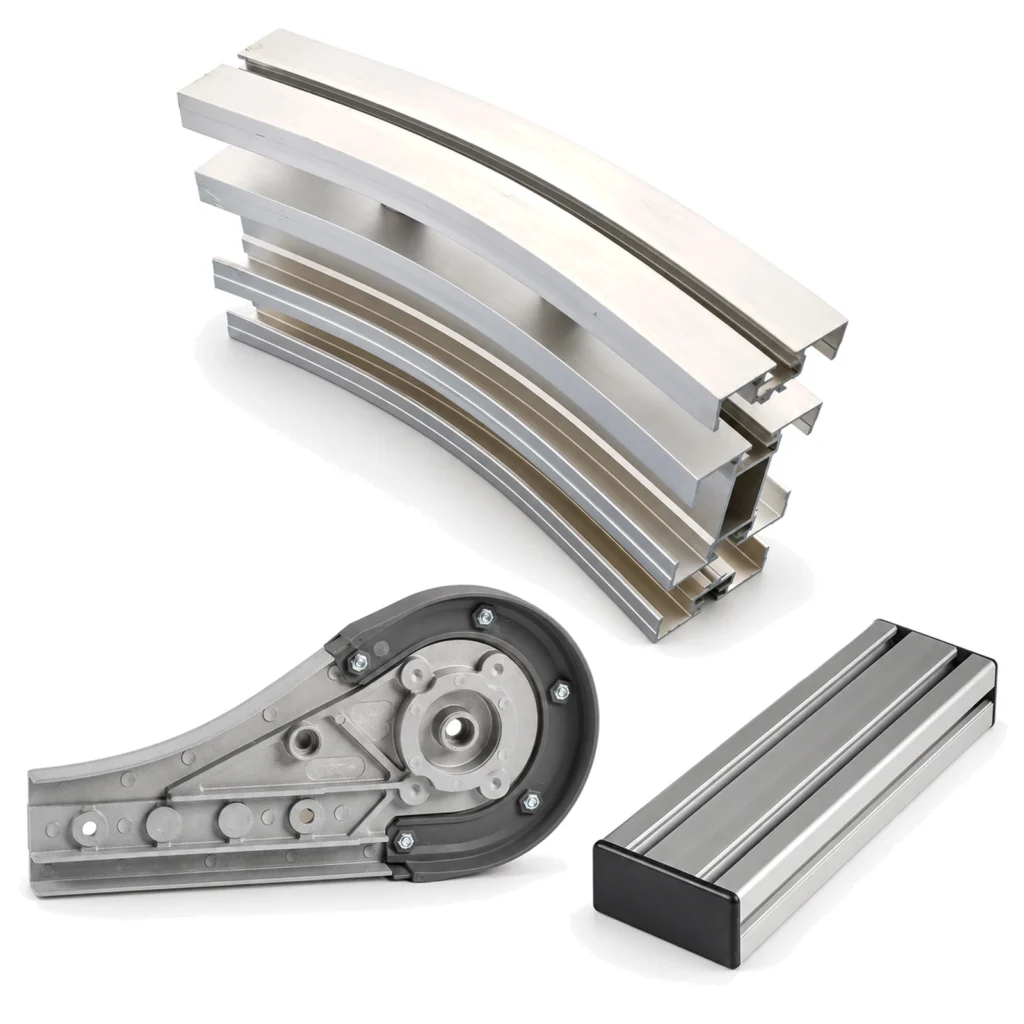
Flexible chain conveyor bend, end unit and beam components on white
Flexible-chain hardware: distinguish the chain from its guides, bends, and supports.

Identify the Part Around the Container Path

A flexible-chain reference identifies the chain itself. Beams, bends, wear strips, guides, and supports belong to the hardware around it. Include the known series and dimensions for the part you need. For a sprocket request, keep the matching chain reference with the teeth and bore details.

Tell us whether the containers are glass, plastic, or metal; empty or filled; and conveyed individually or in a pack. If the route involves wet conditions, food contact, cleaning chemicals, or a specified speed and load, state those conditions for review of the exact item.

Discuss the Component at the Problem Point

Start with the existing part or the point where support, contact, or wear changes. Browse the relevant family, or send the details available for a matching discussion.