Choose a Cleaning Method for the Installed Modular Belt
Choose the method by what must be removed and where it is trapped, then check whether the installed belt and conveyor allow that method. Loose particles, residue that rinses away and firmly attached soil present different removal tasks. Material compatibility and access can rule out a method that otherwise suits the residue.
This guide concerns plastic modular conveyor belts: connected modules with joints, rods or pins, and an underside drive interface. Cleaning the visible conveying surface may leave material in those other areas. The aim here is to select and check a cleaning approach for the installed equipment. Disinfection and hygiene acceptance require the site’s separate approved procedures and verification.
Stop and Isolate Before Inspecting or Cleaning
Use the equipment’s lockout/tagout and maintenance procedure before hands-on inspection, manual cleaning or component removal. Stopping motion does not by itself establish that hazardous or stored energy has been controlled. Intralox’s modular plastic belt manual includes isolation and moving-belt warnings in its safety guidance.
Do not touch a moving belt, reach into its joints, remove pins or direct a handheld cleaning operation into moving parts. An installed automatic cleaning device has its own operating procedure; its presence does not authorize manual work while the belt runs. If the isolation or access procedure is unclear, have the personnel responsible for the equipment establish it before work begins.
Match the Method to Residue and Component Conditions
Read the Residue Before Choosing a Method Category
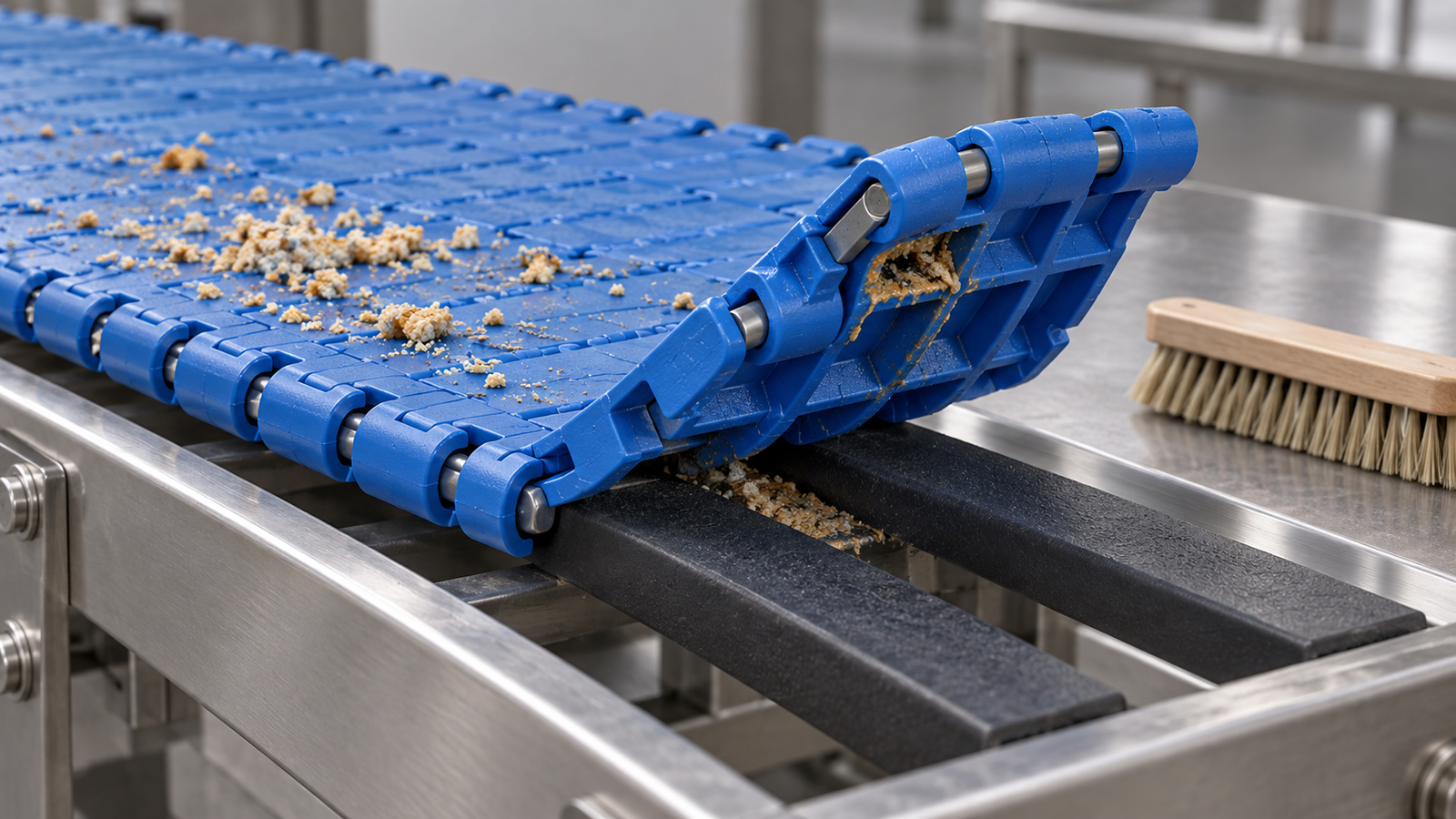
Distinguish material resting on the surface from material attached to it. Also record whether it is on top, inside a joint, at an underside drive feature or between the belt and a support. The same residue can be easy to reach on a flat surface and shielded at a contact interface.
Remove loose fragments with the approved tool and collection method before addressing an attached film. This exposes the surface and prevents large pieces from remaining in joints. For attached residue, its chemistry changes the method to consider. Forbo’s cleaning whitepaper, pages 8–9 and 11, explains the following distinctions:
| Residue | Removal Mechanism and Method Judgment | What to Check Afterward |
|---|---|---|
| Sugar that has not dried or caramelized | Water solubility supports an approved rinse. Heat can make caramelized residue harder to remove. | Remaining film and residue carried into joints or runoff paths |
| Grease or oil film | Water alone does not dissolve the film. A compatible alkaline detergent is a candidate for removing this organic residue. | Film remaining on the top, pins or underside |
| Protein residue | Remove and preclean before it dries and adheres. More heat can denature protein and make removal harder. | Material still attached or hardened in accessible areas |
| Mineral deposits, such as limescale | An acidic cleaner can address inorganic deposits, provided the actual components tolerate that chemical and exposure. | Deposits remaining at the affected location and signs of material damage |
A mineral deposit trapped under a support presents two separate problems: the chemical must address the deposit, and the method must reach it. Changing detergent cannot compensate for a shielded contact surface. Resolve the location and access path as well as the residue type.
If the approved procedure leaves attached material, identify the remaining soil and location before changing the method. Increasing pressure, heat or chemical strength by trial can introduce a different compatibility problem without reaching the missed area.
Apply Material and Access Limits to the Selected Category
A specific manufacturer example shows why removal chemistry and material suitability need separate checks. In Intralox’s 2023 account of chemical compatibility, a meat processor reported belt cracking. Intralox found phosphoric acid on the submitted belt sample and identified incompatibility with the customer’s acetal belt. ScanBelt’s material guidance also cautions about acid- or chlorine-containing agents for its polyacetal materials.
The useful question is therefore more specific than whether a cleaner is “acidic” or a belt is “plastic.” Check the actual chemical identity and working concentration, contact temperature, exposure time and cleaning frequency against the installed material combination. These describe the exposure the parts receive; the same cleaner name alone cannot establish that two processes have the same compatibility.
The access method also needs approval. A brush or scraper must suit the actual surface and joints; a rinse needs a route to the residue and a way to remove the loosened material. Use the equipment-specific method and its stated limits.
Belt Body, Pins and Supports
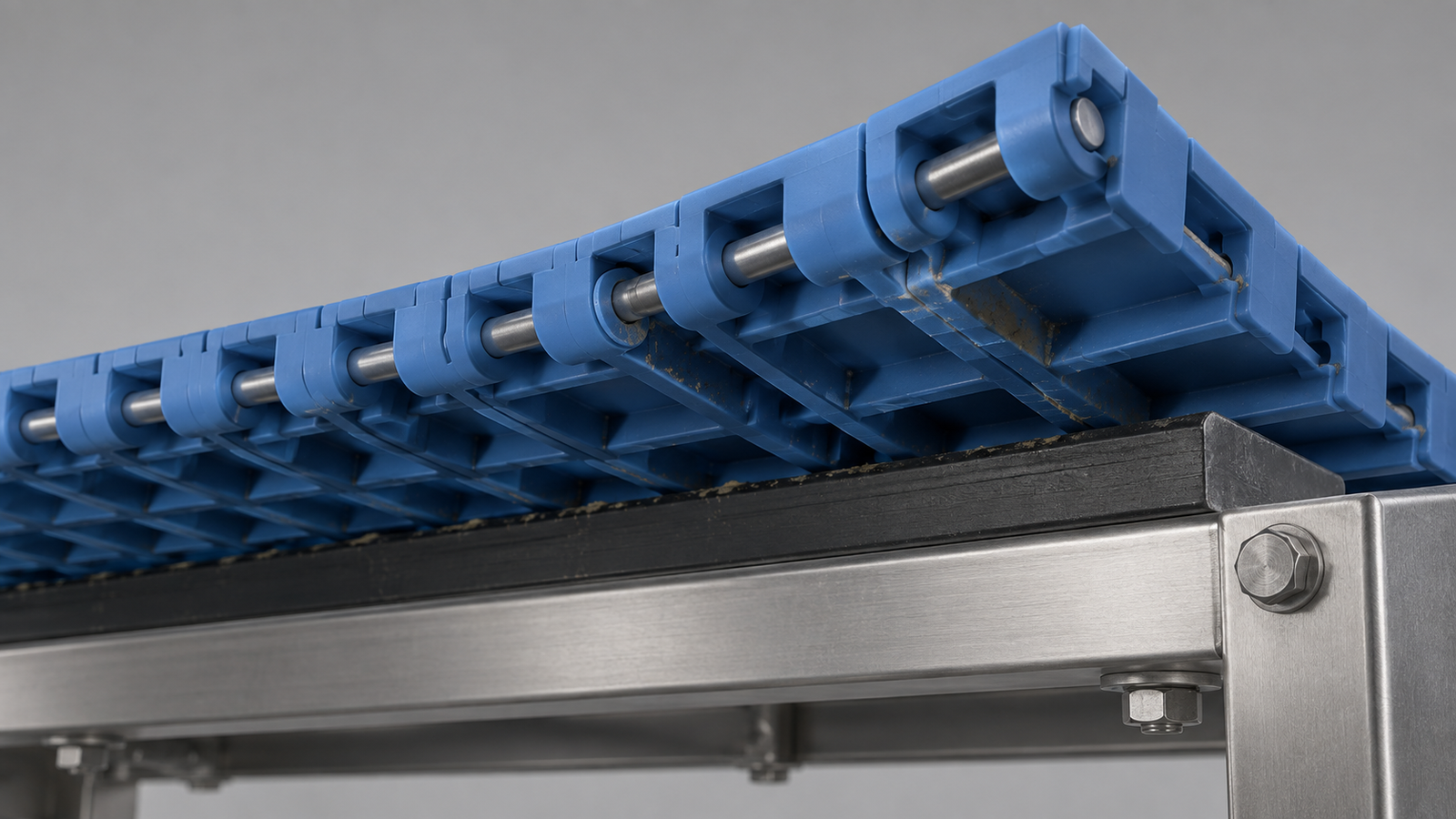
Identify the connecting pins or rods and the wear strips or other supports separately from the belt modules. For example, the company’s 1270 belt product table lists POM/PP belt materials separately from POM/PP/PA6 pin materials. A body-material choice therefore does not identify every component exposed to the cleaner. Check the installed combination rather than applying the body’s compatibility assessment to the whole assembly.
The joint and support contact also affect access. Forbo’s page 7 shows how hinge access changes as modules articulate around a sprocket, and how underside ribs affect the cleaning path. A jet that reaches the exposed top may miss material behind a hinge or rib. Sprocket size and belt type affect the opening geometry, so an installed nozzle arrangement must suit that configuration.
A clean top surface cannot show whether a concealed pin area or the underside against a wear strip is clear. If inspecting those areas requires lifting, repositioning or opening the belt, follow the documented maintenance access method; do not improvise disassembly to complete a cleaning step.
Check the Approved Procedure and the Accessible Areas
Before cleaning, verify that the procedure names the installed belt or an explicitly approved configuration, the method and tools, any agent and its conditions, the access steps, and the required inspection or acceptance checks. An agent label alone cannot establish that the complete conveyor permits the proposed process.
After the prescribed cleaning and removal or rinsing steps, inspect the areas the procedure makes accessible: the conveying surface, joints, underside drive features and support-contact locations. Check for remaining residue as well as missing or damaged modules, protruding or damaged rods, and damaged supports. Intralox’s 2024 manual includes these component checks and identifies underside buildup as a possible interference with sprocket engagement; these are mechanical inspection considerations, not hygiene test results.
Also look for cracking, whitening or swelling, which Intralox lists as possible signs of chemical incompatibility. A visibly clean belt with a changed material surface needs investigation; removal of the soil does not resolve damage to the belt.
Record a location that remains inaccessible or still contains residue. It is a specific access or removal problem to resolve with the equipment owner, rather than evidence that the entire belt is clean. Visual inspection can establish what is visibly present; it cannot demonstrate disinfection or food safety. Complete the site’s required acceptance and equipment-release steps before returning the conveyor to service.
Reassess a Changed Cleaning Condition
A new agent, higher temperature, longer exposure or more frequent cleaning changes the conditions used to assess compatibility. Recheck the procedure and component data before adopting the change, even if the belt series stays the same. A new residue or a change in where it accumulates may also require a different access or removal approach.
For replacement components, identify the existing plastic modular belt and conveyor wear strips by series, part reference and material documentation. The food-processing conveying page provides the application context. With a component request, send the installed part details and the approved cleaning conditions so that the proposed replacement’s suitability can be checked against the actual process.