
Flexible Chain
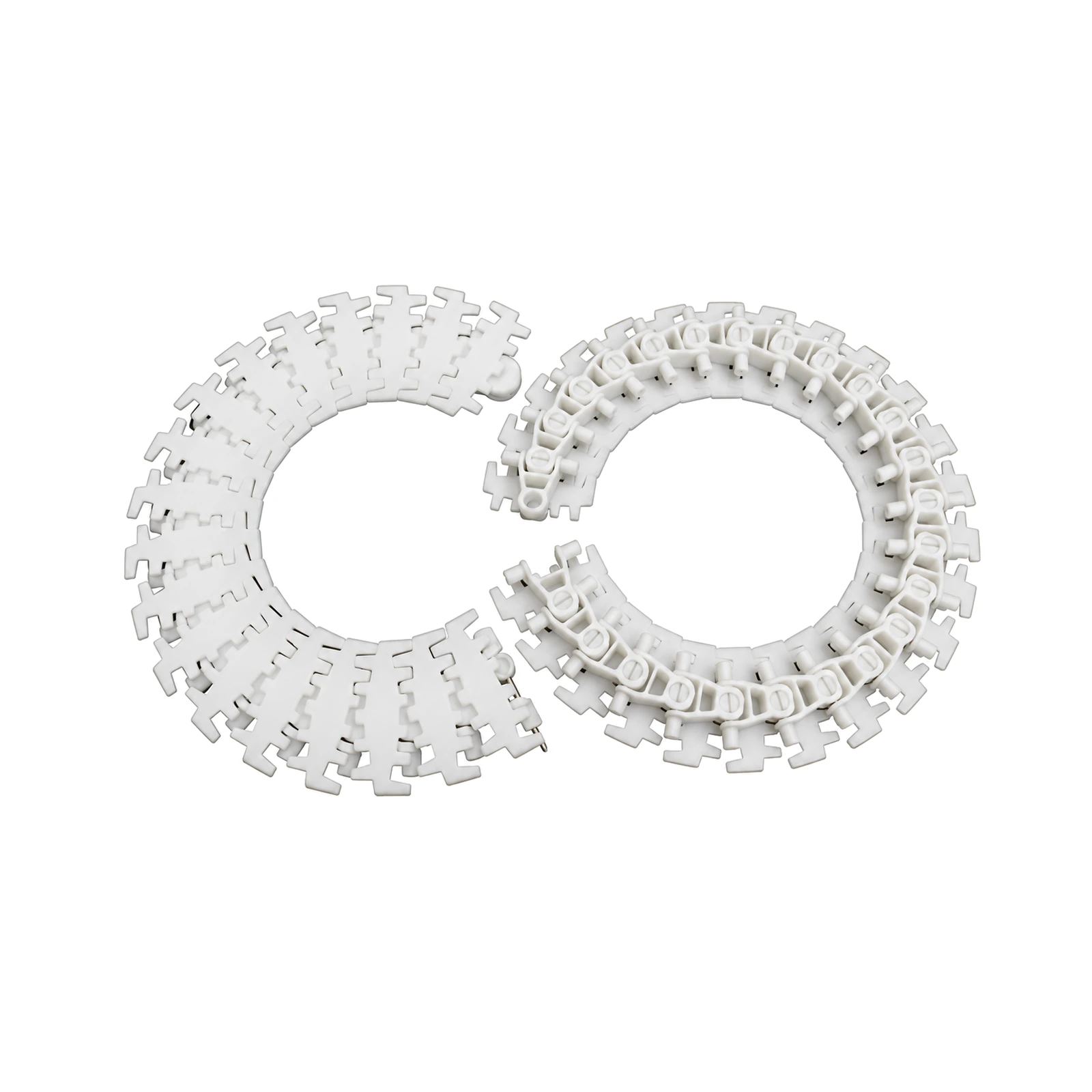
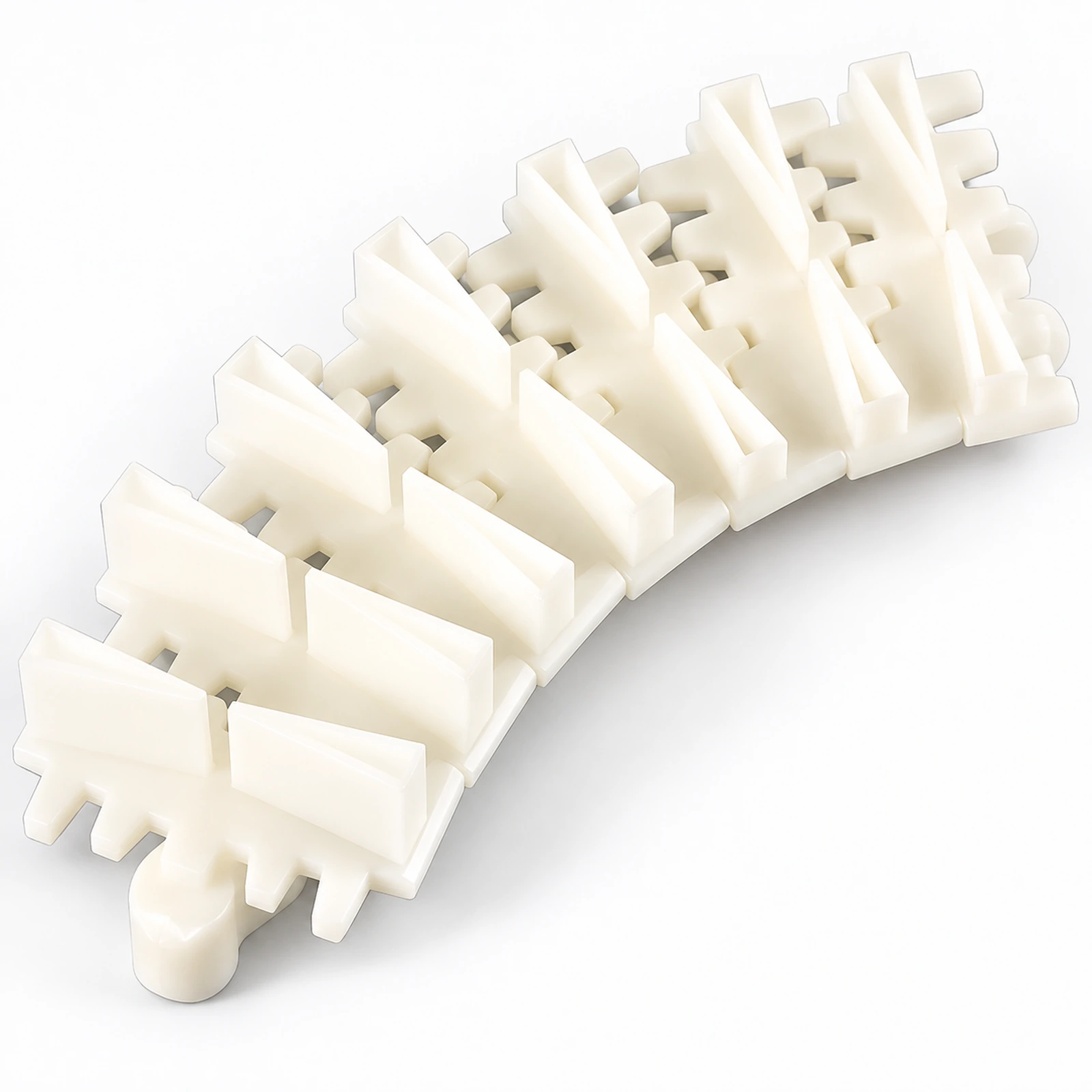
CSTRANS supplies flexible chain families from 44 to 295 for routes that combine straight sections and turns. The range includes flat-toothed and flat-plate versions, flighted 63, 83 and 103 chains, and a 63B steel-base top-plate chain. Matching beams, bends, wear strips and drive and idler units align the carrying path and return loop across a conveyor section.
Product surface
A Carrying Surface That Suits the Product
Flat-plate chain gives packs or containers a bearing face through a route change. Flights on the 63, 83 and 103 families create stops between products. On an incline, flights can resist sliding back; through a turn, the product base still needs support and side guidance. CSTRANS also supplies a 63B steel-base top-plate version. Surface choice affects product spacing and orientation before the next handoff.
Series and turns
Series and Turn Geometry Belong Together
The 44, 63, 83, 103, 140, 175 and 295 families cover different chain and route scales. CSTRANS lists turn-radius figures of 150 mm for 44/63, 160 mm for 83, 170 mm for 103, 400–450 mm for 140, 510 mm for 175 and 650 mm for 295. These are series references, not interchangeable bend dimensions: 63/83/103 need at least a 300 mm radius without a corner disk. A compatible bend keeps products on one carrying route around the corner, avoiding a separate transfer there.
Running hardware
Match the Chain to Its Running Hardware
The chain runs as part of a beam, wear-strip and end-unit assembly. CSTRANS pairs 44/63/83/103 chain families with 45/65/85/105 beam widths and offers corresponding drive-head and idler-end ranges for 63/83/103. The 140 family needs special attention: flat-toothed and flat-plate versions use different beam, drive-end and wear-strip arrangements. A matched wear strip supports the chain; sprocket engagement at the head and return at the tail keep it moving as one loop. A series label alone cannot settle those interfaces.
Application / Line Context
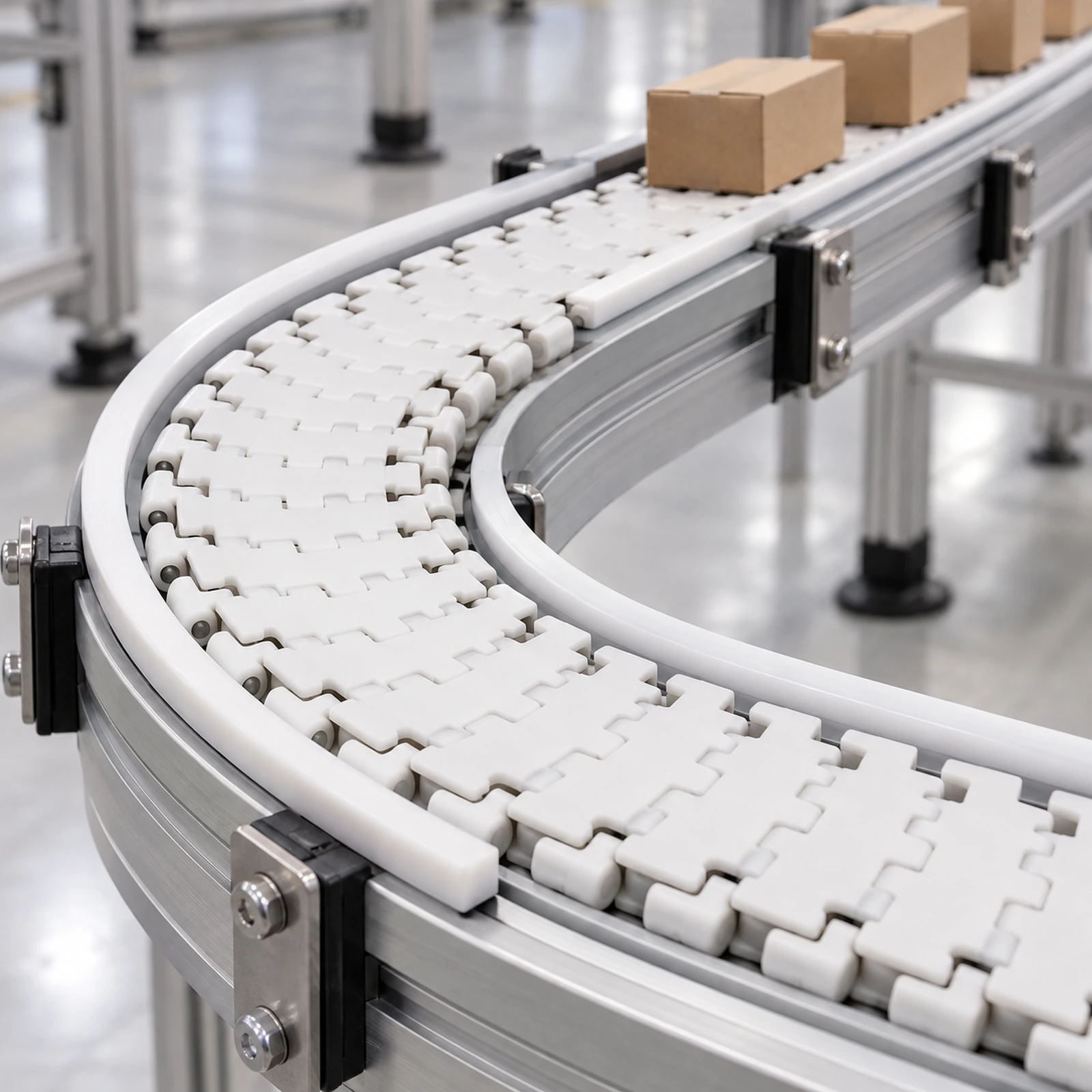
As packs enter a curve, chain and wear strip follow the beam while side guidance controls product position. A corner disk permits a tighter radius for selected families; a disk-free bend needs more layout space. On a rise, flights can hold product spacing where a smooth surface would let items drift. At the end, the drive sprocket pulls the chain, the idler guides its return, and products cross to the next section. Bend geometry, chain support and discharge gap affect product orientation through the route.