
Straight Running Modular Belts
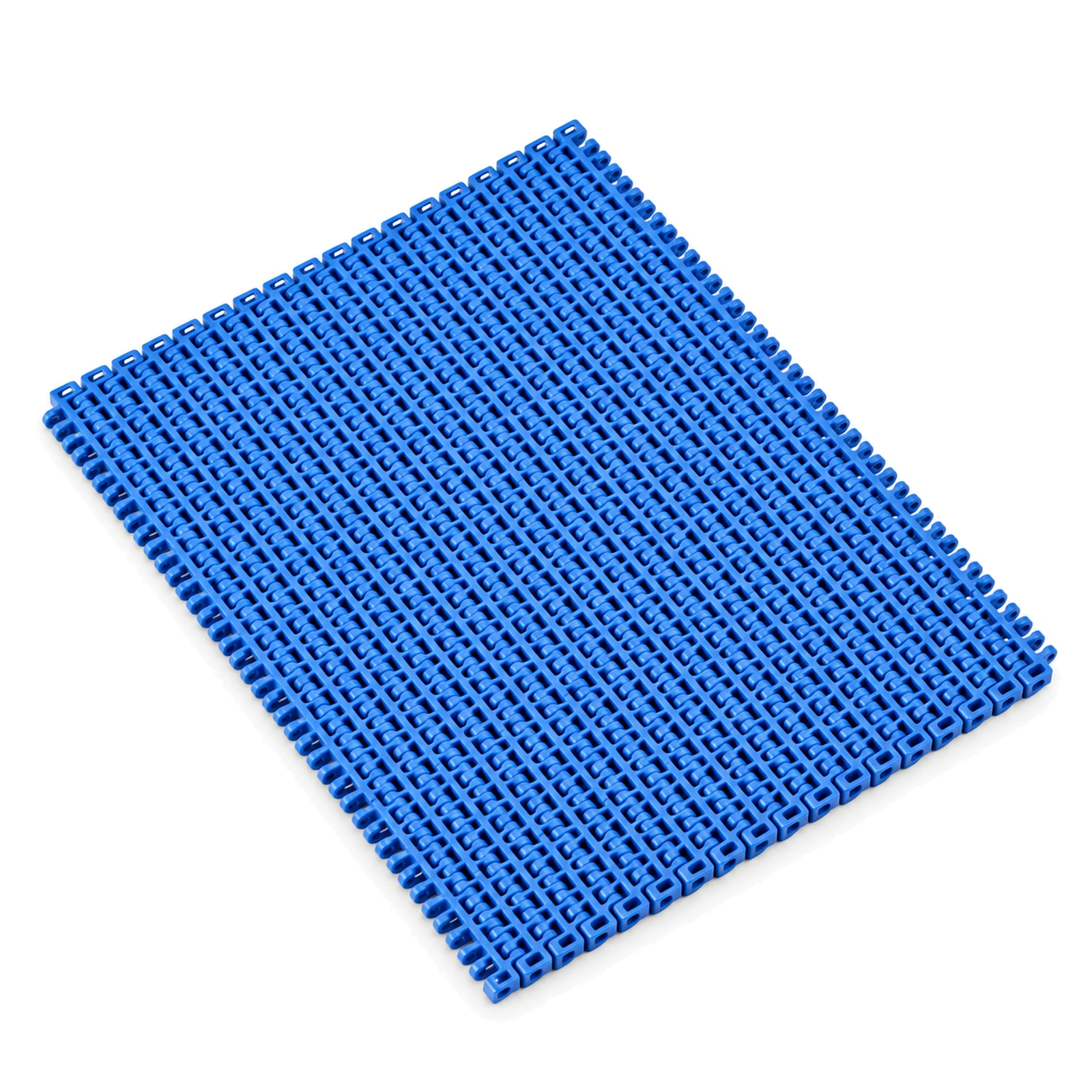
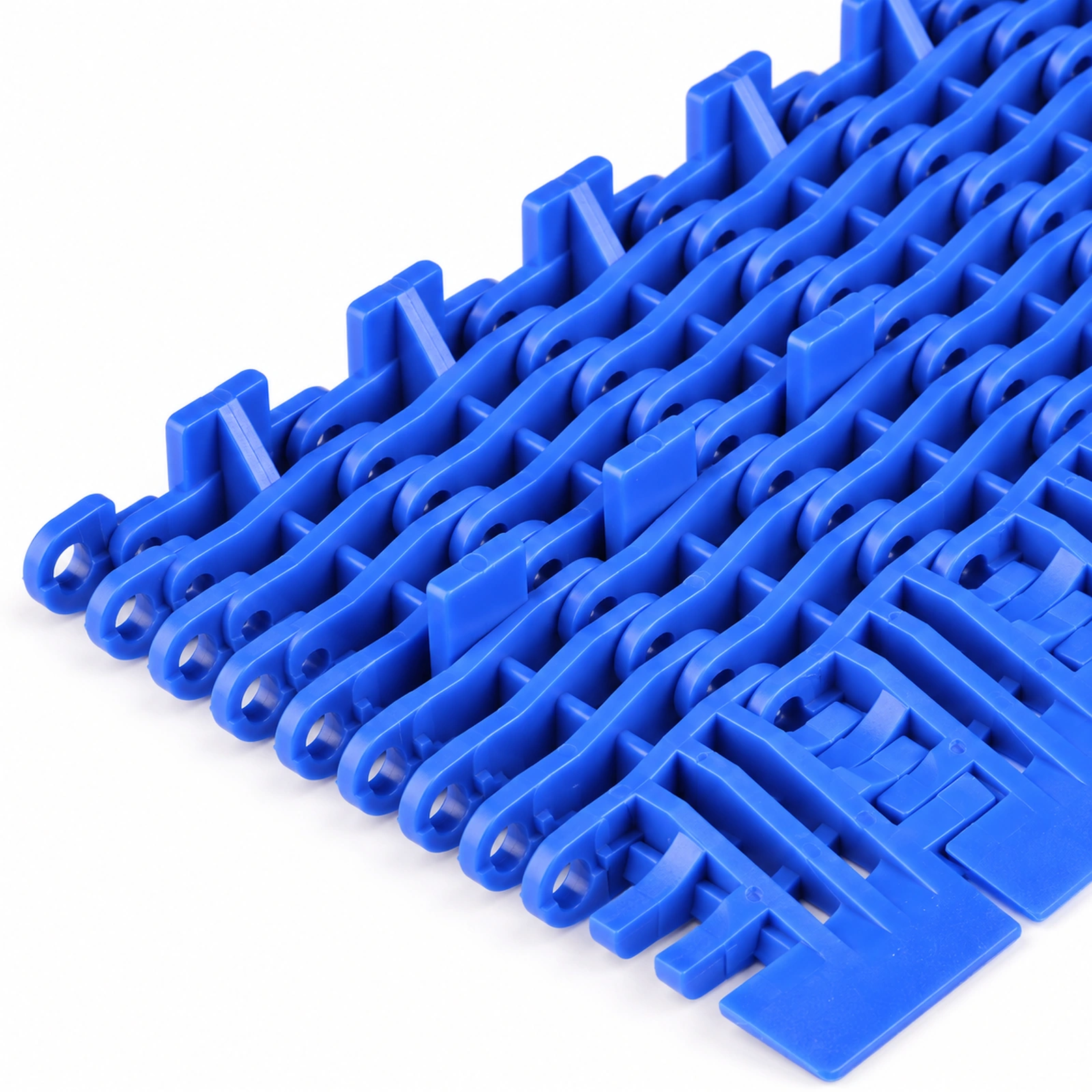
CSTRANS supplies straight running modular belts across nine listed pitch classes, with flat, open, ball-top and flighted surfaces for different product behavior. Selected belt families also have standard molded sprockets or matching raised-rib transfer plates. These choices help equipment teams align product support, drive engagement and the next handoff along a straight conveyor route.
Transfer support
Pitch and Product Support at the Transfer
The straight-running range covers discrete pitches from 12.7 to 57.15 mm. Its 12.7 mm 1270–1275 family is used for small items; the shorter module step gives those products a finer support pattern as they approach an infeed or discharge. Larger pitch families include 2720 at 27.2 mm and 5082 at 50.8 mm, each with its own surface forms. Pitch is therefore part of the product-handling decision, not just a replacement number: it changes the pattern of support where one conveyor section meets another.
Contact surface
Choose the Contact Surface for the Job
Within the 2720 family, CSTRANS offers flat-top 2720A, flush-grid 2720B, raised-rib 2720C and flighted 2720D. The 5082 family includes flat, grid, perforated and flighted forms; a 5082 flight-and-sidewall configuration serves inclined runs. Flat tops offer broad contact for a product base, while openings provide a path for liquid or air. Flights and sidewalls help maintain position as the route rises. Ball-top 5080 and 25410 forms change sliding contact to rolling contact for case conveying. The useful surface depends on what the product does between entry and exit, not only on belt width.
Drive handoff
Carry Motion Through the Drive and Handoff
CSTRANS lists standard injection-molded sprockets for 1520, 2720, 5712 and 5713 belts. The raised-rib 2720, 5083, 5712 and 5713 versions also have matching transfer plates at discharge. These are separate model-specific interfaces: a sprocket engages the belt at the shaft, while a raised-rib plate gives a product a supported route toward the receiving surface. Tooth count, bore, keyway, belt width and plate placement need to suit the actual equipment so a correct surface choice still works within the line.
Application / Line Context
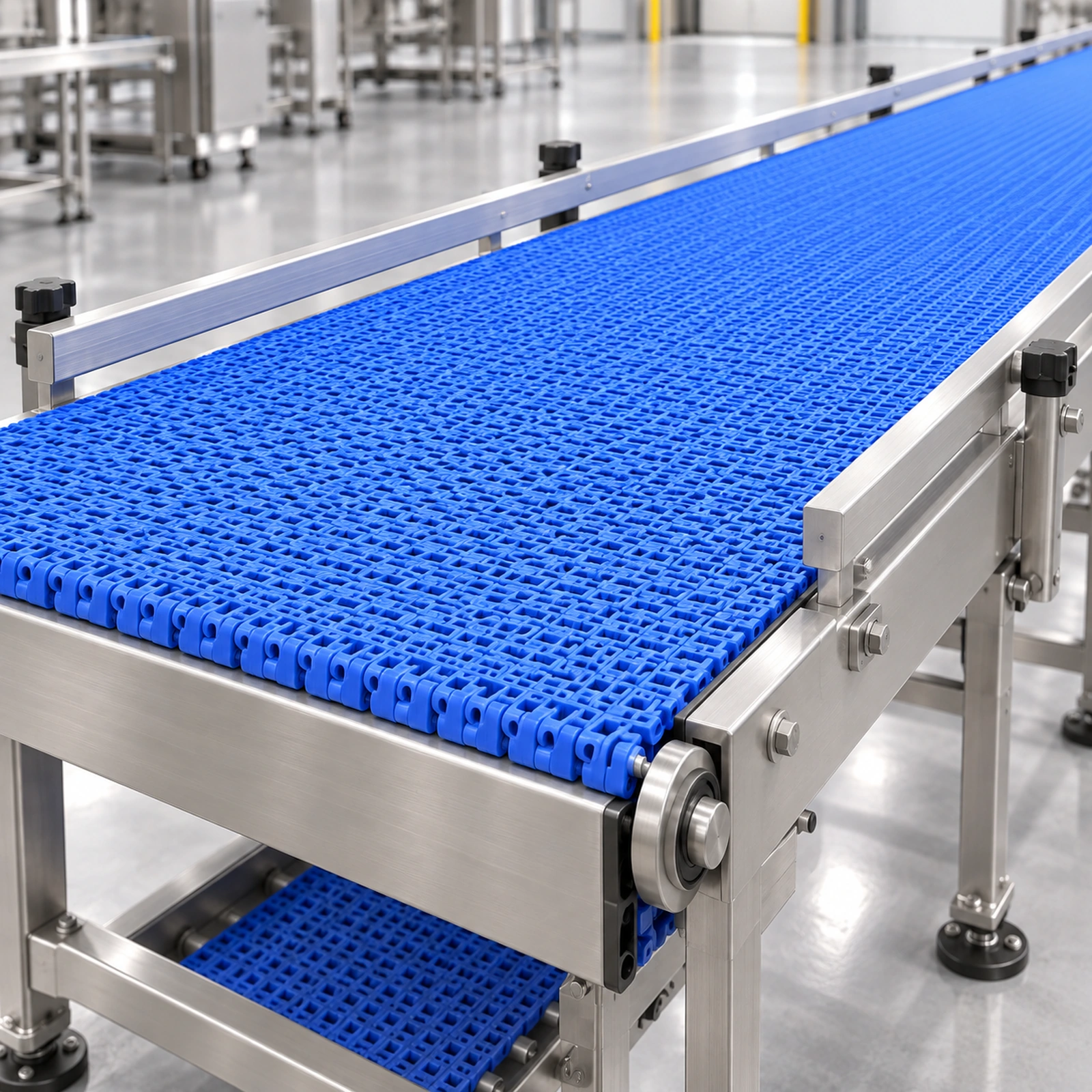
At an infeed, small products need enough base contact to settle onto the belt; a short-pitch family can help where support spacing matters. Through a wet or ventilated process, a grid or perforated surface permits flow through the belt but offers less bearing area to a narrow product base than a closed top. A ball-top section can ease relative movement where cases collect. On a rising straight run, flights and sidewalls help keep products from shifting back. At discharge, the belt turns away around its sprockets while the product must reach the next machine; the raised-rib plate, product footprint and transfer height all influence that handoff.