Drive and Idler Units
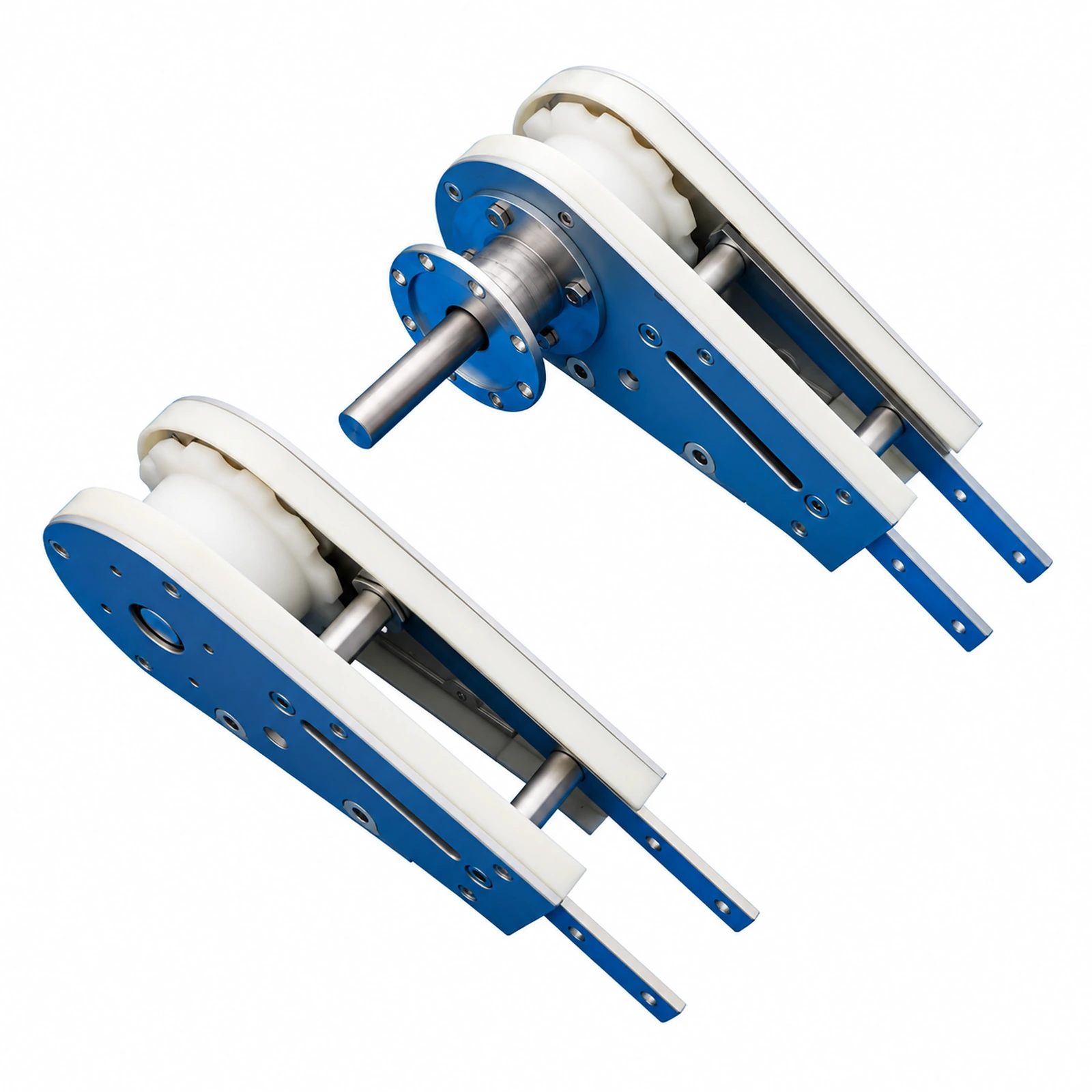
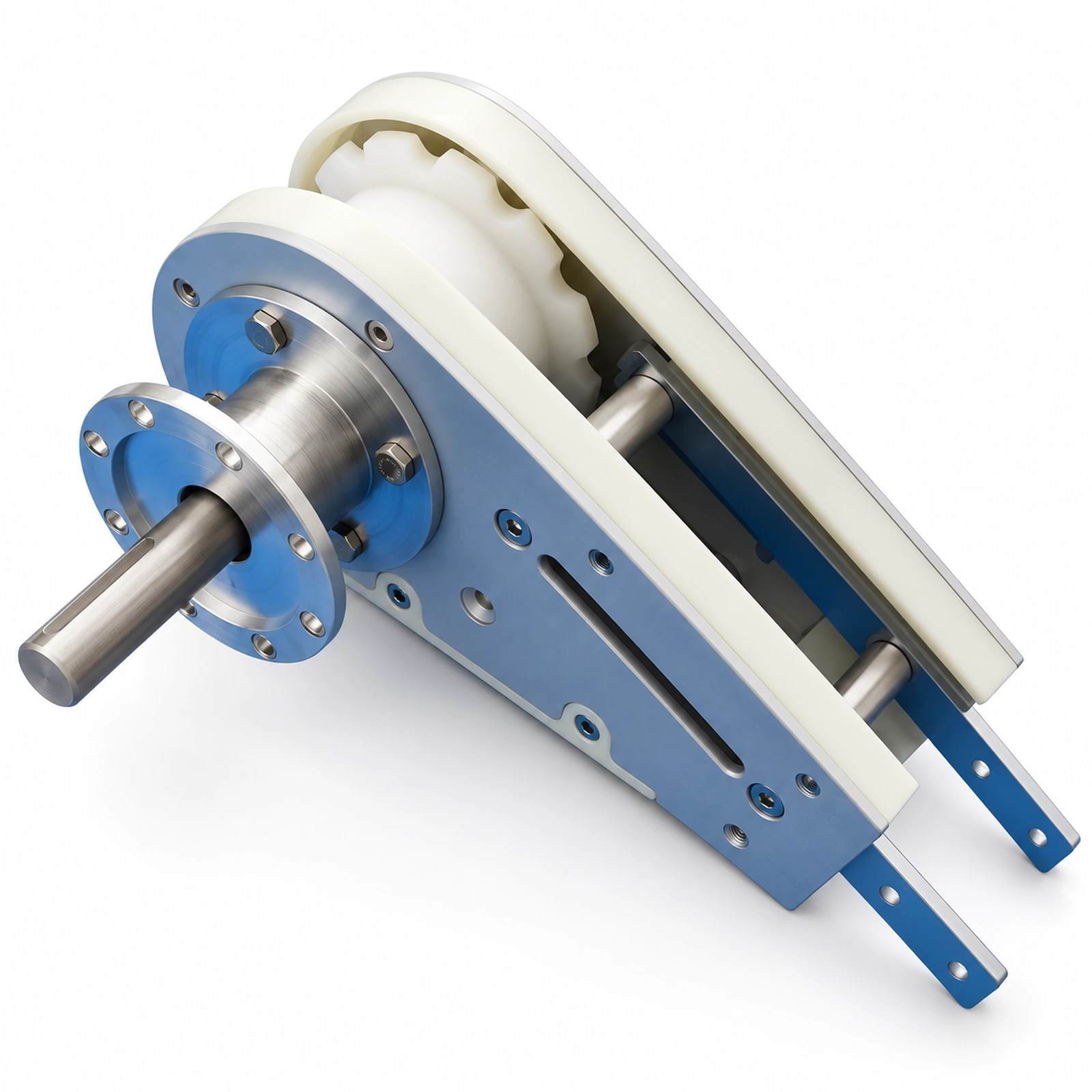
CSTRANS supplies drive heads and idler ends for flexible-chain conveyor sections. The head engages the chain and brings power into its loop; the tail guides it back along the beam. CSTRANS offers 65, 85 and 105 end-unit families for 63, 83 and 103 chains, alongside larger semi-enclosed arrangements. Matching both ends to the chain form and beam keeps the carrying run, turnaround and return run in one route.
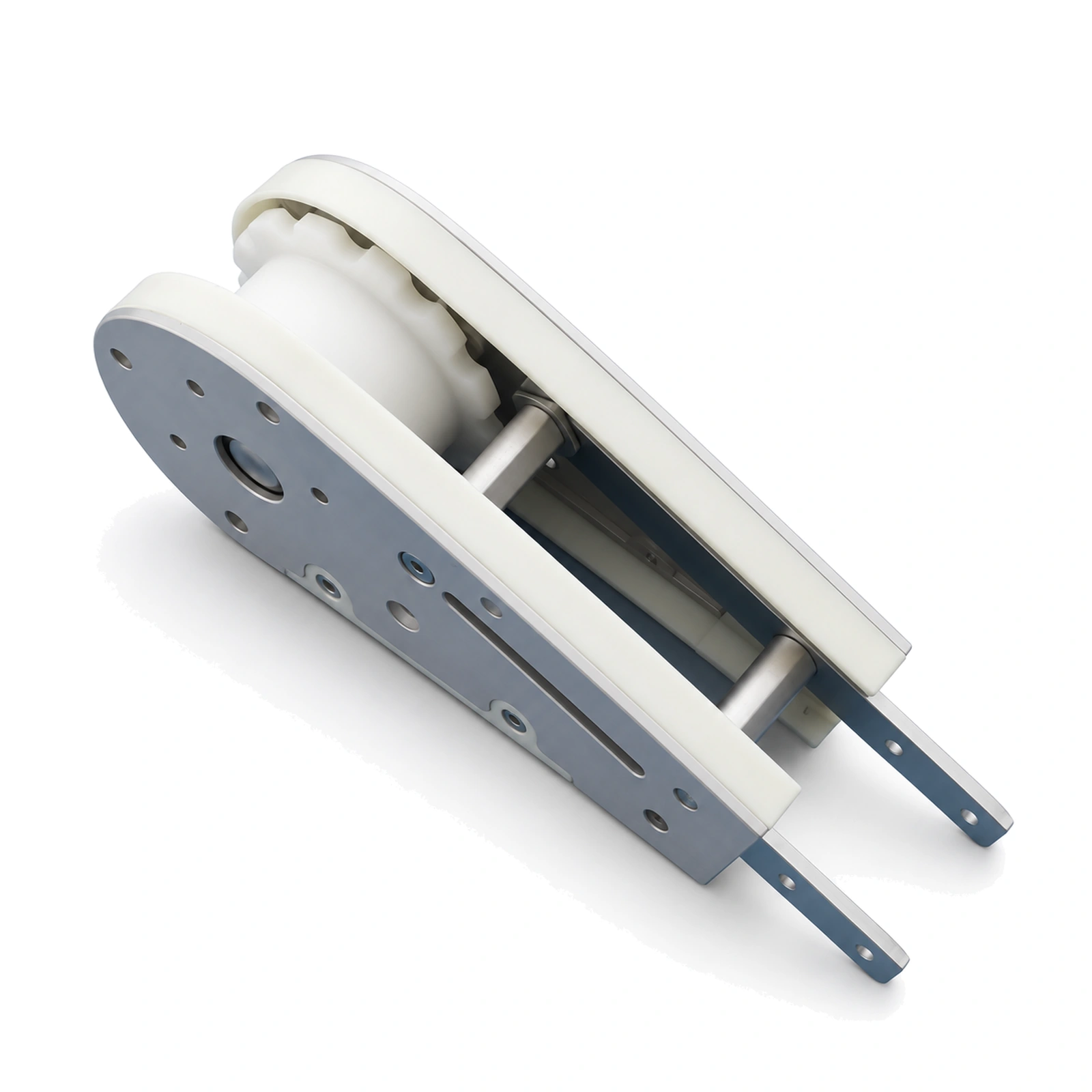
Drive end
Drive the selected chain family
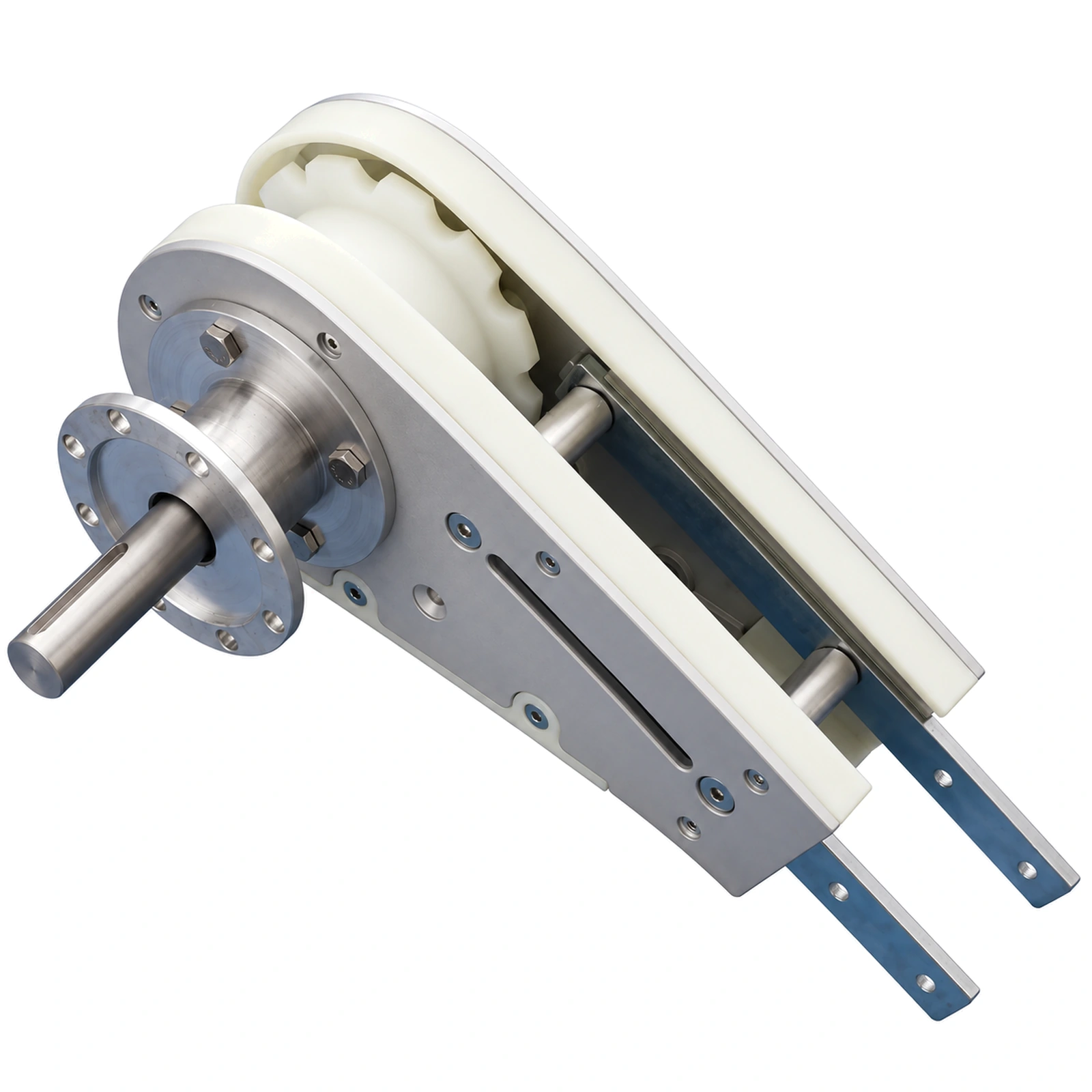
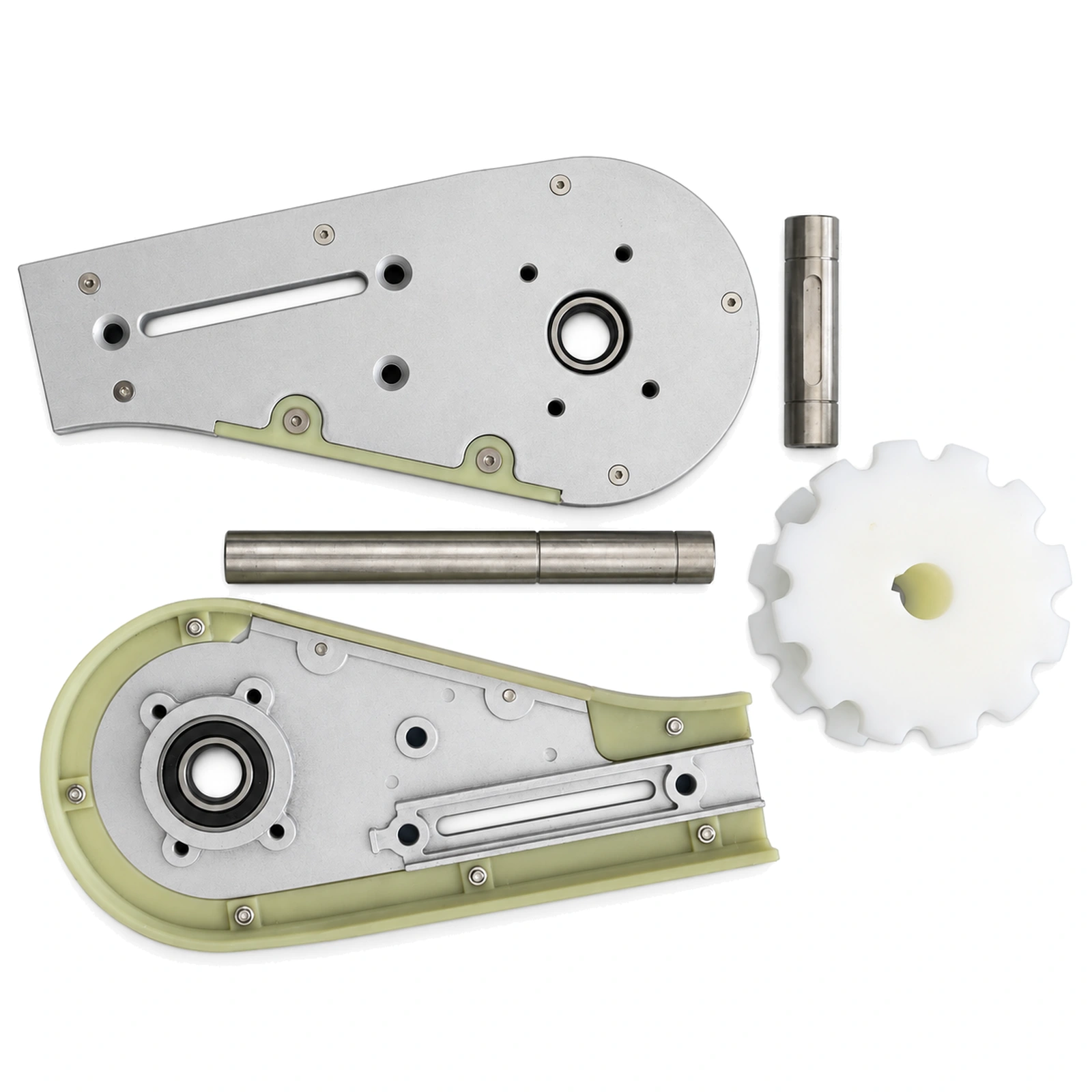
For 63, 83 and 103 flexible chains, CSTRANS supplies matching 65, 85 and 105 drive-head ranges in fully enclosed and semi-enclosed forms, plus stainless drive options. Larger 140, 175 and 295 chain families have corresponding semi-enclosed end-unit arrangements. The drive head brings its shaft and sprocket into the chain path, so pitch and chain underside must meet the drive geometry. Correct engagement carries the chain into the discharge zone as products pass to the next section.
Return end
Guide the return at the tail
An idler end turns the chain from the carrying run into its return under the beam. CSTRANS provides tail-unit ranges paired with the same 63, 83 and 103 chain/beam families, and semi-enclosed ends for larger families. End side plates, shafts, sprockets, bearing housings and retaining parts form the assembly. Their position relative to the beam controls how the chain enters and leaves the turnaround. That continuity matters when space is limited between the tail, support frame and upstream infeed.
End assembly
Match the end assembly, not just its cover
The 140 chain comes in flat-toothed and flat-plate forms; the flat-toothed version calls for its own end-unit, beam and wear-strip arrangement. CSTRANS offers RV40, RV50 and RV63 flange types and can process a nonstandard flange for a specified motor. Shaft, sprocket and flange interfaces matter when an end unit is replaced or connected to a drive. CSTRANS can align the running parts and motor mounting so the replacement fits the chain family and motor connection.
Application / Line Context
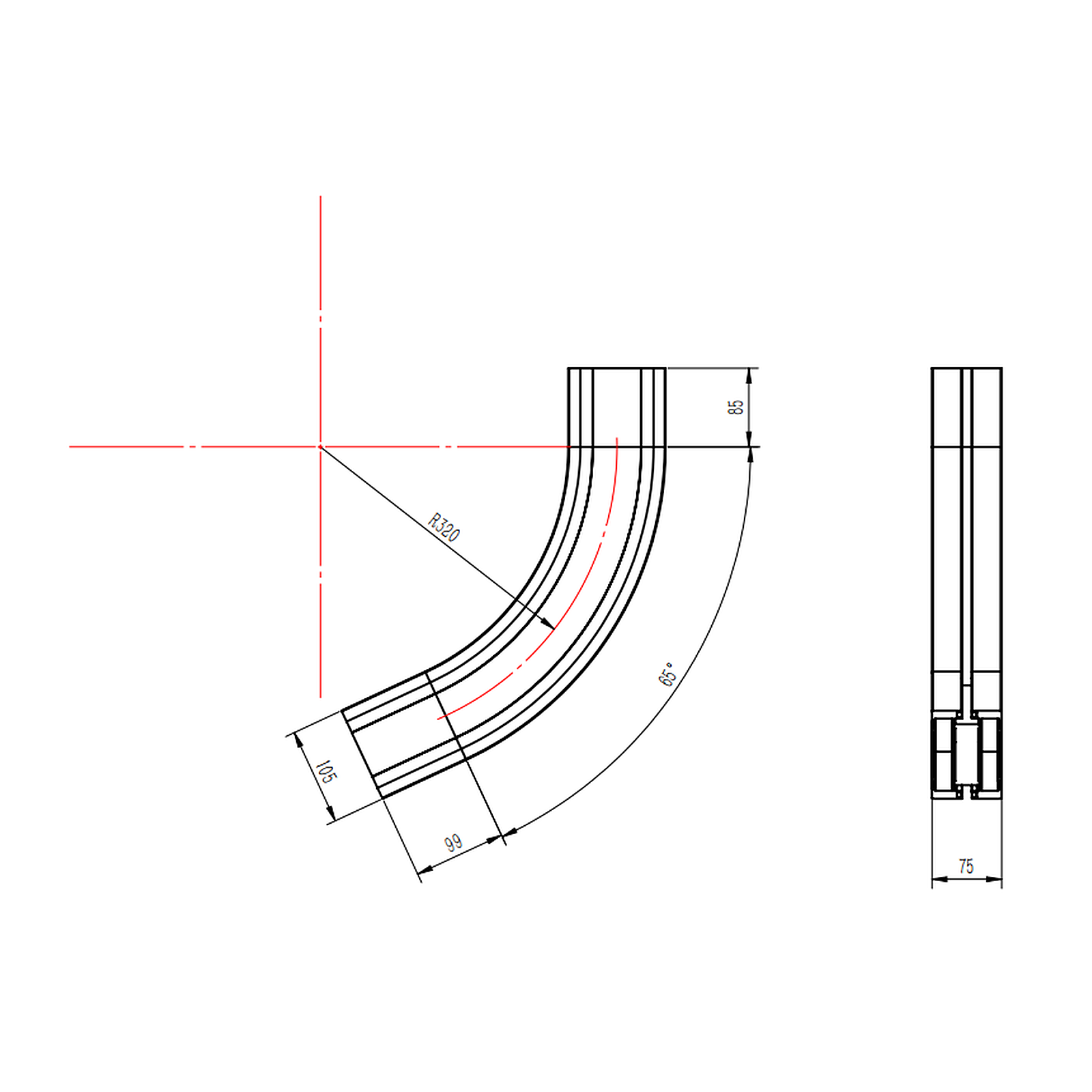
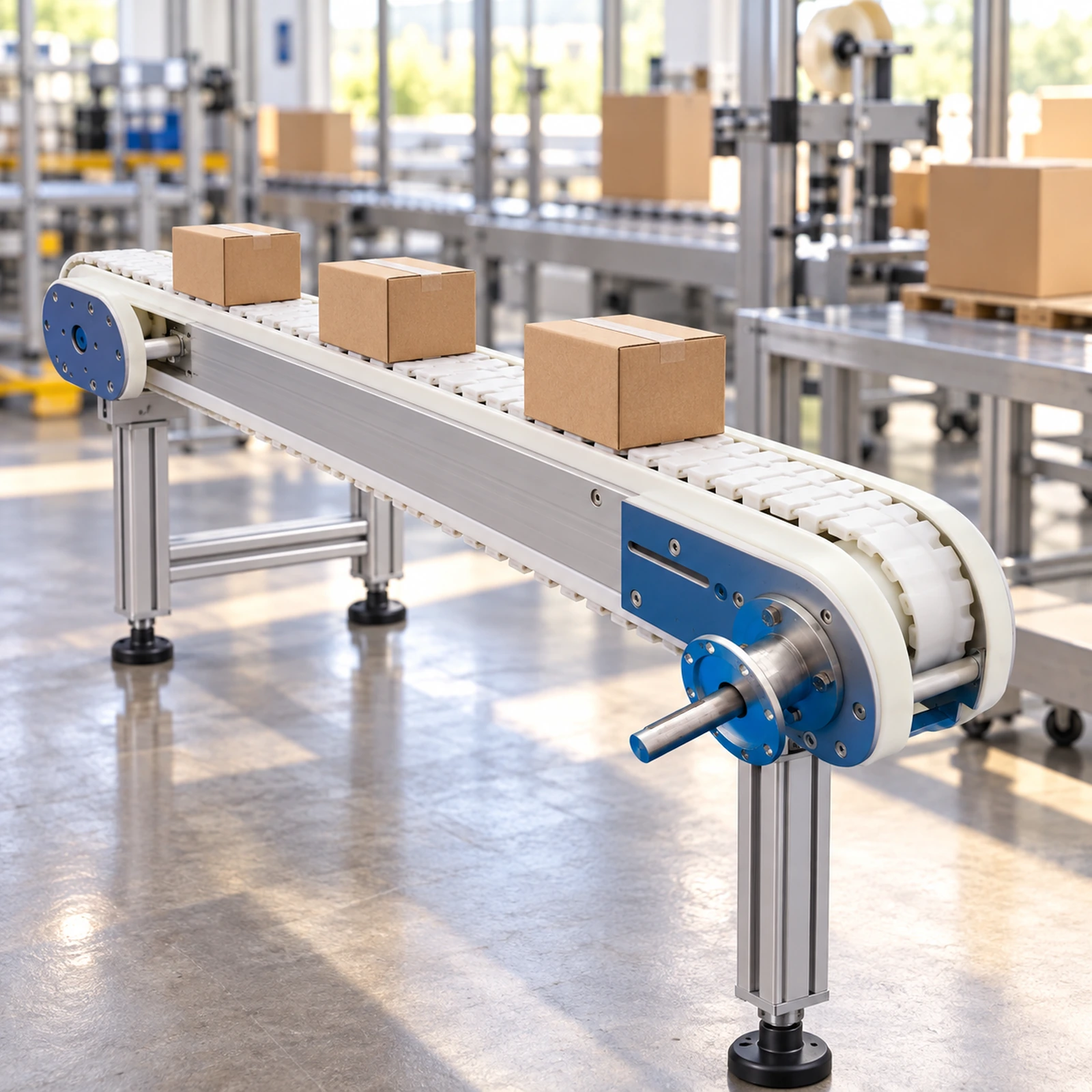
On a curved flexible-chain line, the supported chain approaches the head carrying products in a defined position. The head sprocket pulls the chain around the end as products pass to the receiving section; discharge height, gap and side guidance affect that handoff. Beneath the beam, the return run travels to the idler end and turns back toward the infeed. If the head, tail and beam follow different chain geometries, the loop cannot stay aligned through those transitions. Matching the 140 form is especially important because its flat-toothed and flat-plate versions use different mating hardware.