
Conveyor Bends
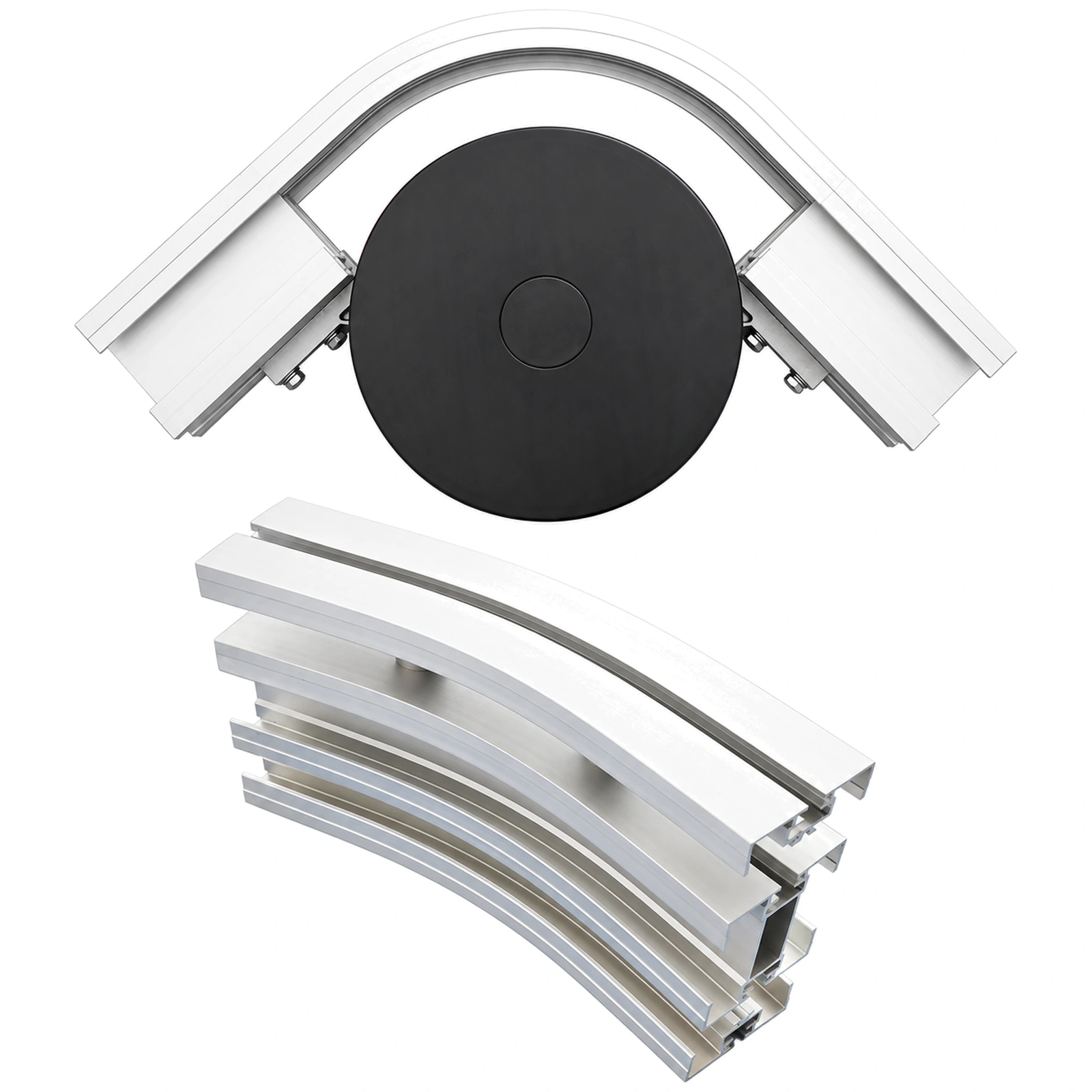
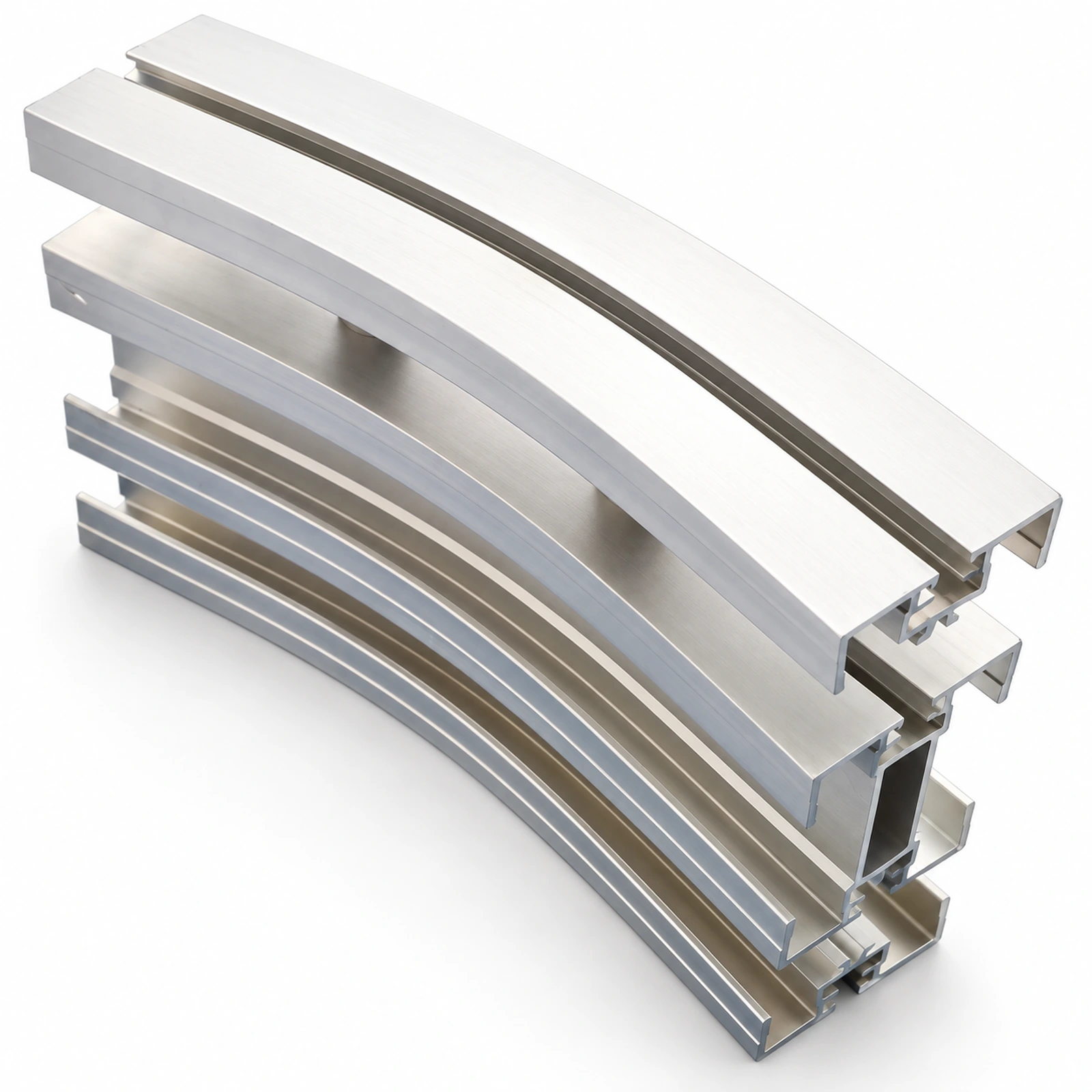
CSTRANS supplies horizontal, vertical and plastic wheel-bend components for flexible-chain conveyors. A bend redirects the chain while its carrying surface connects the straight sections on either side. Chain series, centerline radius, angle and straight lead-in affect the curve's fit, product path and space around the next machine.
Subcategories
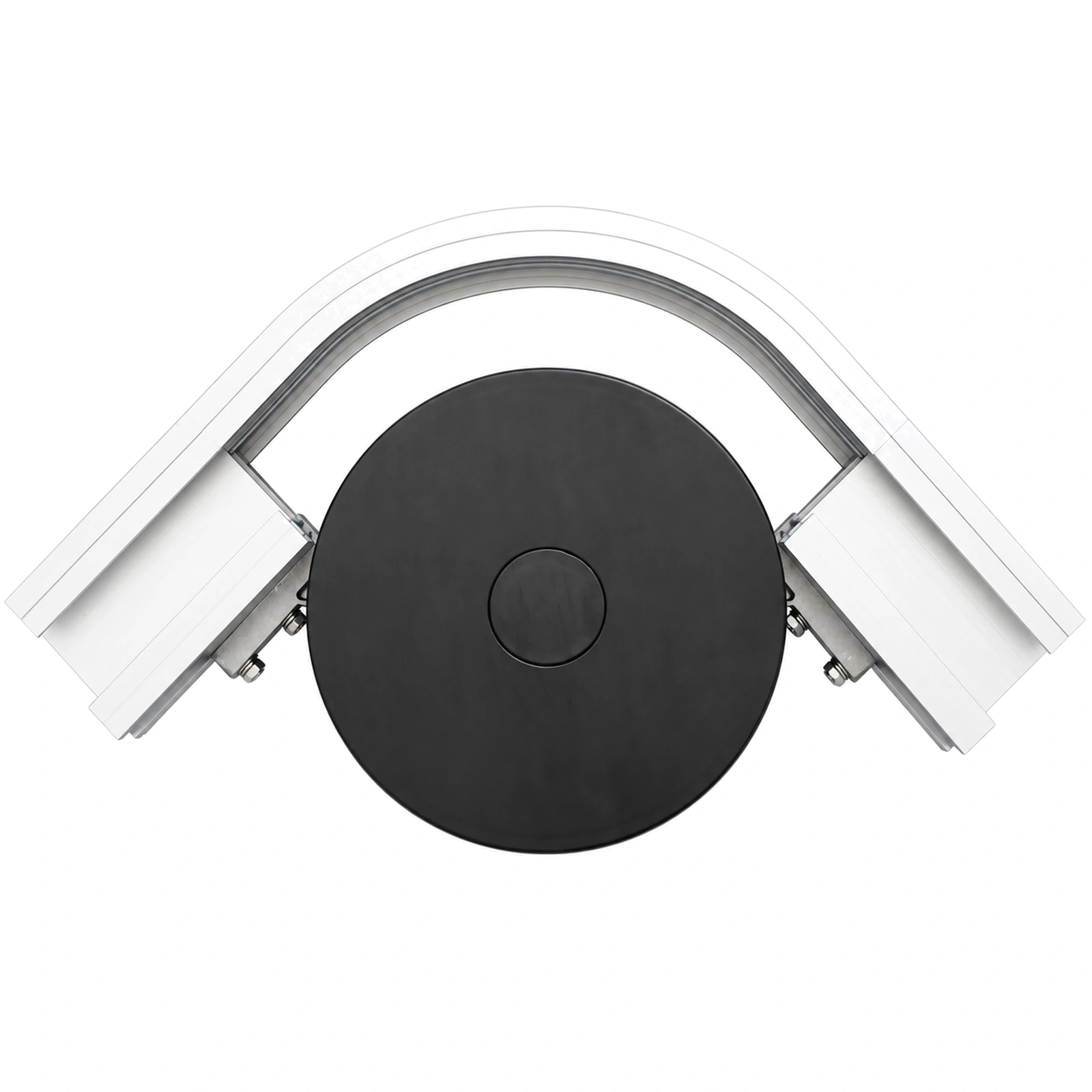
Route geometry
Route around equipment or between levels
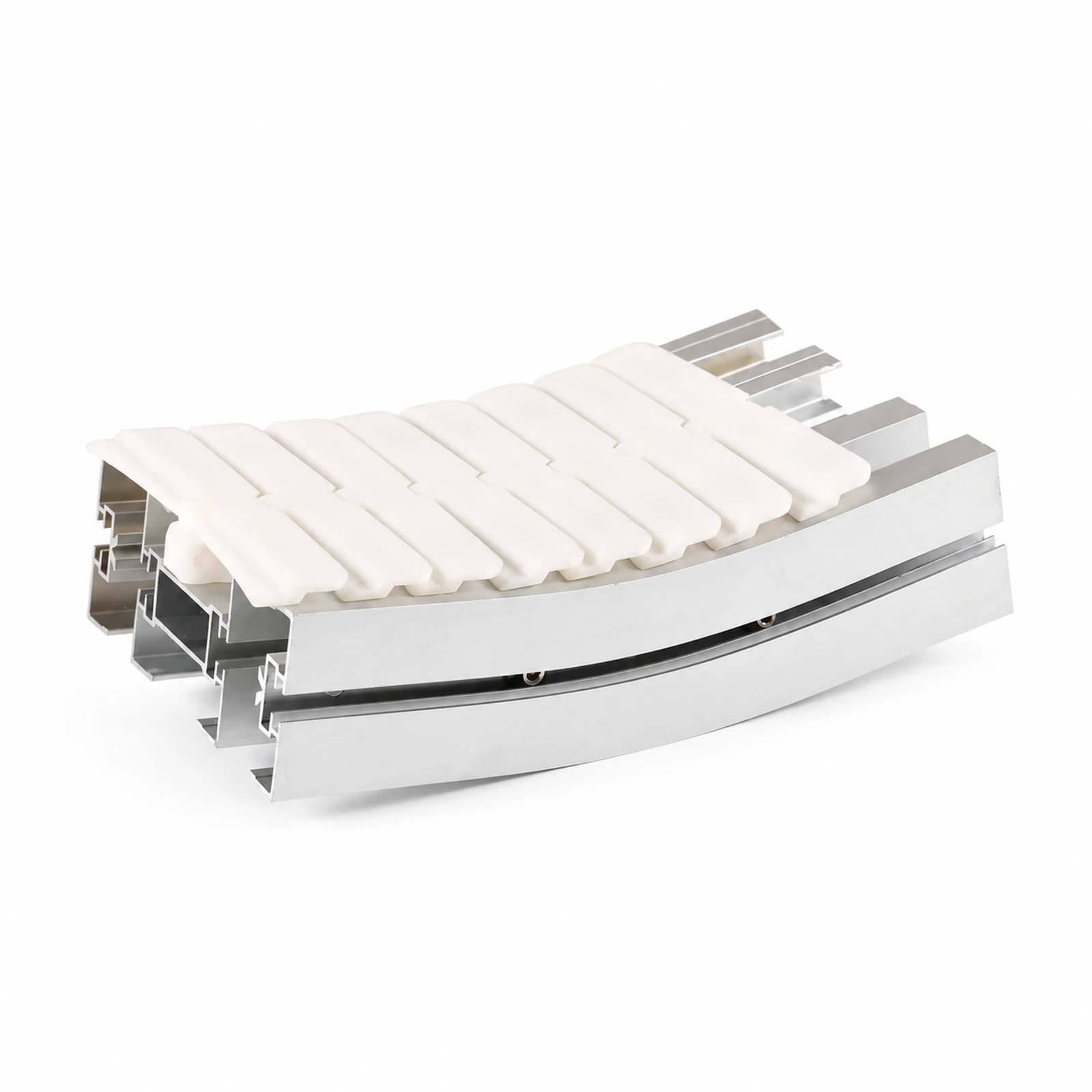
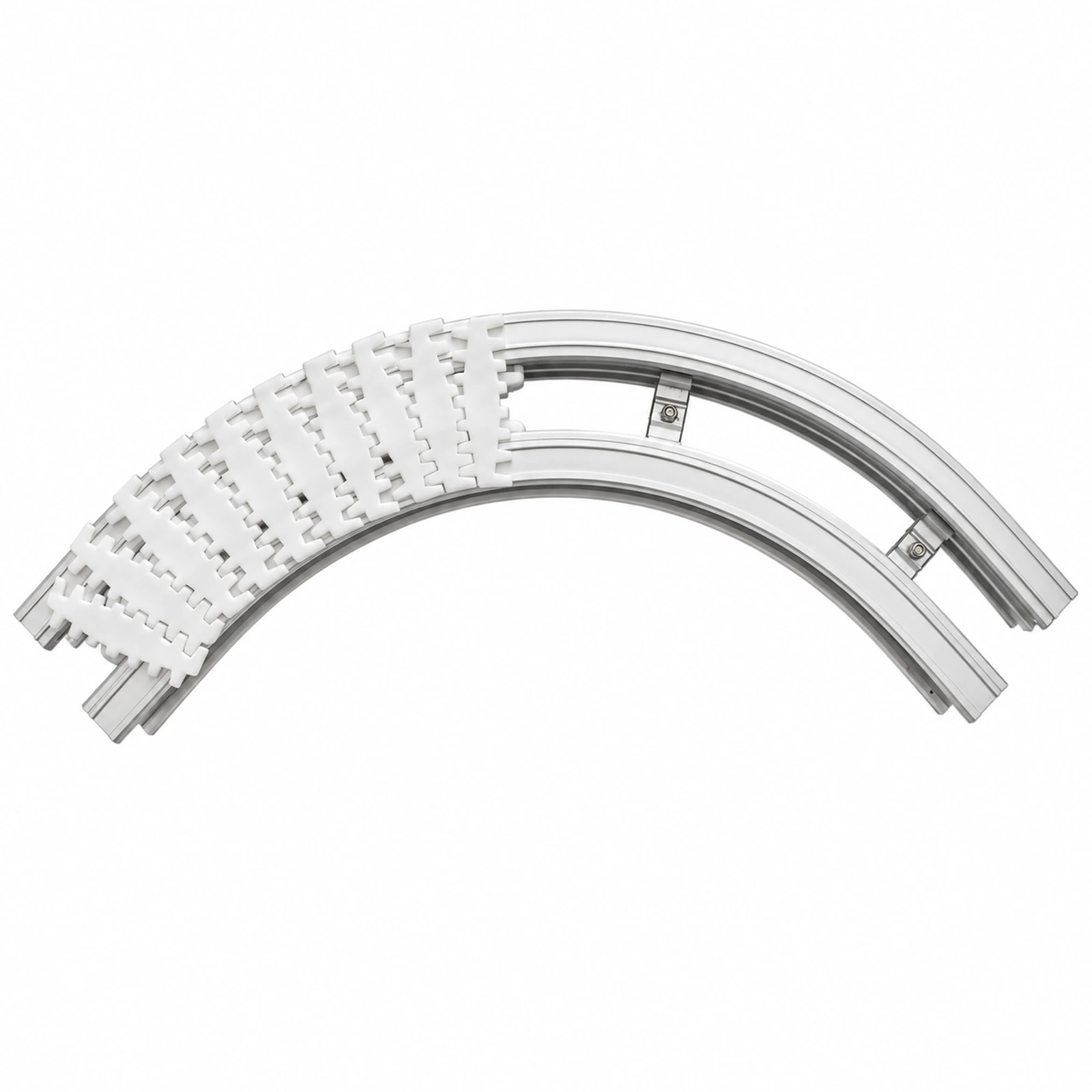
A horizontal bend moves the carrying run around a corner; a vertical bend changes its level. CSTRANS uses the required straight length, bend angle and centerline radius to define each curved section. Those dimensions shape where products enter the curve and where they arrive at the next straight run. A continuous chain path can carry them through a direction change without a separate corner transfer, provided the product base and side guidance suit the chosen route.
Bend construction
Use the curve construction that fits the route
For 63, 83 and 103 flexible-chain systems, CSTRANS has a horizontal-bend assembly with a plastic wheel disk, cast bracket, aluminum half-beam and shaft. The disk is common across those series; 83 and 103 castings are also common, while the 63 casting has a lower center section. These differences matter when replacing a bend assembly. Disk-free bends require a larger radius for 63/83/103; the 140 family has its own minimum. Wheel and disk-free routes therefore need different space and running-contact arrangements.
Chain support
Keep chain support continuous at the joins
The curved section has to meet its chain and beam at both ends. CSTRANS uses an 85 half-beam with an 85 main beam in horizontal and vertical bend construction, joined by a connecting column. The wheel, bracket and shaft of a 63/83/103 horizontal bend guide the chain through the curve, while the half-beam carries its track back to a straight section. Matching the series, beam connection and guide position helps the product leave the bend on the intended line rather than arriving out of position at the downstream handoff.
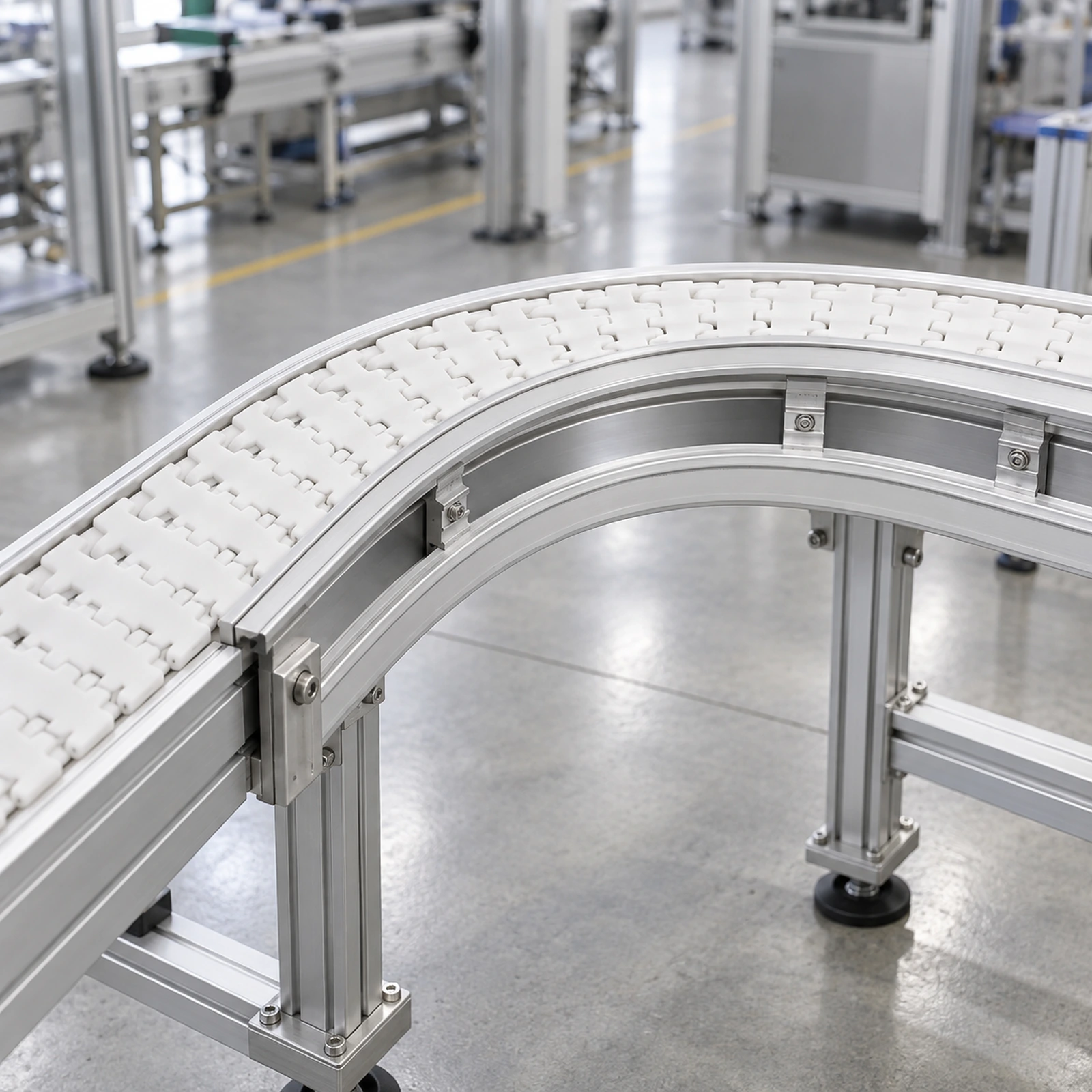
Application / Line Context
At a horizontal turn, the chain and wear strip follow the curved beam while the product's base and side guide determine its orientation. A wheel disk changes how the chain contacts the inside of a selected bend; a disk-free path needs its own radius and track geometry. At a vertical change, chain support must continue between straight and curved beams while product retention depends on the selected chain surface and guide arrangement. At either exit, the supported footprint, receiving conveyor height and transfer gap affect the handoff. These are connected layout decisions, so CSTRANS can help match bend form to chain family and the adjoining line sections.